Source scans · vol_II_p084
recto · open full
scan recto
verso · open full
scan verso
Bṛhaddeśī · Volume II
pp. 150–151folio 084
Devanāgarī (Bṛhaddeśī)
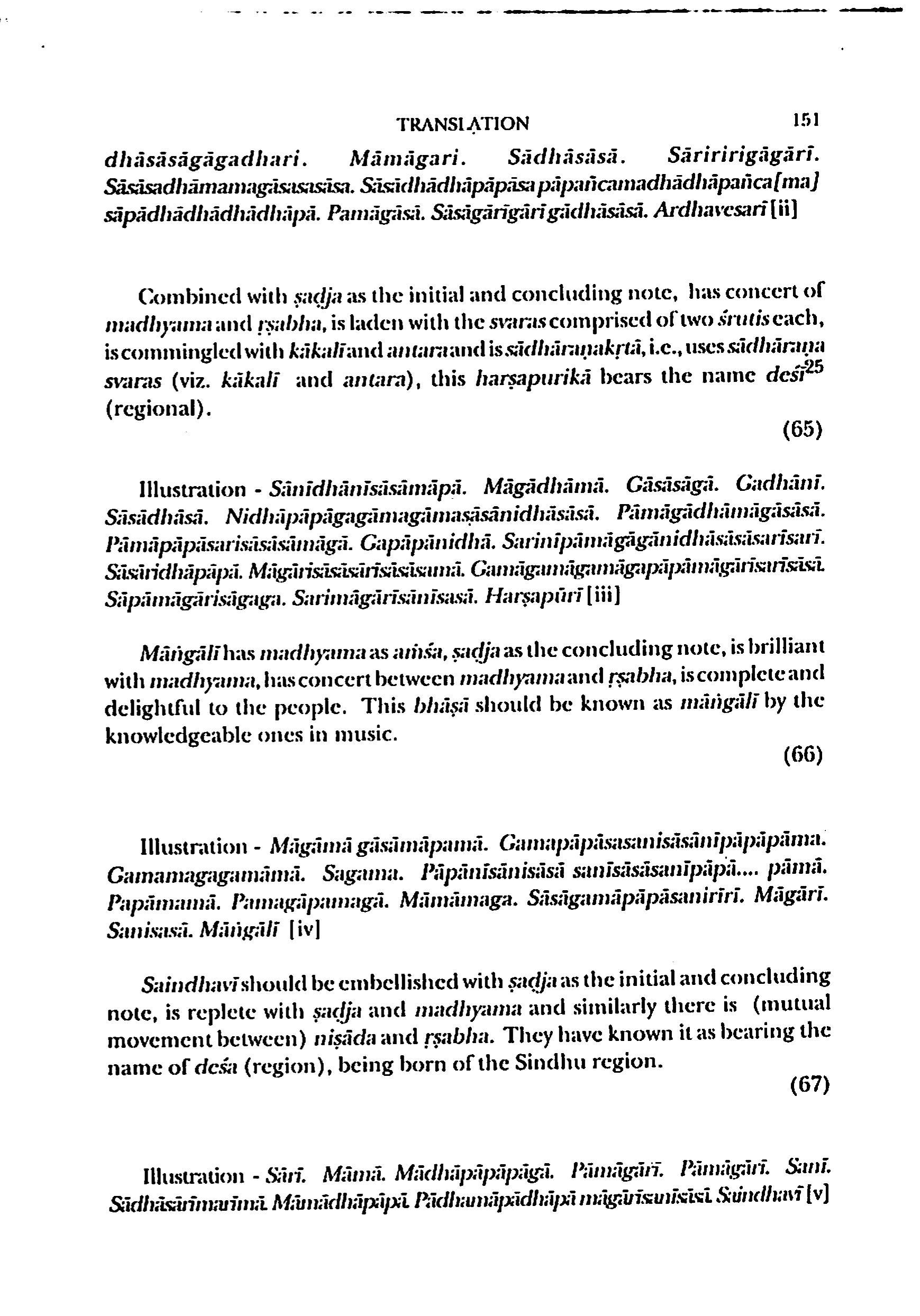
गामापापाधपापाधमपामा। गमगमगरीसा धा सा सा गा ग ध रि । मा मा ग रि । सा धा सा सा । सारिरिरिगागारी ।
œ सा सा स धा म म गा स स सा स सा सा धा धा पा पा स पापंचमधाधापंच[म]सापाधाधाधापा । पमागा- सा । सासागारीगारी गाधासासा। अर्द्धवेसरी3 ।[२] अद्य ॰
षड्ज?ाद्यन्तसमायुक्ता मध्यमर्षभसङ्गता ।
द्विश्रुतिभ्या च रूढा तु13 काकल्यन्तरसङ्करा7
साधारणकृता ह्येषा देशाख्या4 हर्षपूरिका° ॥६५॥ हर्षपूरि(म?)ता उदाहरणम् - सा नी धा नी सा सा मा पा । मा गा धा मा । गा सा सा गा । ग धा नी । सा सा धा सा । नीधापापागगा- म गा म सा सा नी धा सा सा । पा मा गा धा मा गा सा सा । पा मा पा पा स रि सा सा सा मा गा । ग पा पा नि धा । स रि नी पा मा गागानिधासासासरीसरी । सा सा रि धा पा पा । मागारिसासासारीसासासामा । गमागमागमागपापामागारी- सरीसासा । सा पा मा गा रि सा ग ग । सरिमागारीसानीससा । हर्षपूरी ।[३]
५१माङ्गाली मध्यमांशा तु षड्ज?ा[-]ता मध्यमोज?्ज?्वला6
५२मध्यमर्षभसङ्गत्या सम्पूर्णा लोकरञ्ज?िका10
मध्यमर्पभसम्पूर्णा +++ एषा भाषा तु विज?्ञेया माङ्गाली गेयवेदिभिः5 ॥६६॥
उदाहरणम् - मा गा मा गा सा मा प मा । ग म पा पा स नि सा सा नी पा पा पा म । ग म म ग ग मा मा । स ग म ।
पा पा नी सा नि सा सा सनीसासासनीपापा.....पामा । पा पा म मा । प म गा प म गा । मा मा म ग सासा- गा
ग। मापापासनीरीरी । मागारी । स नि स सा । माङ्गाली । [४] ।
सैन्धवी चैव कर्तव्या षड्ज?ाद्यन्तविभूषिता11
षड्जमध्यमबहुला निषादर्षभयोस्तथा12
सिन्ध्विषयसम्भूता देशाख्या सैन्धवी विदुः2५३ ॥६७॥ सबन्धः ॰ ता
उदाहरणम् -सारी । मामा । मा धा पा पा पा गा । पामागारी । पामागारी। सनी साधासारीमरीमा ।
साधासारीमरीमा । मा मा धा पा पा । पाधमापाधापामागारीसनीसासा । सैन्धवी । [५]
English — Sharma (translation)
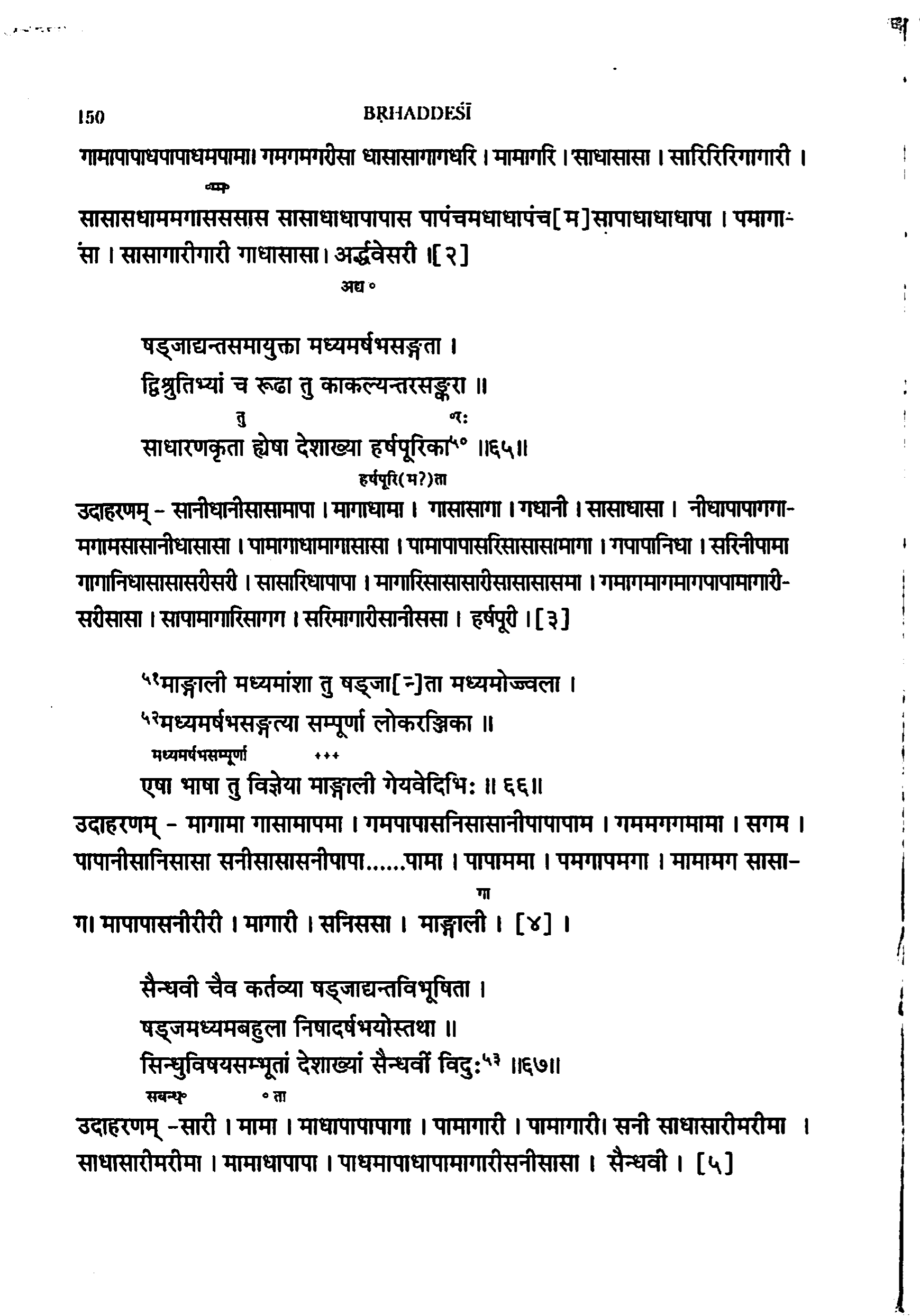
Māmāgari. Sādhāsāsā. Sāriririgāgārī. dhāsāsāgāgadhari. Sāsāsadhāmamagāsasasāsa. Sāsādhādhāpāpāsa pāpañcamadhādhāpañca[ma] sāpādhādhādhādhāpā. Pamāgāsā. Sāsāgārīgārī gādhāsāsā. Ardhavesarī3 [ii] Combined with şadja as the initial and concluding note, has concert of madhyama and ṛṣabha, is laden with the svaras comprised of two śrutis each13, is commingled with kākalī and antara7 and is sādhāraņakṛtā, i.e., uses sādhāraņa svaras (viz. kākalī and antara)4, this harṣapurikā bears the name deśī825 (regional).
(65)
Illustration - Sânīdhānīsāsāmāpā. Māgādhāmā. Gāsāsāgā. Gadhānī. Sāsādhāsā. Nidhāpāpāgagāmagāmasāsānidhāsāsā. Pāmāgādhāmāgāsāsā. Pāmāpāpāsarisāsāsāmāgā. Gapāpānidhā. Sarinīpāmāgāgānidhāsāsāsarīsarī. Sāsāridhāpāpā. Māgārisāsāsārīsāsāsamā. Gamāgamāgamāgapāpāmāgārisarīsāsā. Sāpāmāgārisāgaga. Sarimāgārīsānīsasā. Harşapūrī [iii] Māṅgālī has madhyama as aṁśa, ṣaḍja as the concluding note96, is brilliant with madhyama, has concert between madhyama and ṛṣabha, is complete and delightful to the people10. This bhāṣā should be known as māṅgālī by the knowledgeable ones in music.5
(66)
Illustration - Māgāmā gāsāmāpamā. Gamapāpāsasanisāsānīpāpāpāma. Gamamagagamāmā. Sagama. Pāpānisānisāsā sanīsāsāsanīpāpā.... pāmā. Papāmamā. Pamagāpamagā. Māmāmaga. Sāsāgamāpāpāsanirīrī. Māgārī. Sanisasā. Māṅgālī [iv] Saindhavī should be embellished with ṣaḍja as the initial and concluding note11, is replete with sadja and madhyama and similarly there is (mutual movement between) niṣāda and ṛṣabha12. They have known it as bearing the name of deśa (region), being born of the Sindhu region.2
(67)
Illustration - Sārī. Māmā. Mādhāpāpāpāgā. Pāmāgārī. Pāmāgārī. Sanī. Sādhāsārīmarīmā. Mārnādhāpāpā. Pādhamāpādhāpā māgārīsanīsāsī. Svindhavī [v]
1.[attribution]The Brihaddesi is a musicological treatise that discusses regional melodic types (deśī) and their characteristics.BRHADDEŚĪ 150
2.[attribution] Saindhavī is born of the Sindhu region and bears the name of that deśa (region).सिन्ध्विषयसम्भूता देशाख्या सैन्धवी विदुः
3.[citation] Ardhavesarī is mentioned as a melodic type in the Brihaddesi.अर्द्धवेसरी
4.[definition] Sādhāraņakṛtā refers to the use of sādhāraņa svaras (specifically kākalī and antara) in a melodic type.साधारणकृता ह्येषा देशाख्या
5.[definition] Bhāṣā is a category of melodic types that should be known by knowledgeable musicians.एषा भाषा तु विज?्ञेया माङ्गाली गेयवेदिभिः
6.[definition] Aṁśa refers to the characteristic or primary note of a melodic type.माङ्गाली मध्यमांशा तु षड्ज?ा[-]ता मध्यमोज?्ज?्वला
7.[relation] Kākalī is a type of sādhāraņa svara that features in the composition of certain melodic types.काकल्यन्तरसङ्करा
8.[structural] Harṣapurikā is a deśī (regional melodic type) characterized by use of sādhāraņa svaras and combination of kākalī and antara svaras.साधारणकृता ह्येषा देशाख्या हर्षपूरिका
9.[structural] Māṅgālī is a bhāṣā (melodic type) that has madhyama as its aṁśa (characteristic note) and ṣaḍja as the concluding note.माङ्गाली मध्यमांशा तु षड्ज?ा[-]ता
10.[structural] Māṅgālī exhibits concert (saṅgata) between madhyama and ṛṣabha and is complete and delightful to the people.मध्यमर्षभसङ्गत्या सम्पूर्णा लोकरञ्ज?िका
11.[structural] Saindhavī is a deśī (regional melodic type) that should be embellished with ṣaḍja as both initial and concluding note.सैन्धवी चैव कर्तव्या षड्ज?ाद्यन्तविभूषिता
12.[structural] Saindhavī is replete with ṣaḍja and madhyama, and exhibits mutual movement between niṣāda and ṛṣabha.षड्जमध्यमबहुला निषादर्षभयोस्तथा
13.[structural] Harṣapurikā is combined with ṣaḍja as initial and concluding note, has concert of madhyama and ṛṣabha, and is laden with two-śruti svaras.षड्ज?ाद्यन्तसमायुक्ता मध्यमर्षभसङ्गता । द्विश्रुतिभ्या च रूढा तु
2.[attribution]Saindhavī is born of the Sindhu region and bears the name of that deśa (region).They have known it as bearing the name of deśa (region), being born of the Sindhu region.
3.[citation]Ardhavesarī is mentioned as a melodic type in the Brihaddesi.Ardhavesarī
4.[definition]Sādhāraņakṛtā refers to the use of sādhāraņa svaras (specifically kākalī and antara) in a melodic type.is sādhāraņakṛtā, i.e., uses sādhāraņa svaras (viz. kākalī and antara)
5.[definition]Bhāṣā is a category of melodic types that should be known by knowledgeable musicians.This bhāṣā should be known as māṅgālī by the knowledgeable ones in music.
6.[definition]Aṁśa refers to the characteristic or primary note of a melodic type.Māṅgālī has madhyama as aṁśa, ṣaḍja as the concluding note
7.[relation]Kākalī is a type of sādhāraņa svara that features in the composition of certain melodic types.is commingled with kākalī and antara
8.[structural]Harṣapurikā is a deśī (regional melodic type) characterized by use of sādhāraņa svaras and combination of kākalī and antara svaras.is sādhāraņakṛtā, i.e., uses sādhāraņa svaras (viz. kākalī and antara), this harṣapurikā bears the name deśī
9.[structural]Māṅgālī is a bhāṣā (melodic type) that has madhyama as its aṁśa (characteristic note) and ṣaḍja as the concluding note.Māṅgālī has madhyama as aṁśa, ṣaḍja as the concluding note
10.[structural]Māṅgālī exhibits concert (saṅgata) between madhyama and ṛṣabha and is complete and delightful to the people.has concert between madhyama and ṛṣabha, is complete and delightful to the people
11.[structural]Saindhavī is a deśī (regional melodic type) that should be embellished with ṣaḍja as both initial and concluding note.Saindhavī should be embellished with ṣaḍja as the initial and concluding note
12.[structural]Saindhavī is replete with ṣaḍja and madhyama, and exhibits mutual movement between niṣāda and ṛṣabha.is replete with sadja and madhyama and similarly there is (mutual movement between) niṣāda and ṛṣabha
13.[structural]Harṣapurikā is combined with ṣaḍja as initial and concluding note, has concert of madhyama and ṛṣabha, and is laden with two-śruti svaras.Combined with şadja as the initial and concluding note, has concert of madhyama and ṛṣabha, is laden with the svaras comprised of two śrutis each