Source scans · vol_II_p086
recto · open full
scan recto
verso · open full
scan verso
Bṛhaddeśī · Volume II
pp. 154–155folio 086
Devanāgarī (Bṛhaddeśī)
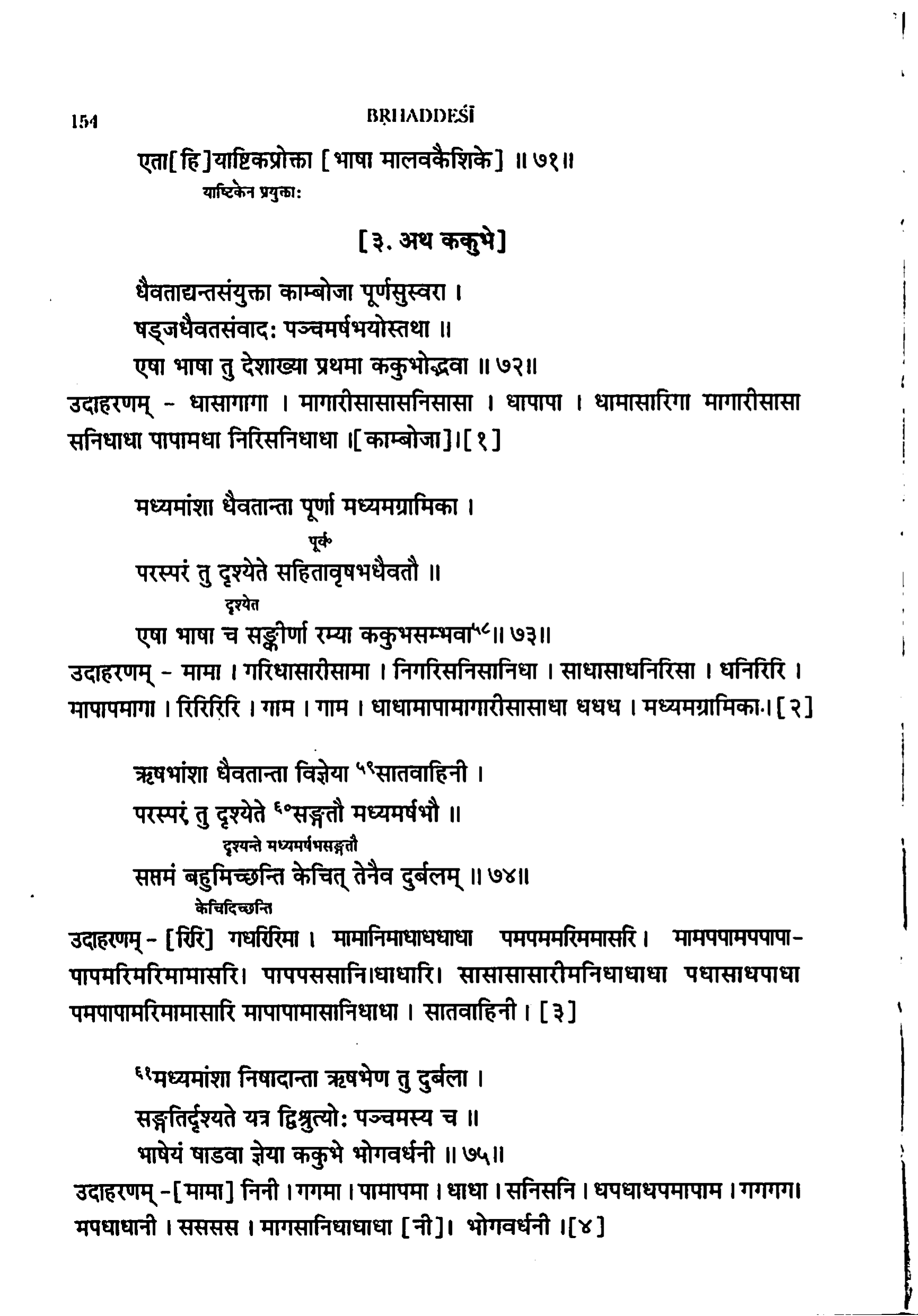
एता[हि]याष्टिकप्रोक्ता [भाषा मालवकैशिके]1 ॥७१॥ याष्टिकेन प्रयुक्ताः
[३. अथ ककुभे]
धैवताद्यन्तसंयुक्ता काम्बोजा पूर्णसुस्वरा ।
षड्जधैवतसंवाद: पञ्चमर्षभयोस्तथा7
एषा भाषा तु देशाख्या प्रथमा ककुभोद्भवा53 ॥७२॥ उदाहरणम् - धासागागा । मागारीसासासनिसासा । धापापा । धामासारिगा मागारीसासा सनिधाधा पापामधा निरिसनिधाधा ।[काम्बोजा]।[१]
मध्यमांशा धैवतान्ता पूर्णा मध्यमग्रामिका8
परस्परं तु दृश्येतेदुश्येत सहितावृषभधैवतौ ॥
एषा भाषा च सङ्कीर्णा रम्या ककुभसम्भवा2५८॥७३॥
उदाहरणम् - मामा । गरिधासारीसामा । निगरिसनिसानिधा । साधासाधनिरिसा । धनिरिरि ।
मापापमागा । रिरिरिरि । गाम । गाम । धाधामापामागारीसासाधा धधध । मध्यमग्रामिका । [२]
ऋषभांशा धैवतान्ता विज्ञेया ५९सातवाहिनी ।
परस्परं तु दृश्येतेदुश्यन्ते मध्यमर्पभसङ्गतौ ६०सङ्गतौ मध्यमर्षभौ ॥
सप्तमं बहुमिच्छन्तिकेचिदिच्छन्ति केचित् तेनैव दुर्बलम् ॥ ७४मामपपामपपापा-
उदाहरणम् - [रिरि] गधरिरिमा । मामानिमाधाधधाधा पमपममरिममासिर ।
पापमरिमरिमामासरि। पापपससानि।धाधारि। सासासासारीमनिधाधाधा पधासाधपाधा पमपापामरिमामासारि मापापामासानिधाधा । सातवाहिनी । [३]
६१मध्यमांशा निषादान्ता ऋषभेण तु दुर्बला ।
सङ्गतिर्दृश्यते यत्र द्विश्रुत्यो: पञ्चमस्य च ॥
भाषेयं षाडवा ज्ञेया ककुभे भोगवर्धनी912 ७५॥
उदाहरणम् -[मामा] निनी । गगमा । पामापमा । धाधा । सनिसनि । धपधाधपमापाम । गगगग।
मपधाधानी । सससस । मागसानिधाधाधा [नी]। भोगवर्धनी ।[४]
English — Sharma (translation)
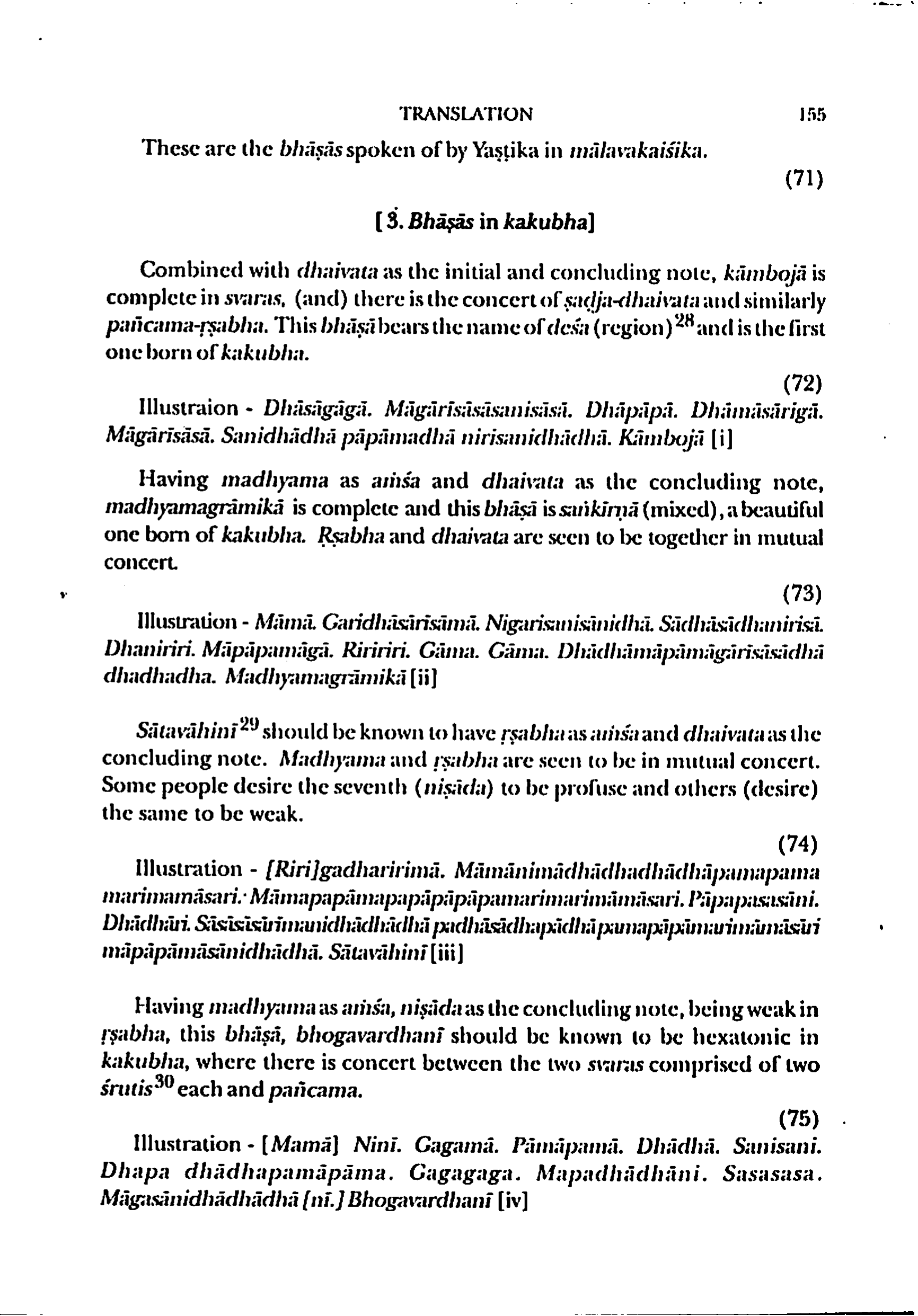
These are the bhāṣās spoken of by Yaṣṭika in mālavakaiśika.1
(71)
[3. Bhāṣās in kakubha]
Combined with dhaivata as the initial and concluding note, kāmbojā is complete in svaras, (and) there is the concert of sadja-dhaivata and similarly pañcama-ṛṣabha.7 This bhāṣā bears the name of deśa (region) 28 and is the first one born of kakubha.53
(72)
Illustraion - Dhāsāgāgā. Māgārīsāsāsanisāsā. Dhāpāpā. Dhāmāsārigā. Māgārīsāsā. Sanidhādhā pāpāmadhā nirisanidhādhā. Kāmbojā [i] Having madhyama as amśa and dhaivata as the concluding note, madhyamagrāmikā is complete and this bhāṣā is sankīrṇā (mixed), a beautiful one born of kakubha.2 Rṣabha and dhaivata are seen to be together in mutual concert.
(73)
٨. Illustration - Māmā. Garidhāsārīsāmā. Nigarisanisānidhā. Sādhāsādhanirisā. Dhaniriri. Māpāpamāgā. Riririri. Gāma. Gāma. Dhādhāmāpāmāgārīsāsādhā dhadhadha. Madhyamagrāmikā [ii] <math>S\bar{a}tav\bar{a}hin\bar{i}^{29}</math> should be known to have <math>r\bar{s}abha</math> as <math>am\bar{s}a</math> and <math>dhaivata</math> as the concluding note. Madhyama and ṛṣabha are seen to be in mutual concert. Some people desire the seventh (niṣāda) to be profuse and others (desire) the same to be weak.
(74)
Illustration - [Riri]gadharirimā. Māmānimādhādhadhādhāpamapama marimamāsari. Māmapapāmapapāpāpāpamarimarimāmāsari. Pāpapasasāni. Dhādhāri. Sāsāsāsīrīmanidhādhādhā padhāsādhapādhā pamapāpāmarimāmāsīri māpāpāmāsānidhādhā. Sātavāhinī [iii] Having madhyama as amśa, niṣāda as the concluding note, being weak in ṛṣabha, this bhāṣā, bhogavardhanī should be known to be hexatonic in kakubha9, where there is concert between the two svaras comprised of two śrutis30 each and pañcama. (75) Illustration - [Mamā] Ninī. Gagamā. Pāmāpamā. Dhādhā. Sanisani. Dhapa dhādhapamāpāma. Gagagaga. Mapadhādhāni. Sasasasa. Māgasānidhādhādhā [nī.] Bhogavardhanī [iv]
1.[attribution] The mālavakaiśika is the text in which Yaṣṭika discusses the bhāṣāsएता[हि]याष्टिकप्रोक्ता [भाषा मालवकैशिके]
2.[definition] Sankīrṇā describes a bhāṣā characterized as mixed and beautifulएषा भाषा च सङ्कीर्णा रम्या ककुभसम्भवा
3.[definition] Deśa is a regional designation applied to classify certain bhāṣāsएषा भाषा तु देशाख्या प्रथमा ककुभोद्भवा
5.[relation] Kāmbojā is the first bhāṣā born of kakubha and is designated as a deśa (regional) bhāṣāएषा भाषा तु देशाख्या प्रथमा ककुभोद्भवा
6.[structural] Kakubha is a classificatory category or framework within which bhāṣās are organized[३. अथ ककुभे]
7.[structural] Kāmbojā is a bhāṣā that is complete in svaras and combines sadja-dhaivata and pañcama-ṛṣabha in concertधैवताद्यन्तसंयुक्ता काम्बोज?ा पूर्णसुस्वरा । षड्जधैवतसंवादः पञ्चमर्षभयोस्तथा
8.[structural] Aṁśa is a structural component of bhāṣās that can be assigned to specific svaras like madhyama or ṛṣabhaमध्यमांशा धैवतान्ता पूर्णा मध्यमग्रामिका
9.[structural] Hexatonic is a classification indicating a bhāṣā employing six svaras, applied to bhogavardhanīभाषेयं षाडवा ज?्ञेया ककुभे भोगवर्धनी
12.[structural] Bhogavardhanī is a hexatonic bhāṣā with madhyama as aṁśa, niṣāda as concluding note, weak in ṛṣabhaभाषेयं षाडवा ज?्ञेया ककुभे भोगवर्धनी ॥
1.[attribution]The mālavakaiśika is the text in which Yaṣṭika discusses the bhāṣāsThese are the bhāṣās spoken of by Yaṣṭika in mālavakaiśika.
2.[definition]Sankīrṇā describes a bhāṣā characterized as mixed and beautifulthis bhāṣā is sankīrṇā (mixed), a beautiful one born of kakubha.
3.[definition]Deśa is a regional designation applied to classify certain bhāṣāsThis bhāṣā bears the name of deśa (region) 28 and is the first one born of kakubha.
4.[enumeration]Kakubha is a framework that encompasses multiple bhāṣās: kāmbojā, madhyamagrāmikā, sātavāhinī, and bhogavardhanīis the first one born of kakubha. (72) ... this bhāṣā, bhogavardhanī should be known to be hexatonic in kakubha
5.[relation]Kāmbojā is the first bhāṣā born of kakubha and is designated as a deśa (regional) bhāṣāThis bhāṣā bears the name of deśa (region) 28 and is the first one born of kakubha.
6.[structural]Kakubha is a classificatory category or framework within which bhāṣās are organized[3. Bhāṣās in kakubha]
7.[structural]Kāmbojā is a bhāṣā that is complete in svaras and combines sadja-dhaivata and pañcama-ṛṣabha in concertCombined with dhaivata as the initial and concluding note, kāmbojā is complete in svaras, (and) there is the concert of sadja-dhaivata and similarly pañcama-ṛṣabha.
8.[structural]Aṁśa is a structural component of bhāṣās that can be assigned to specific svaras like madhyama or ṛṣabhaHaving madhyama as aṁśa and dhaivata as the concluding note
9.[structural]Hexatonic is a classification indicating a bhāṣā employing six svaras, applied to bhogavardhanīthis bhāṣā, bhogavardhanī should be known to be hexatonic in kakubha
10.[structural]Madhyamagrāmikā is a mixed (sankīrṇā) bhāṣā with madhyama as aṁśa and dhaivata as concluding noteHaving madhyama as aṁśa and dhaivata as the concluding note, mādhyamagrāmikā is complete and this bhāṣā is sankīrṇā (mixed)
11.[structural]Sātavāhinī is a bhāṣā with ṛṣabha as aṁśa and dhaivata as concluding note, in which madhyama and ṛṣabha are in mutual concertSar{a}tavar{a}hinar{i}^{29} should be known to have rar{s}abha as amar{s}a and dhaivata as the concluding note. Madhyama and ṛṣabha are seen to be in mutual concert.
12.[structural]Bhogavardhanī is a hexatonic bhāṣā with madhyama as aṁśa, niṣāda as concluding note, weak in ṛṣabhathis bhāṣā, bhogavardhanī should be known to be hexatonic in kakubha, where there is concert between the two svaras comprised of two śrutis^{30} each and pañcama.