Source scans · vol_II_p087
recto · open full
scan recto
verso · open full
scan verso
Bṛhaddeśī · Volume II
pp. 156–157folio 087
Devanāgarī (Bṛhaddeśī)
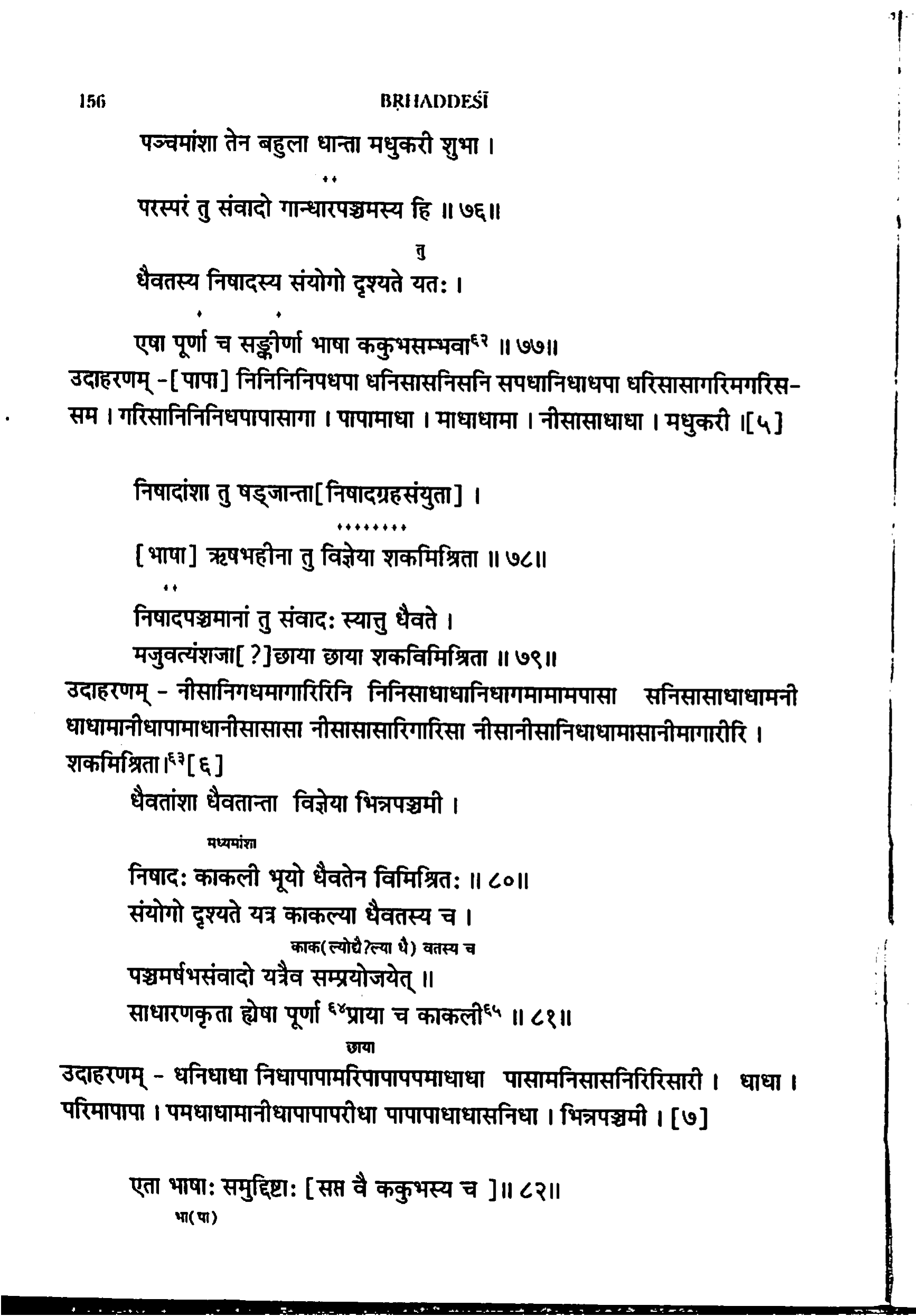
पञ्चमांशा तेन बहुला धान्ता मधुकरी5 शुभा4
परस्परं तु संवादो गान्धारपञ्चमस्य हि6 ॥७६॥
धैवतस्य निषादस्य संयोगो दृश्यते7 यत:।
एषा पूर्णा च सङ्कीर्णा भाषा ककुभसम्भवा158६२ ॥७७॥ उदाहरणम् -[पापा] निनिनिनिपधपा धनिसासनिसनि सपधानिधाधपा धरिसासागरिमगरिस- सम । गरिसानिनिधपापासागा । पापामाधा । माधाधामा । नीसासाधाधा । मधुकरी ।[५]
निषादांशा तु षड्जान्ता9[निषादग्रहसंयुता] ।
+++++++ [भाषा] ऋषभहीना तु विज्ञेया11 शकमिश्रिता10 ॥७८॥
निषादपञ्चमानां तु संवाद: स्यातु धैवते ।
मजुवत्यंशजा[?]छाया छाया शकविमिश्रिता2 ॥७९॥ उदाहरणम् - नीसानिगधमागारिरिनि निनिसाधाधानिधागमामामपासा सनिसासाधाधामनी
धाधामानीधापामाधानीसासासा नीसासासारिगारिसा नीसानीसानिधाधामासानीमागारीरि ।
शकमिश्रिता। ६३ [६]
धैवतांशा धैवतान्तामध्यमांशा विज्ञेया भिन्नपञ्चमी12
निषाद: काकली भूयो धैवतेन विमिश्रित:14 ॥८०॥
संयोगो दृश्यते यत्र काकल्या धैवतस्यकाक(ल्योद्यै?ल्या धै) वतस्य च च।
पञ्चमर्षभसंवादो यत्रैव सम्प्रयोजयेत्॥
साधारणकृता ह्येषा पूर्णा ६४ प्राया च काकली ६५ ॥८१॥
उदाहरणम् - धनिधाधाभा(पा) निधापापामरिपापापपमाधाधा पासामनिसासनिरिरिसारी । धाधा ।
परिमापापा । पमधाधामानीधापापापरीधा पापापाधाधासनिधा । भित्रपञ्चमी । [७] एता भाषा: समुद्दिष्टा:3 [सप्त वै ककुभस्य च ]॥८२॥ the state of the state of the state of the state of the state of the state of the state of the state of the state of the state of the state of the state of the state of the state of the state of the state of the state of t . . . 7.4 From the substitute of the con- ____
English — Sharma
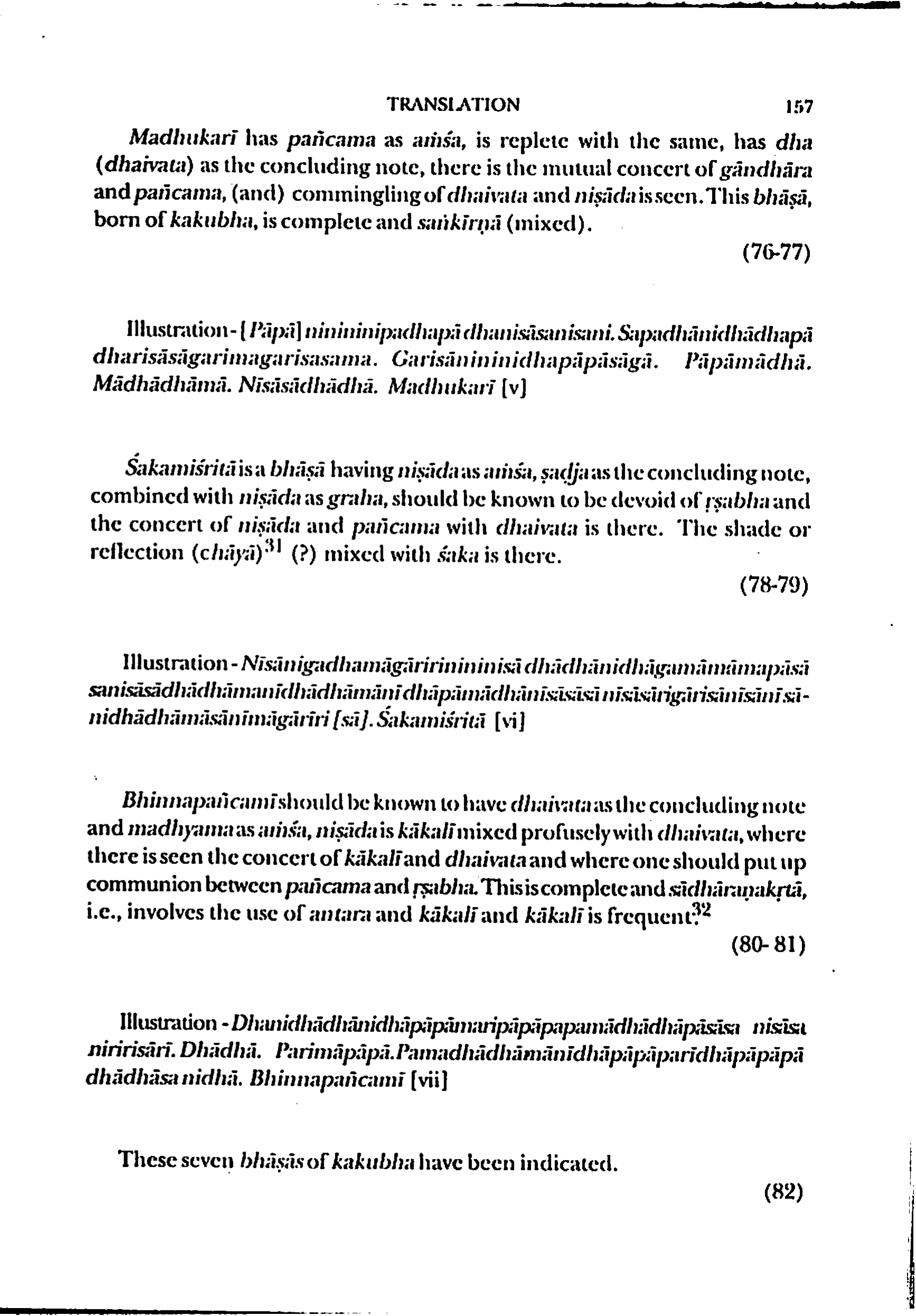
Madhukarī has pañcama as amśa, is replete with the same, has dha (dhaivata) as the concluding note5, there is the mutual concert of gandhara and pañcama6, (and) commingling of dhaivata and niṣāda is seen7. This bhāṣā, born of kakubha, is complete and sankīrņā (mixed).158 <math>(76-77)</math> Illustration-[Pāpā] ninininipadhapā dhanisāsanisani. Sapadhānidhādhapā dharisāsāgarimagarisasama. Garisānininidhapāpāsāgā. Pāpāmādhā. Mādhādhāmā. Nīsāsādhādhā. Madhukarī [v] Šakamišritā is a bhāṣā having niṣāda as amśa, ṣaḍja as the concluding note10, combined with niṣāda as graha, should be known to be devoid of ṛṣabha11 and the concert of niṣāda and pañcama with dhaivata is there. The shade or reflection (chāyā)31 (?)2 mixed with śaka is there. (78-79) Illustration - Nīsānigadhamāgāririnininisā dhādhānidhāgamāmāmapāsā sanisāsādhādhāmanīdhādhāmānī dhāpāmādhānīsāsāsā nīsāsārigārisānīsānī sā- nidhādhāmāsānīmāgārīri [sā]. Šakamiśritā [vi] Bhinnapañcamī should be known to have dhaivata as the concluding note12 and madhyama as amśa, miṣāda is kākalī mixed profusely with dhaivata14, where there is seen the concert of kākalī and dhaivata and where one should put up communion between pañcama and ṛṣabha. This is complete and sādhāraṇakṛtā, i.e., involves the use of antara and kākalī and kākalī is frequent. 32 <math>(80-81)</math> Illustration - Dhanidhādhānidhāpāpāmaripāpāpapamādhādhāpāsāsa nisāsa niririsārī. Dhādhā. Parimāpāpā. Pamadhādhāmānī dhāpāpāparī dhāpāpāpā dhādhāsa nidhā. Bhinnapañcamī [vii] These seven bhāṣās of kakubha have been indicated.3
(82)
2.[definition] Chāyā refers to shade or reflection in musical contextछाया छाया शकविमिश्रिता
3.[enumeration] Seven bhāṣās of kakubha are enumerated in this textएता भाषाः समुद्दिष्टाः
4.[structural] Madhukarī has pañcama as its aṁśa (characteristic note)पञ्चमांशा तेन बहुला धान्ता मधुकरी शुभा
5.[structural] Madhukarī has dhaivata as its concluding noteधान्ता मधुकरी
6.[structural] Madhukarī exhibits mutual concert between gandhara and pañcamaपरस्परं तु संवादो गान्धारपञ्चमस्य हि
7.[structural] Madhukarī shows commingling of dhaivata and niṣādaधैवतस्य निषादस्य संयोगो दृश्यते
8.[structural] Kakubha is the origin or source of certain bhāṣāsएषा पूर्णा च सङ्कीर्णा भाषा ककुभसम्भवा
9.[structural] Šakamišritā has niṣāda as its aṁśaनिषादांशा तु षड्ज?ान्ता
10.[structural] Šakamišritā has ṣaḍja as its concluding noteऋषभहीना तु विज?्ञेया शकमिश्रिता
11.[structural] Šakamišritā is devoid of ṛṣabhaऋषभहीना तु विज?्ञेया
12.[structural] Bhinnapañcamī has dhaivata as its concluding noteधैवतांशा धैवतान्ता विज?्ञेया भिन्नपञ्चमी
13.[structural] Bhinnapañcamī has madhyama as its aṁśaधैवतांशा धैवतान्ता विज?्ञेया भिन्नपञ्चमी। मध्यमांशा
14.[structural] Bhinnapañcamī features kākalī mixed profusely with dhaivataनिषादः काकली भूयो धैवतेन विमिश्रितः
15.[structural] Sankīrņā characterizes a bhāṣā as mixed or commingledएषा पूर्णा च सङ्कीर्णा भाषा ककुभसम्भवा
1.[definition]Sādhāraṇakṛtā involves the use of antara and kākalīsādhāraṇakṛtā, i.e., involves the use of antara and kākalī
2.[definition]Chāyā refers to shade or reflection in musical contextThe shade or reflection (chāyā)31 (?)
3.[enumeration]Seven bhāṣās of kakubha are enumerated in this textThese seven bhāṣās of kakubha have been indicated.
4.[structural]Madhukarī has pañcama as its aṁśa (characteristic note)Madhukarī has pañcama as aṁśa, is replete with the same, has dha (dhaivata) as the concluding note
5.[structural]Madhukarī has dhaivata as its concluding notehas dha (dhaivata) as the concluding note
6.[structural]Madhukarī exhibits mutual concert between gandhara and pañcamathere is the mutual concert of gandhara and pañcama
7.[structural]Madhukarī shows commingling of dhaivata and niṣādacommingling of dhaivata and niṣāda is seen
8.[structural]Kakubha is the origin or source of certain bhāṣāsThis bhāṣā, born of kakubha, is complete and sankīrņā (mixed).
9.[structural]Šakamišritā has niṣāda as its aṁśaŠakamišritā is a bhāṣā having niṣāda as aṁśa
10.[structural]Šakamišritā has ṣaḍja as its concluding noteṣaḍja as the concluding note
11.[structural]Šakamišritā is devoid of ṛṣabhashould be known to be devoid of ṛṣabha
12.[structural]Bhinnapañcamī has dhaivata as its concluding noteBhinnapañcamī should be known to have dhaivata as the concluding note
13.[structural]Bhinnapañcamī has madhyama as its aṁśadhaivata as the concluding note and madhyama as aṁśa
14.[structural]Bhinnapañcamī features kākalī mixed profusely with dhaivatamiṣāda is kākalī mixed profusely with dhaivata
15.[structural]Sankīrņā characterizes a bhāṣā as mixed or commingledis complete and sankīrņā (mixed).