Devanāgarī (Bṛhaddeśī)
ordered sequence list
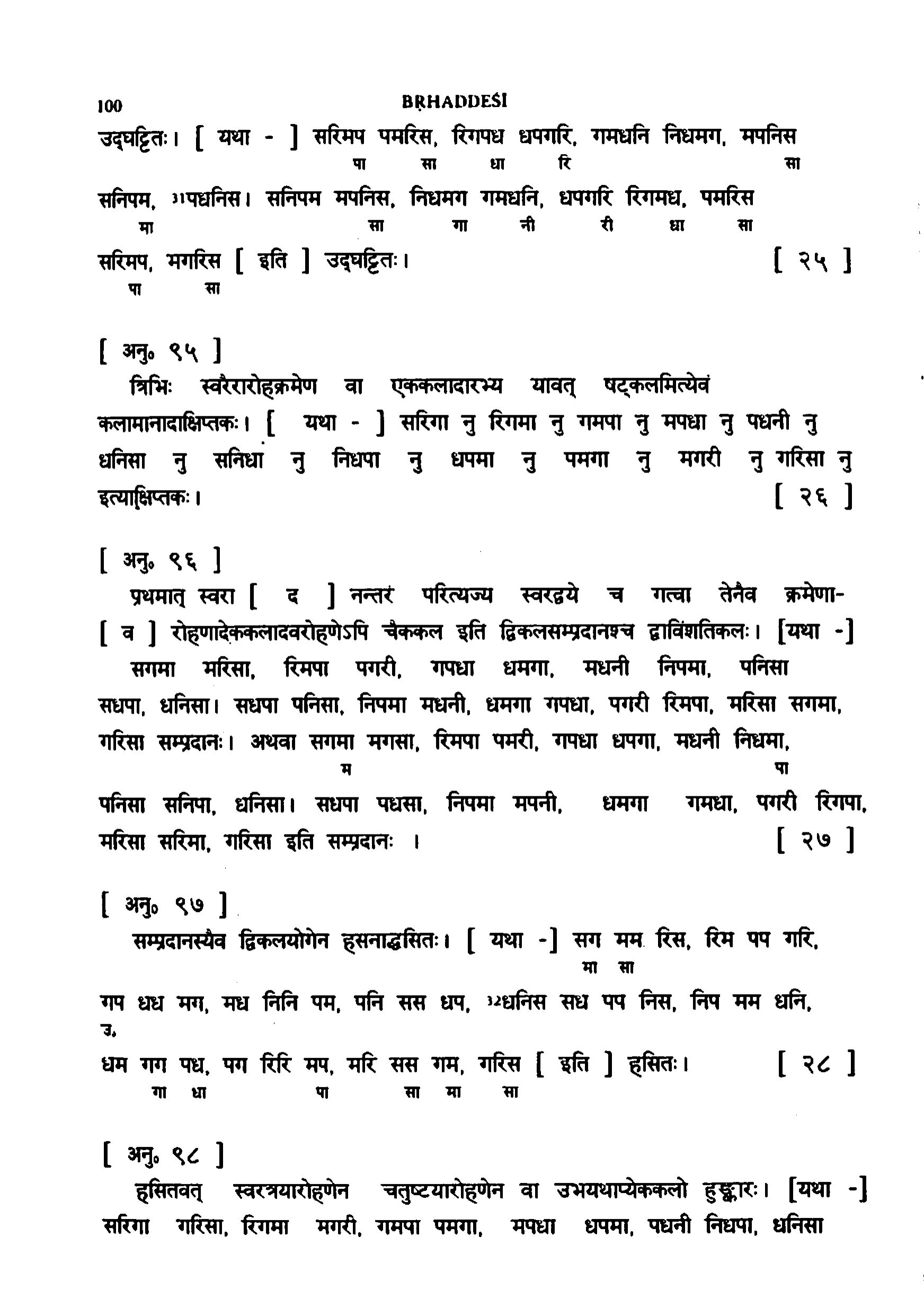
An. 97 — hasitaḥ with sampradāna dvikayoga (example [28]) — Sūtra 97: sampradānasaiva dvikayogena hasitākhyāsitaḥ ... yathā - svara phrases with interlinear annotations forming hasitaḥ pattern
s · ā · · m · a · m · a · · r · i · s · a
r · i · m · · p · a · · g · a · r · i
g · a · p · · d · h · a · · m · a · g
m · a · · n · i · n · i · · p · a
p · a · n · i · · s · a · s · · d · h · a
d · h · ? · a · d · h · a · n · i · s · a · · s · a · d · h
p · a · · p · a · s · a · m · a
n · i · p · · m · a · m · a · · d · h · a · n · i
d · h · a · · g · a · g · · p · a · ?
p · a · · r · i · r · i · · m · a
m · a · · s · a · s · · g · a
g · a · r · i · s · · i · t · i · · h · a · s · i · t · a · ḥ
— [ अनु. ९७ ] ... [ यथा - ] ... [ २८ ]
सरिमप, मगरिस [ इति ] उद्घट्टितः।
[२५]
अन्₀ ९५ ]
त्रिभिः स्वररारोहक्रमेण वा एककलादारभ्य यावत् षट्कलमित्येवं
कलामानादाक्षिप्तकः। [ यथा - ]
सरिगा नु रिगमा नु गमपा नु मपधा नु पधनी नु
धनिसा नु सनिधा नु निधपा नु धपमा नु पमगा नु7 मगरी नु
गरिसा२६ । नु
इत्याक्षिप्तकः ।
अनु, ९६
प्रथमात् स्वरा [ द ] नन्तरं परित्यज्य स्वरद्वये च गत्वा तेनैव
क्रमेणा-
व ] रोहणादेककलादवरोहणेऽपि चैककल5 इति द्विकलसम्प्रदानश्च द्वाविंशतिकलः। [यथा -]
सगमा मरिसा, रिमपा पगरी, गपधा धमगा, मधनी निपमा, पनिसा
संधपा, धनिसा। संधपा पनिसा, निपमा मधनी, धमगा गपधा, पगरी रिमपा, मरिसा संगमा,
गरिसा सम्प्रदानः। अथवा
सगमाम मगसा, रिमपा पमरी, गपधा धपगा, मधनी
निधमा,पा
पनिसा सनिपा, धनिसा। सधपा पधसा, निपमा मपनी, धमगा गमधा, पगरी रिगपा,
[२७]
मरिसा सरिमा, गरिसा इति सम्प्रदानः ।
अन्० ९७
सम्प्रदानस्यैव द्विकलयोगेन हसनाद्धसितः।2 [ यथा -] सग मम रिस, रिम पप गरि,
गप
धधगा मग,धा मध निनि
पम,पा पनि
सससा धप,मा अधनिससा सध पप निस, निप मम धनि,
₹,
धम गग पध, पग रिरि मप, मरि सस गम, गरिस [ इति ] हसितः।
Ⅰ २८ ]
[अनु。 ९८]
ह्सितवत् स्वरत्रयारोहणेन चतुष्टयारोहणेन वा उभयथाप्येककलो हुद्कारः।6 [यथा -]
सरिगा गरिसा, रिगमा मगरी, गमपा पमगा, मपधा धपमा, पधनी निधपा, धनिसा
ordered sequence list
udghaṭṭita example sequences — Example [25] (udghaṭṭitaḥ): yathā - three lines of svara phrases with interlinear devanagari svara annotations marking shifting reference tones
s · a · r · i · g · ā
p · a · m · a · r · i · ṣ · a
r · i · g · a · m · ā
d · h · a · g · a · r · i · ṣ · a
g · ā · m · a · d · h · ā
n · i · d · h · a · m · ā
m · ā · p · a · n · i · ṣ · a
s · a · n · i · g · ā
s · a · n · i · m · ā
m · ā · p · a · n · i · ṣ · ā
n · i · d · h · a · g · ā
g · ā · m · a · d · h · ā
d · h · a · g · a · r · i · ṣ · ā
r · i · g · a · m · ā
p · a · m · a · r · i · ṣ · ā
s · a · r · i · g · ā
r · i · g · ā
g · ā
m · a · g · ā
g · a · r · i · ṣ · ā
i · t · i · · u · d · g · h · a · ṭ · ṭ · i · t · a · ḥ
— [ यथा - ] ... [ २५ ]
shifted sequence table
An. 95 — ekakalād-ārabhya pattern with 'nu' placeholder — Sūtra 95: svarārohaṇa-kramena vā ekakalād-ārabhya yāvat ṣaḍ-kalam ... yathā - sequence of svara-pairs each followed by 'nu' (placeholder/filler)
Pattern: ascending then descending stepwise sliding window of 3 consecutive svaras (saptaka cycle: SRG, RGM, GMP, MPD, PDN, DNS, then descending SND, NDP, DPM, PMG, MGR, GRS) · omitted:
sarigā · nu
rigamā · nu
gamapā · nu
mapadhā · nu
padhanī · nu
dhanisā · nu
sanidhā · nu
nidhapā · nu
dhapamā · nu
pamagā · nu
magarī · nu
garisā · nu
— [ अनु. ९५ ] ... [ यथा - ] ... [ २६ ]
ordered sequence list
An. 96 — rohaṇa pattern with dvika-sampradāna (example [27]) — Sūtra 96: prathamam svarād [da] anantaram parityajya svaradvaye ca gatvā ... rohaṇakrameṇa-tad-vad rohyo'pi ... cakram tu dvika-sampradāna-tad-vatcam drāvitam-iti ... yathā
s · ā · m · ā · · m · a · r · i · s · ā
r · i · m · a · p · ā · · p · a · g · a · r · ī
g · a · p · a · d · h · ā · · m · a · d · h · a · n · ī
p · a · d · h · a · n · ī · · n · i · p · a · m · ā
p · a · n · i · s · ā
s · ā · d · h · a · n · ī
d · h · a · n · i · s · ā
s · ā · d · h · a · n · ī · · p · a · n · i · s · ā
n · i · p · a · m · ā · · m · ā · d · h · a · n · ī
d · h · a · m · a · g · ā · · g · a · p · a · d · h · ā
p · a · g · a · r · ī · · r · i · m · a · p · ā
m · a · r · i · s · ā · · s · ā · m · ā
g · a · r · i · s · ā · · s · a · m · p · r · a · d · ā · n · a · m
a · t · h · a · v · ā · · s · ā · n · i · m · ā
m · a · g · a · s · ā
r · i · m · a · p · ā · · p · a · m · a · r · ī
g · a · p · a · d · h · ā · · d · h · a · g · a · m · ā
m · ā · d · h · a · n · ī · · n · i · d · h · a · m · ā
p · a · n · i · s · ā · · s · a · n · i · p · ā
s · ā · d · h · a · n · ī · , · · s · ā · d · h · a · p · ā · ?
d · h · a · n · i · s · ā · ?
n · i · p · a · m · ā · · m · a · p · a · n · ī
d · h · a · m · a · g · ā · · g · a · m · a · d · h · ā
p · a · g · a · r · ī · · r · i · g · a · p · ā
m · a · r · i · s · ā · · s · a · r · i · m · ā
g · a · r · i · s · ā · · i · t · i
— [ अनु. ९६ ] ... [ यथा - ] ... [ २७ ]
ordered sequence list
An. 98 — hasita-tva svara-trayārohaṇena (sequence begins on this page) — Sūtra 98 begins: hasitatvaḥ svaratrayārohaṇena caturārohaṇena vā ubhayāvyatikaraṇo hahkāraḥ ... [yathā -]
s · a · r · i · g · ā
g · a · r · i · s · ā
r · i · g · a · m · ā
m · a · g · a · r · ī
g · a · m · a · p · ā
p · a · g · a · m · ā · ?
m · a · p · a · d · h · ā
d · h · a · p · a · m · ā
p · a · d · h · a · n · ī
n · i · d · h · a · p · ā
d · h · a · n · i · s · ā
— [ अनु. ९८ ] ... [ यथा - ]
English — Sharma (translation)
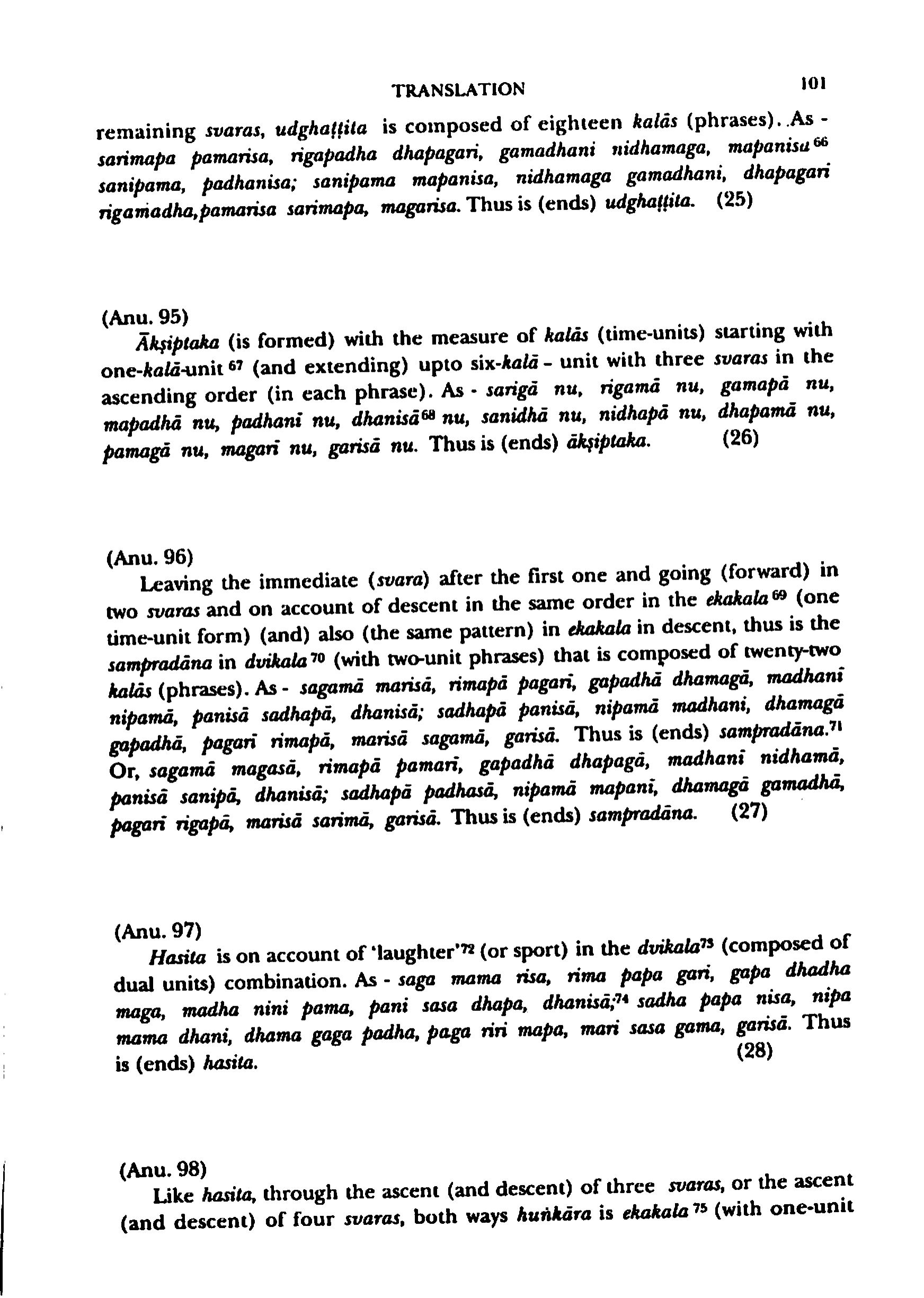
remaining svaras,
udghațțita is composed of eighteen kalās (phrases). As -
ordered sequence list
udghaṭṭita phrase (18 kalās) — Anu. (24/25) — continuation: udghaṭṭita is composed of eighteen kalās (phrases). Example phrase sequence ending in 'Thus is (ends) udghaṭṭita.'
s · a · r · i · m · a · p · a
p · a · m · a · r · i · s · a
r · i · g · a · p · a · d · h · a
d · h · a · p · a · g · a · r · i
g · a · m · a · d · h · a · n · i
n · i · d · h · a · m · a · g · a
m · a · p · a · n · i · s · a
s · a · n · i · p · a · m · a
p · a · d · h · a · n · i · s · a
s · a · n · i · p · a · m · a
m · a · p · a · n · i · s · a
n · i · d · h · a · m · a · g · a
g · a · m · a · d · h · a · n · i
d · h · a · p · a · g · a · r · i
r · i · g · a · m · a · d · h · a
p · a · m · a · r · i · s · a
s · a · r · i · m · a · p · a
m · a · g · a · r · i · s · a
— udghaṭṭita
Aksiptaka (is formed) with the measure of kalās (time-units) starting with
one-kalā-unit 67 (and extending) upto six-kalā - unit with three svaras in the
ordered sequence list
ākṣiptaka phrase (one-kalā unit, 6-kalā extent, 3 svaras per phrase, ascending) — Anu. 95 (26) — ākṣiptaka formed with measure of kalās starting one-kalā unit, extending up to six-kalā unit with three svaras in ascending order per phrase. 'Thus is (ends) ākṣiptaka.'
s · a · r · i · g · a · · n · u
r · i · g · a · m · a · · n · u
g · a · m · a · p · a · · n · u
m · a · p · a · d · h · a · · n · u
p · a · d · h · a · n · i · · n · u
d · h · a · n · i · s · ā · · n · u
s · ā · n · i · d · h · a · · n · u
n · i · d · h · a · p · a · · n · u
d · h · a · p · a · m · ā · · n · u
p · a · m · a · g · ā · · n · u
m · a · g · a · r · i · · n · u
g · a · r · i · s · ā · · n · u
— ākṣiptaka
Leaving the immediate (svara) after the first one and going (forward) in
two svaras and on account of descent in the same order in the ekakala 69 (one
time-unit form) (and) also (the same pattern) in ekakala in descent, thus is the
sampradāna in dvikala 70 (with two-unit phrases) that is composed of twenty-two
Hasita is on account of 'laughter'72 (or sport) in the dvikala73 (composed of
Like hasita, through the ascent (and descent) of three svaras, or the ascent
(and descent) of four svaras, both ways hunkāra is
ekakala 75 (with one-unit