Source scans · vol_I_p065
recto · open full
scan recto
verso · open full
scan verso
Bṛhaddeśī · Volume I
pp. 1–113folio 065
Devanāgarī
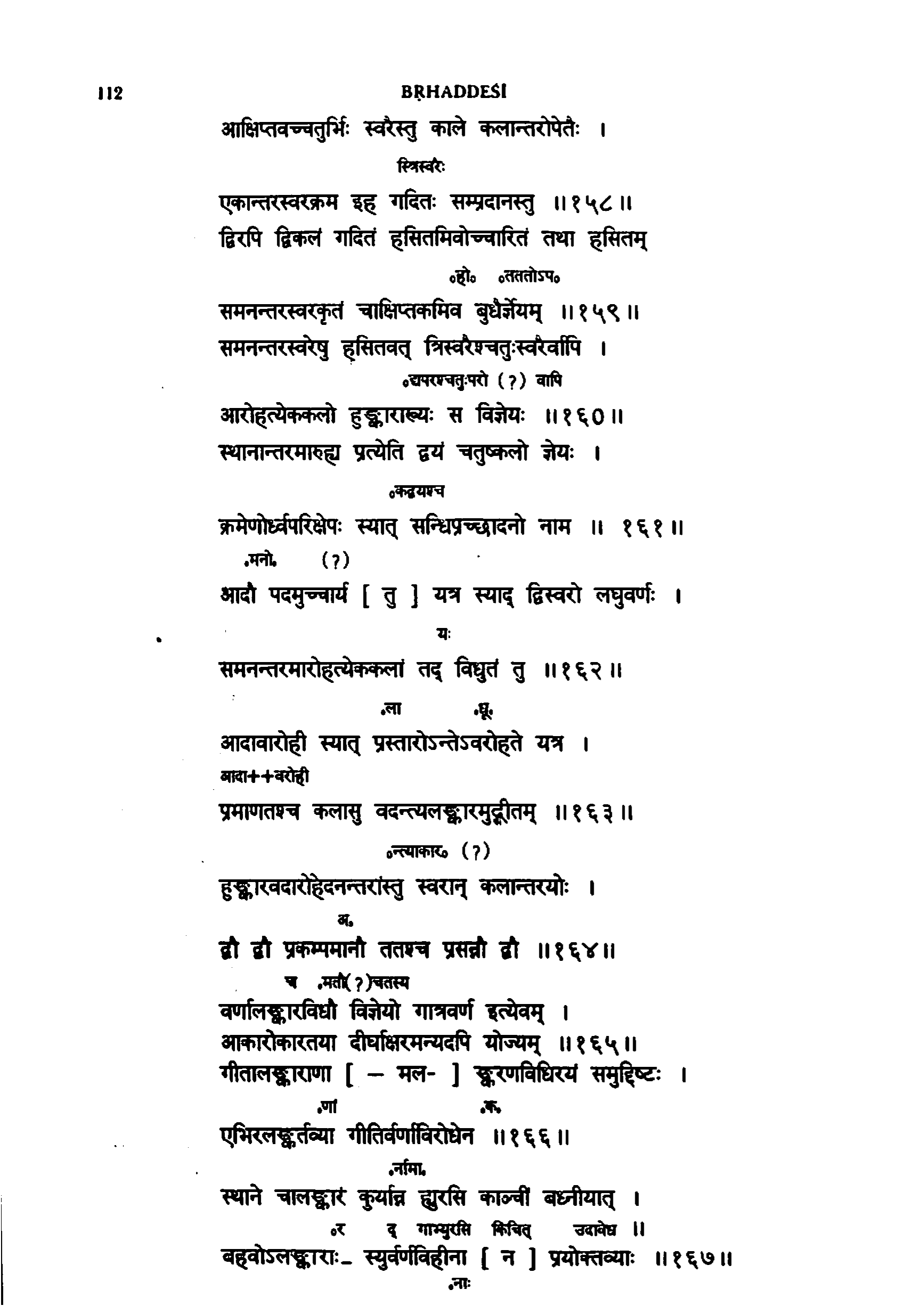
आक्षिप्तवच्चतुर्भिः स्वरैस्तुस्त्रिस्वरः काले कलान्तरोपेतैः ।
एकान्तरस्वरक्रम इह गदितः सम्प्रदानस्तु ॥१५८॥ द्विरपि द्विकलं गदितं हसितमिवोच्चारितं₀हो₀ ₀तततोऽप<b>₀</b> तथा हसितम्3 समनन्तरस्वरकृतं चाक्षिप्तकमिव बुधैर्जेयम् ॥१५९॥
समनन्तरस्वरेषु हसितवत् त्रिस्वरैष्टचतुःस्वरैवापि₀द्यपरश्चतुःपरो (?) वापि
आरोहत्येककलो हुङ्काराख्यः स विज्ञेयः ॥१६०॥
स्थानान्तरमारुह्य प्रत्येति₀कद्वयश्च द्वयं चतुष्कलो ज्ञेयः ।
क्रमेणोर्ध्वपरिक्षेपः.मनो. स्यात् सन्धिप्रच्छादनो नाम ॥१६१॥ (?)यः
आदौ पदमुच्चार्य [ तु ] यत्र स्याद् द्विस्वरो लघुवर्णः ।
समनन्तरमारोहत्येककलां•ला तद् विधुतं तु ॥१६२॥ .Ų.
आदावारोहीबादा++वरोही स्यात् प्रस्तारोऽन्तेऽवरोहते यत्र ।
प्रमाणतश्च कलासु वदन्त्यलङ्कारमुद्गीतम्6 ॥१६३॥ ब्न्स्याकारु (२)
हुक्कारवदारोहेदनन्तरांस्तुम्, स्वरान् कलान्तरयोः ।
द्वी द्वी प्रकम्पमानीच ,मती(?)चतस्य ततश्च प्रसन्नी द्वी ॥१६४॥ वर्णालक्कारविधौ विज्ञेयो गात्रवर्ण इत्येवम् । आकारोकारतया,णां दीर्घाक्षरमन्यदिप योज्यम्7 ॥१६५॥ गीतालङ्काराणा [ – मल- ] ङ्करणविधिरयं समुद्दिष्टः ।8 एभिरलक्कर्तव्या गीतिर्वर्णविरोधेन.नीमा, ॥१६६॥ स्थाने चालङ्कारं कुर्यान्न ह्युरिस काञ्ची बध्नीयात् ।9
द्₀र गाम्युरसि किचित् उदावेध ।।
बहवोऽलञ्काराः – स्युर्वर्णविहीना [ न ] प्रयोक्तव्याः ॥१६७॥ ,नाः
English — Sharma
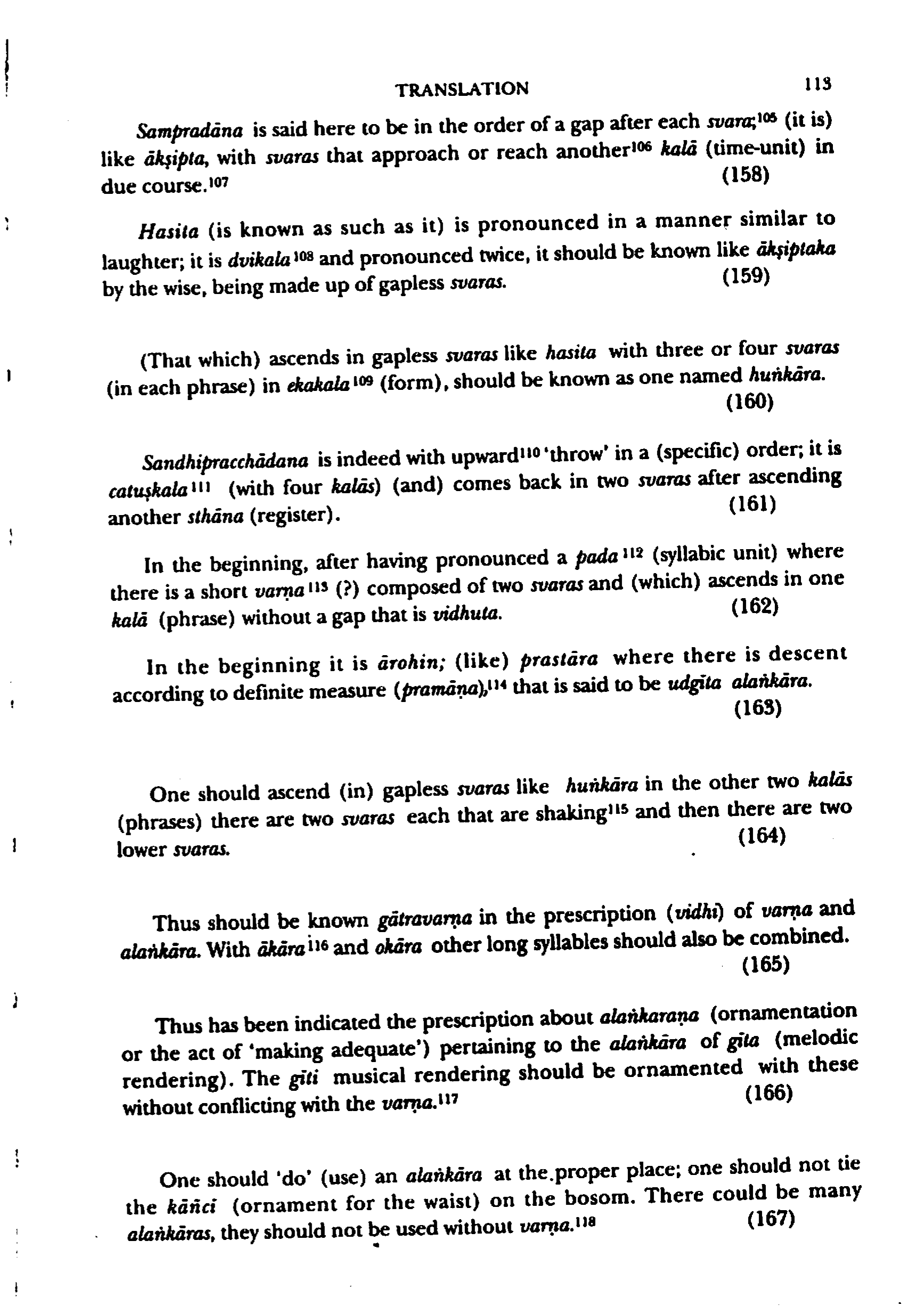
Sampradana is said here to be in the order of a gap after each svara; 105 (it is) like ākṣipta, with svaras that approach or reach another106 kalā (time-unit) in (158) due course.1 107 Hasita (is known as such as it) is pronounced in a manner similar to laughter; it is dvikala 108 and pronounced twice3, it should be known like ākşiptaka (159) by the wise, being made up of gapless svaras.2 (That which) ascends in gapless svaras like hasita with three or four svaras (in each phrase) in ekakala 109 (form), should be known as one named hunkāra.
(160)
Sandhipracchādana is indeed with upward110 'throw' in a (specific) order; it is catușkala111 (with four kalās) (and) comes back in two svaras after ascending (161) another sthana (register).4 In the beginning, after having pronounced a pada 112 (syllabic unit) where there is a short varna 113 (?) composed of two svaras and (which) ascends in one (162) kalā (phrase) without a gap that is vidhuta.13 In the beginning it is arohin; (like) prastara where there is descent according to definite measure (pramāṇa),114 that is said to be udgīta alankāra.
(163)
One should ascend (in) gapless svaras like hunkāra in the other two kalās (phrases) there are two svaras each that are shaking 115 and then there are two
(164)
lower svaras. Thus should be known gatravarna in the prescription (vidhi) of varna and alankāra. With ākāra 116 and okāra other long syllables should also be combined.
(165)
ı Thus has been indicated the prescription about alankarana (ornamentation or the act of 'making adequate') pertaining to the alankara of gita (melodic rendering).8 The giti musical rendering should be ornamented with these
(166)
without conflicting with the varna.117 One should 'do' (use) an alankāra at the proper place; one should not tie the kānci (ornament for the waist) on the bosom.9 There could be many
(167)
alankāras, they should not be used without varņa.118
1.[definition] Ākṣipta is characterized by svaras that approach or reach another kalā in due course, with gaps after each svaraआक्षिप्तवच्चतुर्भि स्वरैस्तु काले कलान्तरोपेतै
3.[definition] Hasita is pronounced in a manner similar to laughter, is dvikala and pronounced twiceद्विरपि द्विकलं गदितं हसितमिवोच्चारितं तथा हसितम्
6.[definition] Udgīta alaṅkāra is characterized by descent according to definite measure within prastaraप्रमाणतश्च कलासु वदन्त्यलङ्कारमुद्गीतम्
7.[definition] Gatravarna is a concept in the prescription of varna and alaṅkāra, to be known with reference to ākāra and okāraवर्णालक्कारविधौ विज?्ञेयो गात्रवर्ण इत्येवम् । आकारोकारतया दीर्घाक्षरमन्यदिप योज?्यम्
8.[definition] Alankarana is the prescription for ornamentation or the act of making adequate pertaining to the alaṅkāra of gītaगीतालङ्काराणा [ – मल- ] ङ्करणविधिरयं समुद्दिष्टः ।
9.[definition] Kānci is an ornament for the waist that should not be improperly placed; used as a metaphor for alaṅkāra placementस्थाने चालङ्कारं कुर्यान्न ह्युरिस काञ्ची बध्नीयात् ।
1.[definition]Ākṣipta is characterized by svaras that approach or reach another kalā in due course, with gaps after each svaralike ākṣipta, with svaras that approach or reach another106 kalā (time-unit) in (158) due course.
2.[definition]Ākṣiptaka is composed of gapless svaras and hasita is pronounced similarly to itit should be known like ākşiptaka (159) by the wise, being made up of gapless svaras.
3.[definition]Hasita is pronounced in a manner similar to laughter, is dvikala and pronounced twiceHasita (is known as such as it) is pronounced in a manner similar to laughter; it is dvikala 108 and pronounced twice
4.[definition]Sandhipracchādana is characterized by upward throw in specific order, is catușkala, ascends another sthana and comes back in two svarasSandhipracchādana is indeed with upward110 'throw' in a (specific) order; it is catușkala111 (with four kalās) (and) comes back in two svaras after ascending (161) another sthana (register).
5.[definition]Arohin is an ascending form present at the beginning of a musical phrase or prastaraIn the beginning it is arohin; (like) prastara where there is descent according to definite measure (pramāṇa),114 that is said to be udgīta alaṅkāra.
6.[definition]Udgīta alaṅkāra is characterized by descent according to definite measure within prastarathat is said to be udgīta alaṅkāra. (163)
7.[definition]Gatravarna is a concept in the prescription of varna and alaṅkāra, to be known with reference to ākāra and okāraThus should be known gatravarna in the prescription (vidhi) of varna and alaṅkāra. With ākāra 116 and okāra other long syllables should also be combined.
8.[definition]Alankarana is the prescription for ornamentation or the act of making adequate pertaining to the alaṅkāra of gītaThus has been indicated the prescription about alankarana (ornamentation or the act of 'making adequate') pertaining to the alankara of gita (melodic rendering).
9.[definition]Kānci is an ornament for the waist that should not be improperly placed; used as a metaphor for alaṅkāra placementone should not tie the kānci (ornament for the waist) on the bosom.
10.[relation]Prastara involves descent according to definite measure and is associated with udgīta alaṅkāra(like) prastara where there is descent according to definite measure (pramāṇa),114 that is said to be udgīta alaṅkāra.
11.[relation]These ornamentations should be used without conflicting with varna and should not be employed without varna supportThe giti musical rendering should be ornamented with these (166) without conflicting with the varna.117 One should 'do' (use) an alaṅkāra at the proper place
12.[structural]Huṅkāra ascends in gapless svaras with three or four svaras in ekakala formThat which) ascends in gapless svaras like hasita with three or four svaras (in each phrase) in ekakala 109 (form), should be known as one named huṅkāra.
13.[structural]Vidhuta is characterized by ascending in one kalā without a gap, composed of two svaraswhere there is a short varna 113 (?) composed of two svaras and (which) ascends in one (162) kalā (phrase) without a gap that is vidhuta.