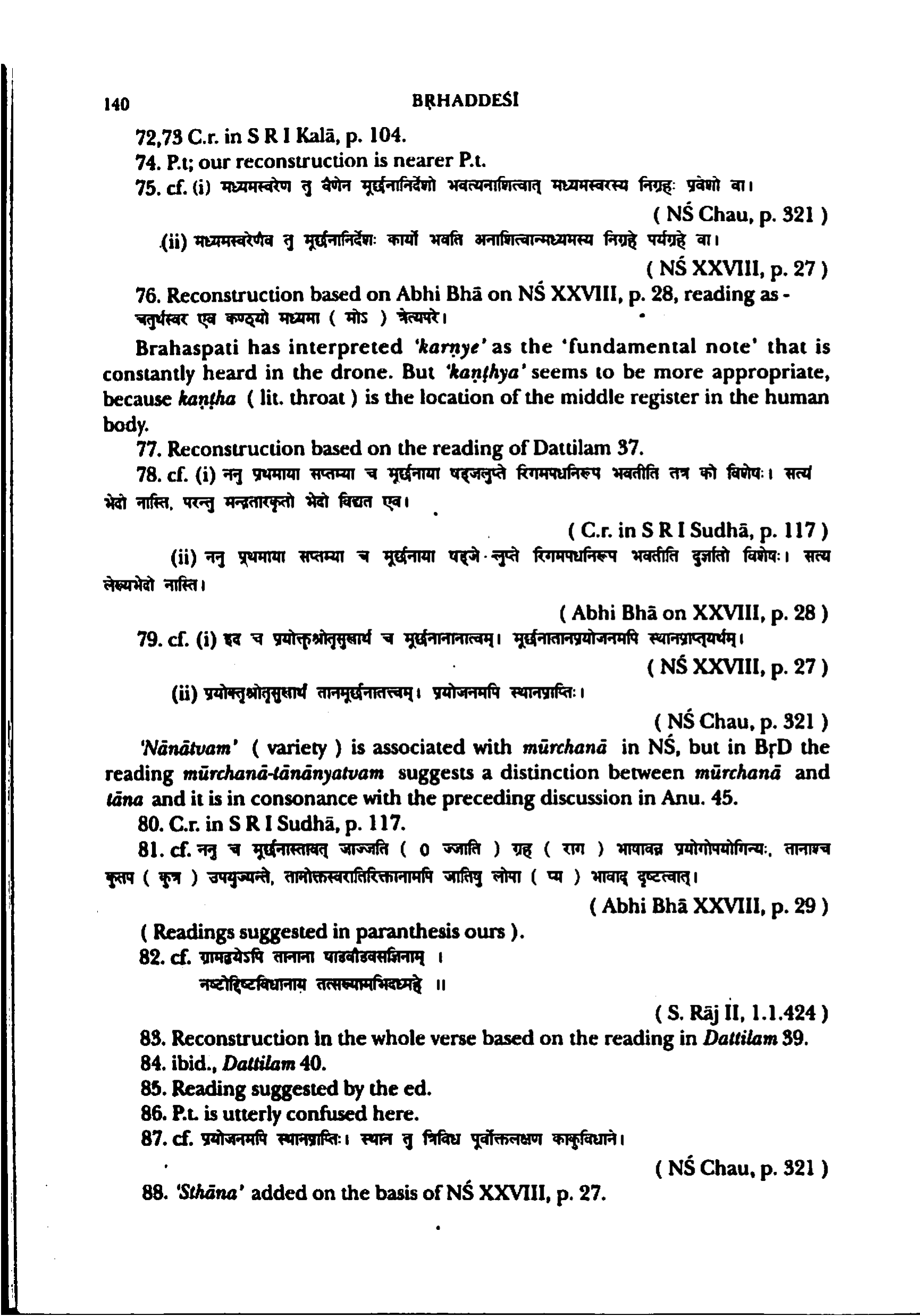
89. cf. यत्त्रिविधत्वेनोक्त काकुविधानेन तच्च षट्षिटभेदः, सक्षेपतस्त्रिधा सद्वर्णालकारयोगः प्रयोक्ष्यते।
(
Abhi Bhā XXVIII, p. 31)
90,91. C.r. in
S R I Sudhā, p. 110.
92. cf. गायता श्रृण्वता चापि भवेद्रागामृत हृदि ।
मनसो मञ्जन यत्तन्मूर्छनित्याह कोहलः ॥
(
Sam S Sā, p. 43)
This verse also bears comparison with verse 90 of our text.2
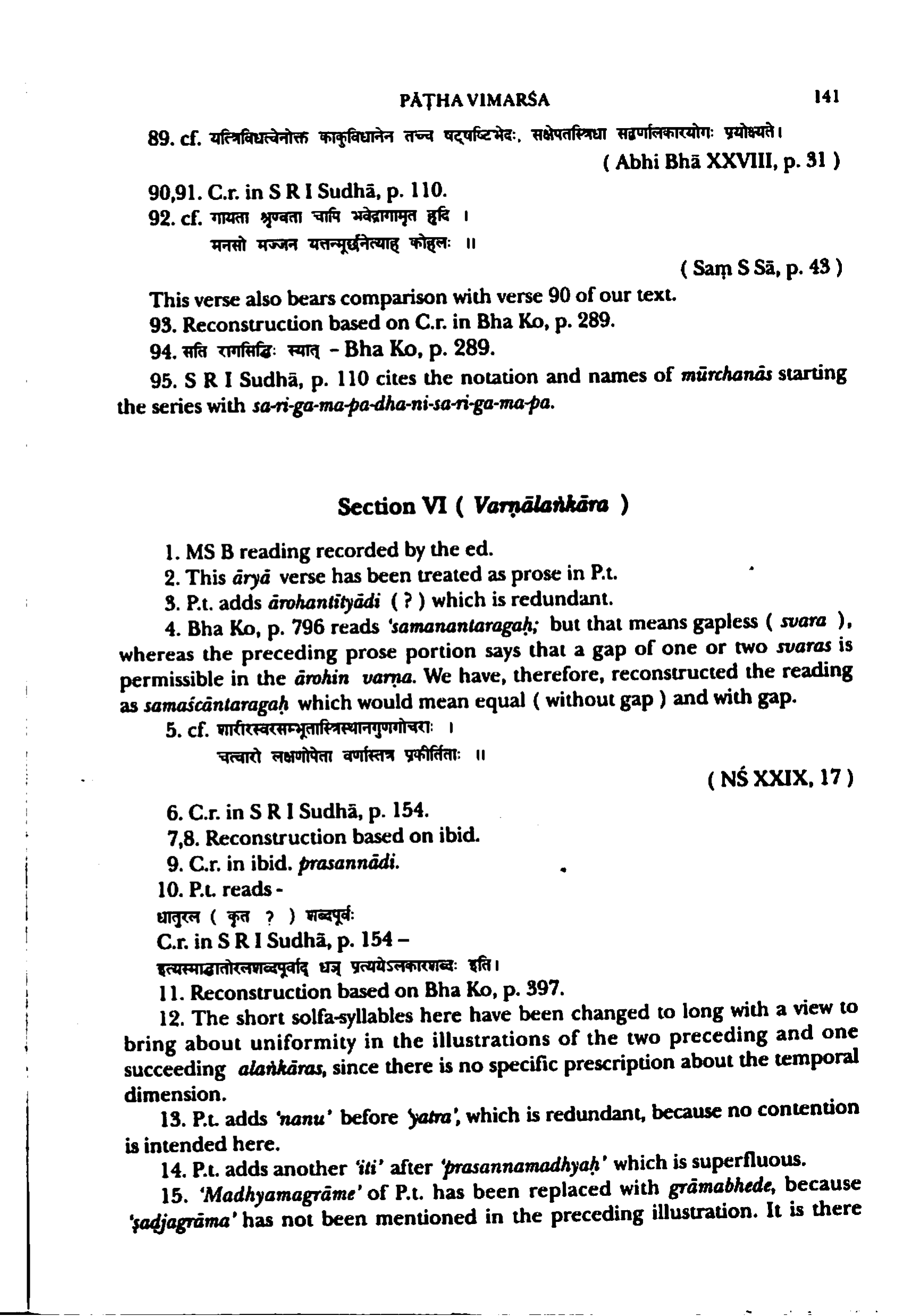
93. Reconstruction based on C.r. in Bha Ko, p. 289.
94. सित रागसिद्धि स्यात् - Bha Ko, p. 289.
95.
S R I Sudhā, p. 110 cites the notation and names of
mūrchanās starting
the series with sa-ri-ga-ma-pa-dha-ni-sa-ri-ga-ma-pa.
Section VI ( Varņālankāra )10
1. MS B reading recorded by the ed.
2.
This āryā verse has been treated as prose in P.t.12
3. P.t. adds ārohantītyādi (?) which is redundant.
4. Bha Ko, p. 796 reads 'samanantaragaḥ; but that means gapless ( svara ),
whereas
the preceding prose portion says that a gap of one or two svaras is
permissible in the arohin varna.11 We have, therefore, reconstructed the reading
as samaścāntaragaḥ which would mean equal (without gap) and with gap.
5. cf. शारीरस्वरसम्भूतास्त्रिस्थानगुणगोचरा ।
चत्वारो लक्षणोपेता वर्णास्तत्र प्रकीर्तिता ॥
( NŚ XXIX, 17 )
6. C.r. in
S R I Sudhā, p. 154.
7,8. Reconstruction based on ibid.
9. C.r. in ibid.
prasannādi.
10. P.t. reads -
धातुरल ( कृत ? ) मब्दपूर्वः
C.r. in
S R I Sudhā, p. 154 -
इत्यस्माद्धातोरलशब्दपूर्वाद् धत्र् प्रत्ययेऽलकारशब्दः इति।
11. Reconstruction based on Bha Ko, p. 397.
12. The short solfa-syllables here have been changed to long with a view to
bring about uniformity in the illustrations of the two preceding and one
succeeding
alankāras, since there is no specific prescription about the temporal
dimension.
13. P.t. adds 'nanu' before 'yatra', which is redundant, because no contention
is intended here.
14. P.t. adds another 'iti' after 'prasannamadhyah' which is superfluous.
15. 'Madhyamagrāme' of P.t. has been replaced with grāmabhede, because
'
şadjagrāma' has not been mentioned in the preceding illustration. It is there