avarohin technical_term
Generative rules (1) ↗ filter all
avarohin_definitiondefinition · 3 att.
Avarohin varṇa is the descending melodic movement where svaras descend in one order (gapless or with gaps of one or two svaras); prevails in śuddhaṣāḍava.
Pseudocode (DSL v1.1) ↗ full DSL (raw text)
RULE id: avarohin (cluster 159)
SCOPE: technical_term family
STATUS: empirical
CONFIDENCE: empirical
PROTECT: false
Essence pseudocode — identity + RECORD. The page citations for each slot value are in the Grammar record table above (audit trail). The full DSL adds ASSERTIONS with verbatim quotes (see Affirmations below) and CITED_RULES (see Graph relations).
Graph relations
Outgoing (5)
--[structural]--> Varņa (2)--[definition]--> varṇa (1)--[structural]--> varṇa (1)--[definition]--> svaras (1)--[structural]--> svaras (1)
Incoming (3)
Affirmations (3)
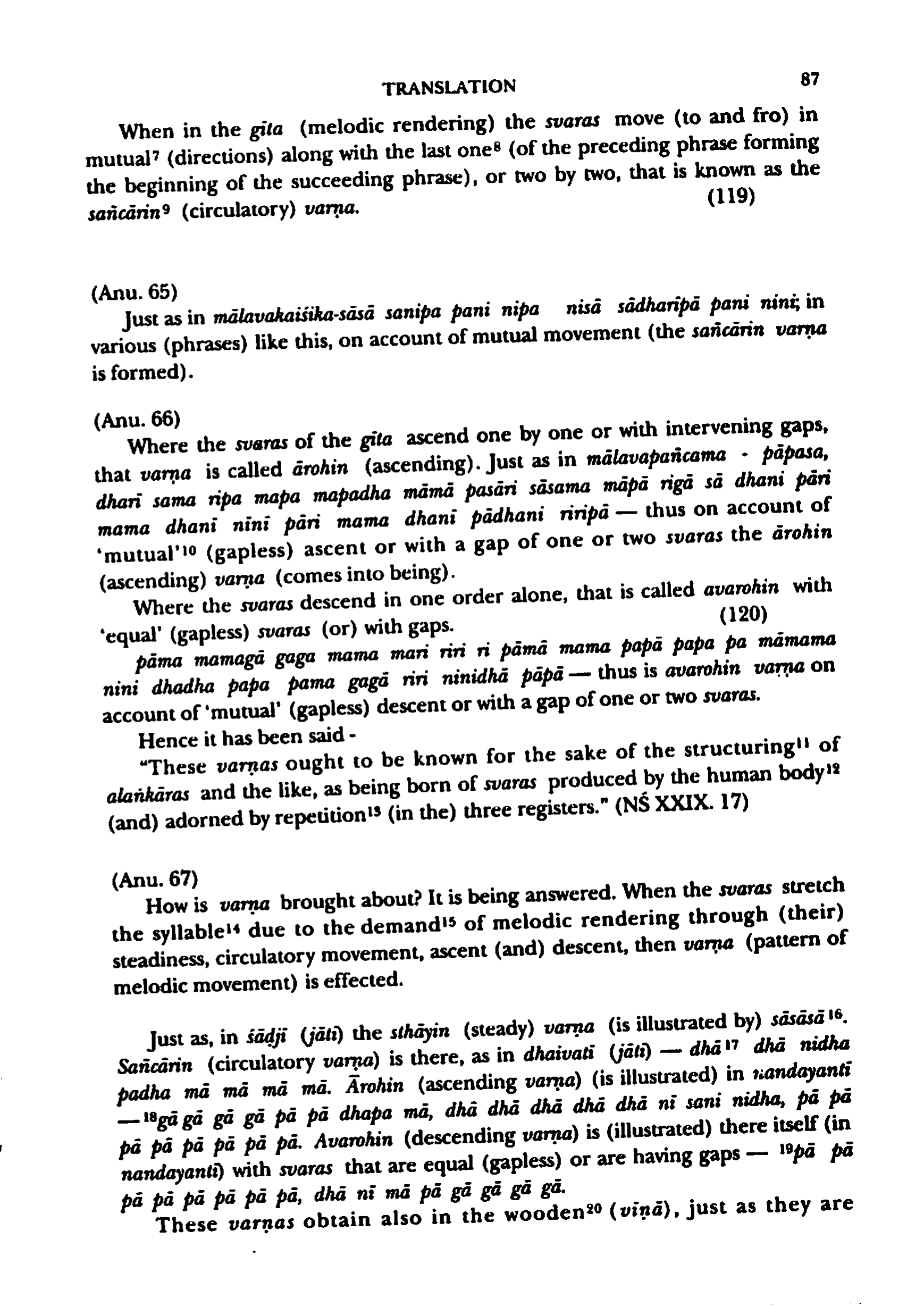
Avarohin varṇa occurs where svaras descend in one order alone, either with gapless svaras or with gaps.
"Where the svaras descend in one order alone, that is called avarohin with
(120)
'equal' (gapless) svaras (or) with gaps."
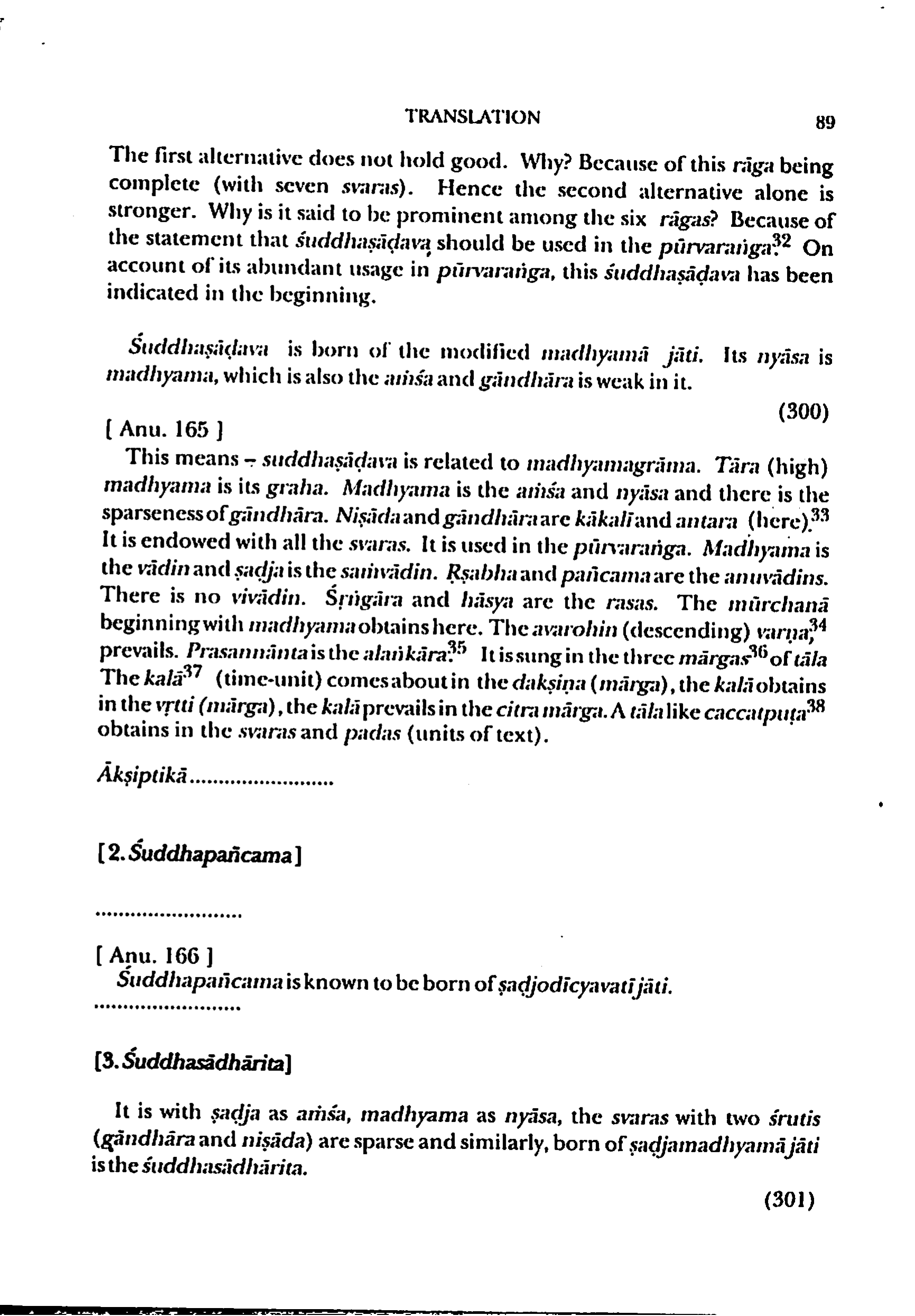
The avarohin (descending) varņa prevails in śuddhaṣāḍava
"The avarohin (descending) varņa,
prevails."
Avarohin varṇa is formed through mutual gapless descent or with a gap of one or two svaras.
"thus is avarohin varņa on
account of 'mutual' (gapless) descent or with a gap of one or two svaras."