nandayantī jati
Grammar record (family: jati)
| graha_svaras | गान्धारः | p.vol_II_p023, conf 0.90 |
| nyasa_svaras | गान्धारः | p.vol_II_p023, conf 0.90 |
| amsa_svaras | पञ्चमोंऽशः | p.vol_II_p023, conf 0.90 |
Generative rules (2) ↗ filter all
R_c83_nandayantiderivation · 3 att.
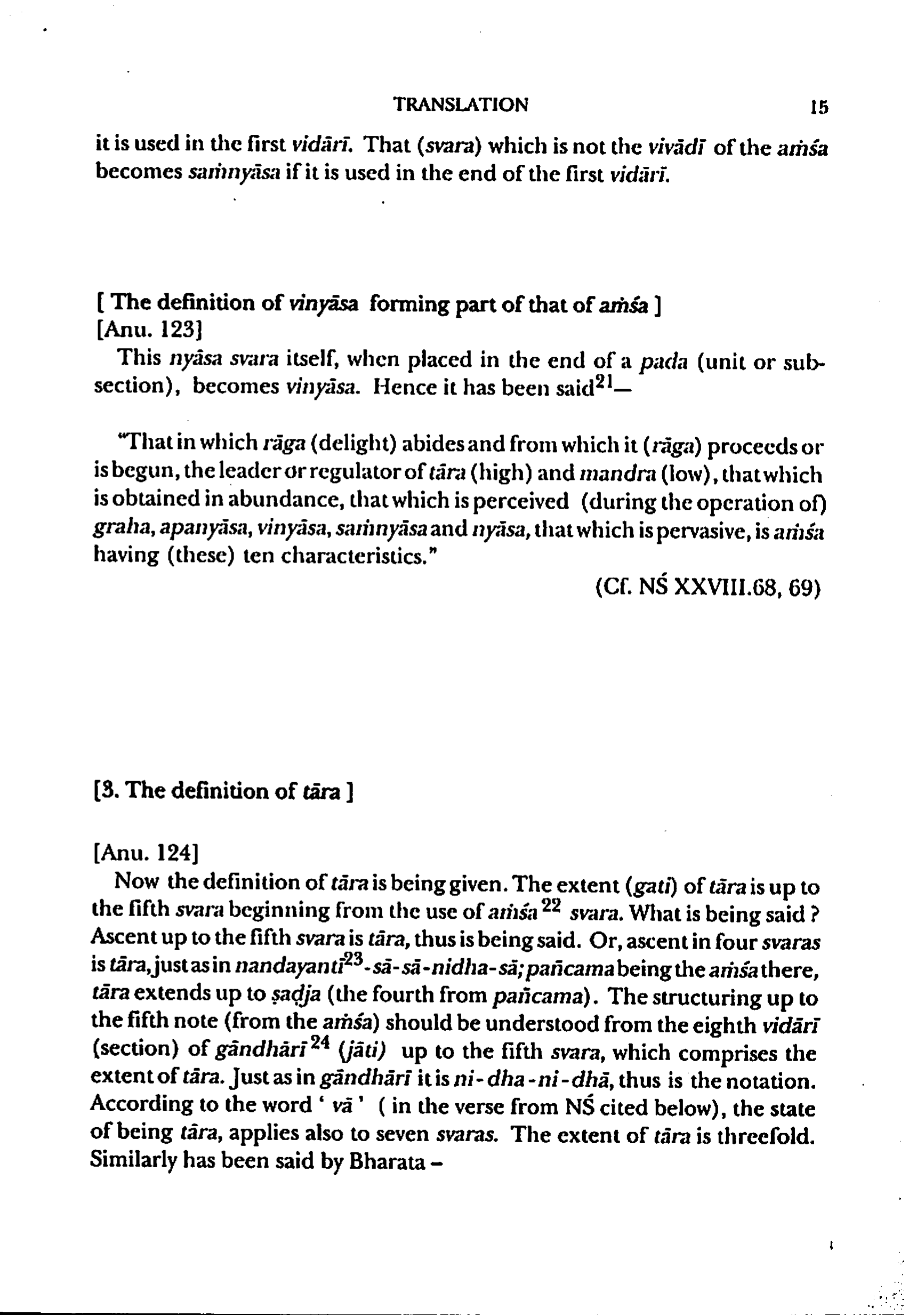
nandayantī = jāti dérivée de ārṣabhī + gāndhārī par adjonction de pañcamī; tāra monte jusqu'à ṣaḍja quand pañcama est aṃśaR_224_nandayanti_structuralstructural · 2 att.
In Nandayantī jāti: gāndhāra is both graha and nyāsa, pañcama is aṁśa, madhyama and pañcama are the two apanyāsas
Pseudocode (DSL v1.1) ↗ full DSL (raw text)
RULE id: nandayantī (cluster 83)
SCOPE: jati family
STATUS: canonical
CONFIDENCE: canonical
PROTECT: true

RECORD:
  graha_svaras = गान्धारः
  nyasa_svaras = गान्धारः
  amsa_svaras  = पञ्चमोंऽशः
Essence pseudocode — identity + RECORD. The page citations for each slot value are in the Grammar record table above (audit trail). The full DSL adds ASSERTIONS with verbatim quotes (see Affirmations below) and CITED_RULES (see Graph relations).
Graph relations
Outgoing (15)
--[structural]--> pañcama (2)--[relation]--> tāra (2)--[relation]--> aṁśa (1)--[structural]--> aṁśa (1)--[structural]--> nyāsa (1)--[structural]--> apanyāsa (1)--[structural]--> graha (1)--[structural]--> gāndhāra (1)--[relation]--> pañcama (1)--[citation]--> Varņa (1)--[citation]--> varṇa (1)--[citation]--> avarohin (1)--[citation]--> ārohin (1)--[attribution]--> नन्दयन्ती (1)--[structural]--> madhyama (1)
Incoming (5)
Varņa --[enumeration]--> (2)apanyāsa --[structural]--> (1)jāti --[citation]--> (1)auduva --[structural]--> (1)गान्धारोदीच्यवा --[enumeration]--> (1)
Affirmations (8)
nandayantī is the title of a musical composition or section
"Thus ends nandayantī."
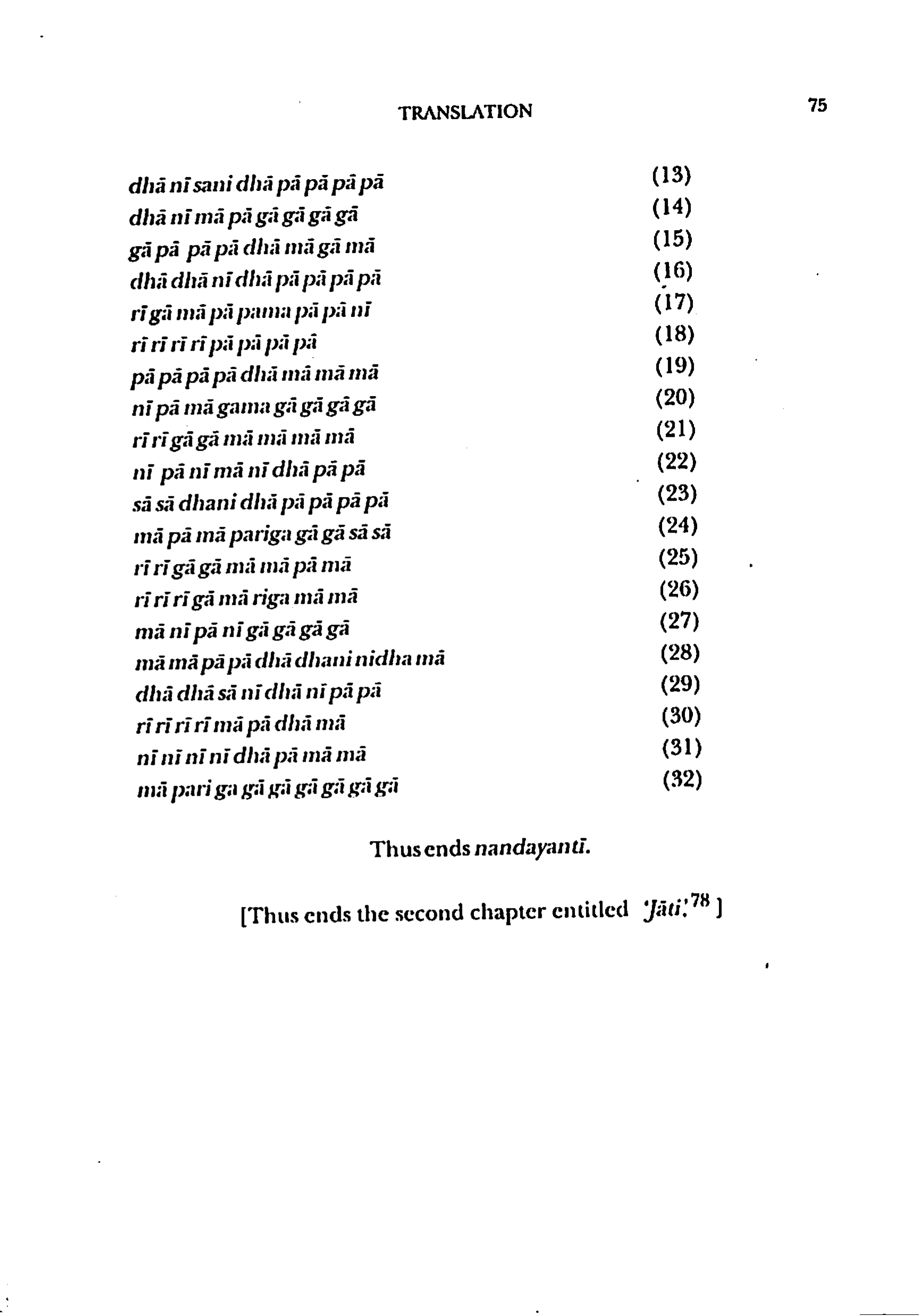
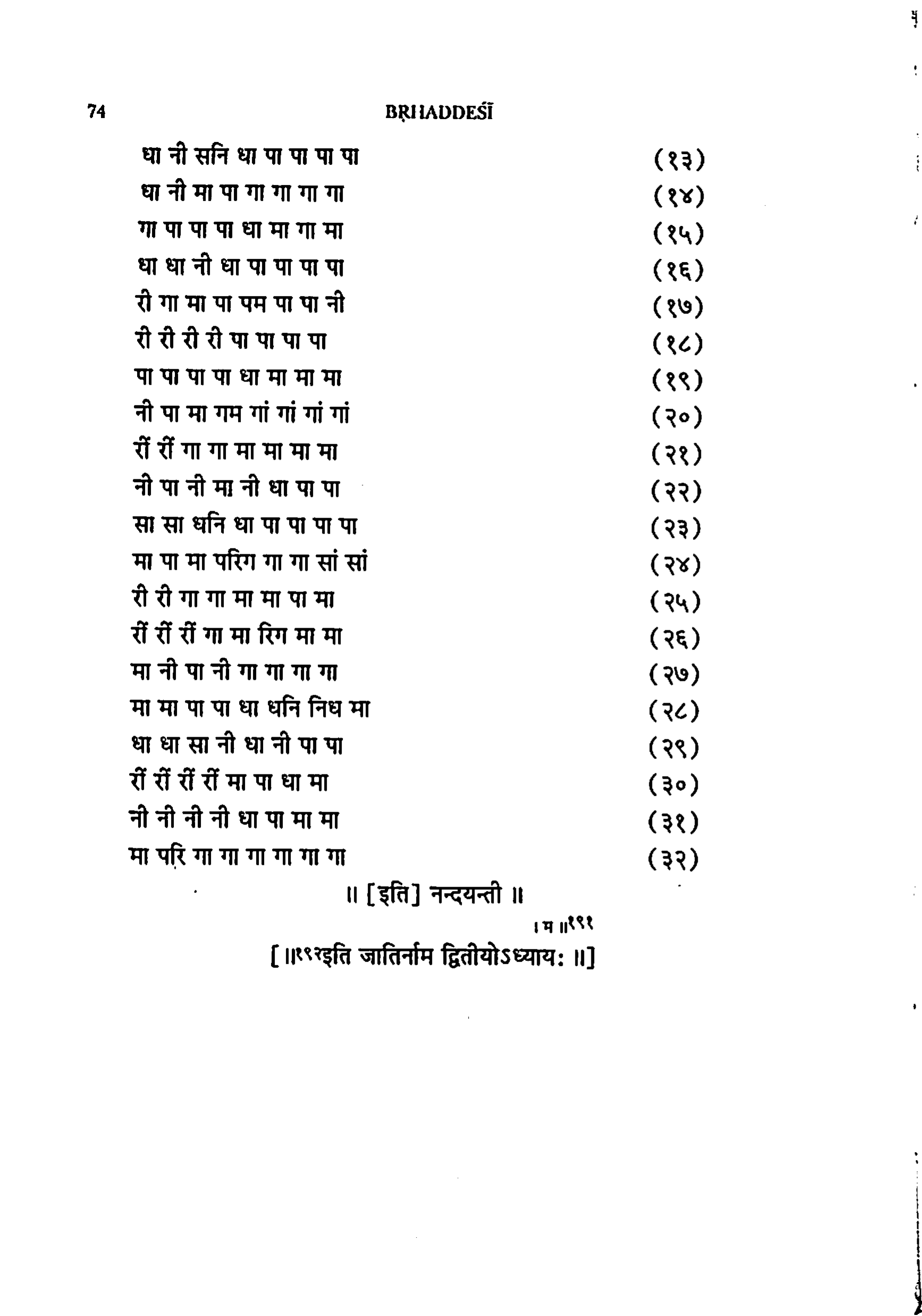
nandayantī is the title of a musical composition or section
"॥ [इति] नन्दयन्ती ॥"
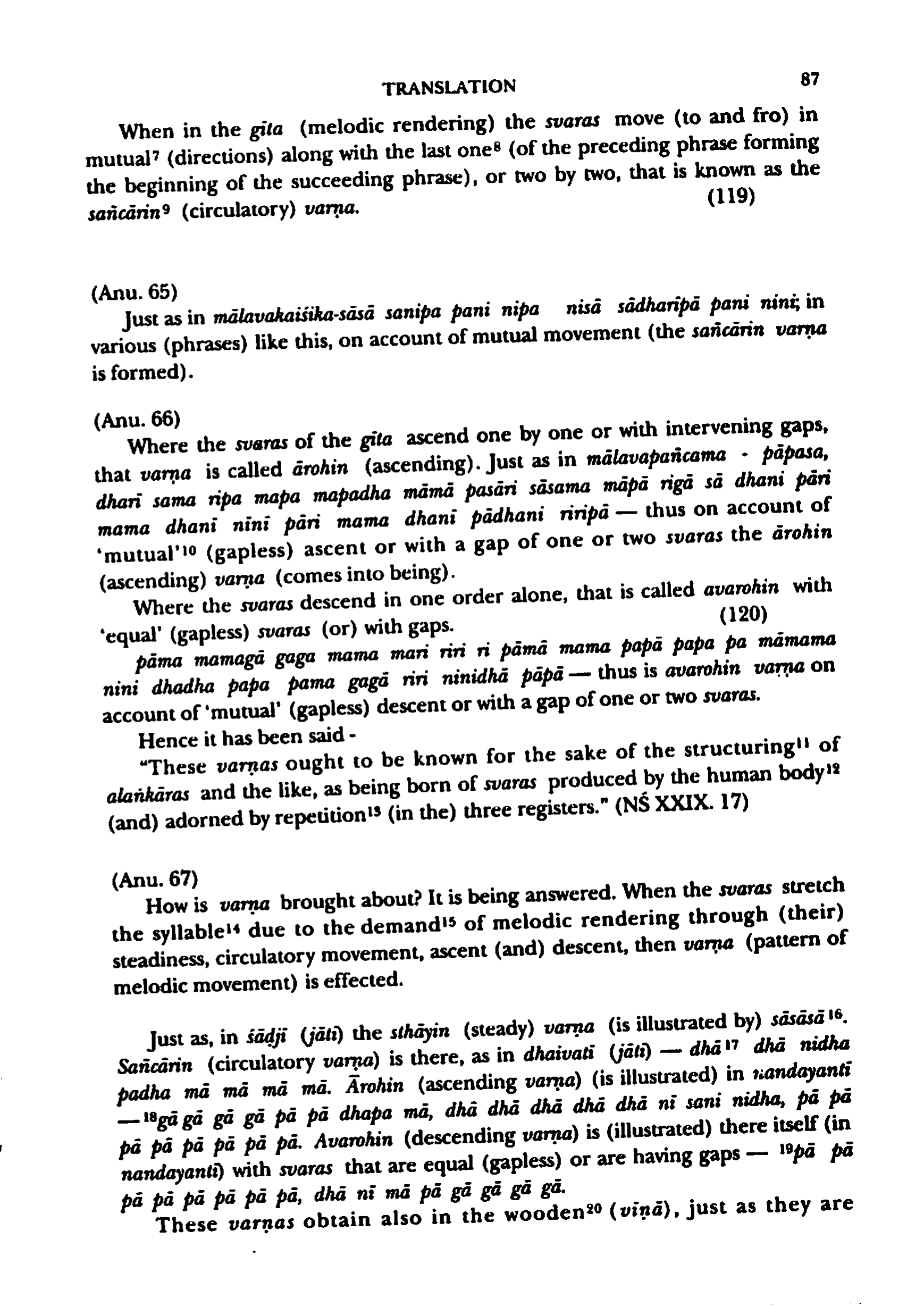
Nandayantī provides examples of both ārohin and avarohin varṇas.
"Ārohin (ascending varņa) (is illustrated) in nandayantī — gā gā gā pā pā dhapa mā, dhā dhā dhā dhā nī sani nidha, pā pā pā pā pā pā pā. Avarohin (descending varņa) is (illustrated) there itself (in nandayanti)"
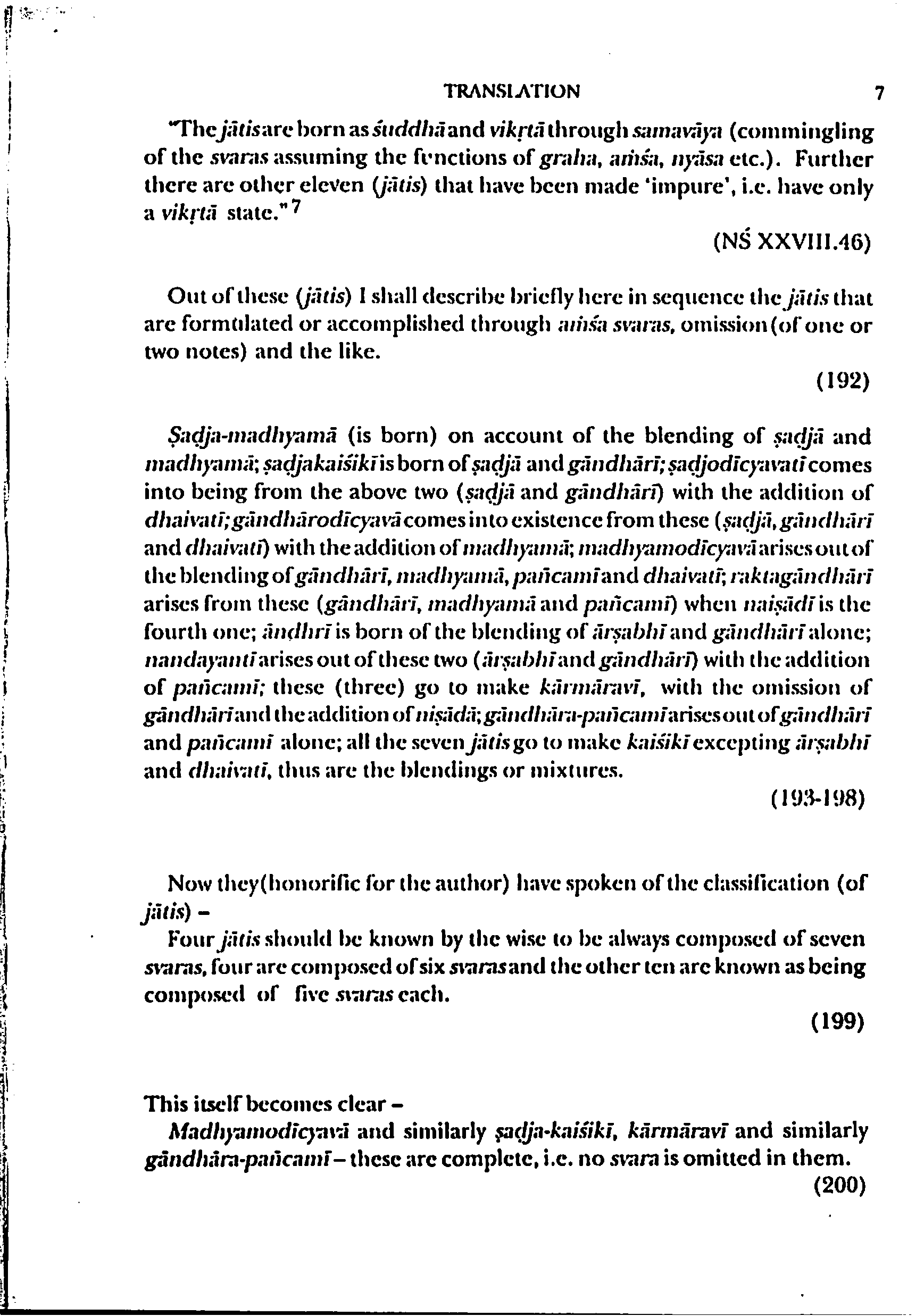
nandayantī arises from ārṣabhī and gāndhārī with the addition of pañcami
"nandayantī arises out of these two (ārṣabhī and gāndhārī) with the addition
of pañcami"
nandayantī demonstrates tara ascent with pañcama as the aṁśa
"just as in nandayantī<sup>23</sup>-sā-sā-nidha-sā; pañcama being the aṁśa there,
tāra extends up to ṣaḍja"
In nandayanti, gāndhāra is both graha and nyāsa, and pañcama is the aṁśa
"ग्रहो न्यासश्च गान्धारः पञ्चमोंऽशः प्रकीर्तितः"
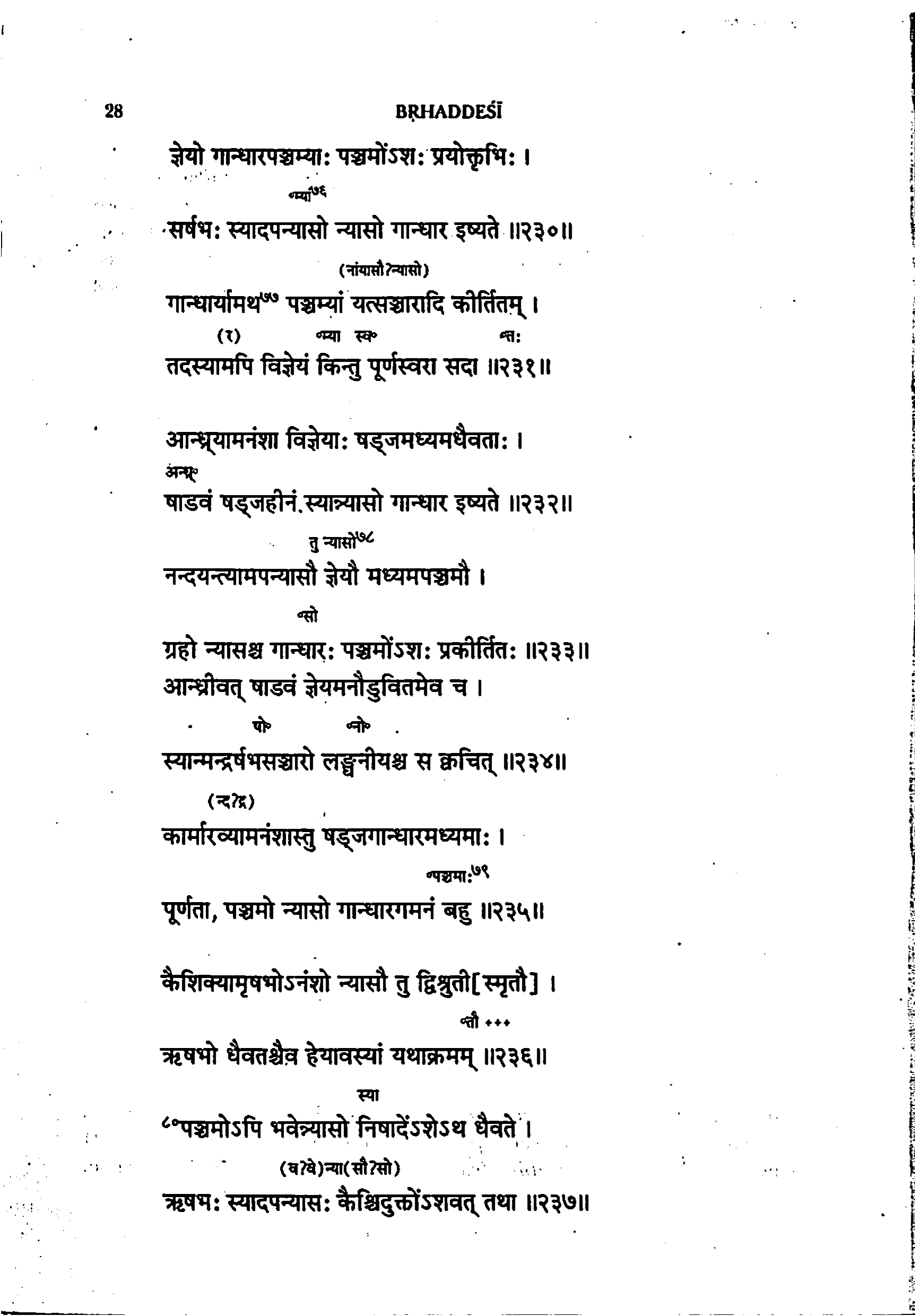
In nandayanti, madhyama and pañcama are the two apanyāsas
"नन्दयन्त्यामपन्यासौ ज्ञेयौ मध्यमपञ्चमौ"
nandayantī is composed of a series of solfège syllables (dhā, nī, sani, pā, gā, mā, rī, sā) arranged in sequences
"dhā nī sani dhā pā pā pā pā
(१३)
dhā nī mā pā gā gā gā gā"