वर्णा technical_term
Generative rules (1) ↗ filter all
varna_four_types_and_definitionenumeration · 2 att.
Les varņas sont au nombre de quatre: sthāyin, sancārin, ārohin, avarohin; un varņa est défini comme le gīta où svaras égaux restent sans entrave dans un pada.
Pseudocode (DSL v1.1) ↗ full DSL (raw text)
RULE id: वर्णा (cluster 1829)
SCOPE: technical_term family
STATUS: empirical
CONFIDENCE: empirical
PROTECT: false
Essence pseudocode — identity + RECORD. The page citations for each slot value are in the Grammar record table above (audit trail). The full DSL adds ASSERTIONS with verbatim quotes (see Affirmations below) and CITED_RULES (see Graph relations).
Graph relations
Outgoing (11)
--[definition]--> Varņa (1)--[enumeration]--> Varņa (1)--[enumeration]--> Sañcārin (1)--[definition]--> pada (1)--[enumeration]--> varṇa (1)--[enumeration]--> avarohin (1)--[enumeration]--> ārohin (1)--[definition]--> sthāyin (1)--[enumeration]--> sthāyin (1)--[definition]--> Gita (1)--[definition]--> svaras (1)
Incoming (1)
varṇa --[structural]--> (2)
Affirmations (2)
A varņa is the singing (gita) in which equal svaras remain unimpeded, manifesting varņa in a given textual unit (pada)
"Where svaras are equal3 and stay
unimpeded4, the gita5 (melodic rendering) born out of them, that is the
manifestor of varņa (unit of melodic movement) in a given pada6 (textual
unit), that varņa is called sthāyin (steady)."
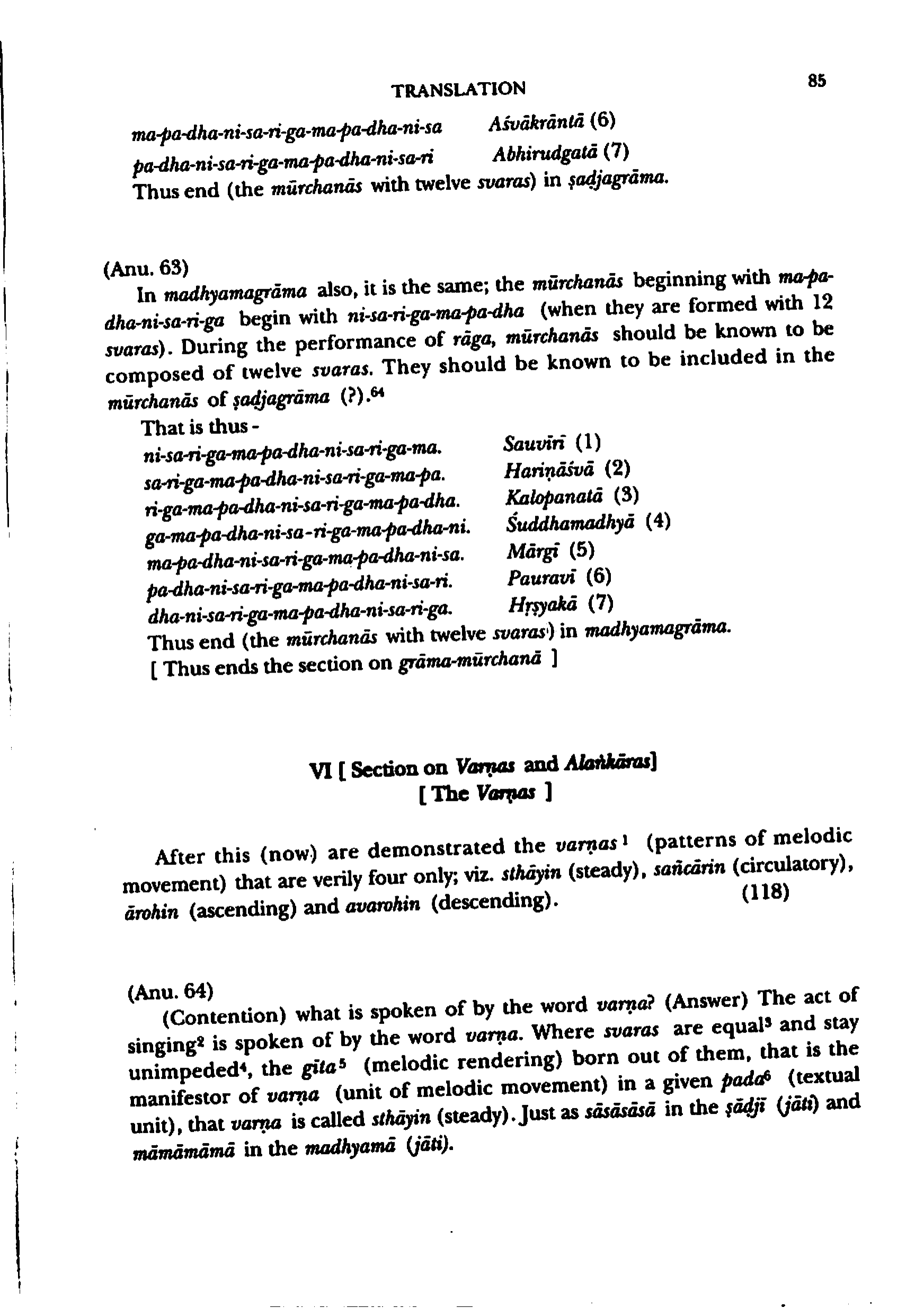
Varņas are four in number: sthāyin (steady), sancārin (circulatory), ārohin (ascending), and avarohin (descending)
"After this (now) are demonstrated the varnas 1 (patterns of melodic
movement) that are verily four only; viz. sthāyin (steady), sancārin (circulatory),
(118)
ārohin (ascending) and avarohin (descending)."