Varņa core_concept
Grammar record (family: core_concept)
| structural_components | a compositional form profusely used in Karnatic music even today | p.vol_II_p167, conf 0.85 |
Generative rules (4) ↗ filter all
varna_definition_primary_unitdefinition · 2 att.
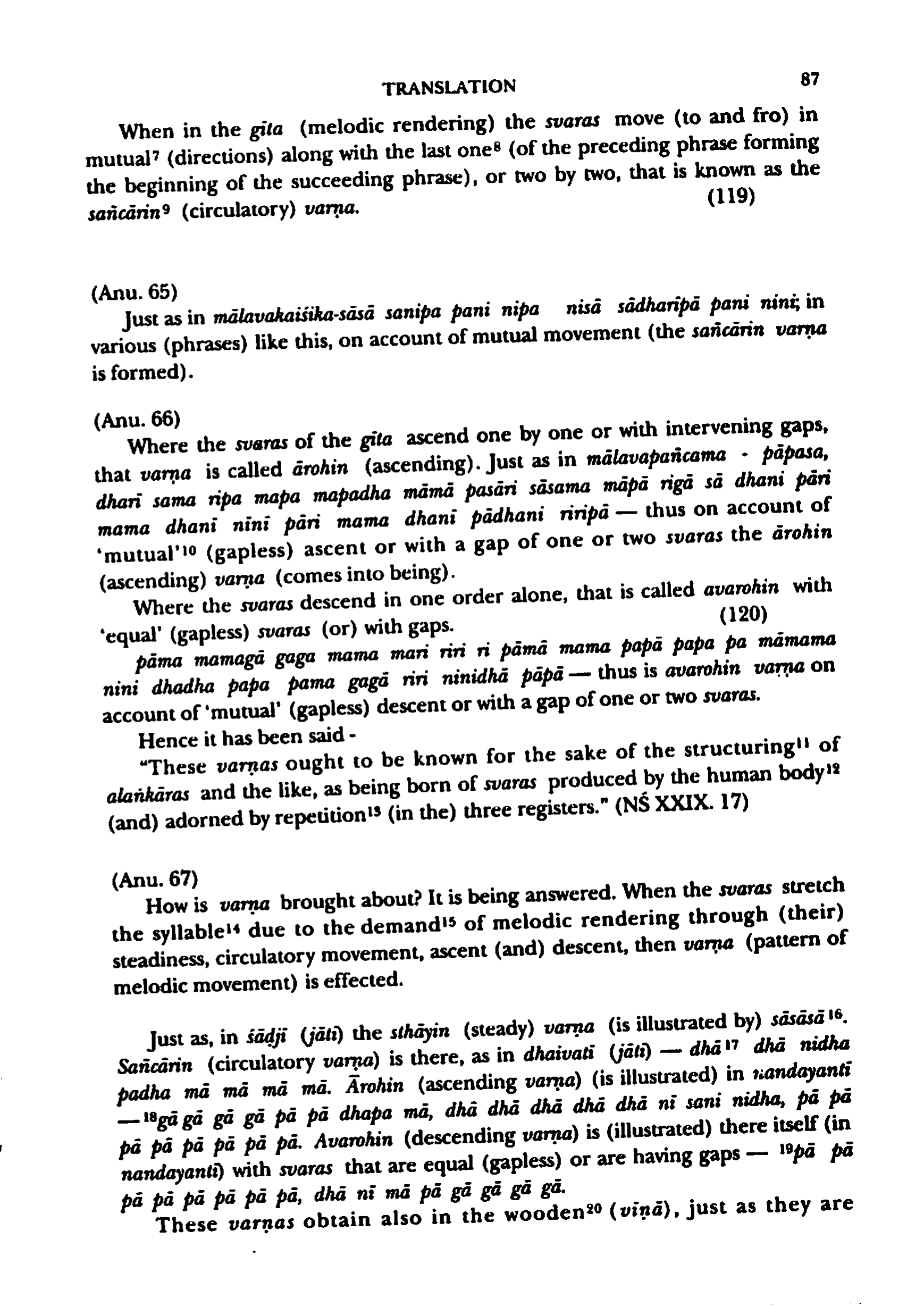
Varṇa is the primary unit of melodic movement, formed when svaras stretch syllables via steadiness, circulation, ascent, or descent.varna_structures_melodyrelation · 2 att.
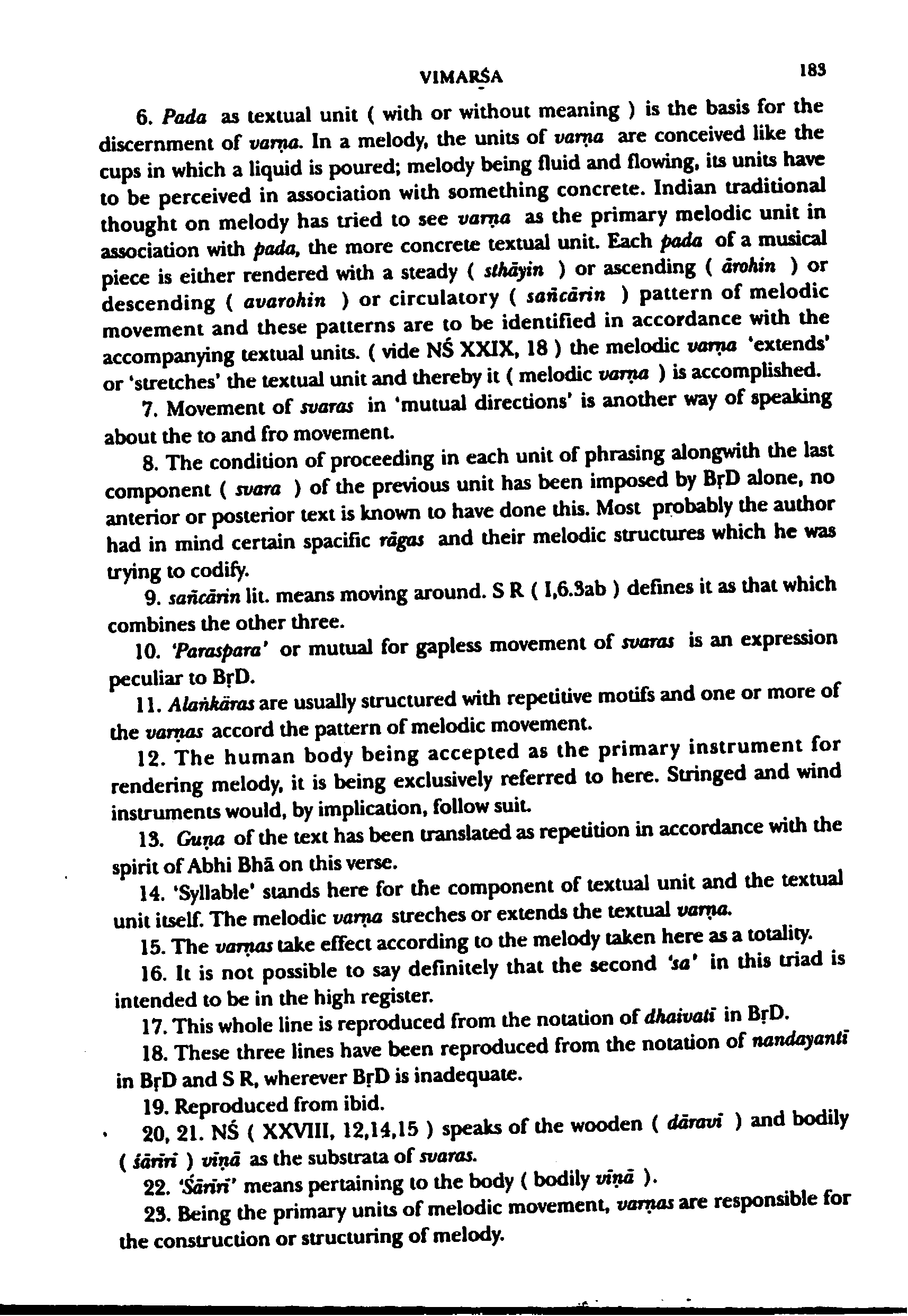
Varṇas, being the primary units of melodic movement, are responsible for the construction/structuring of melody and stretch the textual unit (pada).varna_four_typesenumeration · 1 att.
Varṇa has four kinds: sthāyin (steady), sañcārin (circulatory), ārohin (ascending), avarohin (descending).varna_karnatic_compositional_formstructural · 1 att.
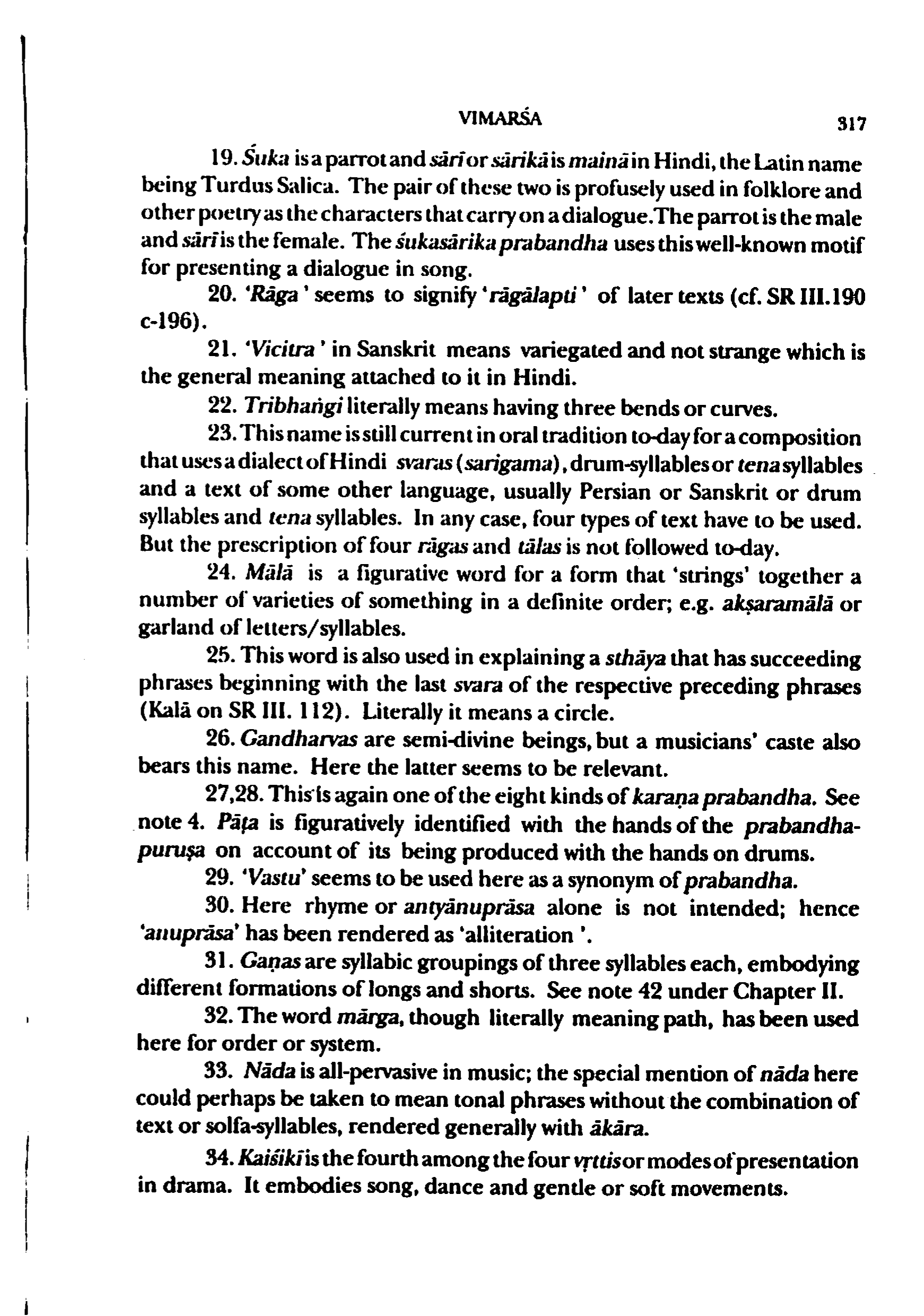
Varņa is also a compositional form profusely used in Karnatic music to this day.
Pseudocode (DSL v1.1) ↗ full DSL (raw text)
RULE id: varņa (cluster 78)
SCOPE: core_concept family
STATUS: canonical
CONFIDENCE: canonical
PROTECT: true

RECORD:
  structural_components = a compositional form profusely used in Karnatic music even today
Essence pseudocode — identity + RECORD. The page citations for each slot value are in the Grammar record table above (audit trail). The full DSL adds ASSERTIONS with verbatim quotes (see Affirmations below) and CITED_RULES (see Graph relations).
Graph relations
Outgoing (18)
--[attribution]--> varṇa (3)--[attribution]--> alaṅkāra (2)--[enumeration]--> nandayantī (2)--[enumeration]--> Sañcārin (2)--[attribution]--> BrD (2)--[attribution]--> svaras (2)--[attribution]--> BRHADDEŚĪ (1)--[enumeration]--> dhaivatī (1)--[relation]--> pada (1)--[enumeration]--> ṣāḍjī (1)--[definition]--> varṇa (1)--[enumeration]--> varṇa (1)--[enumeration]--> avarohin (1)--[enumeration]--> ārohin (1)--[enumeration]--> sthāyin (1)--[definition]--> svaras (1)--[enumeration]--> svaras (1)--[attribution]--> NŚ XXIX. 17 (1)
Incoming (20)
avarohin --[structural]--> (2)ārohin --[structural]--> (2)BRHADDEŚĪ --[structural]--> (1)mālavapañcama --[citation]--> (1)alaṅkāra --[definition]--> (1)nandayantī --[citation]--> (1)dhaivatī --[citation]--> (1)Sañcārin --[definition]--> (1)Sañcārin --[structural]--> (1)Mātṛkā --[attribution]--> (1)mālavakaišika --[citation]--> (1)ārohin --[definition]--> (1)sthāyin --[structural]--> (1)Varnailā --[enumeration]--> (1)sthāyi-varņa --[relation]--> (1)narta-rāga --[structural]--> (1)वर्णालंकारप्रकरणम् --[structural]--> (1)वर्णा --[definition]--> (1)वर्णा --[enumeration]--> (1)स्थायिसंचारिणौ --[enumeration]--> (1)
Affirmations (9)
Varṇas are born of svaras produced by the human body and are adorned by repetition in the three registers.
"These varnas ought to be known for the sake of the structuring" of
alankāras and the like, as being born of svaras produced by the human body 12
(and) adorned by repetition13 (in the) three registers." (NŚ XXIX. 17)"
The condition that each unit of phrasing must proceed along with the last svara component of the previous unit was prescribed by Brhaddesi alone
"The condition of proceeding in each unit of
phrasing alongwith the last component ( svara ) of the previous unit has been imposed by BrD alone"
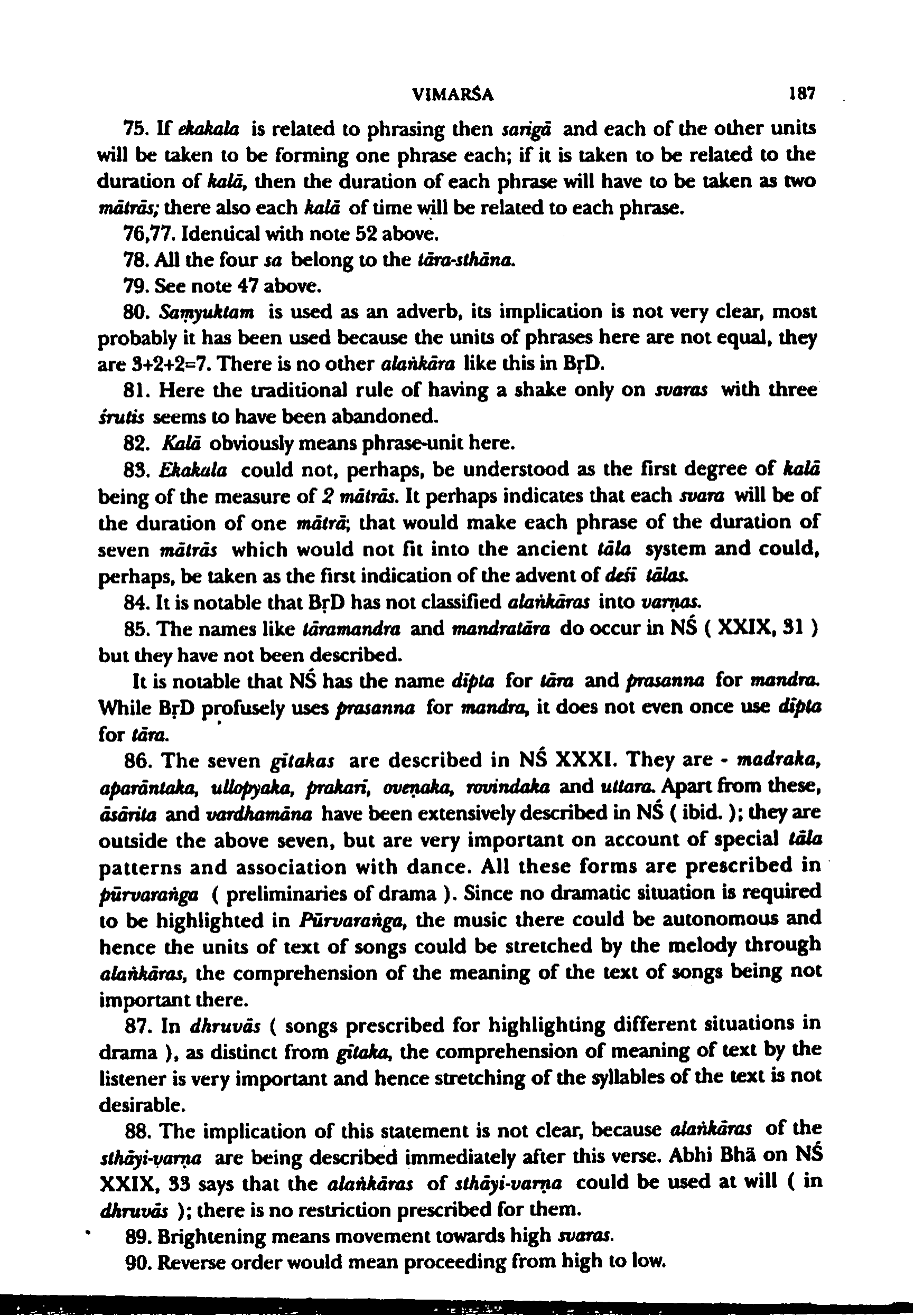
BrD has not classified alaṅkāras into varṇas, distinguishing it from other treatises
"It is notable that BrD has not classified alankāras into varņas."
Varṇa is a pattern of melodic movement brought about when svaras stretch syllables through steadiness, circulatory movement, ascent and descent in response to the demand of melodic rendering.
"When the svaras stretch the syllable due to the demand of melodic rendering through (their) steadiness, circulatory movement, ascent (and) descent, then varņa (pattern of melodic movement) is effected."
Varņa is the primary unit of melodic movement in music, analogous to how letters/syllables are primary in language and color in the visual realm
"Varņa stands for colour, letter, syllable, caste and here, pattern of
melodic movement; just as in language, letter or syllable is the primary unit, in
the visual realm colour is the primary element, similarly in music, varna is the
primary unit of melodic movement."
Varṇa has four varieties: sthāyin, sañcārin, ārohin, and avarohin.
"Just as, in śādjī (jātī) the sthāyin (steady) varņa (is illustrated by) sāsāsā. Sancārin (circulatory varņa) is there, as in dhaivatī (jātī) — dhā dhā nidha padha mā mā mā. Ārohin (ascending varņa) (is illustrated) in nandayantī — gā gā gā pā pā dhapa mā, dhā dhā dhā dhā nī sani nidha, pā pā pā pā pā pā pā. Avarohin (descending varņa) is (illustrated) there itself (in nandayanti) with svaras that are equal (gapless) or are having gaps —"
Melodic varņa extends or stretches the textual unit (pada) and is thereby accomplished
"the melodic varņa 'extends'
or 'stretches' the textual unit and thereby it (melodic varņa) is accomplished."
Varņas are responsible for the construction and structuring of melody as primary units of melodic movement
"Being the primary units of melodic movement, varņas are responsible for
the construction or structuring of melody."
Varņa is a compositional form profusely used in Karnatic music even today
"Varņa is a compositional form profusely used in
Karnatic music even today."