samvādī svara_role
Grammar record (family: svara_role)
| constraint_type | cannot be omitted | p.vol_II_p027, conf 0.85 |
Generative rules (2) ↗ filter all
R_c217_samvadirelation · 3 att.
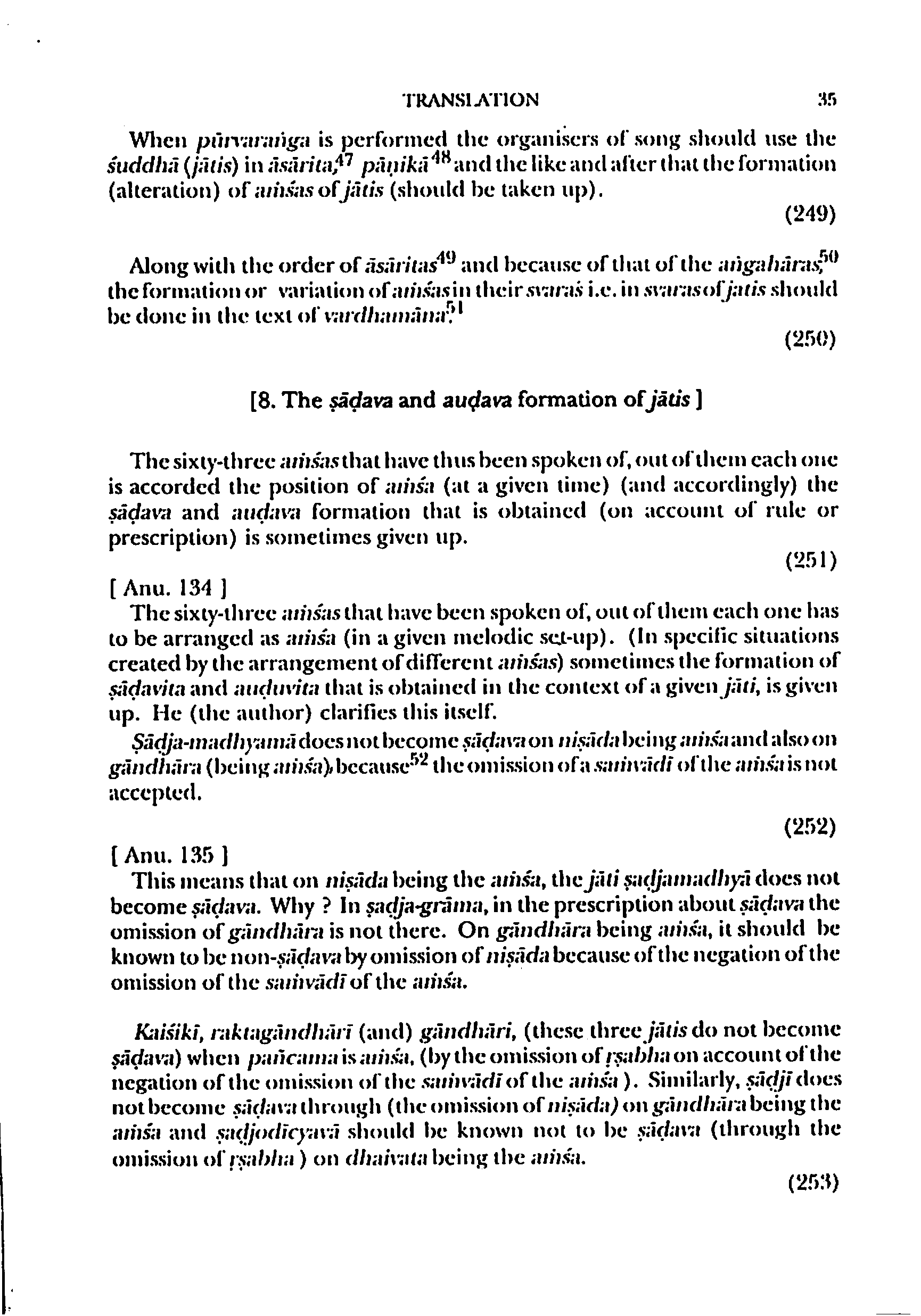
saṃvādī = note consonante de l'aṃśa, non-omissible; cette contrainte empêche 7 aṃśas spécifiques de former ṣāḍavaR_739_01validation · 1 att.
Omission of samvadi of amsa forbidden in jāti transformation
Pseudocode (DSL v1.1) ↗ full DSL (raw text)
RULE id: samvādī (cluster 217)
SCOPE: svara_role family
STATUS: canonical
CONFIDENCE: canonical
PROTECT: true

RECORD:
  constraint_type = cannot be omitted
Essence pseudocode — identity + RECORD. The page citations for each slot value are in the Grammar record table above (audit trail). The full DSL adds ASSERTIONS with verbatim quotes (see Affirmations below) and CITED_RULES (see Graph relations).
Graph relations
Outgoing (10)
--[relation]--> aṁśa (4)--[relation]--> ṣāḍava (3)--[structural]--> aṁśa (1)--[structural]--> ṣāḍava (1)--[relation]--> gāndhāra (1)--[structural]--> gāndhāra (1)--[structural]--> jāti (1)--[structural]--> niṣāda (1)--[relation]--> svaras (1)--[structural]--> madhyama (1)
Incoming (4)
Affirmations (4)
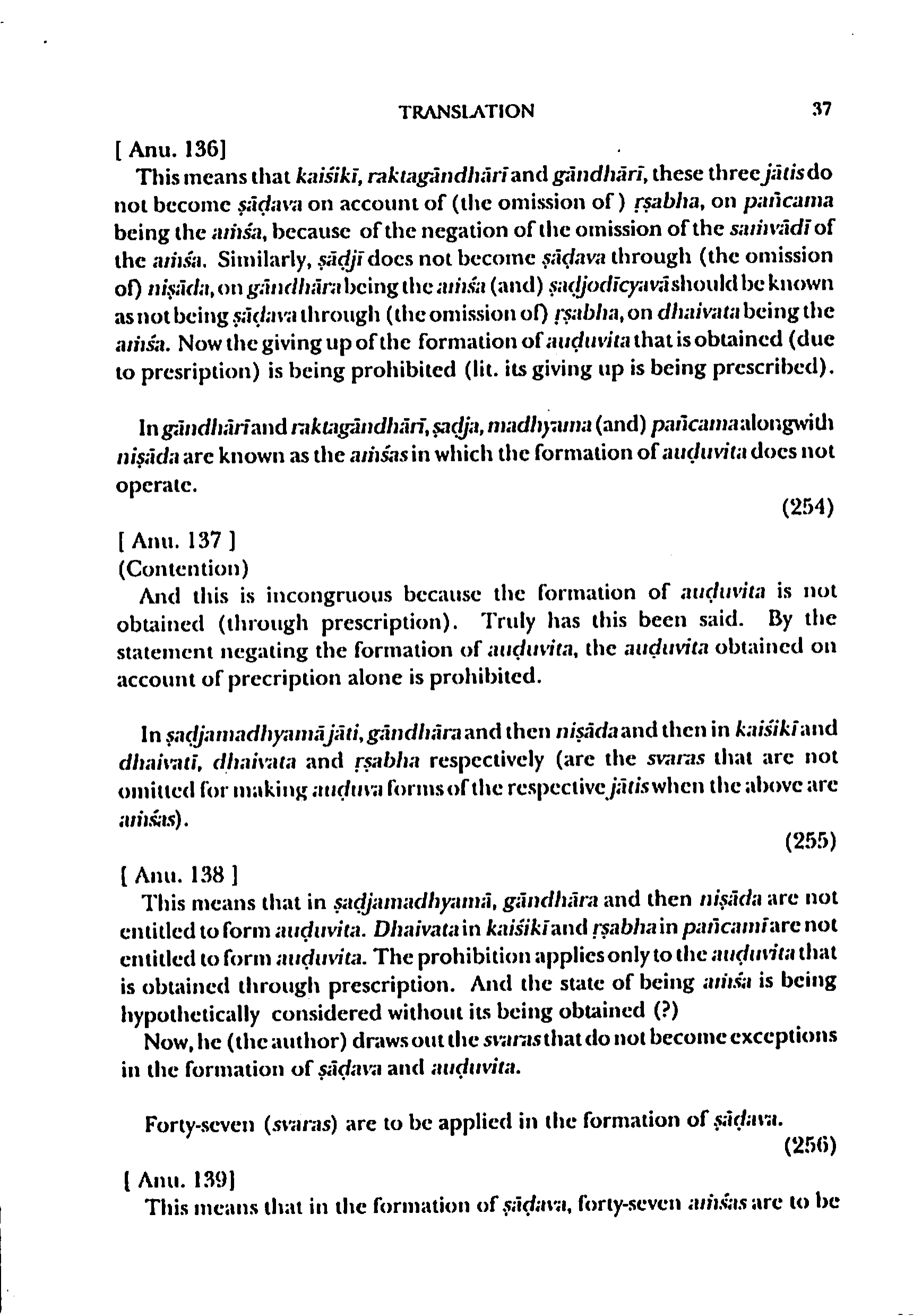
The samvādī of the aṁśa cannot be omitted in forming ṣāḍava variations
"because of the negation of the omission of the samvādī of the aṁśa"
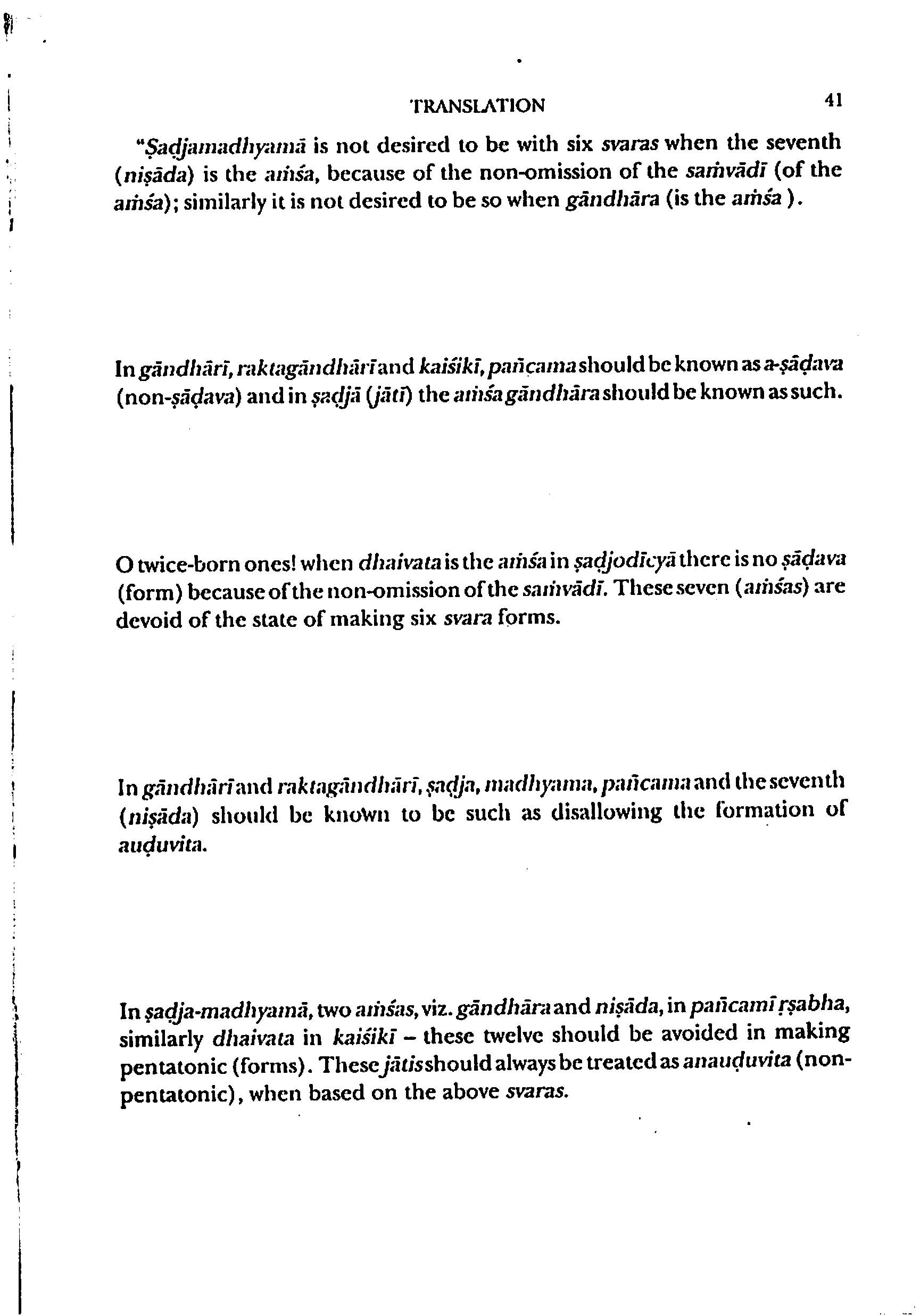
The non-omission of the samvādī (consonant note) prevents certain jātī forms from being ṣāḍava
"because of the non-omission of the samvādī (of the amsa); similarly it is not desired to be so when gandhara (is the amsa)."
Seven specific aṁśas are devoid of ṣāḍava-forming capacity due to samvādī non-omission
"These seven (amśas) are devoid of the state of making six svara forms."
The omission of a samvadi of the amsa is not accepted in jāti transformations
"Şādja-madhyamā does not become ṣāḍava on niṣāda being amsaand also on
gandhara (being amsa), because the omission of a samvadi of the amsa is not
accepted."