śuddhā jātis technical_term
Generative rules (2) ↗ filter all
R_619_suddha_jati_definitiondefinition · 1 att.
Śuddhā jāti has identical graha, apanyāsa, aniśa; nyāsa in mandra; completer_brd_353_suddha_jatis_rootrelation · 1 att.
Śuddhā jātis are the root from which other jātis come into existence
Pseudocode (DSL v1.1) ↗ full DSL (raw text)
RULE id: śuddhā jātis (cluster 353)
SCOPE: technical_term family
STATUS: empirical
CONFIDENCE: empirical
PROTECT: false
Essence pseudocode — identity + RECORD. The page citations for each slot value are in the Grammar record table above (audit trail). The full DSL adds ASSERTIONS with verbatim quotes (see Affirmations below) and CITED_RULES (see Graph relations).
Graph relations
Outgoing (7)
--[definition]--> nyāsa (1)--[definition]--> apanyāsa (1)--[definition]--> mandra (1)--[definition]--> graha (1)--[definition]--> jāti (1)--[relation]--> jāti (1)--[definition]--> aniśa (1)
Incoming (5)
nyāsa --[structural]--> (1)pūrvaranga --[structural]--> (1)śuddhā --[definition]--> (1)vikṛtā jātis --[structural]--> (1)śuddhā and vikṛtā --[structural]--> (1)
Affirmations (2)
A śuddhā jāti is defined as having the same graha, apanyāsa, and aniśa, with nyāsa in the mandra and being complete
"When a jāti has the same graha, the same apanyāsa and the same aniśa, has
nyāsa in the mandra (lower register) and is complete, then it is known as
śuddhā jāti."
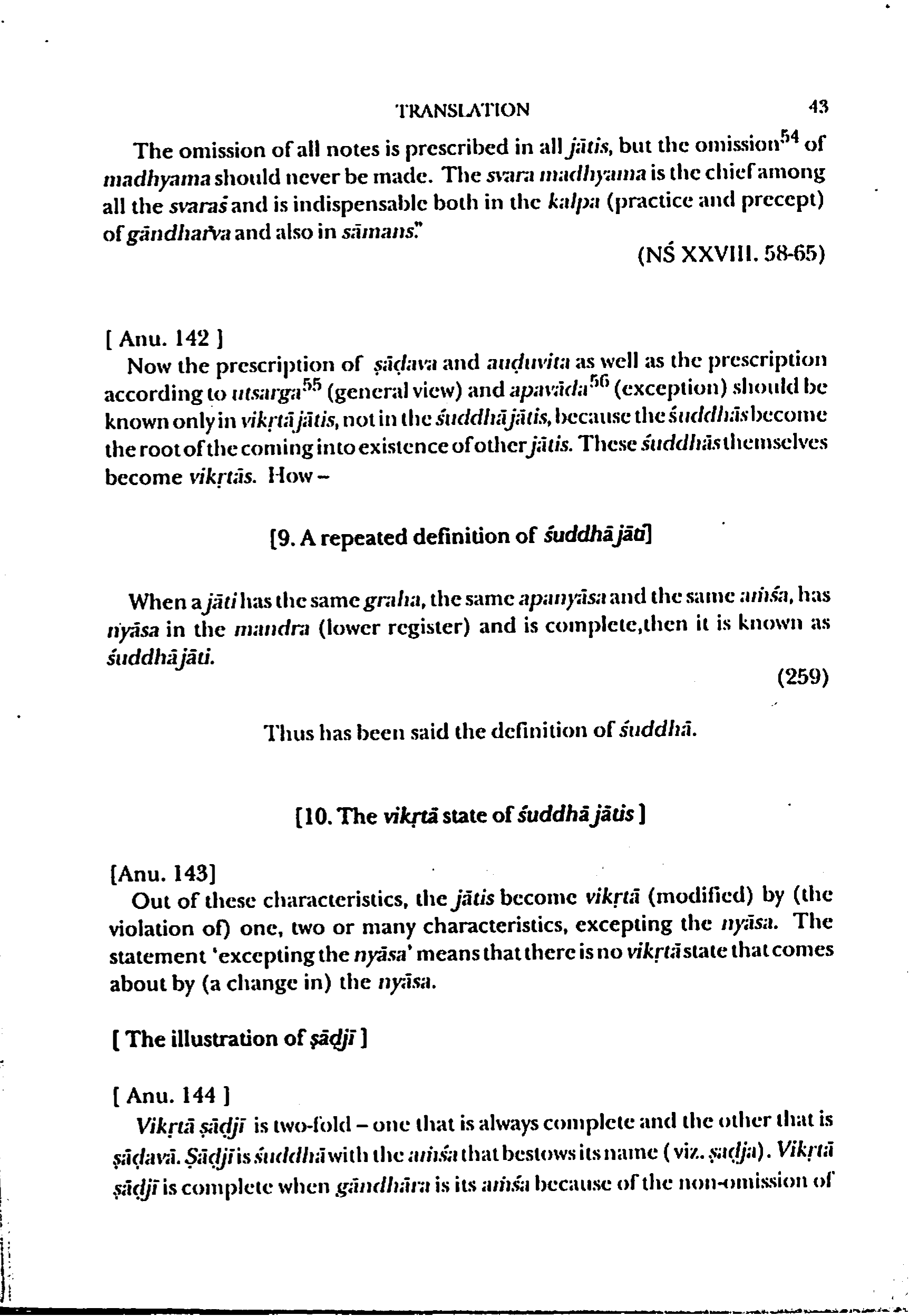
Śuddhā jātis are the root of the coming into existence of other jātis
"because the śuddhās become
the root of the coming into existence of other jātis."