nyāsa svara_role
Grammar record (family: svara_role)
| count | twenty-one | p.vol_II_p020, conf 0.95 |
| register_preference | mandra | p.vol_II_p011, conf 0.90 |
| jati_type_condition | śuddhā jātis | p.vol_II_p011, conf 0.95 |
| position_in_structure | at the end of anga | p.vol_II_p020, conf 0.95 |
| assigned_svara_in_gandhara_pancami | गान्धार | p.vol_II_p023, conf 0.95 |
| assigned_svara_in_ratagandhari | Gāndhāra | p.vol_II_p039, conf 0.95 |
| assigned_svara_in_suddhakaisika | पञ्चमो | p.vol_II_p055, conf 0.95 |
| assigned_svara_in_bhinnakaisikamadhyama | Madhyama | p.vol_II_p058, conf 0.90 |
| assigned_svara_in_bhavini | pañcama | p.vol_II_p089, conf 0.90 |
| assigned_svara_in_sadhji | ṣaḍja | p.vol_II_p158, conf 0.95 |
| variability | तारो वा मन्द्रो वा | p.vol_II_p011, conf 0.60 |
Generative rules (1) ↗ filter all
R_006_nyasa_definitiondefinition · 20 att.
Nyāsa is the svara on which a gīta (tonal structure) is placed, left, or concluded
Pseudocode (DSL v1.1) ↗ full DSL (raw text)
RULE id: nyāsa (cluster 6)
SCOPE: svara_role family
STATUS: canonical
CONFIDENCE: canonical
PROTECT: true

RECORD:
  count                                   = twenty-one
  register_preference                     = mandra
  jati_type_condition                     = śuddhā jātis
  position_in_structure                   = at the end of anga
  assigned_svara_in_gandhara_pancami      = गान्धार
  assigned_svara_in_ratagandhari          = Gāndhāra
  assigned_svara_in_suddhakaisika         = पञ्चमो
  assigned_svara_in_bhinnakaisikamadhyama = Madhyama
  assigned_svara_in_bhavini               = pañcama
  assigned_svara_in_sadhji                = ṣaḍja
  variability                             = तारो वा मन्द्रो वा
Essence pseudocode — identity + RECORD. The page citations for each slot value are in the Grammar record table above (audit trail). The full DSL adds ASSERTIONS with verbatim quotes (see Affirmations below) and CITED_RULES (see Graph relations).
Graph relations
Outgoing (43)
--[structural]--> mandra (3)--[structural]--> gāndhāra (3)--[structural]--> pañcama (3)--[structural]--> न्यासः (3)--[structural]--> svaras (3)--[relation]--> aṁśa (2)--[structural]--> aṁśa (2)--[relation]--> bhāṣā (2)--[relation]--> gāndhāra (2)--[structural]--> madhyama (2)--[structural]--> rāga (2)--[definition]--> bhāṣā (1)--[structural]--> bhāṣā (1)--[structural]--> graha (1)--[structural]--> raktagāndhārī (1)--[structural]--> jāti (1)--[structural]--> tāra (1)--[structural]--> dhaivatī (1)--[relation]--> śrutis (1)--[structural]--> ṣāḍjī (1)--[structural]--> vidārī (1)--[structural]--> bhāvinī (1)--[structural]--> śuddhakaiśika (1)--[relation]--> न्यासः (1)--[definition]--> sādhāritā (1)--[structural]--> anga (1)--[relation]--> niṣāda (1)--[structural]--> Bhinnakaisikamadhyama (1)--[structural]--> gāndhārapañcamī (1)--[structural]--> śuddhā jātis (1)--[structural]--> vikṛtā jātis (1)--[relation]--> svara-jāti (1)--[relation]--> dhaivata (1)--[structural]--> dhaivata (1)--[definition]--> Gita (1)--[structural]--> vikrtā state (1)--[definition]--> षड्ज (1)--[structural]--> षड्ज (1)--[definition]--> svaras (1)--[relation]--> svaras (1)--[definition]--> madhyama (1)--[structural]--> sadja (1)--[structural]--> गान्धारस्य (1)
Incoming (56)
ṭakkarāga --[structural]--> (2)bhāvinī --[structural]--> (2)Māngālī --[structural]--> (2)Mālavesarī --[structural]--> (2)aṁśa --[relation]--> (1)aṁśa --[structural]--> (1)Bharata --[attribution]--> (1)Bharata --[citation]--> (1)kākalī --[structural]--> (1)apanyāsa --[definition]--> (1)mandra --[enumeration]--> (1)ṣāḍava --[structural]--> (1)kaiśikī --[structural]--> (1)kārmāravī --[structural]--> (1)gāndhāra --[relation]--> (1)pañcamaṣāḍava --[structural]--> (1)bhinnatāna --[structural]--> (1)bhinnapañcama --[structural]--> (1)nandayantī --[structural]--> (1)gāndhārapañcama --[structural]--> (1)vinyāsa --[definition]--> (1)antaramārga --[relation]--> (1)śuddhā --[definition]--> (1)vikṛtā --[definition]--> (1)vikṛtā --[structural]--> (1)न्यासः --[structural]--> (1)sādhāritā --[structural]--> (1)revagupta --[structural]--> (1)Sauvīrī --[structural]--> (1)Pārvatī --[structural]--> (1)śuddhā jātis --[definition]--> (1)vikṛtā jātis --[structural]--> (1)Naisādī --[structural]--> (1)svara-jāti --[relation]--> (1)आन्ध्री --[structural]--> (1)bhinnakaiśika --[structural]--> (1)छेवाटी --[structural]--> (1)pulindikā --[structural]--> (1)Vibhāvinī --[structural]--> (1)graha, aṁśa, nyāsa --[relation]--> (1)NŚ XXVIII.72 --[citation]--> (1)सङ्गतिन्यासपर्यन्त --[relation]--> (1)गौडपञ्चमः --[structural]--> (1)गौडकैशिकः --[structural]--> (1)gaudakaiśika rāga --[structural]--> (1)gaudakaiśikamadhyama --[structural]--> (1)Mālavakaisika --[structural]--> (1)narta-rāga --[structural]--> (1)śaka --[structural]--> (1)Takkasaindhava --[structural]--> (1)वेरञ्ज?िका --[structural]--> (1)vesarikā --[structural]--> (1)chevāțī --[structural]--> (1)Bhammānikā --[structural]--> (1)Kārņāţī --[structural]--> (1)alpatva-bahutva --[structural]--> (1)
Affirmations (20)
Nyāsa is defined as that svara on which or by which a song is abandoned or concluded
"न्यस्यते त्यज्यते यस्मिन् येन वा गीतं तत्र्यास इति"
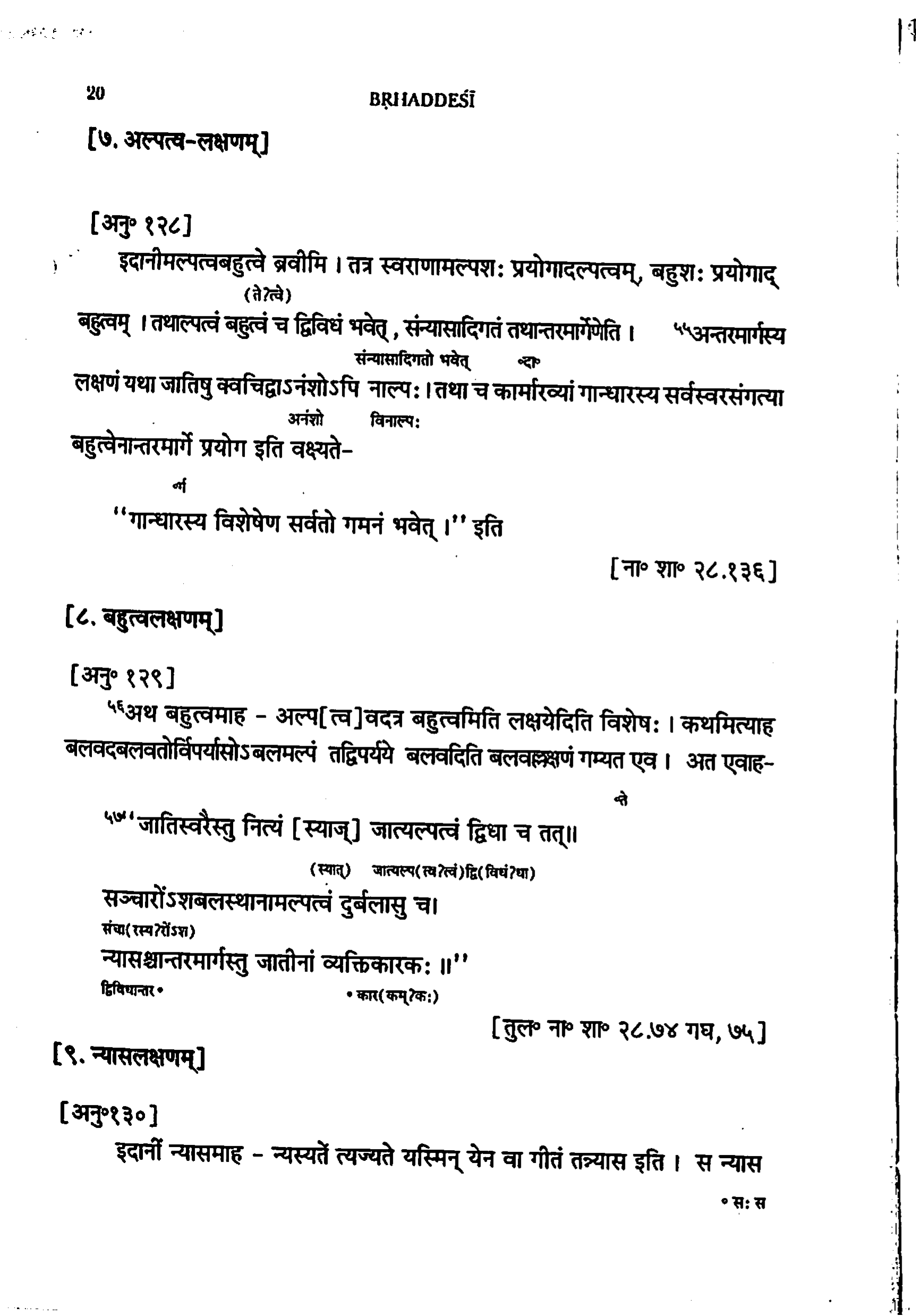
Nyāsa is the point at which a gita (tonal structure) is placed, left, or ended
"with which gita (tonal structure) is 'placed', left or ended is nyāsa."
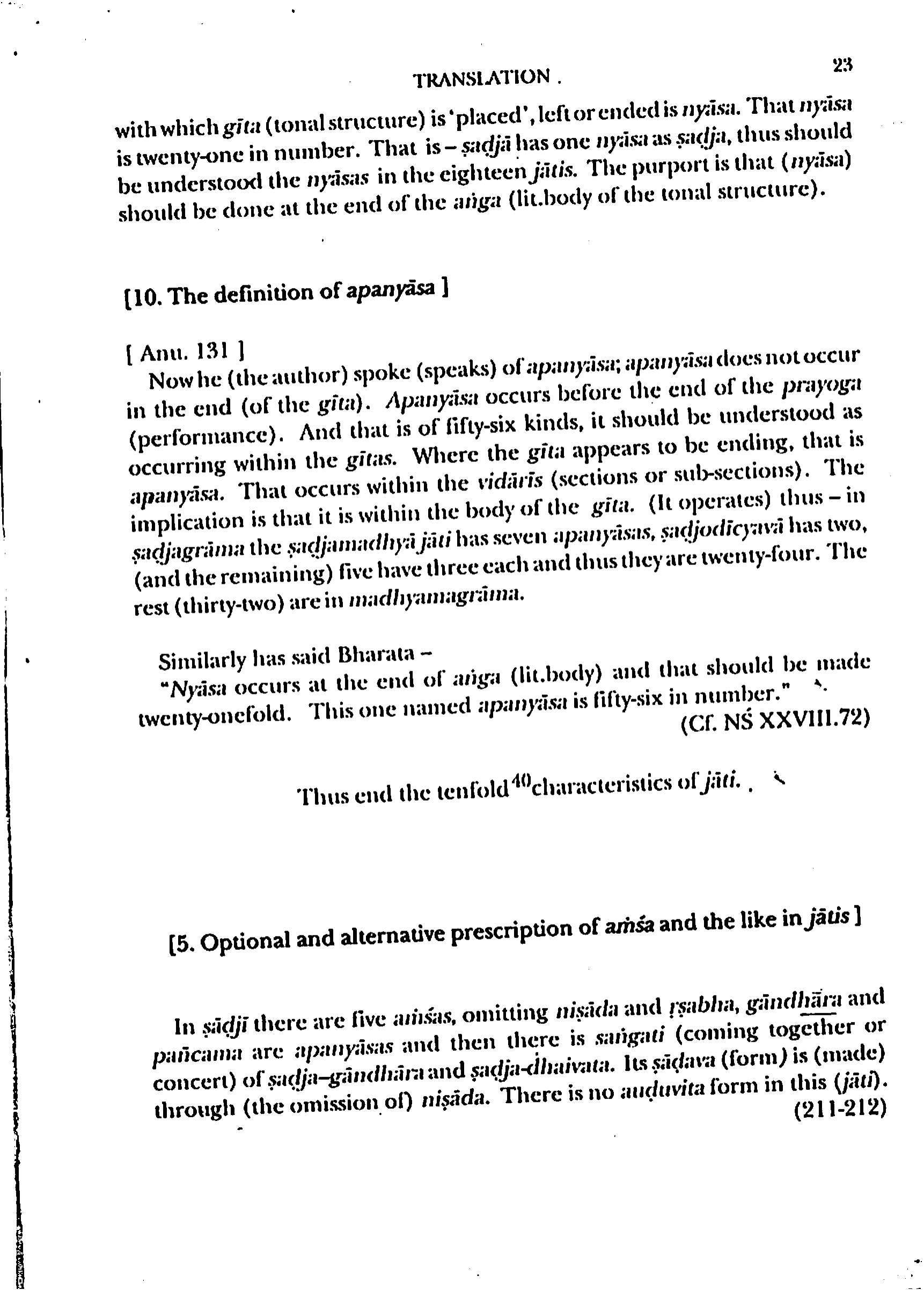
Nyāsa refers to the concluding note in bhāṣā classification, used in defining Sādhāritā with madhyama as nyāsa
"षड्ज?ांशा मध्यमन्यासा"
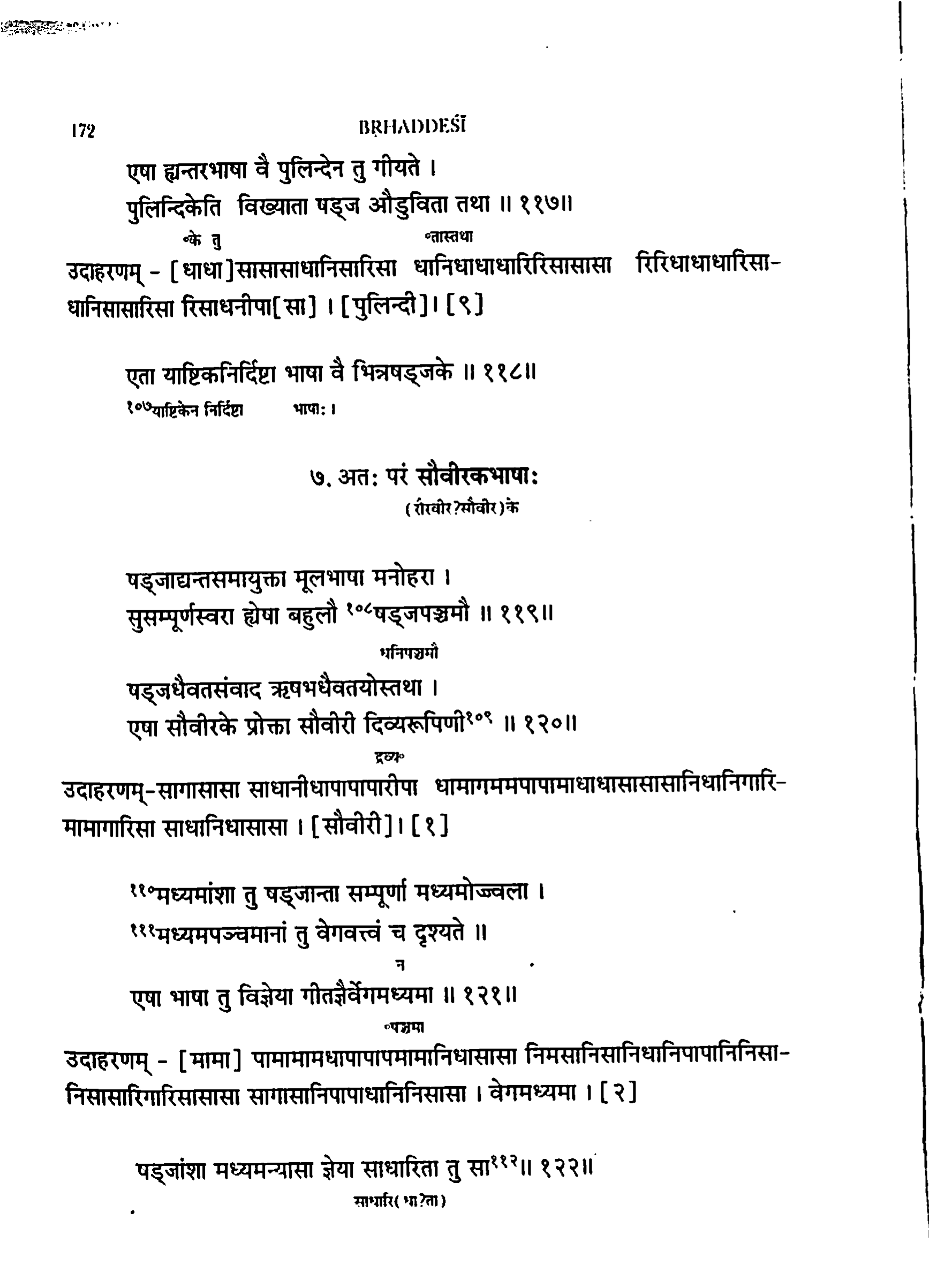
Gāndhāra is the nyāsa on account of being a svara-jāti
"स्वरजातित्वाद् गान्धारो न्यासः,"
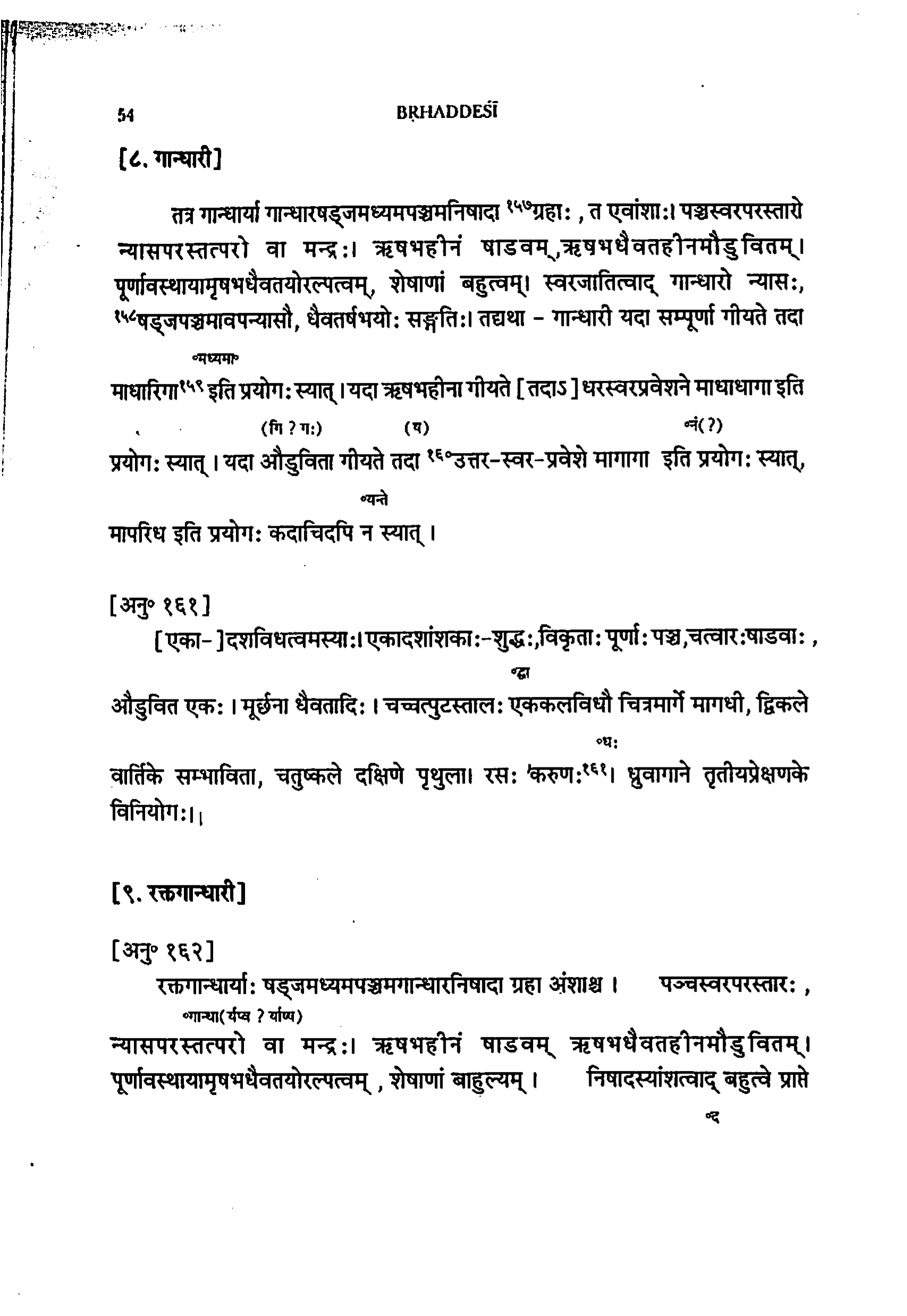
When ni and dha are aṁśas, pancama alone functions as nyāsa; otherwise gāndhāra-niṣāda svaras serve as nyāsas
"When ni and dha are the
amsas, then pancama alone is the nyāsa; otherwise the svaras with two śrutis
(gāndhāra-niṣāda) are known to be nyāsas."
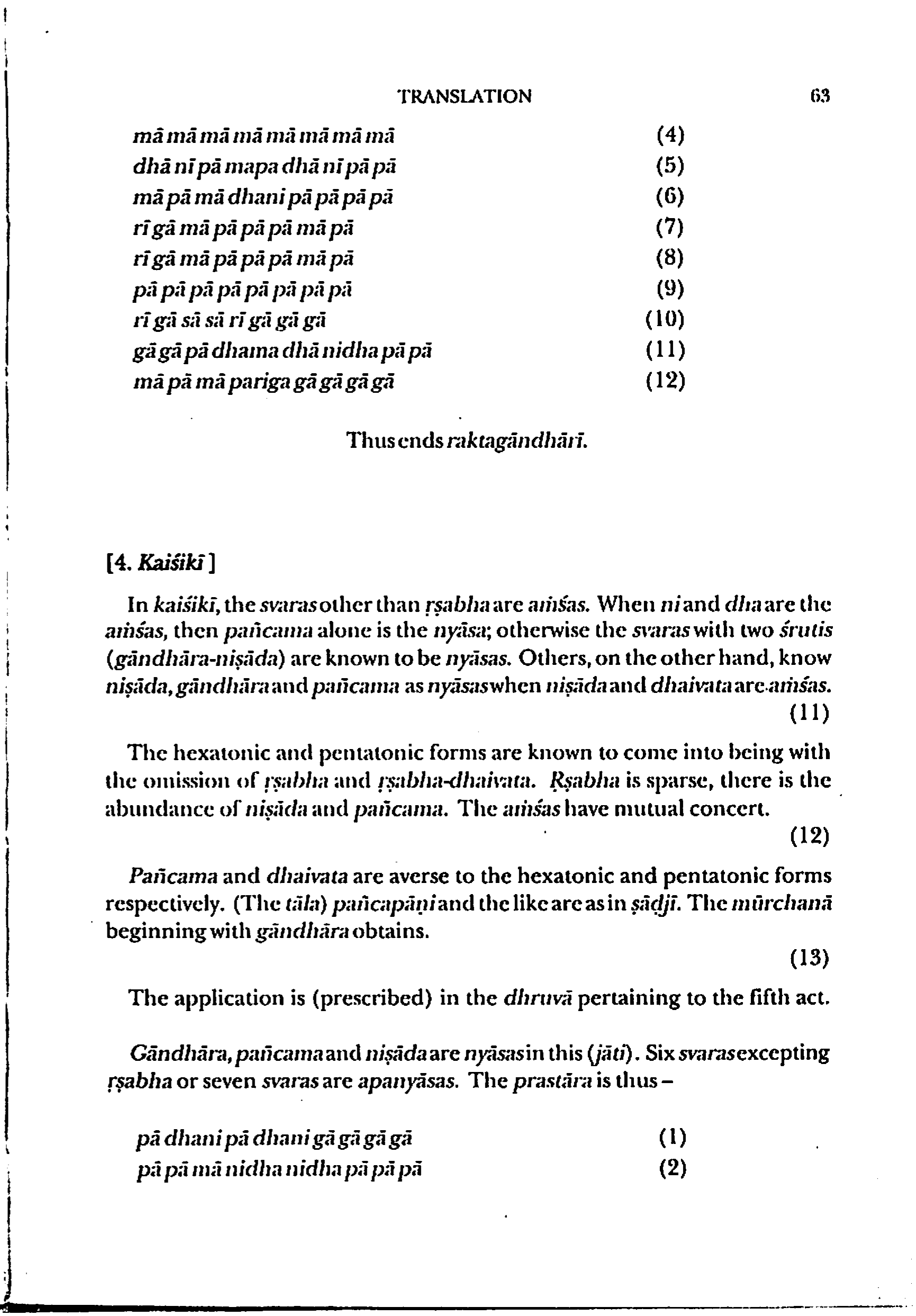
nyāsa is a structural feature of bhāṣā melodies
"Having ṣaḍja as its nyāsa"
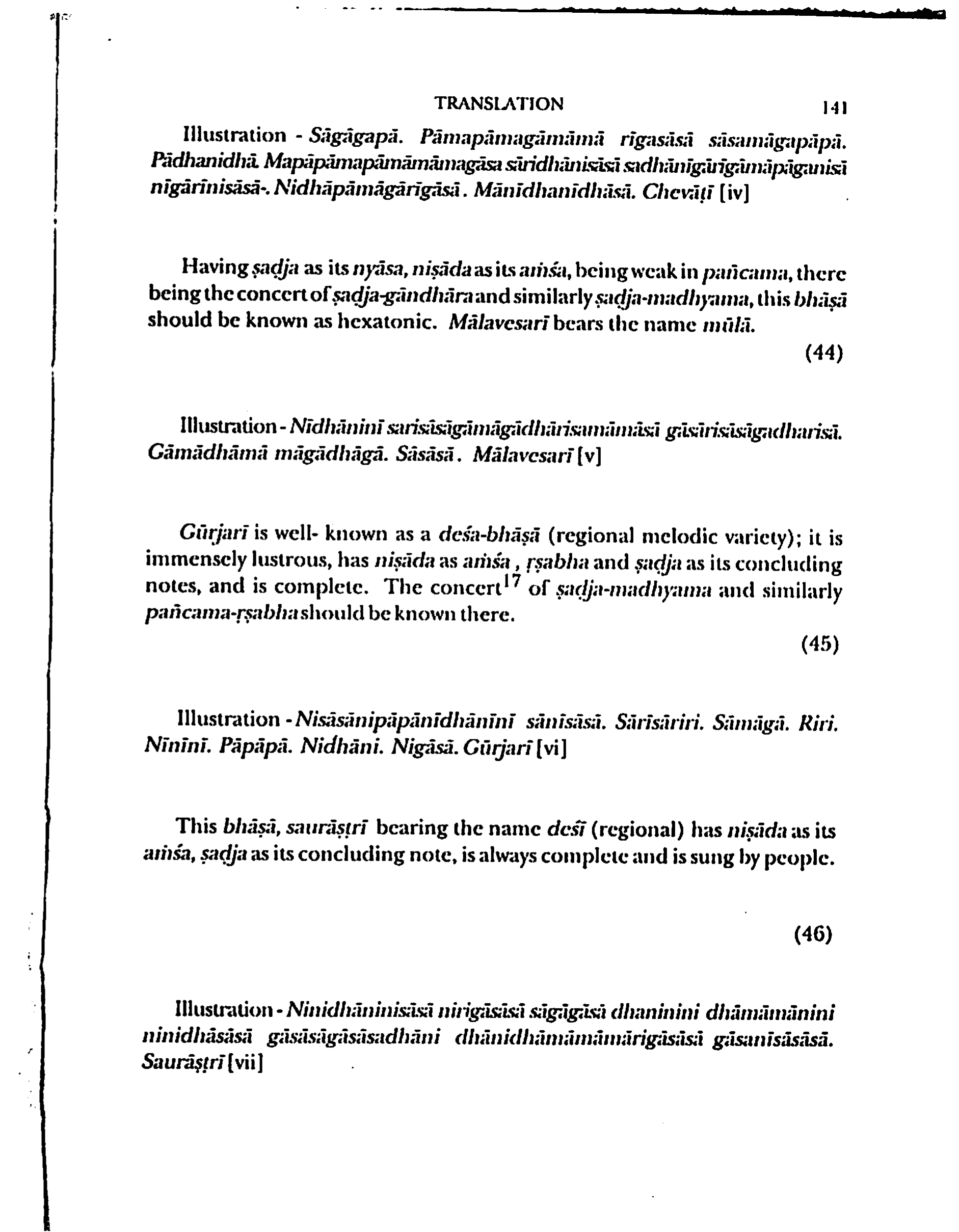
nyāsa is a structural feature paired with aṁśa in the formation of bhāṣās
"Combined with ṣaḍja as aṁśa and nyāsa, weak in dhaivata"
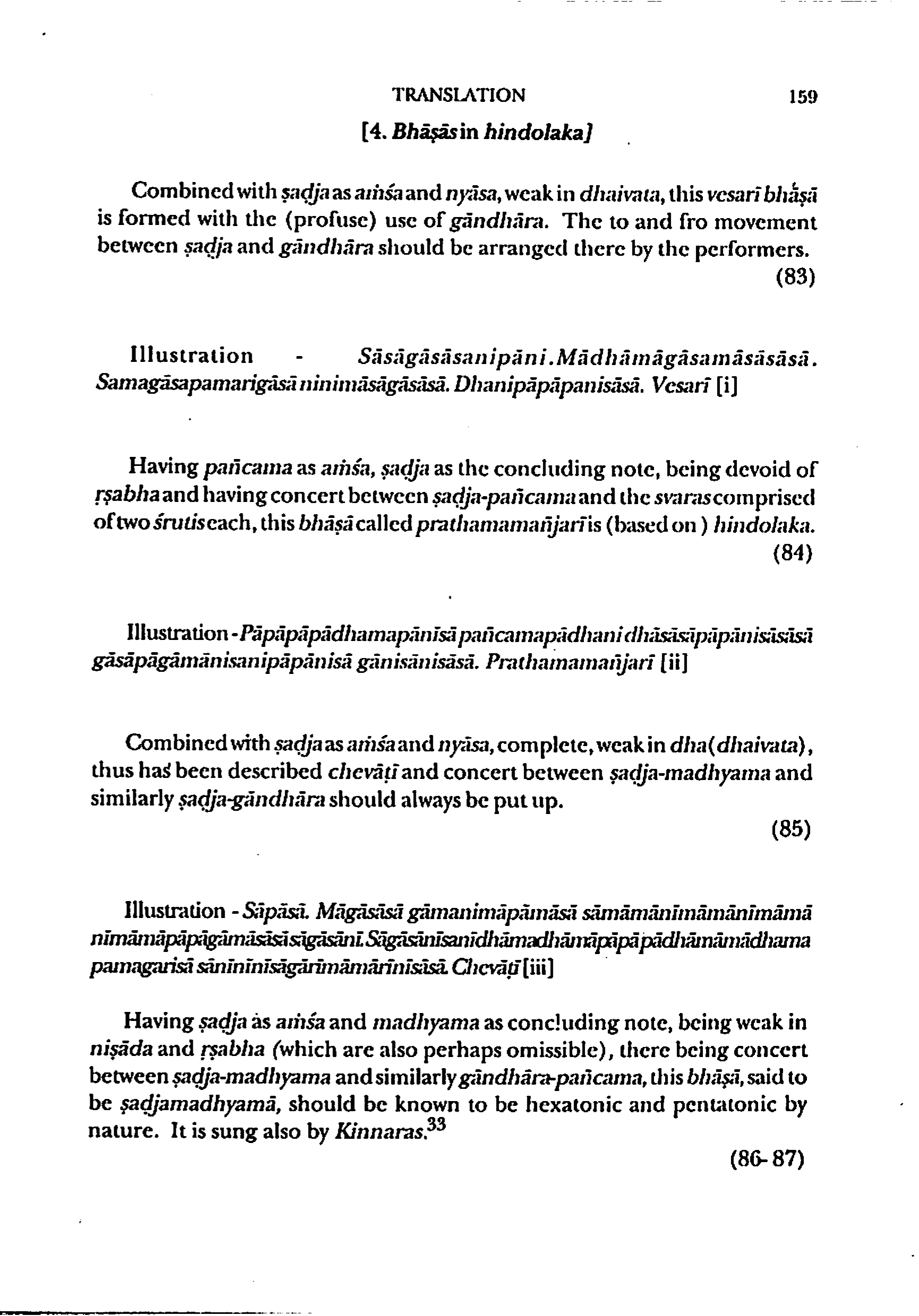
In śuddhā jātis, nyāsa on the naming svara is prescribed to be mandra (low)
"तासु नामकारी यो न्यासः [स] नियमेन मन्त्रो भवति"
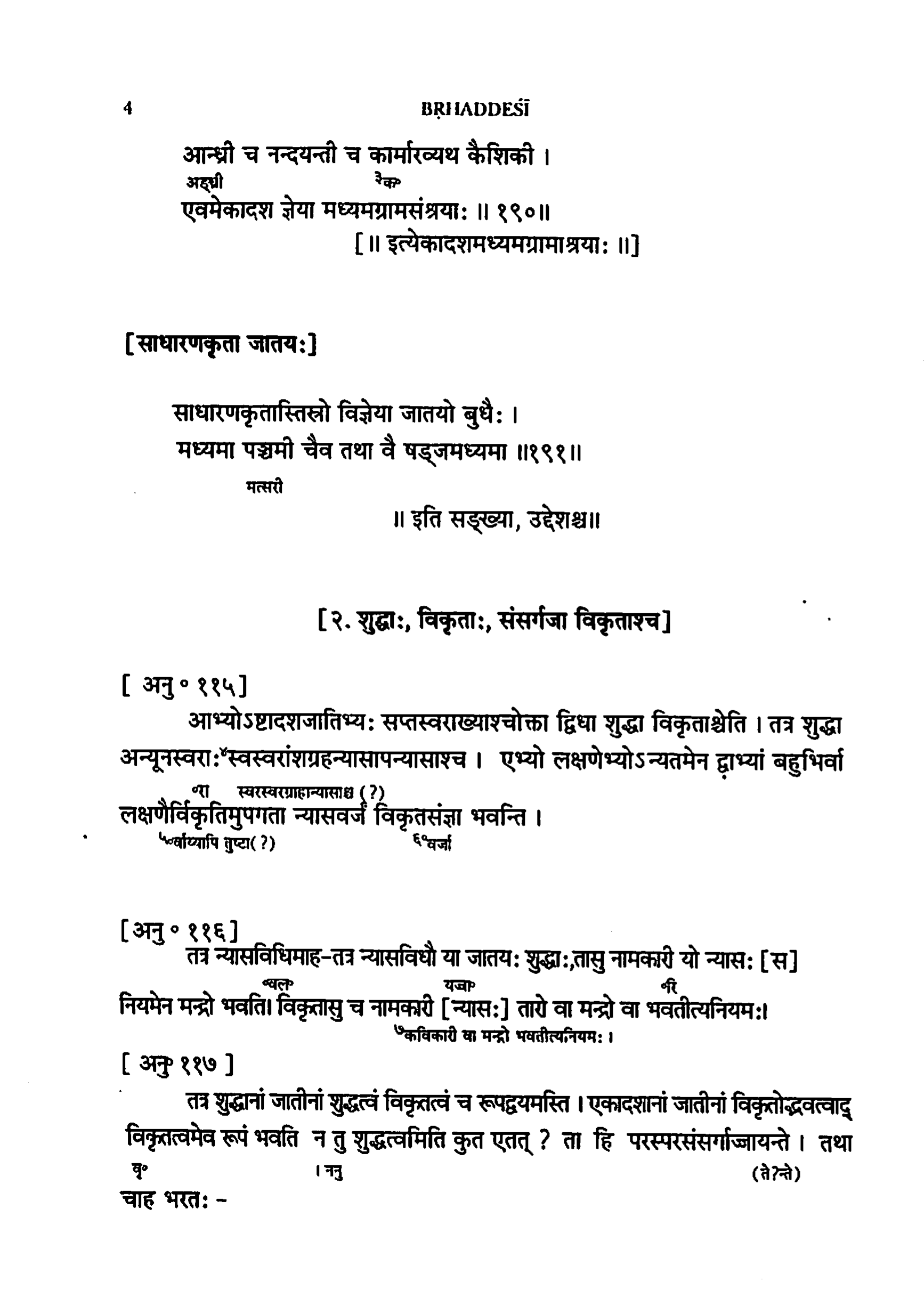
In vikṛtā jātis, nyāsa on the naming svara can be either tāra (high) or mandra (low) without fixed rule
"विकृतासु च नामकरी [न्यासः] तारो वा मन्द्रो वा भवतीत्यनियमः"
Nyāsa is twenty-one in number
"That nyāsa is twenty-one in number."
Nyāsa occurs at the end of anga (body of tonal structure)
"Nyāsa occurs at the end of anga (lit.body) and that should be made
twenty-onefold."
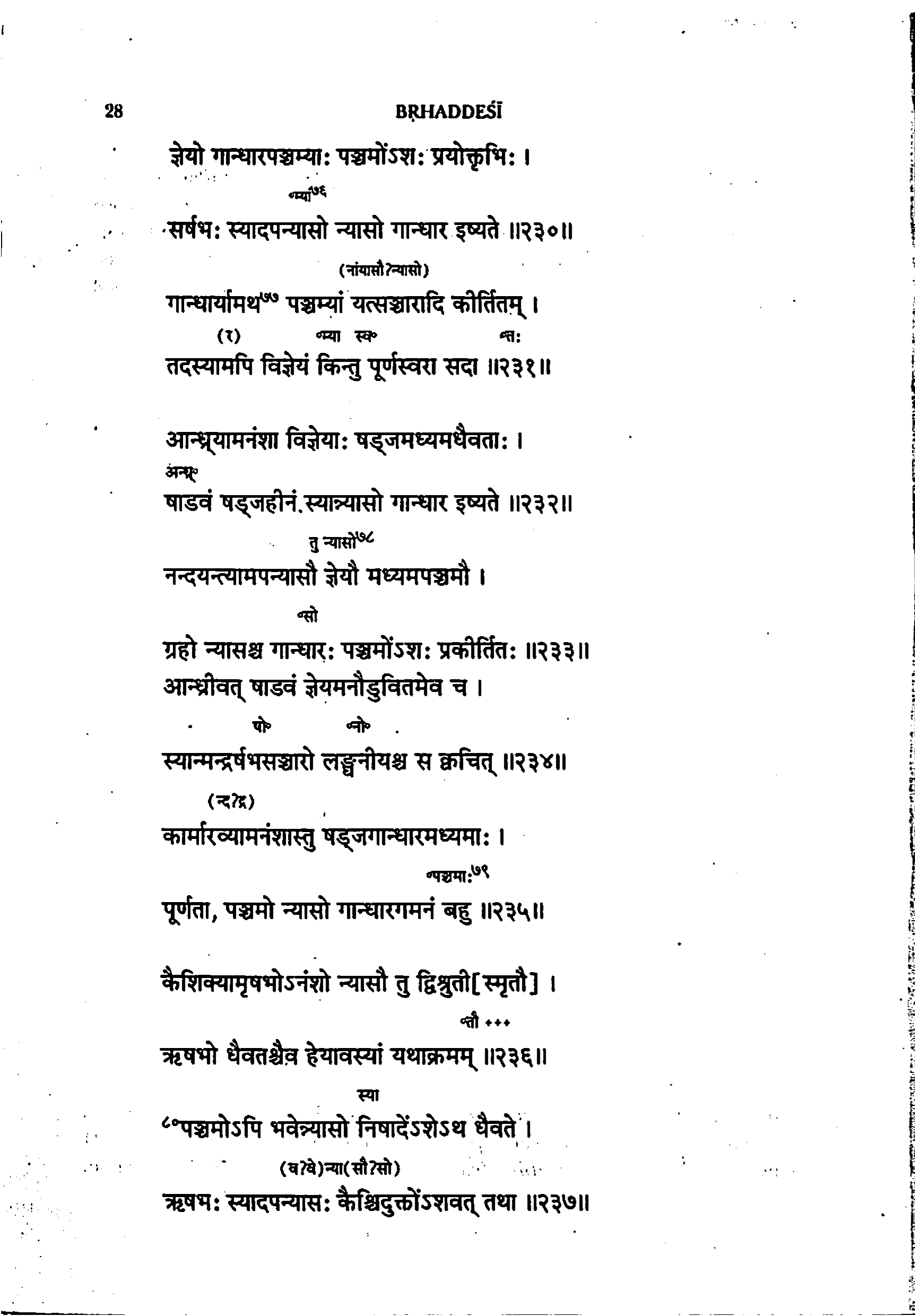
In gāndhārapañcamī, gāndhāra is the desired nyāsa (cadential note)
"न्यासो गान्धार इष्यते"
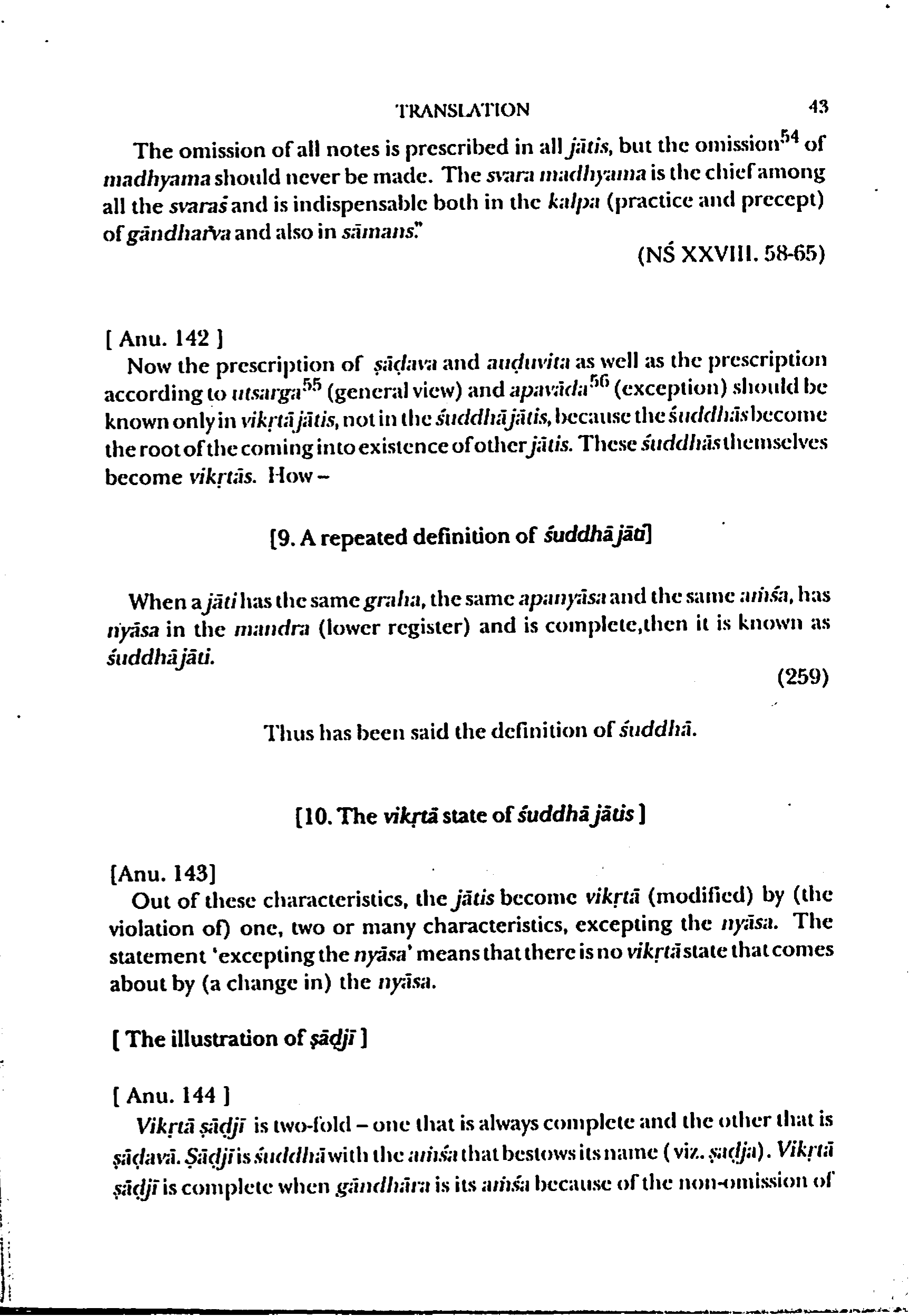
There is no vikṛtā state that comes about by a change in the nyāsa
"The statement 'excepting the nyāsa' means that there is no vikṛtā state that comes
about by (a change in) the nyāsa."
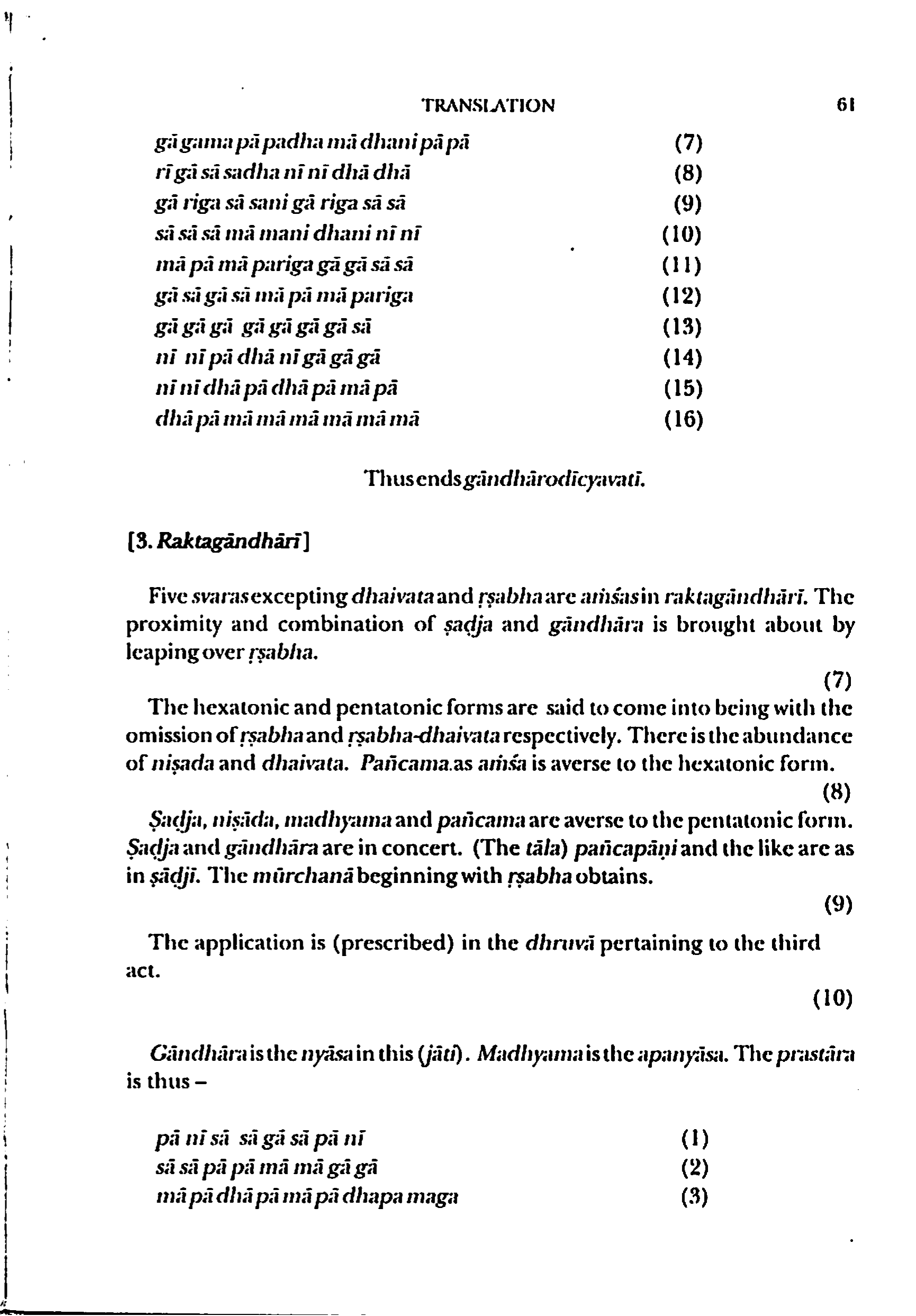
Gāndhāra functions as the nyāsa in raktagāndhārī jāti
"Gāndhāra is the nyāsa in this (jāti)."
Pañcama functions as the nyāsa in śuddhakaiśika rāga
"पञ्चमो न्यासः"
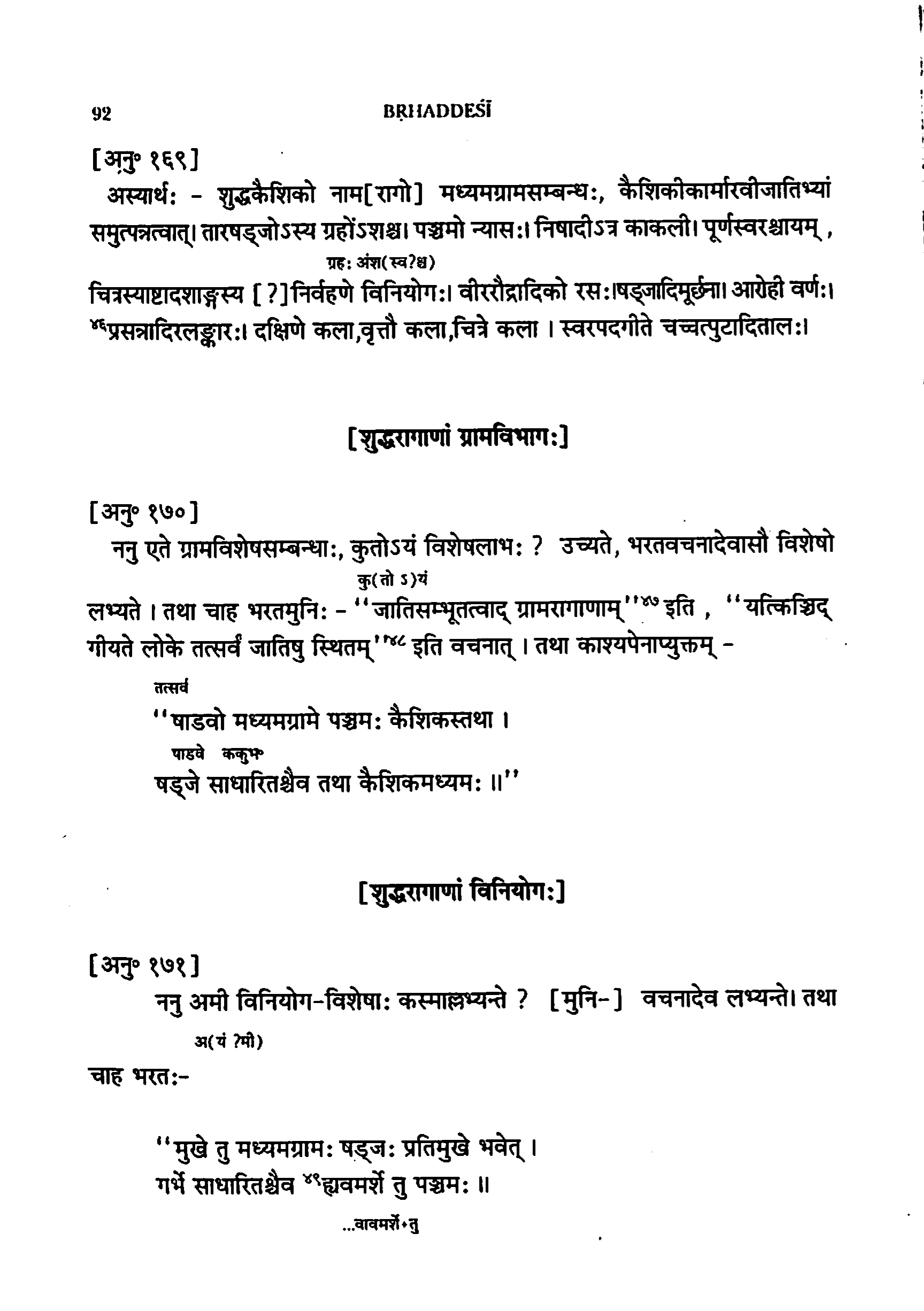
nyāsa is a structural element; in Bhinnakaisikamadhyama, madhyama serves as nyāsa
"Madhyama
is the nyāsa."
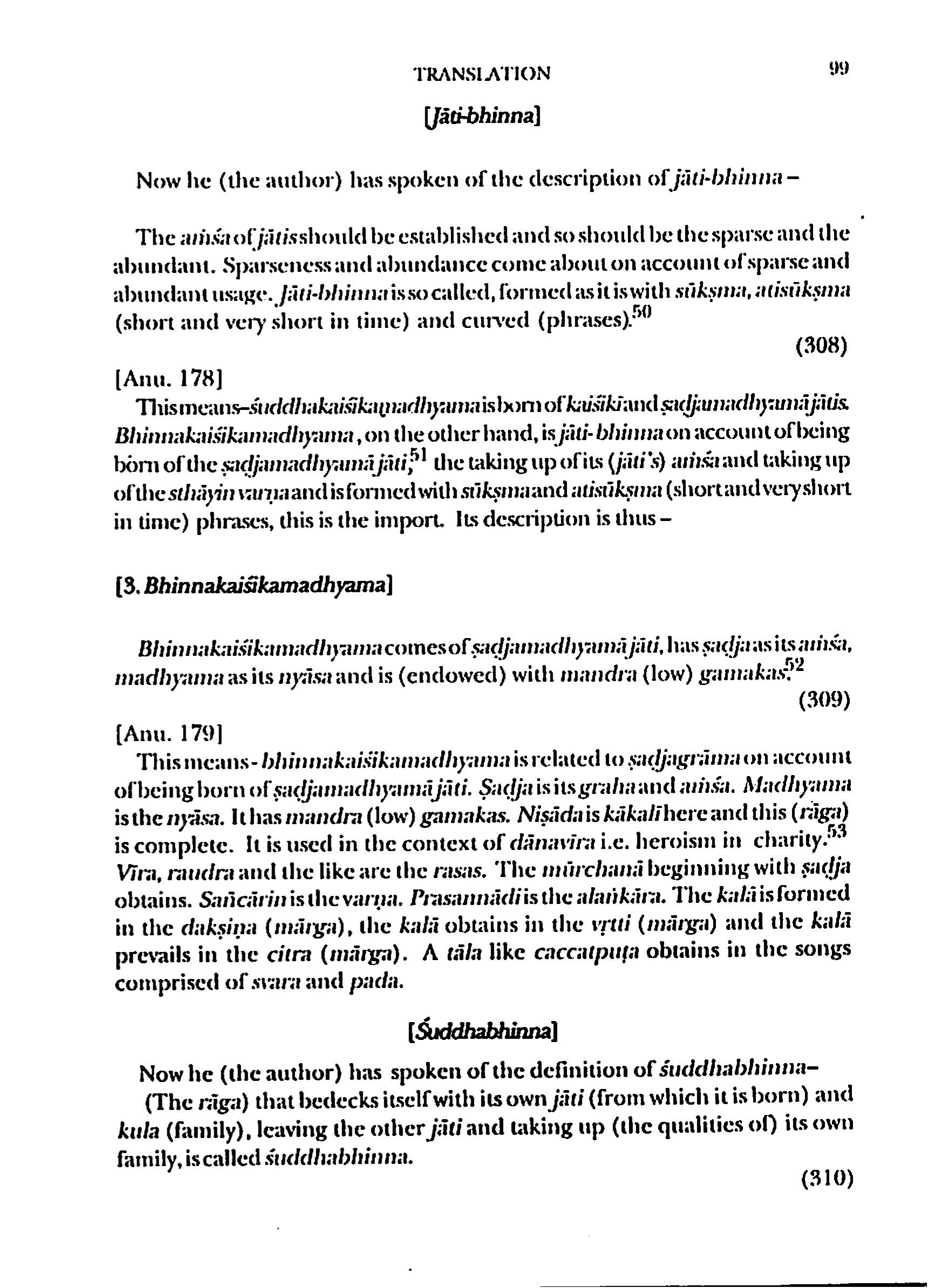
nyāsa is a concluding or resting note in a bhāṣā, as exemplified by pañcama in bhāvinī
"Bhāvinī has pañcama as nyāsa"
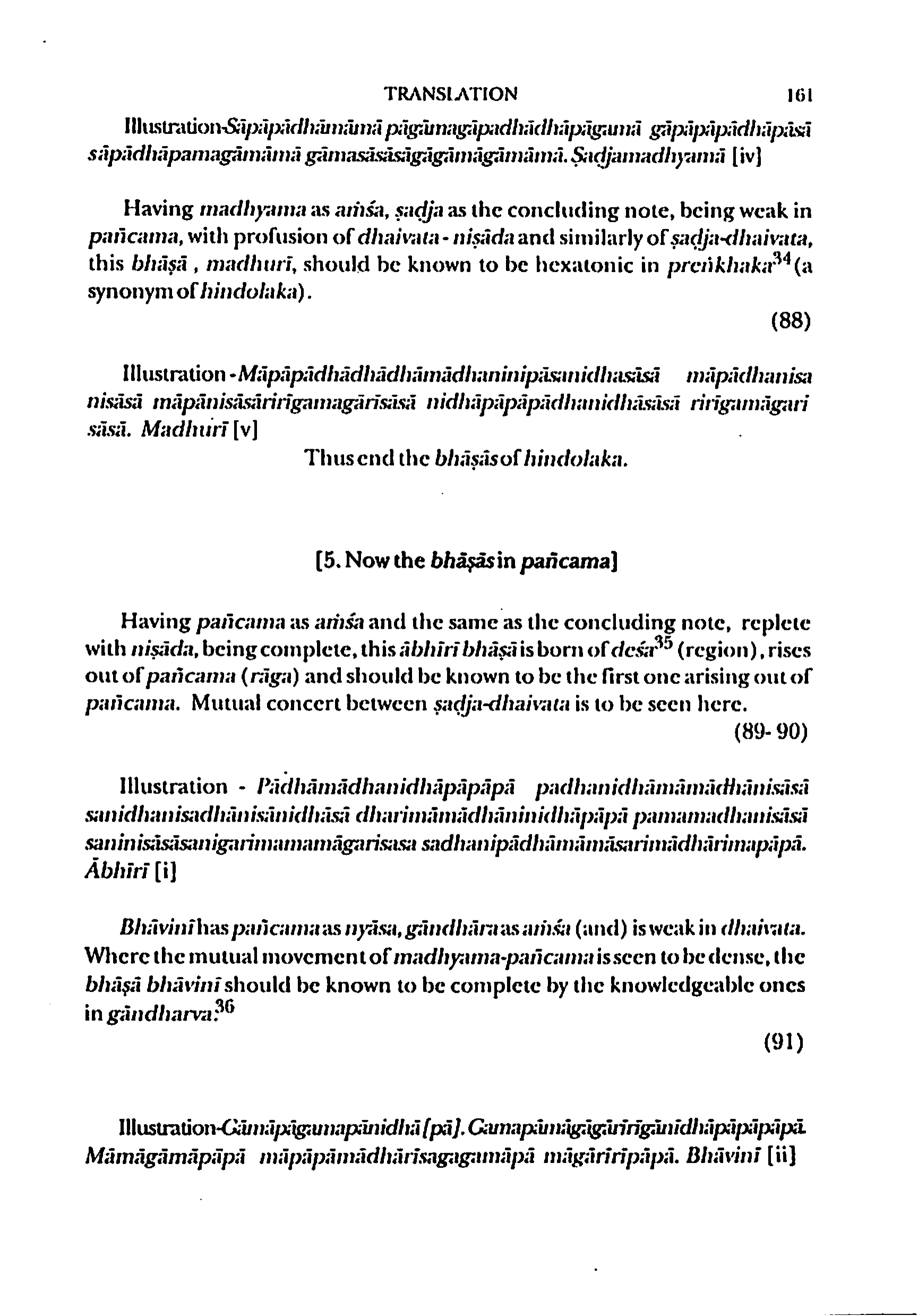
nyāsa is a technical term used to characterize rāgas alongside graha
"गान्धारग्रहन्यासा च षड्ज?ांशा तारवर्ज?िता"
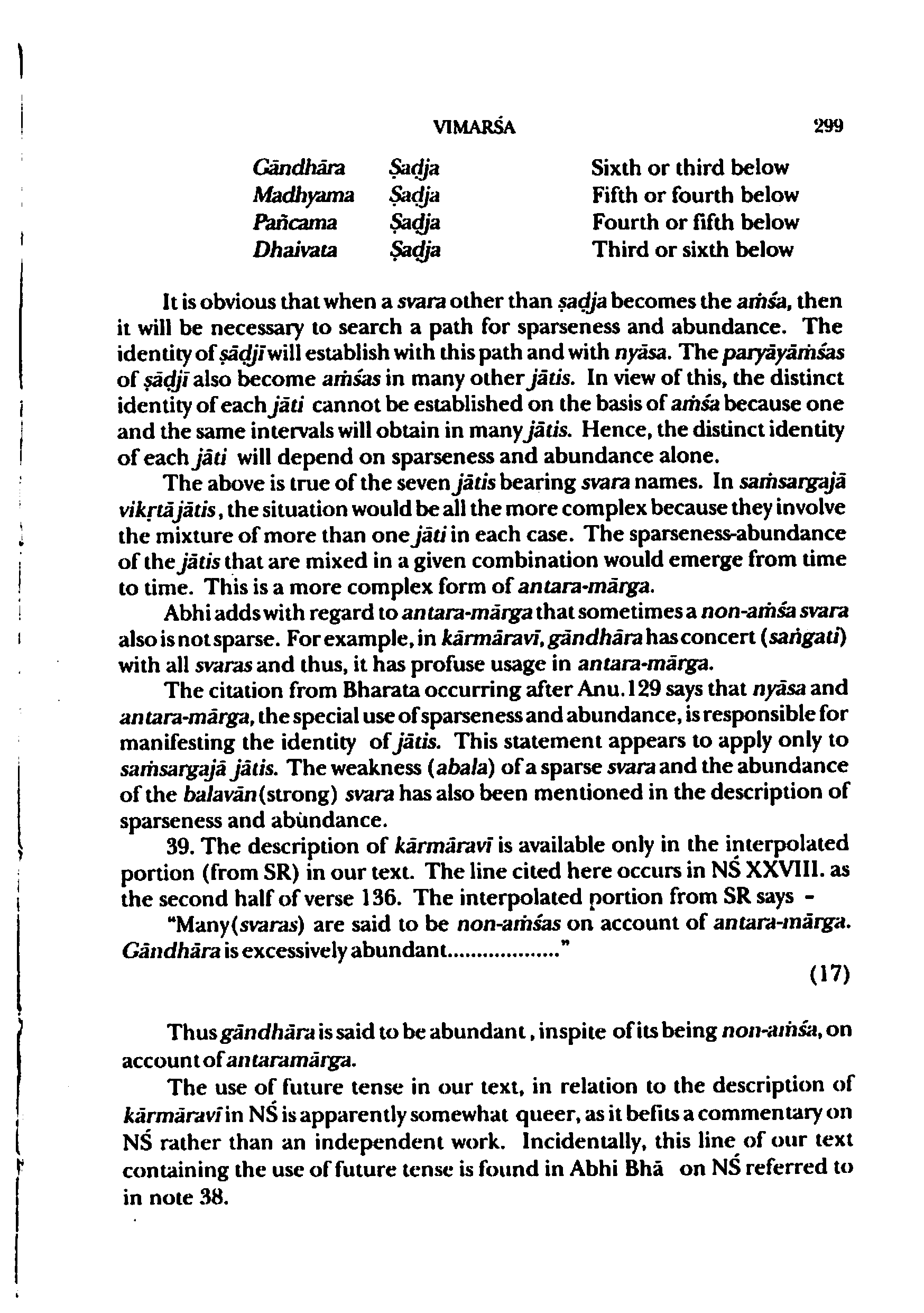
Nyāsa can operate in the mandra (low) range, as evidenced in the sixth vidārī of dhaivatī which ends with the lower dha.
"The operation of nyāsa in the mandra range could be seen in the
sixth vidārī of dhaivatī, which ends with the lower 'dha'."
Nyāsa in ṣāḍjī is ṣaḍja, whose position changes based on which svara serves as the aṁśa
"In ṣāḍjī, the nyāsa is ṣaḍja which will be the first when sadja is amsa, the sixth when gandhara is amsa, the fifth when madhyama is amsa, the fourth when pañcama is amsa and the third when dhaivata is aṁśa."