apanyāsa svara_role
Grammar record (family: svara_role)
| count | fifty-six kinds | p.vol_II_p020, conf 0.95 |
| position_in_structure | occurring within the gitas | p.vol_II_p020, conf 0.85 |
| assigned_svaras_in_gandhari | Şadja and pañcama | p.vol_II_p022, conf 0.95 |
| assigned_svara_in_gandharapancami | सर्षभः | p.vol_II_p023, conf 0.85 |
| assigned_svaras_in_sadjamadhyama | सप्तस्वरा | p.vol_II_p035, conf 0.90 |
| assigned_svara_in_ratagandhari | Madhyama | p.vol_II_p039, conf 0.95 |
| boundary_function | lowest limit of mandra could extend upto the lower octave of amsa or nyasa or apanyasa | p.vol_II_p157, conf 0.60 |
Generative rules (2) ↗ filter all
R_c17_apanyasadefinition · 12 att.
apanyāsa = svara de cadence intermédiaire (avant fin), interne aux vidārīs, jamais en fin de gītaR_4p0_005definition · 6 att.
apanyāsa = svara de repos secondaire (non-nyāsa); enumeration variable selon jāti (ṣaḍja+pañcama; ṣaḍja+dhaivata; madhyama+pañcama; six/sept svaras hors ṛṣabha
Pseudocode (DSL v1.1) ↗ full DSL (raw text)
RULE id: apanyāsa (cluster 17)
SCOPE: svara_role family
STATUS: canonical
CONFIDENCE: canonical
PROTECT: true

RECORD:
  count                             = fifty-six kinds
  position_in_structure             = occurring within the gitas
  assigned_svaras_in_gandhari       = Şadja and pañcama
  assigned_svara_in_gandharapancami = सर्षभः
  assigned_svaras_in_sadjamadhyama  = सप्तस्वरा
  assigned_svara_in_ratagandhari    = Madhyama
  boundary_function                 = lowest limit of mandra could extend upto the lower octave of amsa or nyasa or apanyasa
Essence pseudocode — identity + RECORD. The page citations for each slot value are in the Grammar record table above (audit trail). The full DSL adds ASSERTIONS with verbatim quotes (see Affirmations below) and CITED_RULES (see Graph relations).
Graph relations
Outgoing (27)
--[structural]--> pañcama (3)--[structural]--> ṛṣabha (2)--[structural]--> svaras (2)--[structural]--> madhyama (2)--[structural]--> aṁśa (1)--[definition]--> nyāsa (1)--[structural]--> mandra (1)--[structural]--> raktagāndhārī (1)--[structural]--> kaiśikī (1)--[structural]--> gāndhārī (1)--[enumeration]--> pañcama (1)--[relation]--> pañcama (1)--[structural]--> gāndhārodīcyavā (1)--[structural]--> nandayantī (1)--[relation]--> dhaivatī (1)--[relation]--> vidārī (1)--[relation]--> śuddhā (1)--[definition]--> prayoga (1)--[structural]--> न्यासः (1)--[structural]--> gāndhārapañcamī (1)--[relation]--> dhaivata (1)--[structural]--> dhaivata (1)--[definition]--> Gita (1)--[relation]--> Gita (1)--[structural]--> sadjamadhyamā (1)--[relation]--> madhyama (1)--[structural]--> Şadja (1)
Incoming (13)
pañcamī --[structural]--> (2)Bharata --[attribution]--> (1)mandra --[enumeration]--> (1)raktagāndhārī --[relation]--> (1)nandayantī --[structural]--> (1)vidārī --[definition]--> (1)śuddhā --[definition]--> (1)vikṛtā --[structural]--> (1)śuddhā jātis --[definition]--> (1)Naisādī --[structural]--> (1)आन्ध्री --[relation]--> (1)NŚ XXVIII.72 --[citation]--> (1)vikrtā state --[relation]--> (1)
Affirmations (18)
Apanyāsa does not occur at the end of a gita
"apanyāsa does not occur
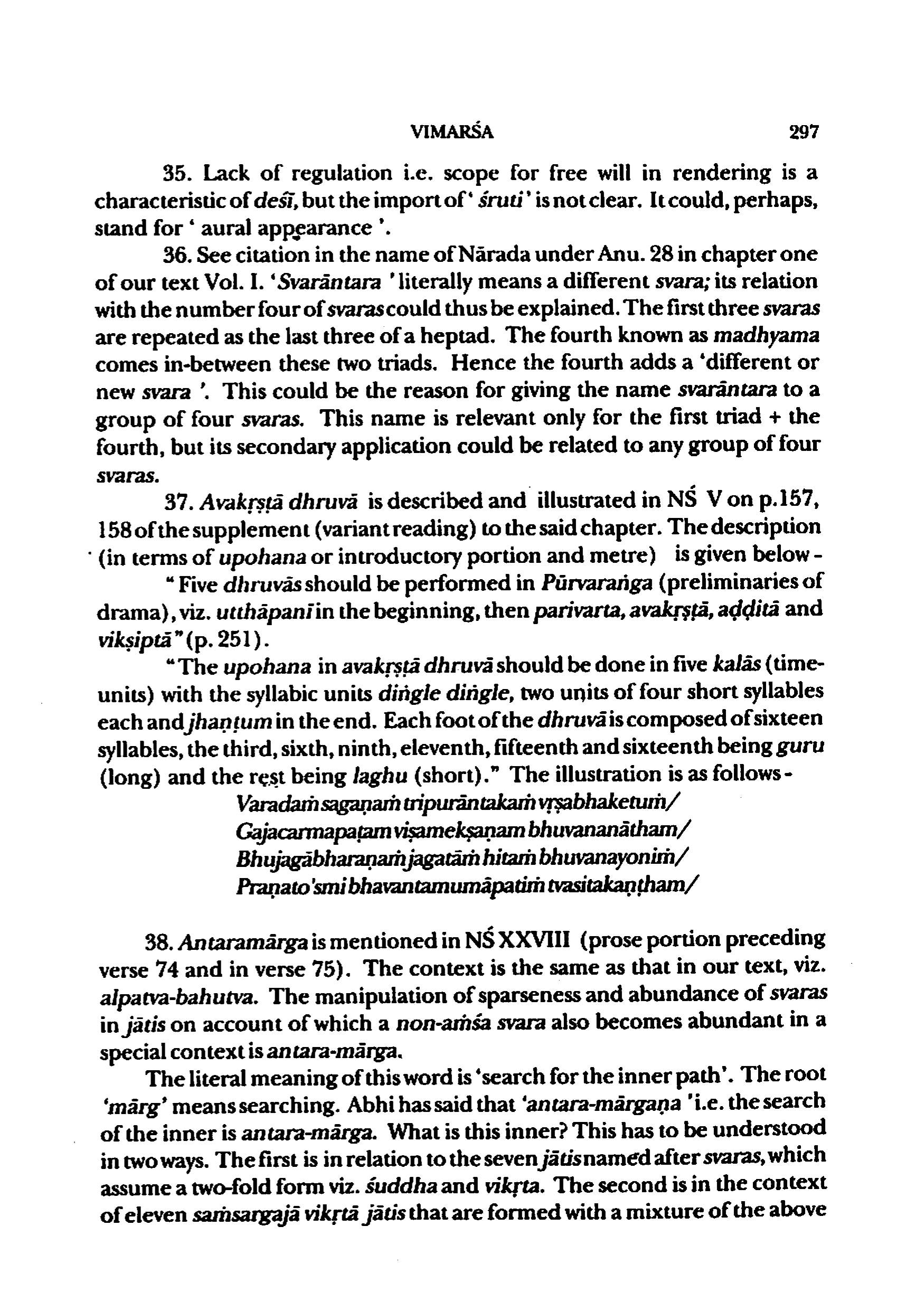
in the end (of the gita)."
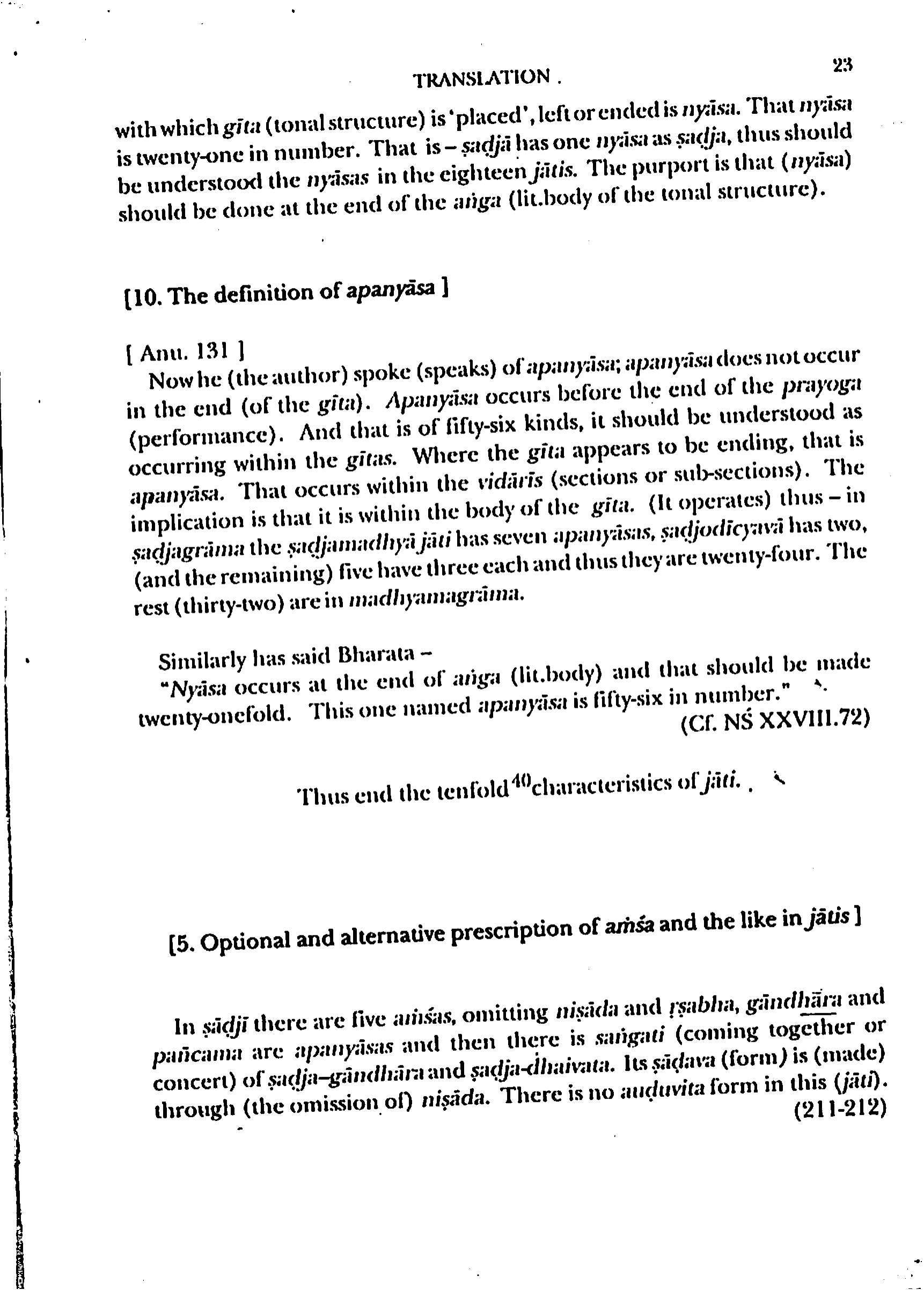
Apanyāsa occurs before the end of the prayoga (performance)
"Apanyāsa occurs before the end of the prayoga
(performance)."
apanyāsa is a technique where the practitioner does not follow the rules of nyāsa, creating the appearance of an intermediate path through discontinuity of the standard arrangement
"अपन्यसनं च न्यासत्वापगमे त्ववान्तरविच्छेद्वसंस्वात्र्यासवछतिभासनम्।"
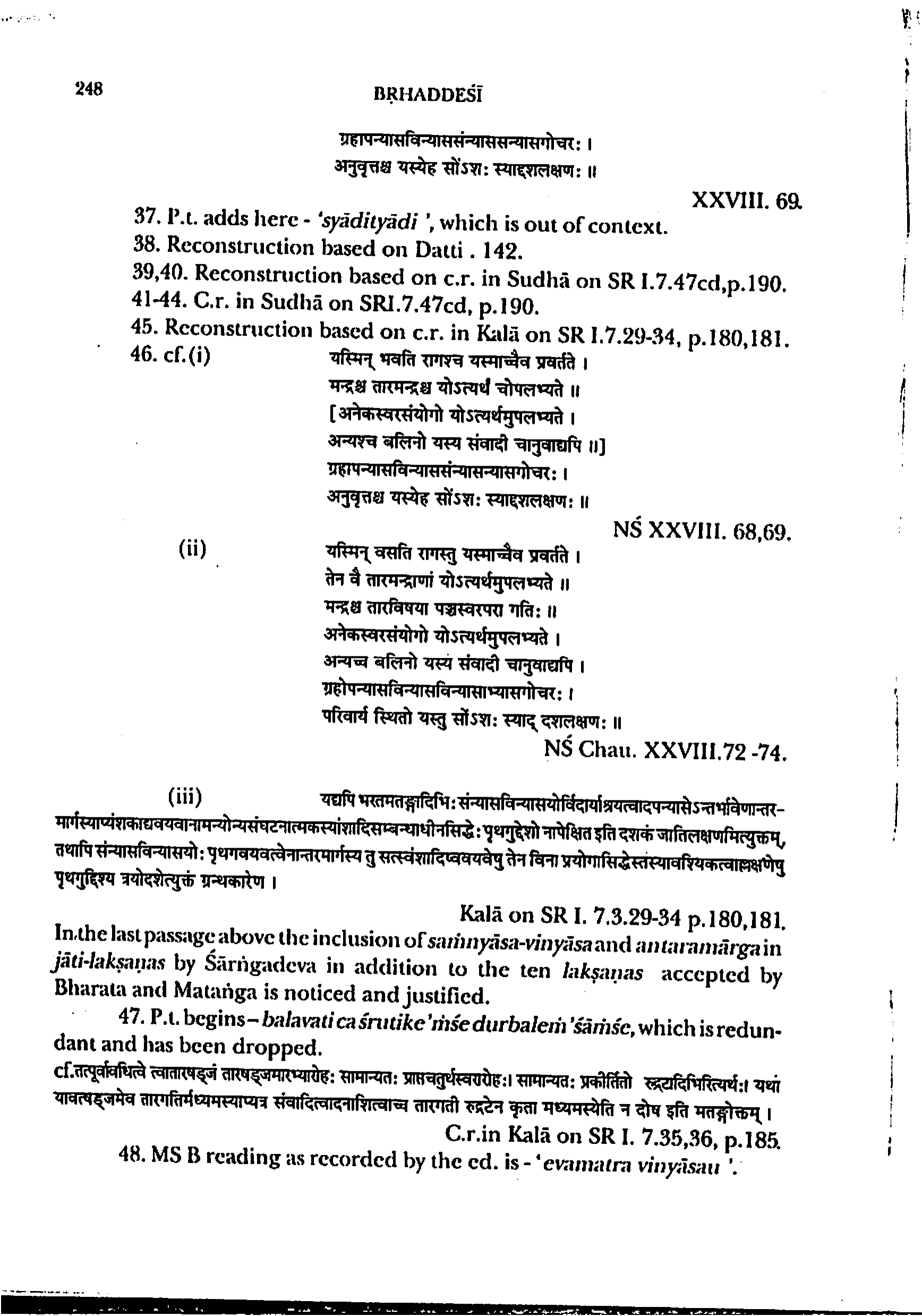
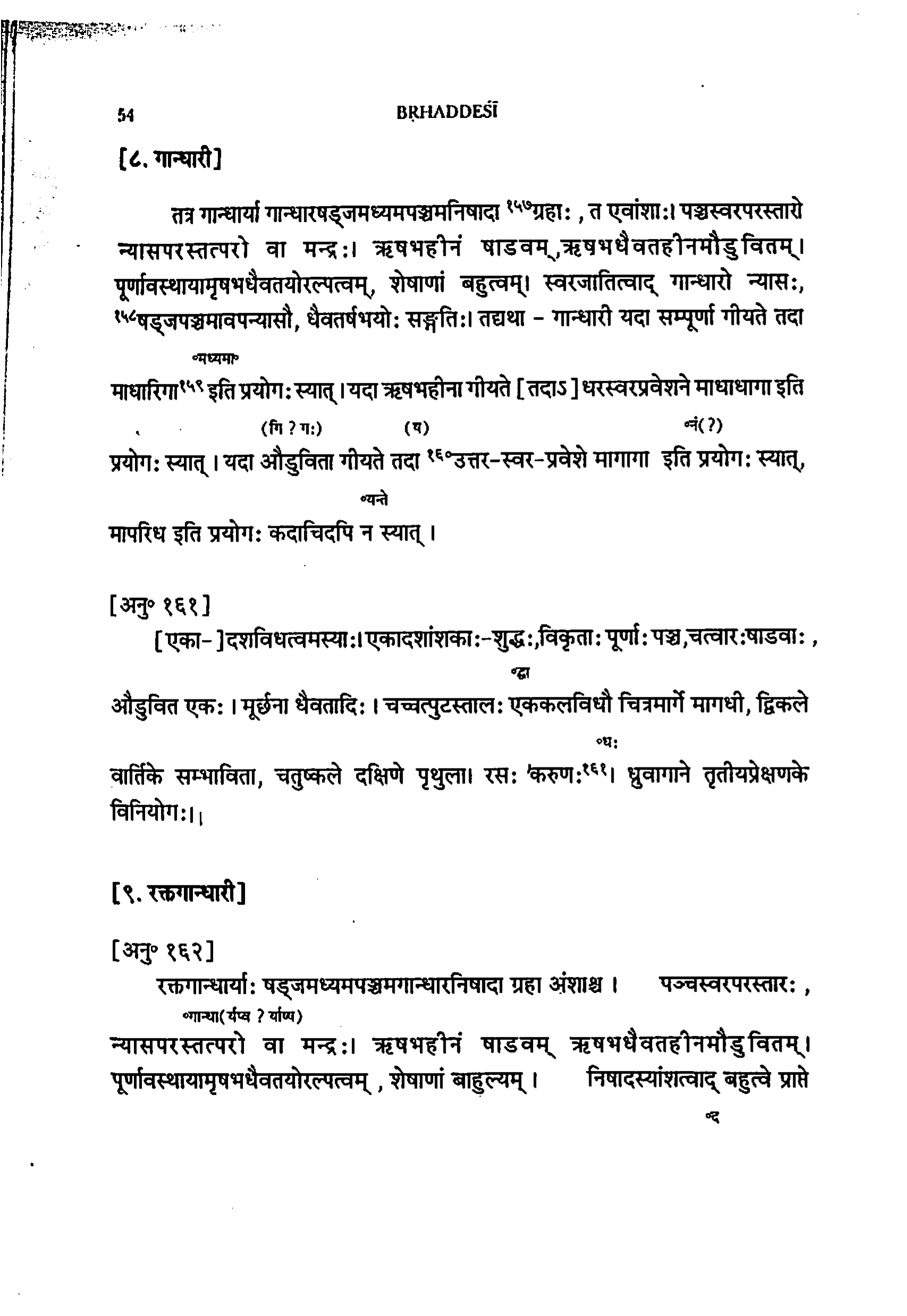
Ṣaḍja and pañcama are the two apanyāsas
"षड्जपञ्चमावपन्यासौ,"
Apanyāsa occurs within the vidārīs (sections of gita)
"That occurs within the vidārīs (sections or sub-sections)."
ṛṣabha becomes the apanyāsa on account of being non-aṁśa
"अस्मद्गुरुमते ऋषभस्तावदपन्यासो भवति । अनंशत्वात्"
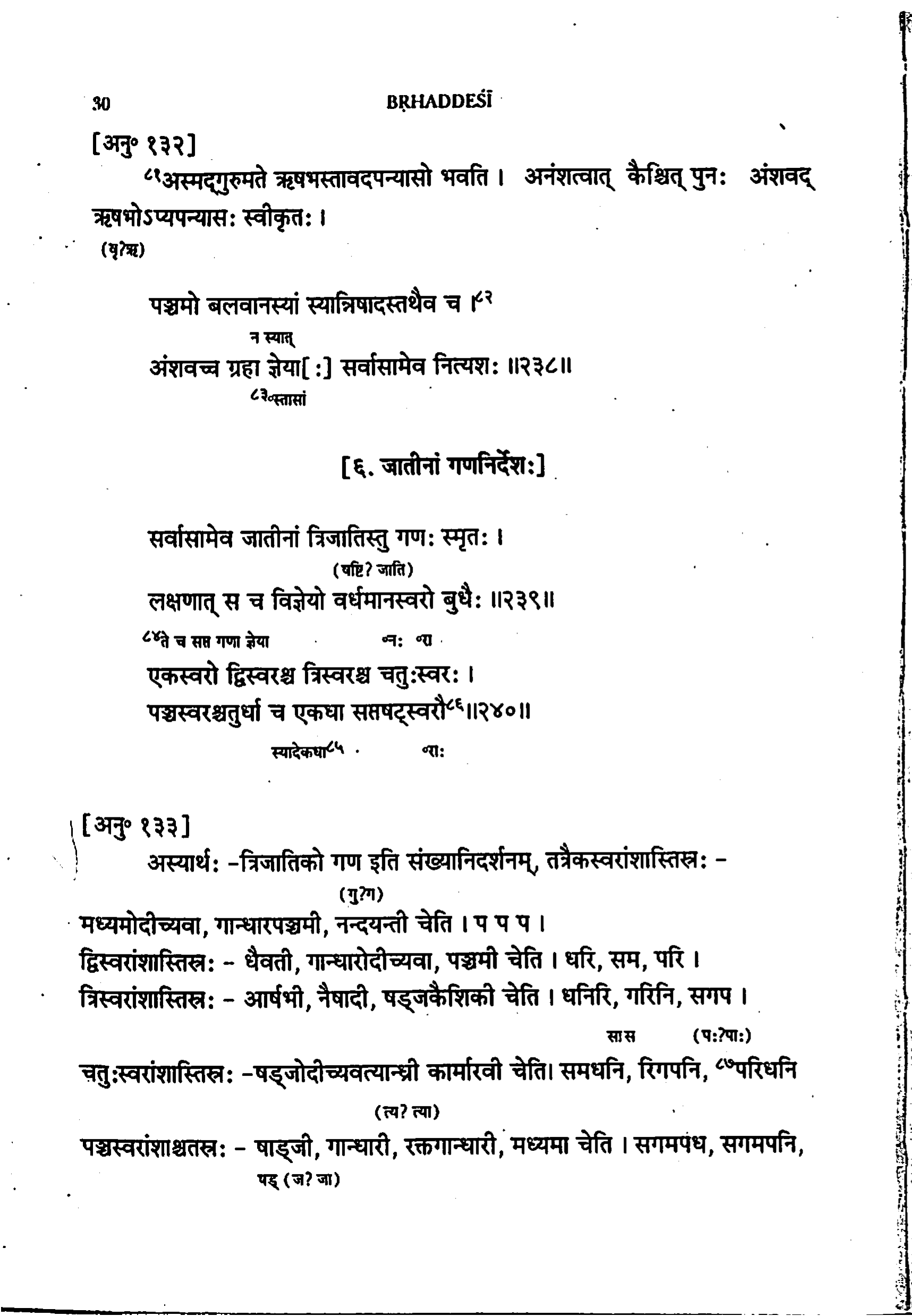
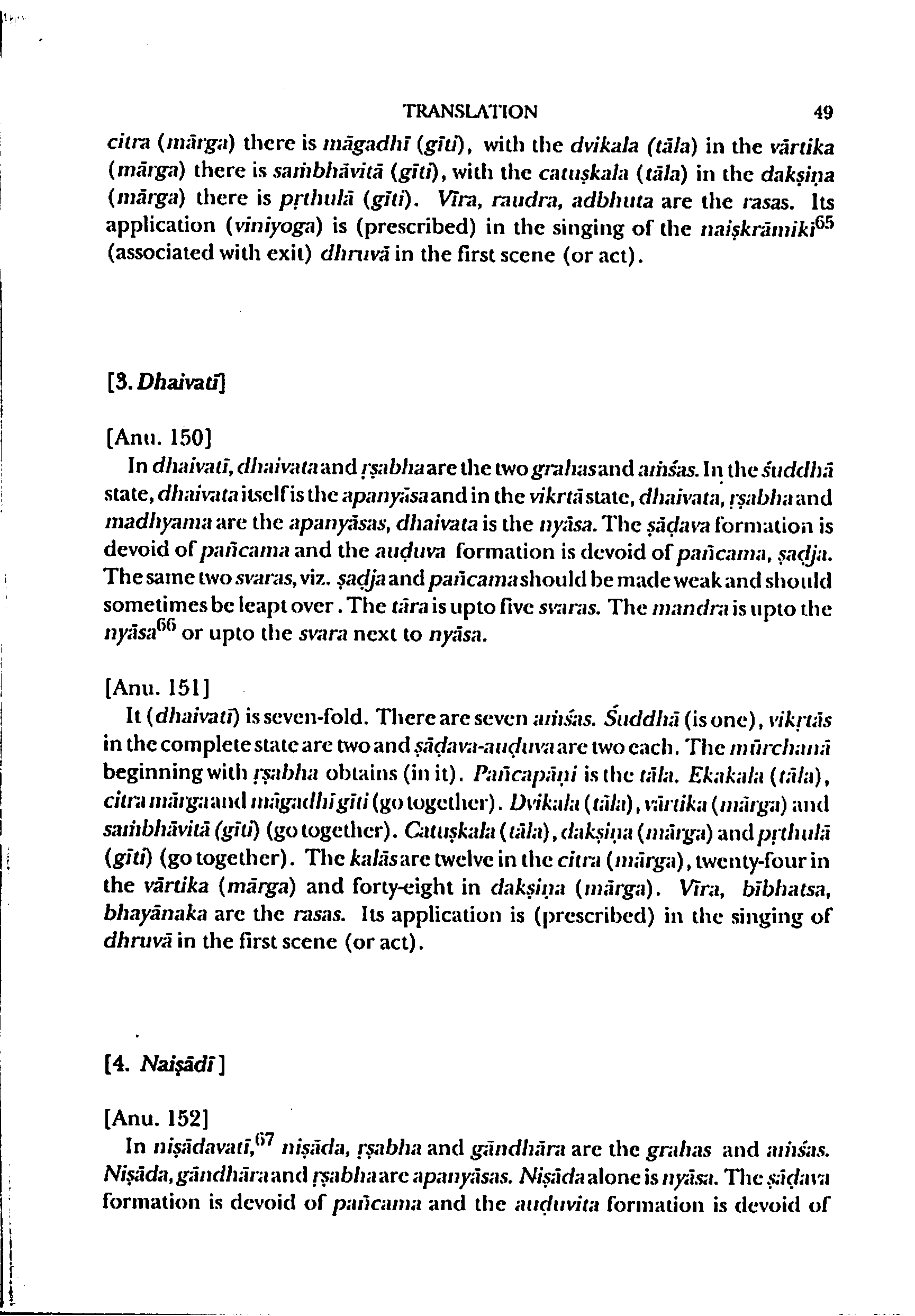
In the śuddhā state of dhaivati, dhaivata itself is the apanyāsa
"In the śuddhā
state, dhaivataitself is the apanyāsa"
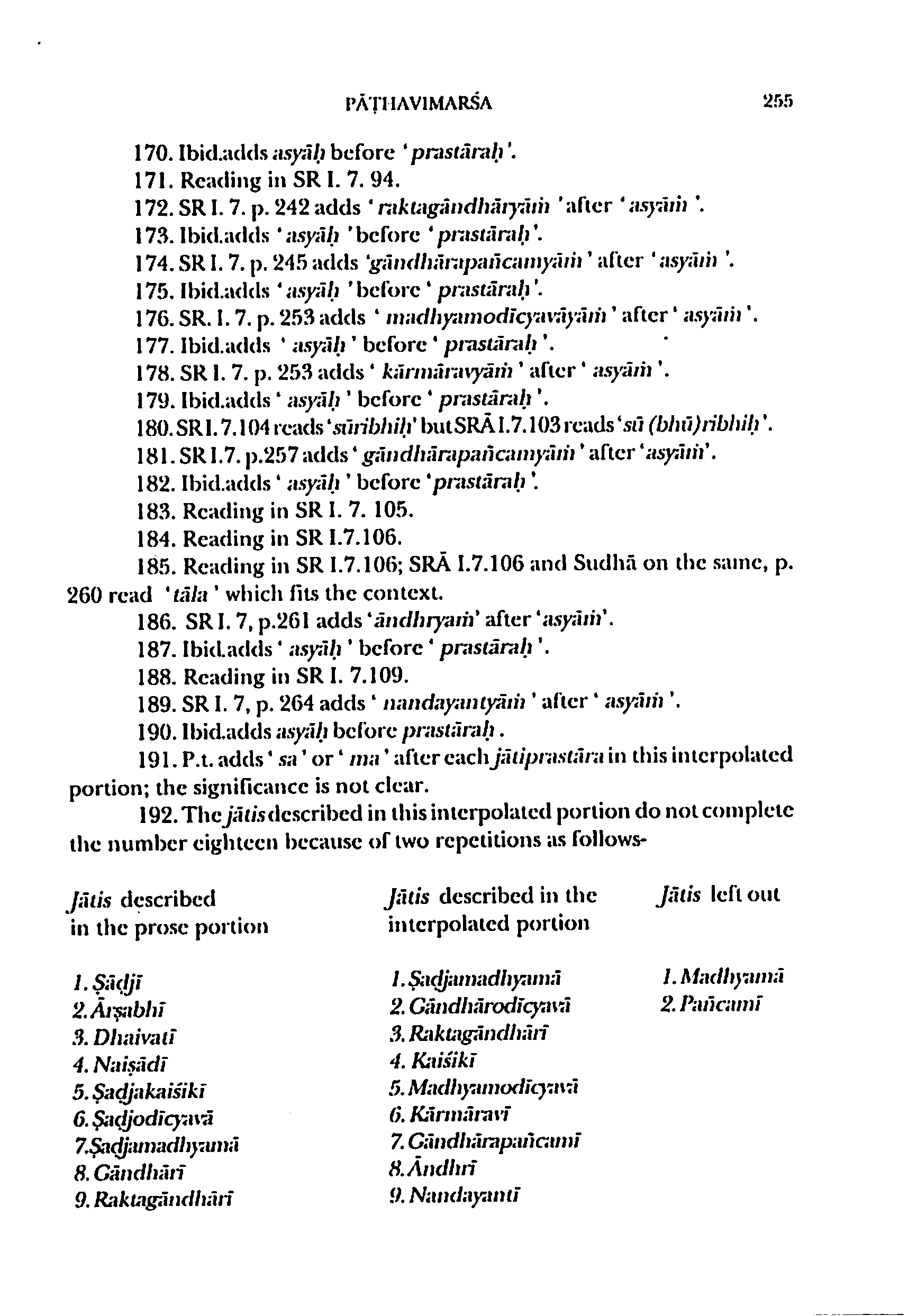
Śadja and pañcama (not madhyama) are mentioned as apanyāsas in other texts
"Śadja and pañcama (and not madhyama) are mentioned as
apanyāsas in other texts"
Apanyāsa is of fifty-six kinds
"And that is of fifty-six kinds, it should be understood as
occurring within the gitas."
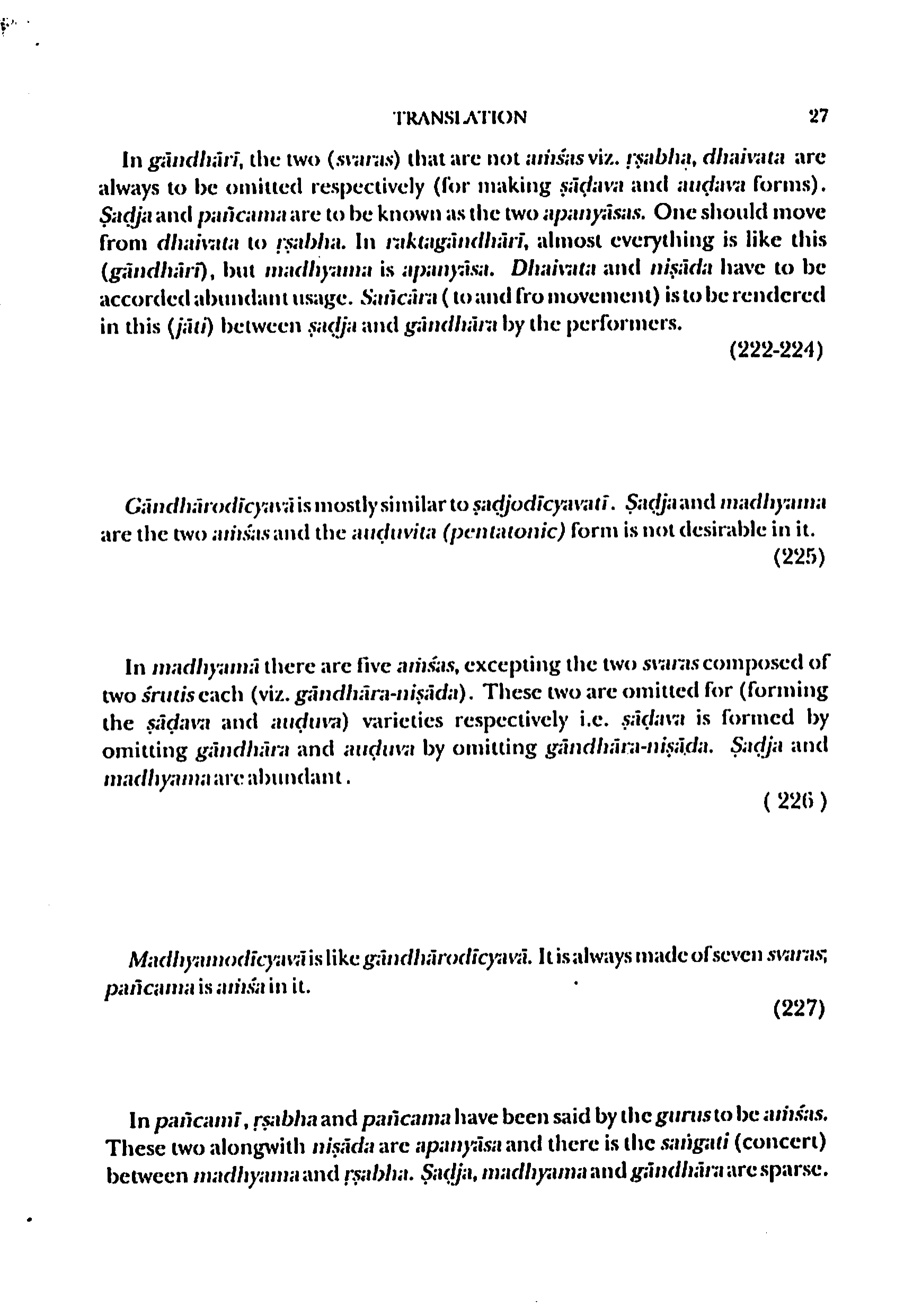
Ṣaḍja and pañcama are identified as the two apanyāsas in gāndhārī
"Şadja and pañcama are to be known as the two apanyāsas."
In gāndhārapañcamī, pañcama together with ṛṣabha constitutes apanyāsa
"सर्षभः स्यादपन्यासो"
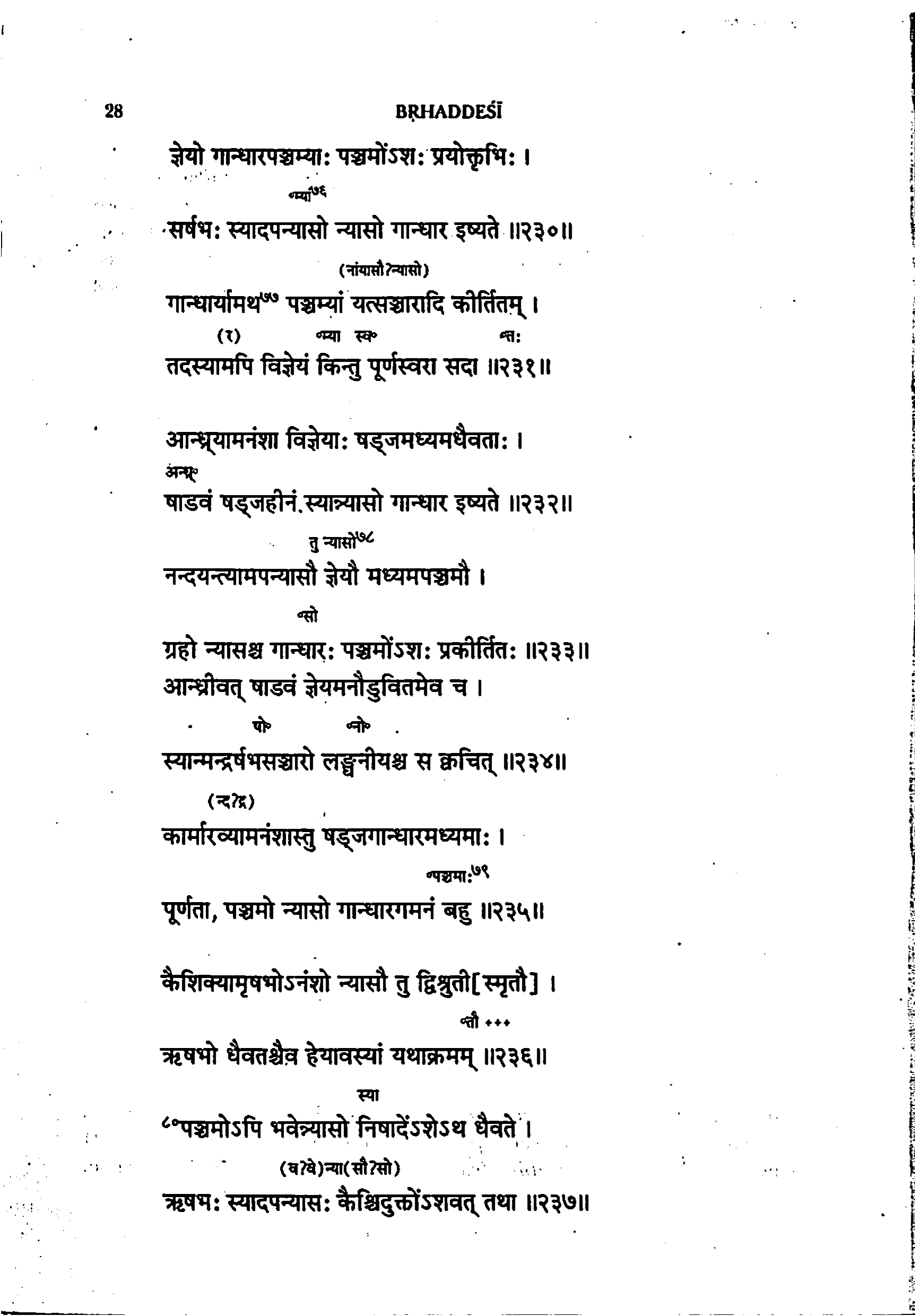
Apanyasas are svaras that are not the nyasa; in Sadjaikaisiki they are sadja, nisada and pañcama
"षड्जनिषादपञ्चमा अपन्यासाश्च ।"
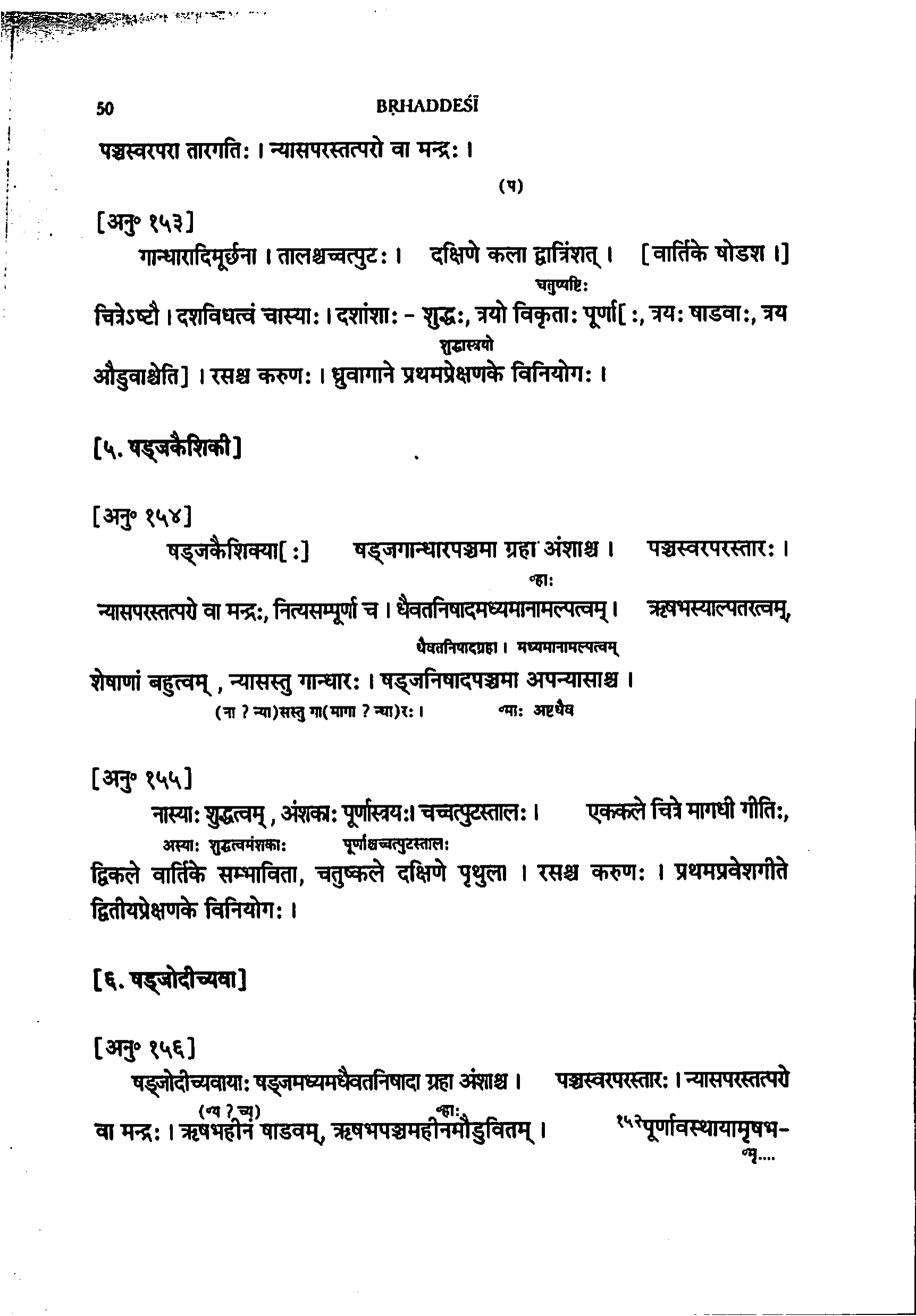
In sadjamadhyamā, seven svaras are apanyāsas
"सप्तस्वरा अपन्यासाः"
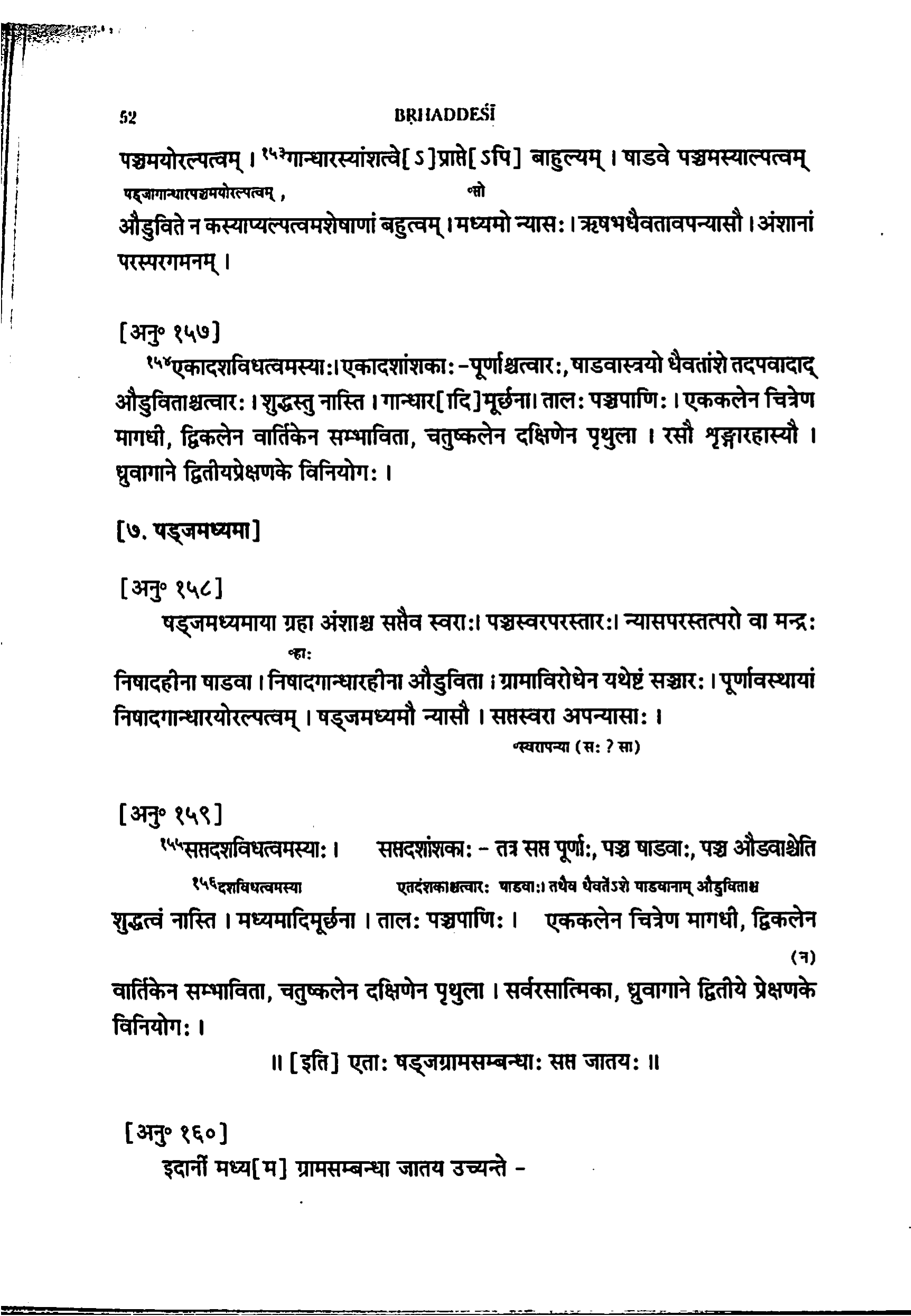
Ṣaḍja and dhaivata function as apanyāsas (secondary resting tones) in Gāndhārodīcyavā.
"Ṣaḍja and dhaivata are apanyāsas."
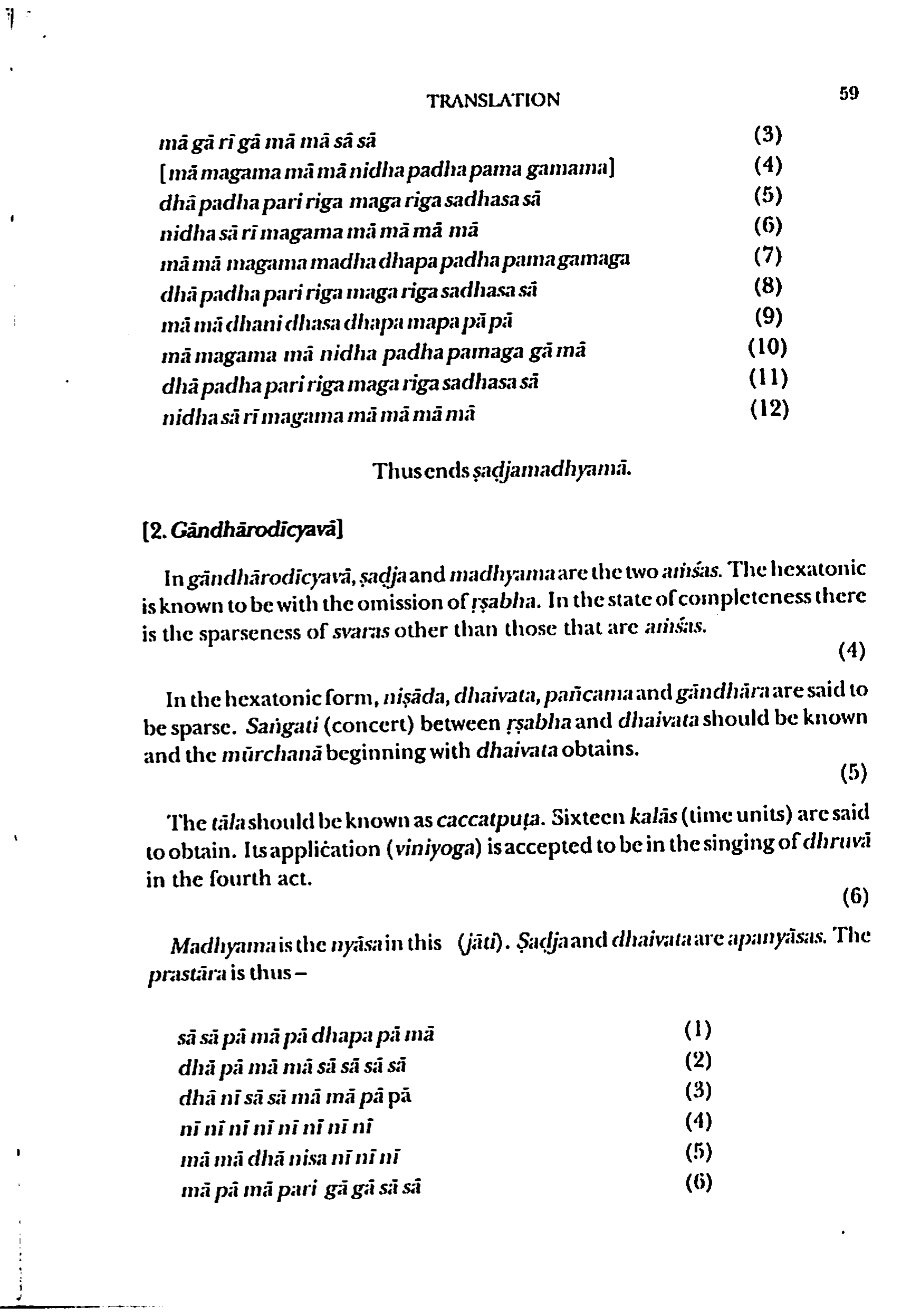
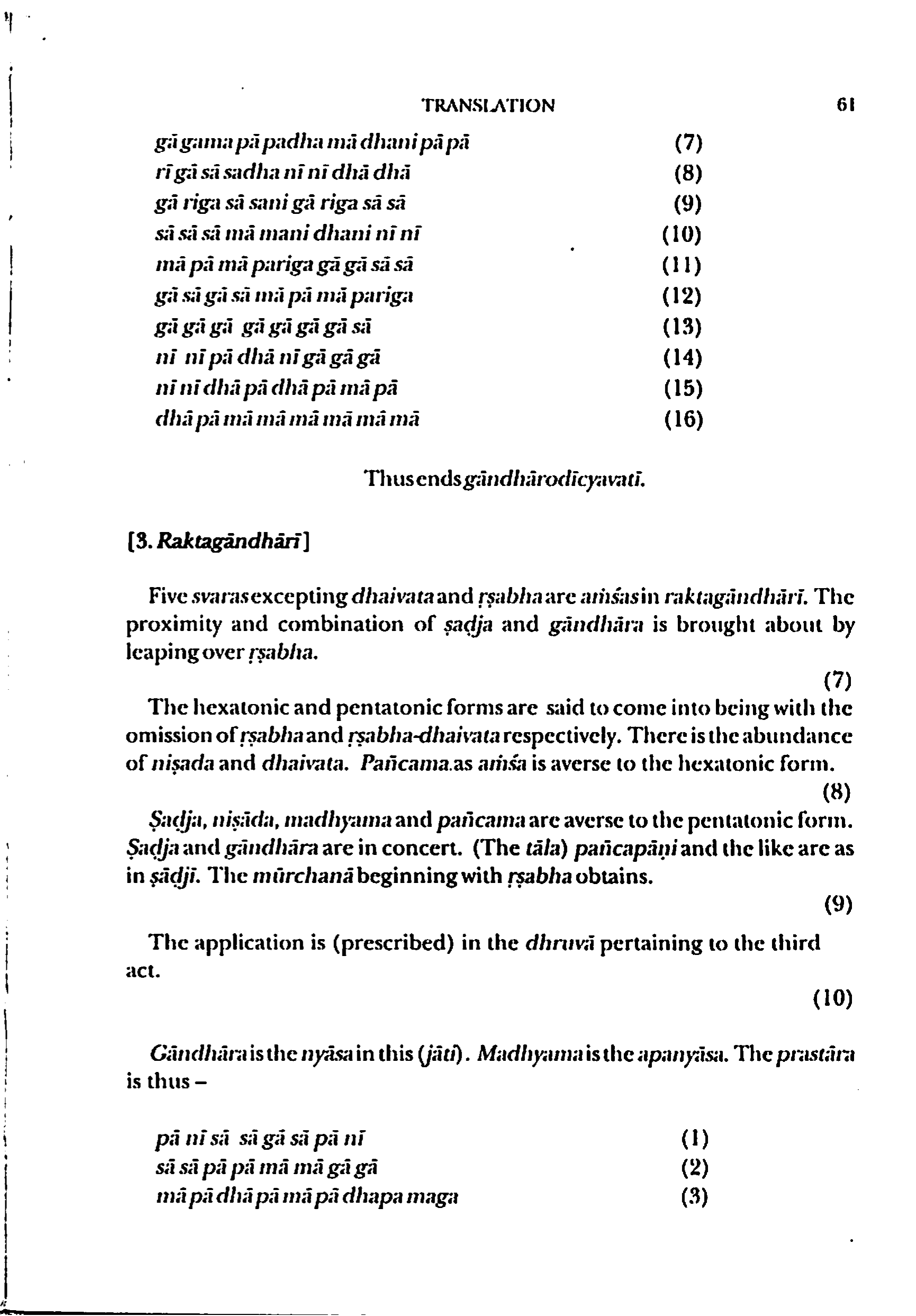
Madhyama is designated as the apanyāsa in raktagāndhārī
"Madhyama is the apanyāsa."
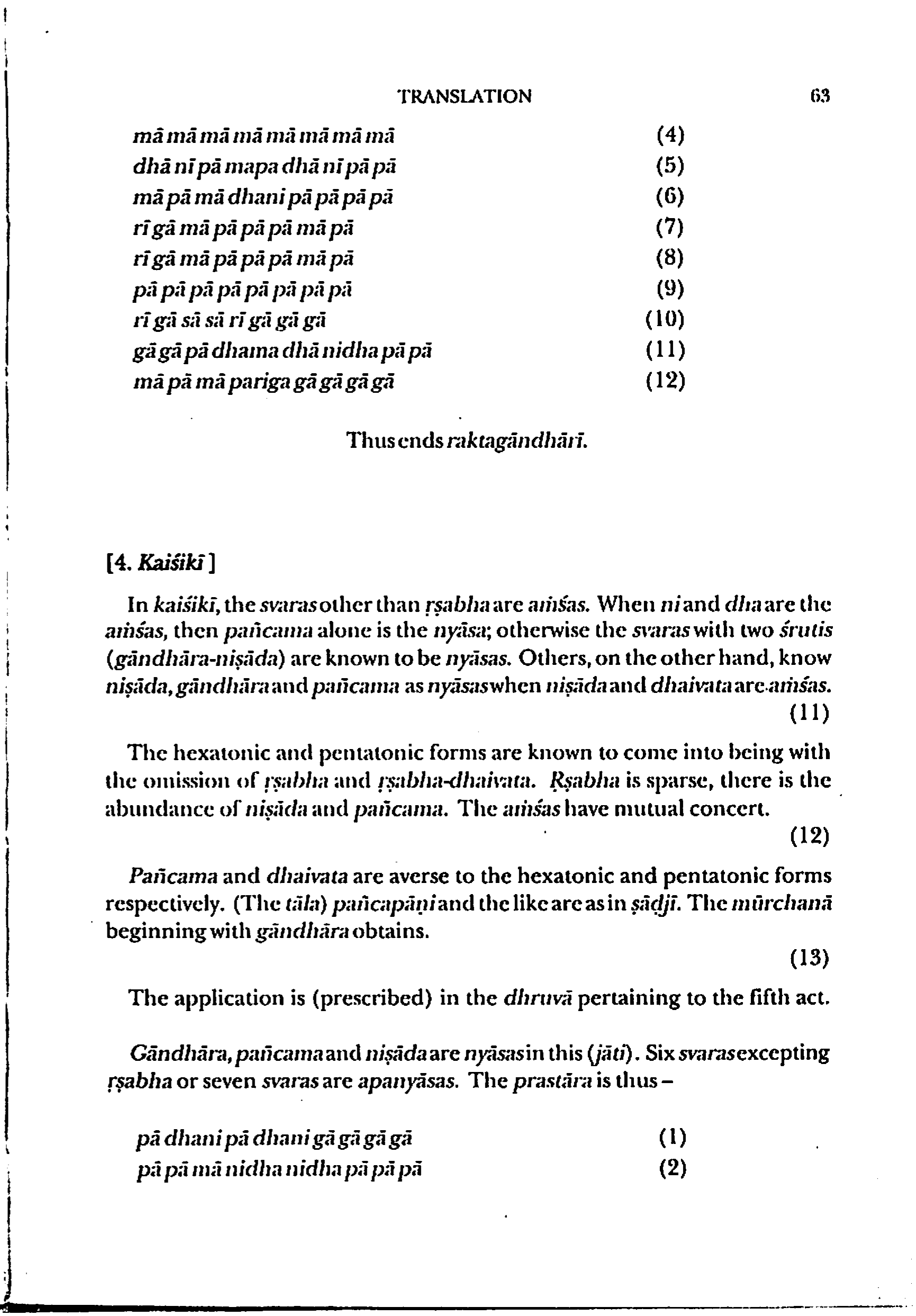
In kaiśikī, six svaras excepting ṛṣabha or seven svaras are classified as apanyāsas
"Six svaras excepting ṛṣabha or seven svaras are apanyāsas."
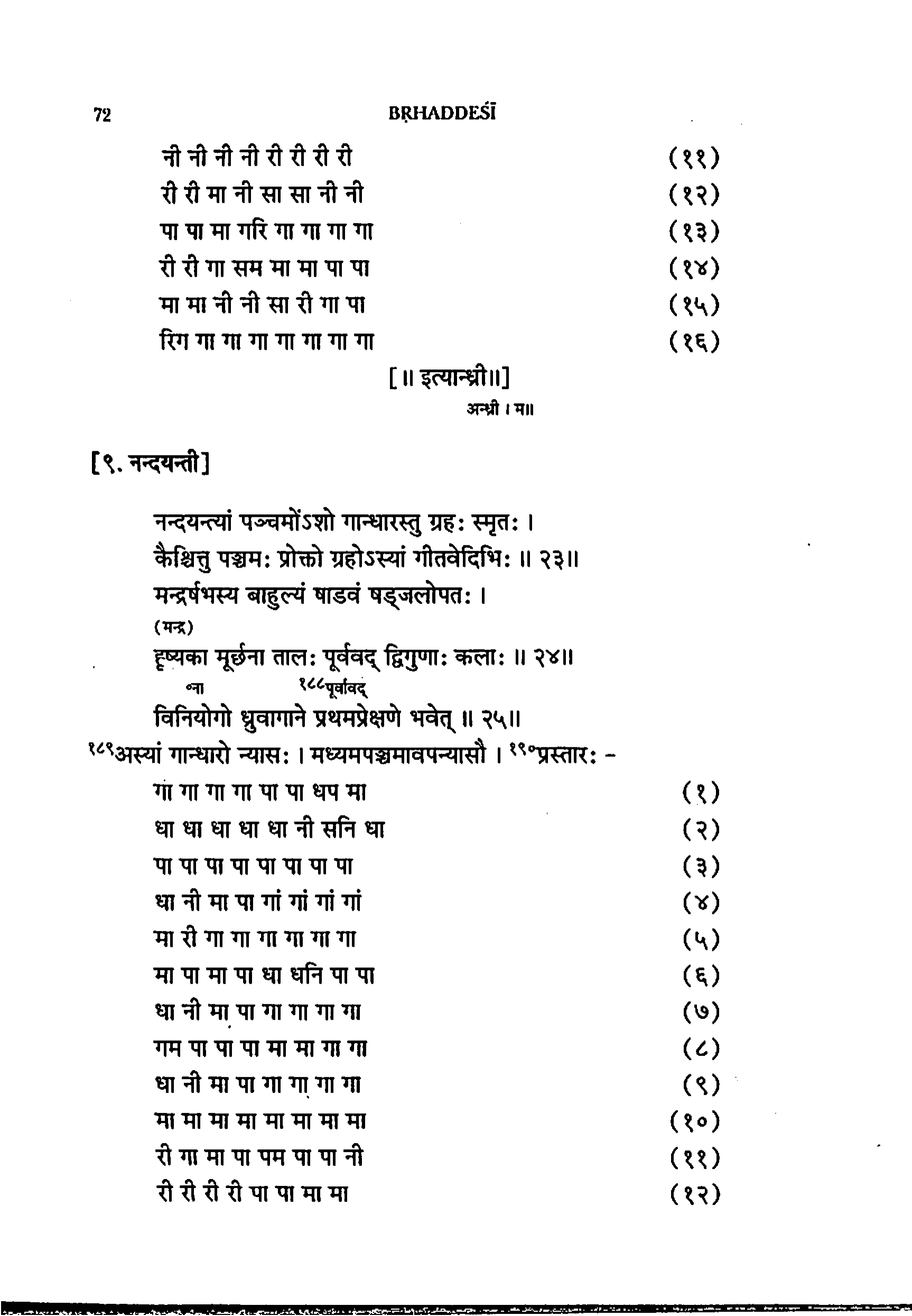
In Nandayanti, madhyama and pañcama are apanyāsas (secondary resting points)
"अस्या गान्धारो न्यासः । मध्यमपञ्चमावपन्यासौ"
Apanyāsa serves as a boundary marker; mandra can extend down to the lower octave of apanyāsa.
"the lowest limit of mandra
could extend upto the lower octave of amsa or nyasa or apanyasa."