वेरञ्ज?िका technical_term
Generative rules (1) ↗ filter all
veranjika_sadava_definitionstructural · 2 att.
Verañjikā est un rāga ṣāḍava avec gāndhāra comme aṁśa, pañcama faible, ṣaḍja comme nyāsa, et mouvement mutuel ṣaḍja-dhaivata et gāndhāra-ṛṣabha.
Pseudocode (DSL v1.1) ↗ full DSL (raw text)
RULE id: वेरञ्ज?िका (cluster 938)
SCOPE: technical_term family
STATUS: traditional
CONFIDENCE: traditional
PROTECT: false
Essence pseudocode — identity + RECORD. The page citations for each slot value are in the Grammar record table above (audit trail). The full DSL adds ASSERTIONS with verbatim quotes (see Affirmations below) and CITED_RULES (see Graph relations).
Graph relations
Outgoing (8)
--[structural]--> aṁśa (2)--[structural]--> gāndhāra (2)--[structural]--> nyāsa (1)--[structural]--> pañcama (1)--[structural]--> dhaivata (1)--[structural]--> ṛṣabha (1)--[structural]--> ṣāḍava rāga (1)--[structural]--> Şadja (1)
Incoming (0)
none
Affirmations (2)
Verañjikā is a ṣāḍava rāga with gāndhāra as its amsa and weak pañcama
"Verañjikā should be known to have gandhāra as its aṁśa and weak
pañcama."
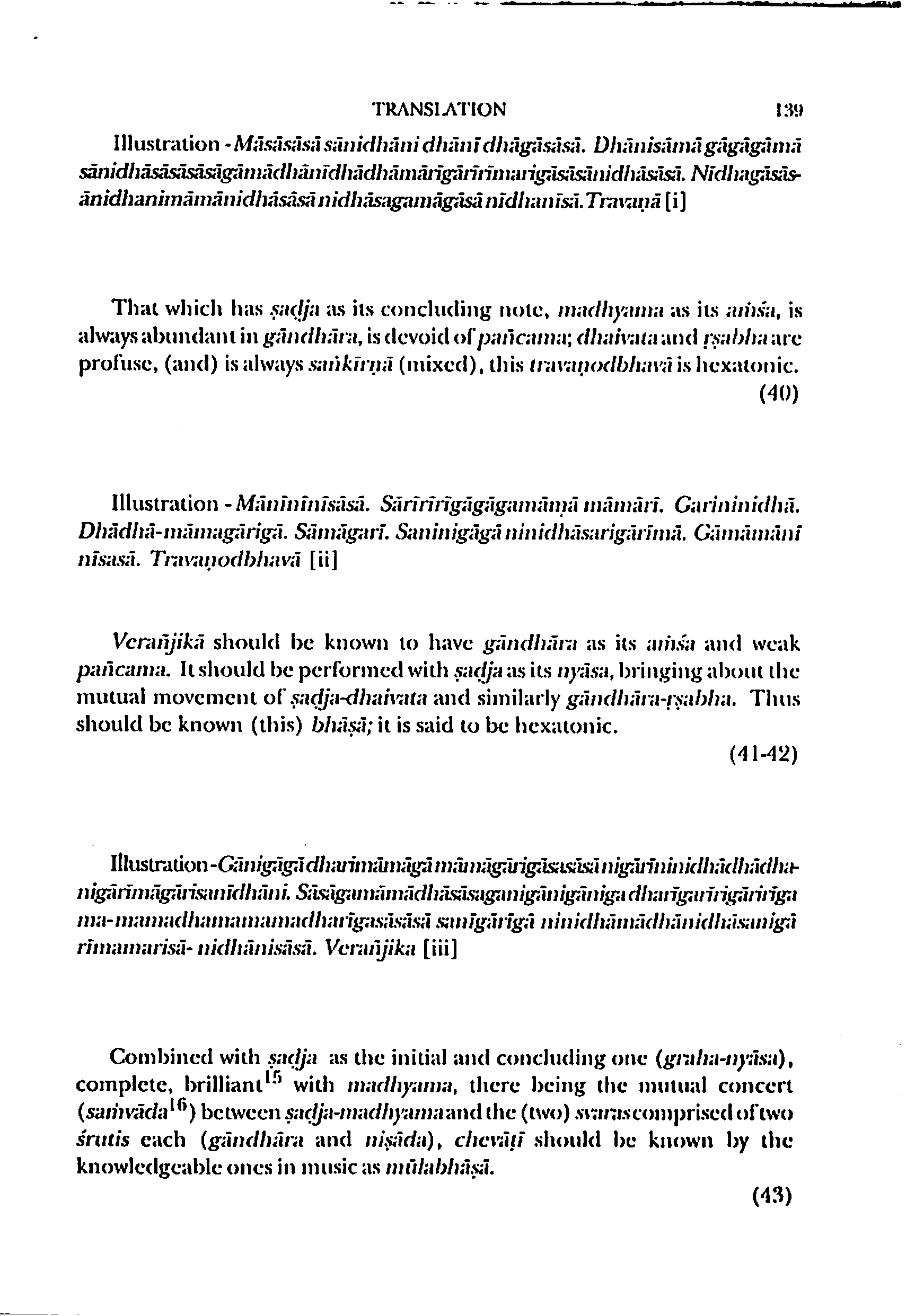
Verañjikā should be performed with ṣaḍja as nyāsa and features mutual movement of ṣaḍja-dhaivata and gāndhāra-ṛṣabha
"It should be performed with ṣaḍja as its nyāsa, bringing about the
mutual movement of şadja-dhaivata and similarly gāndhāra-ṛṣabha."