Source scans · vol_II_p091
recto · open full
scan recto
verso · open full
scan verso
Bṛhaddeśī · Volume II
pp. 164–165folio 091
Devanāgarī
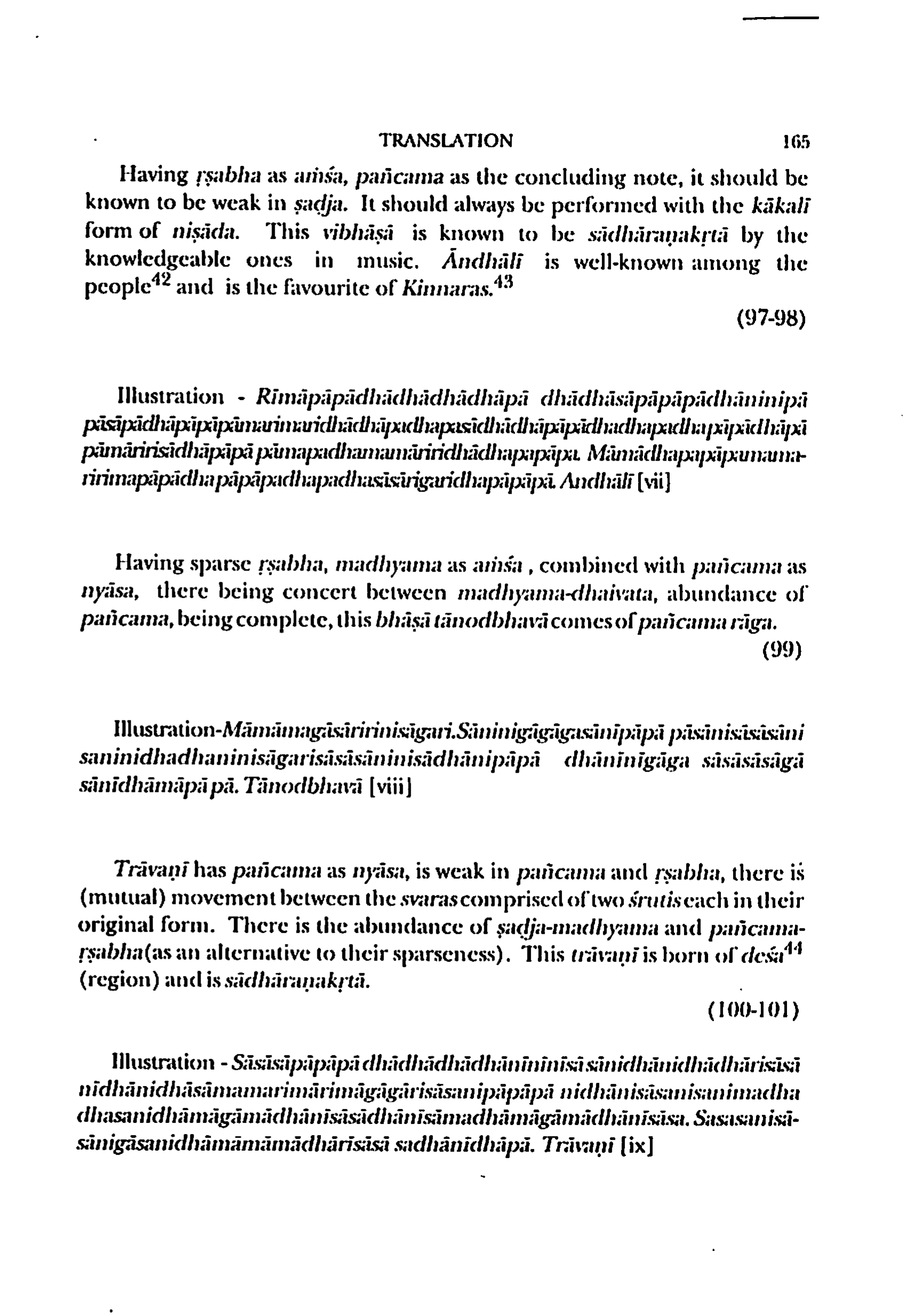
programme. ऋषभांशा पञ्चमान्ता विज्ञेया षड्जदुर्बला ।6 প্লা
निषादकाकलीरूपा कर्तव्या सा तु नित्यशः॥7 ९७॥
साधारणकृता ह्येषा विभाषा गीतवेदिभि:।542 ८७अन्थालीअमाली विश्रुता लोके कित्रराणां च वल्लभा1 ॥९८॥3 उदाहरणम् - रीमापापाधाधाधाधापा धाधासापापापा धानिनिपा। पासापाधापापापा मरिमरि-
धाधापधपसाधाधापापा धधपधपापाधापा। पामारिरिसाधापापापा मपधममारिरिधाधपपाप।
मामाधपपापममरिरिमपापा धपापापधपधसासारिगरिधपापापा । अन्धाली। [७]
अल्पर्षभामध्यमांशाल्पऋपभा मध्यमांशा पञ्चमन्याससंयुता ।
मध्यधैवतसंवादोमध्यमः बाहुल्यं॰वादस्तुल्यं स्यात् पञ्चमस्य तु ॥
८८ सम्पूर्णासम्पूर्णपाड(वा) चेयं पञ्चमाच्चेयं भाषा तानोद्भवा भवेत् ॥९९॥ उदाहरणम् - मामामगासारिरिनिसागरि । सानिनिगागागसानिपापा पासानिसासासानिसानि -
निधधनिनिसा। गरिसासासानिनिसाधानिपापा धानिनिगगसासासासासागासानीधामापापा ।
तानोद्भवा। [८]
त्रावणीत्रापणी पञ्चमन्यासा पञ्चमर्षभदुर्बला ।
द्विश्रुतीनांतु स्वरूपेण गमनं तत्प्रयोक्तृभि:9 ॥१००॥
षड्जमध्यमबाहुल्यं पञ्चमर्षभयोस्तथा ।
साधारणकृता होषा त्रावणी देशसम्भवा11 ८९॥१०१॥ उदाहरणम् -सासासापापापा धाधाधाधानीनीनीसासानिधानिधाधारिसासा नीधानीधासाममरि मारिमागागारिसा सनिपापापा निधानिसासनिसनिमधधसनिधामागामाधानीसासाधानीसामधात्रापणी - मागामाधानीसास। सससनिसासानिगासनिधामामाधारीसासा सधानीधापा । त्रावणी । [९]
English — Sharma (translation)
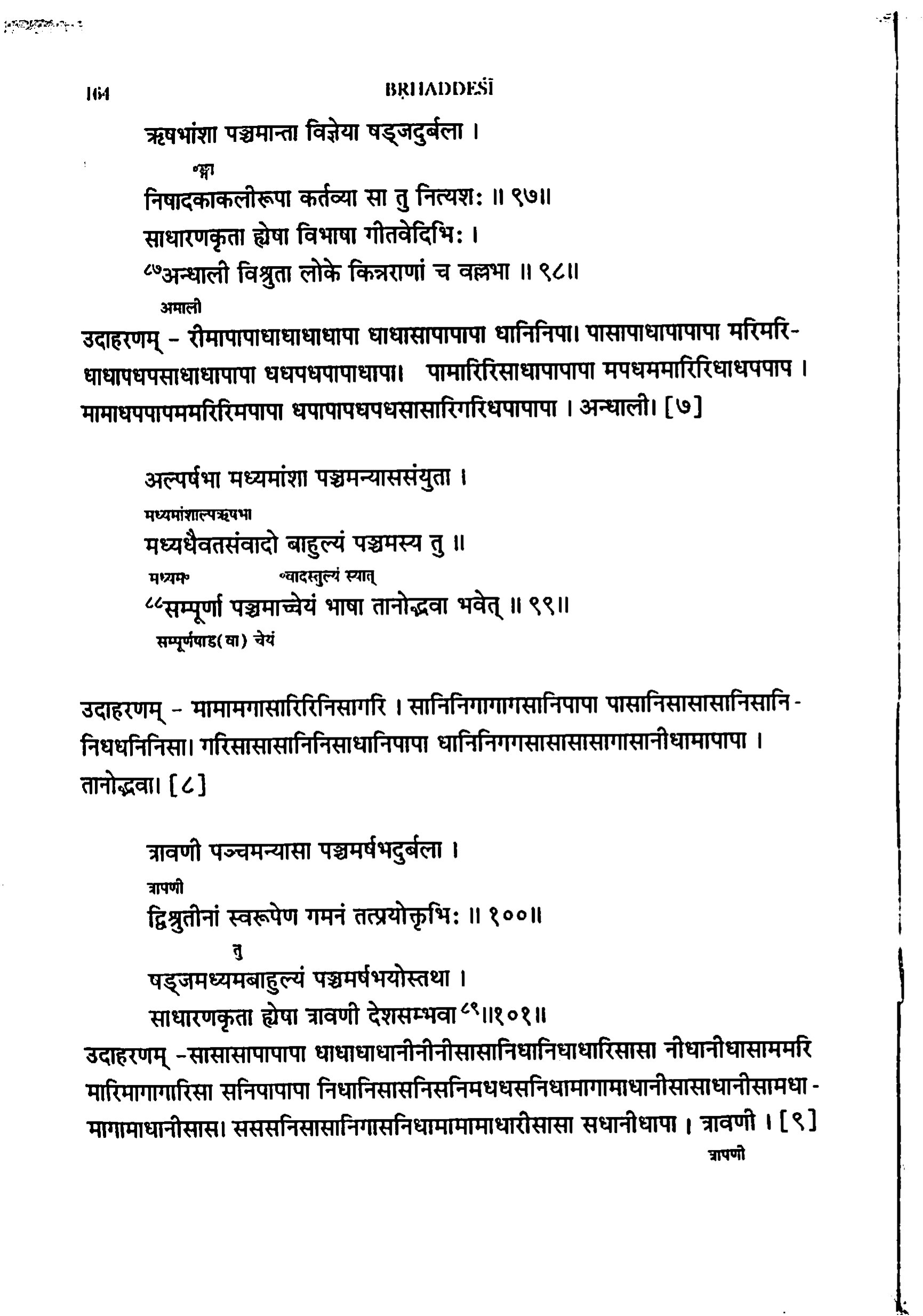
Having ṛṣabha as amśa, pancama as the concluding note, it should be known to be weak in sadja. It should always be performed with the kākalī form of niṣāda.7 This vibhāṣā is known to be sādhāraṇakṛtā by the knowledgeable ones in music.542 Āndhālī is well-known among the people42 and is the favourite of Kinnaras.43 <math>(97-98)</math> Illustration - Rīmāpāpādhādhādhādhāpā dhādhāsāpāpāpādhāninipā päsäpädhäpäpäpämarimaridhädhäpadhapasidhädhäpäpädhadhapadhapädhäpä pāmāririsādhāpāpā pāmapadhamamāriridhādhapapāpa, Māmādhapapāpamama- ririmapāpādha pāpāpadhapadhasīsīrigaridhapāpāpā, Andhālī [vii] Having sparse ṛṣabha, madhyama as aṁśa , combined with pañcama as nyāsa, there being concert between madhyama-dhaivata, abundance of pañcama, being complete, this bhāṣā tānodbhavā comes of pañcama rāga.10
(99)
Illustration-Māmāmagāsāririnisāgari.Sāninigāgāgasānīpāpā pāsānisāsāsāni saninidhadhaninisāgarisāsāsāninisādhānipāpā dhānīnīgāga sāsāsāsāgā sānīdhāmāpā pā. Tānodbhavā [viii] Trāvaņī has pañcama as nyāsa, is weak in pañcama and ṛṣabha, there is (mutual) movement between the svaras comprised of two śrutis each in their original form.9 There is the abundance of şadja-madhyama and pañcama- rṣabha(as an alternative to their sparseness). This trāvaṇī is born of deśa44 (region) and is sādhāraņakṛtā.11 <math>(100-101)</math> Illustration - Sāsāsāpāpāpā dhādhādhādhānīnīnīsā sānidhānidhādhārisāsā nīdhānidhāsāmamarimārimāgāgārisāsanipāpāpā nidhānisāsanisanimadha dhasanidhāmāgāmādhānīsāsādhānīsāmadhāmāgāmādhānīsāsa, Sasasanisā- sānigāsanidhāmāmāmādhārisāsā sadhānīdhāpā. Trāvaņī [ix]
1.[attribution] Āndhālī is well-known among people and is favored by Kinnarasअन्थाली विश्रुता लोके कित्रराणा च वल्लभा
2.[definition] vibhāṣā is a musical category that encompasses multiple named varieties (Āndhālī, tānodbhavā, Trāvaņī)साधारणकृता ह्येषा विभाषा गीतवेदिभिः।
3.[enumeration] Multiple vibhāṣā varieties are enumerated: Āndhālī, tānodbhavā, and Trāvaņīअन्थाली विश्रुता लोके कित्रराणा च वल्लभा ॥ ९८॥
4.[relation]sādhāraṇakṛtā is recognized as a classification attribute by knowledgeable musicians (gītavedibhiḥ)साधारणकृता ह्येषा विभाषा गीतवेदिभिः।
5.[structural]sādhāraṇakṛtā is an attribute applied to vibhāṣā varieties, indicating a common or conventional originसाधारणकृता ह्येषा विभाषा गीतवेदिभिः।
6.[structural]Āndhālī is a vibhāṣā variety characterized by having ṛṣabha as aṁśa and pancama as concluding note, with weak sadjaऋषभांशा पञ्चमान्ता विज?्ञेया षड्जदुर्बला ।
7.[structural]The kākalī form of niṣāda is an essential feature used in the performance of Āndhālīनिषादकाकलीरूपा कर्तव्या सा तु नित्यशः॥
9.[structural] In Trāvaņī, svaras move between each other in their original form comprising two śrutisद्विश्रुतीना स्वरूपेण गमनं तत्प्रयोक्तृभिः
11.[structural] Trāvaņī is a vibhāṣā variety with pañcama as nyāsa, weak in pañcama and ṛṣabha, derived from regional (deśa) sourcesसाधारणकृता होषा त्रावणी देशसम्भवा
1.[attribution]Āndhālī is well-known among people and is favored by KinnarasĀndhālī is well-known among the people42 and is the favourite of Kinnaras.43
2.[definition]vibhāṣā is a musical category that encompasses multiple named varieties (Āndhālī, tānodbhavā, Trāvaņī)This vibhāṣā is known to be sādhāraṇakṛtā by the knowledgeable ones in music.
3.[enumeration]Multiple vibhāṣā varieties are enumerated: Āndhālī, tānodbhavā, and TrāvaņīĀndhālī is well-known among the people and is the favourite of Kinnaras. (97-98)
4.[relation] sādhāraṇakṛtā is recognized as a classification attribute by knowledgeable musicians (gītavedibhiḥ)This vibhāṣā is known to be sādhāraṇakṛtā by the knowledgeable ones in music.
5.[structural] sādhāraṇakṛtā is an attribute applied to vibhāṣā varieties, indicating a common or conventional originThis vibhāṣā is known to be sādhāraṇakṛtā by the knowledgeable ones in music.
6.[structural] Āndhālī is a vibhāṣā variety characterized by having ṛṣabha as aṁśa and pancama as concluding note, with weak sadjaHaving ṛṣabha as aṁśa, pancama as the concluding note, it should be known to be weak in sadja.
7.[structural] The kākalī form of niṣāda is an essential feature used in the performance of ĀndhālīIt should always be performed with the kākalī form of niṣāda.
8.[structural]tānodbhavā is a vibhāṣā variety derived from pañcama rāga, characterized by sparse ṛṣabha and madhyama as aṁśaHaving sparse ṛṣabha, madhyama as aṁśa , combined with pañcama as nyāsa, there being concert between madhyama-dhaivata, abundance of pañcama, being complete, this bhāṣā tānodbhavā comes of pañcama rāga.
9.[structural]In Trāvaņī, svaras move between each other in their original form comprising two śrutisthere is (mutual) movement between the svaras comprised of two śrutis each in their original form.
10.[structural]tānodbhavā is marked by abundance (bāhulya) of pañcama and concert (saṁvāda) between madhyama and dhaivatathere being concert between madhyama-dhaivata, abundance of pañcama, being complete, this bhāṣā tānodbhavā comes of pañcama rāga.
11.[structural]Trāvaņī is a vibhāṣā variety with pañcama as nyāsa, weak in pañcama and ṛṣabha, derived from regional (deśa) sourcesThis trāvaṇī is born of deśa (region) and is sādhāraņakṛtā.