Source scans · vol_II_p092
recto · open full
scan recto
verso · open full
scan verso
Bṛhaddeśī · Volume II
pp. 166–167folio 092
Devanāgarī (Bṛhaddeśī)
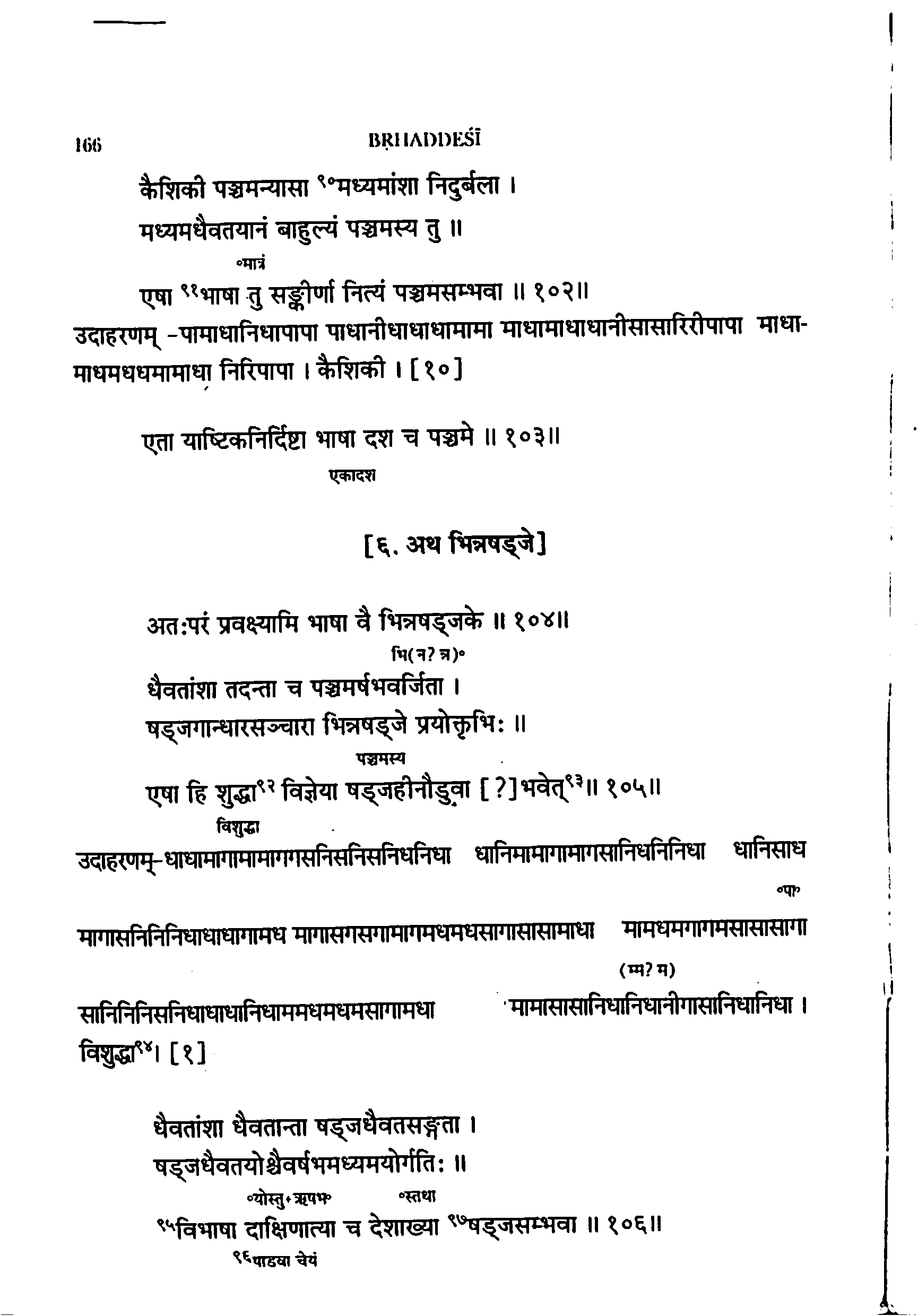
कैशिकी पञ्चमन्यासा7 ९॰मध्यमांशा निदुर्बला8
मध्यमधैवतयानं बाहुल्यं पञ्चमस्य तु9
॰मात्र एषा ९१भाषा तु सङ्कीर्णा नित्यं पञ्चमसम्भवा3 ॥१०२॥ उदाहरणम् -पामाधानिधापापा पा धा नी धा धा धा मा मा माधामाधाधानीसासारिरीपापा माधा- मा ध म ध ध मा मा धा नि रि पा पा । कैशिकी । [१०] एता याष्टिकनिर्दिष्टा भाषा दश च पञ्चमे1 ॥१०३॥ एकादश अतःपरं प्रवक्ष्यामि भाषा वै भिन्नषड्जके4 ॥१०४॥ भि(न? न्न)॰
धैवतांशा तदन्ता च पञ्चमर्षभवर्ज?िता ।
षड्जगान्धारसञ्चारा भित्रषड्ज? प्रयोक्तृभिः10
पञ्चमस्य एषा हि शुद्धा९२ विज?्ञेया षड्जहीनौडुवा [?]भवेत्९३॥१०५॥ विशुद्धा उदाहरणम्-धाधामागामागगसनिसनिसनिधनिधा धा नि मा मा गा मा ग सा नि ध नि नि धा धा नि सा ध ॰पा मा म ध म गा ग म सा सा सा गा मा गा स नि नि नि धा धा धा गा म ध मा गा स ग स गा मा ग म ध म ध सा गा सा सा मा धा (म्प? म)
.मामासासानिधानिधानीगासानिधानिधा ।
सानिनिनसनिधाधाधानिधाममधमधमसागामधा विशुद्धा१४। [१]
धैवतांशा धैवतान्ता षड्जधैवतसङ्गता ।
षड्जधैवतयोश्चैवर्षभमध्यमयोगीतिः11
॰योस्तु+ऋपफ ॰स्तथा ९५विभाषा दाक्षिणात्या च देशाख्या ९७षड्जसम्भवा6 ॥१०६॥ ९६पाडवा चेयं
English — Sharma (translation)
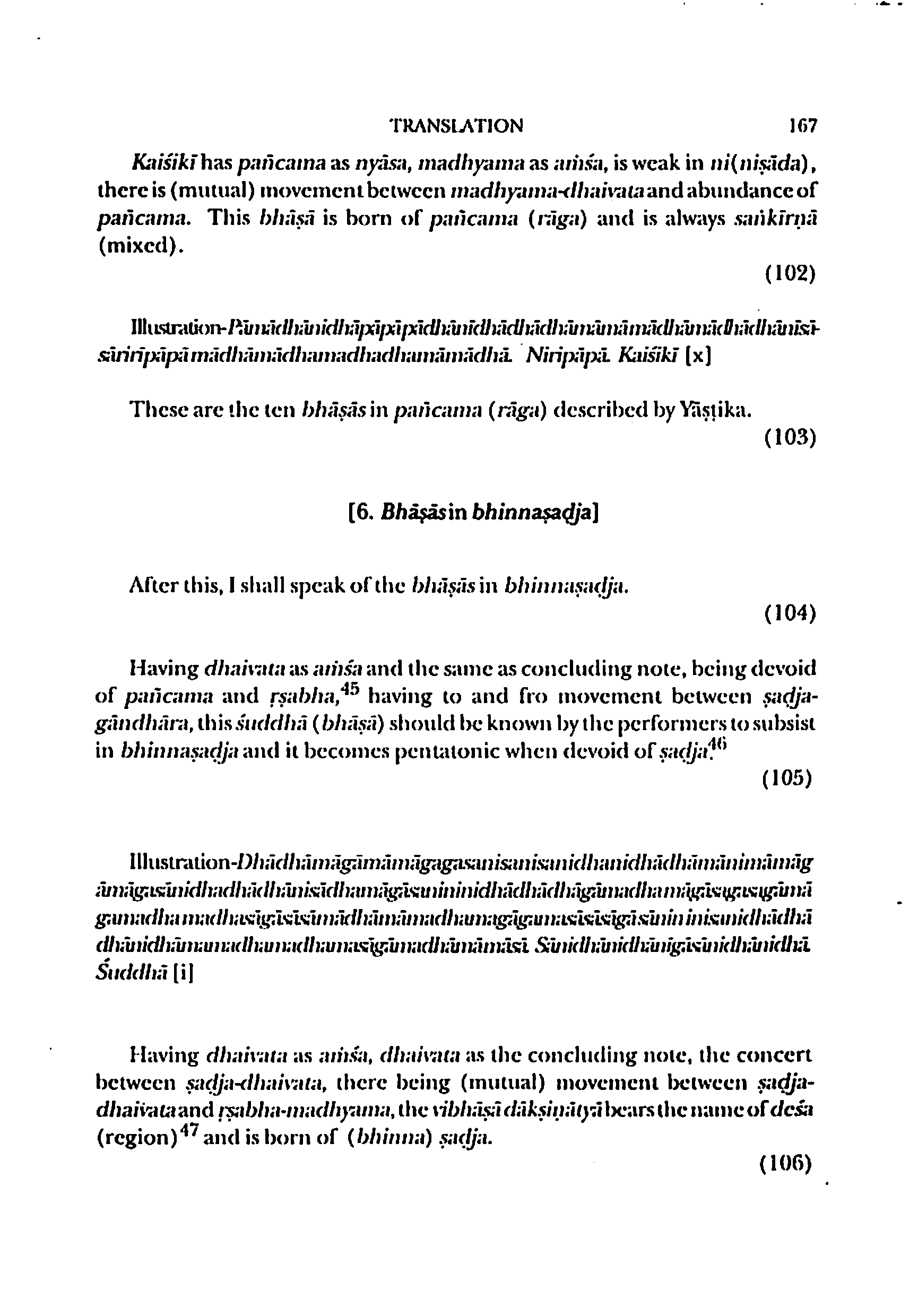
Kaiśikī has pañcama as nyāsa7, madhyama as amśa, is weak in ni(niṣāda), there is (mutual) movement between madhyama-dhaivata and abundance of pancama9. This bhāṣā is born of pancama (rāga) and is always sankīrṇā (mixed)53.
(102)
Illustration-Pรับหลัdhลับidhลัpลีpลิpลิdhลับidhaัdhaัdhลับหลับกลับกลัdhลับกลัdhลัdhลับโรรั- sārirīpāpā mādhāmādhamadhadhamāmādhā. Niripāpā. Kaišikī [x] These are the ten bhāṣās in pancama (rāga) described by Yāṣṭika.
(103)
[6. Bhāṣāsin bhinnaṣaḍja]
After this, I shall speak of the bhāṣās in bhinnaṣaḍja.
(104)
Having dhaivata as amsa and the same as concluding note, being devoid of pañcama and ṛṣabha,45 having to and fro movement between ṣaḍja- gāndhāra, this śuddhā (bhāṣā) should be known by the performers to subsist in bhinnaṣadja and it becomes pentatonic when devoid of ṣadja.46
(105)
lllustration-Dhādhāmāgāmāmāgagasanisanisanidhanidhādhāmānimāmāg ลังกลัฐจรรับก่ฝาลฝาลัปกลับก่รรัปกลเกล้ฐริธาก่าก่าเปกลีปกลิปกลัฐริธาลปกลากลัฐริธาฐริธาลี gamadhamadhasigāsisimādhāmāmadhamagāgamasisisigāsinininismidhādhā dhānidhāmanadhamadhamasīgāmadhāmāsā. Sānidhānidhānīgāsānidhānidhā Suddhā [i] Having dhaivata as amsa, dhaivata as the concluding note, the concert between sadja-dhaivata, there being (mutual) movement between sadja- dhaivata and ṛṣabha-madhyama, the vibhāṣā dākṣiṇātyā bears the name of deśa (region)47 and is born of (bhinna) şadja.
(106)
1.[attribution]Yāṣṭika is cited as the authority who described ten bhāṣās in pañcama rāgaएता याष्टिकनिर्दिष्टा भाषा दश च पञ्चमे
2.[citation] BRHADDEŚĪ is the source text in which these bhāṣā classifications are presentedBRHADDEŚĪ 166
3.[relation]Kaiśikī is a bhāṣā born of pañcama rāga and is always mixed (sankīrṇā)एषा ९१भाषा तु सङ्कीर्णा नित्यं पञ्चमसम्भवा
4.[relation]bhinnaṣaḍja is a rāga category for which bhāṣās are described in the treatiseअतःपरं प्रवक्ष्यामि भाषा वै भिन्नषड्जके
5.[relation]sankīrṇā means mixed or blended in the context of bhāṣā classificationएषा ९१भाषा तु सङ्कीर्णा नित्यं पञ्चमसम्भवा
6.[relation]dākṣiṇātyā is a vibhāṣā bearing a regional name (deśa) and born of bhinnaṣaḍjaविभाषा दाक्षिणात्या च देशाख्या षड्जसम्भवा
7.[structural]Kaiśikī has pañcama as its nyāsa (cadential note)कैशिकी पञ्चमन्यासा
8.[structural]Kaiśikī has madhyama as its aṁśa (characteristic note)मध्यमांशा निदुर्बला
9.[structural]Kaiśikī is characterized by mutual movement between madhyama-dhaivata and abundance of pañcamaमध्यमधैवतयानं बाहुल्यं पञ्चमस्य तु
10.[structural]The śuddhā bhāṣā in bhinnaṣaḍja is characterized by dhaivata as aṁśa and concluding note, absence of pañcama and ṛṣabha, and movement between ṣaḍja-gāndhāraधैवतांशा तदन्ता च पञ्चमर्षभवर्ज?िता । षड्जगान्धारसञ्चारा भित्रषड्ज? प्रयोक्तृभिः
11.[structural]vibhāṣā is a bhāṣā type in bhinnaṣaḍja characterized by dhaivata as aṁśa and concluding note with movement between ṣaḍja-dhaivata and ṛṣabha-madhyamaधैवतांशा धैवतान्ता षड्जधैवतसङ्गता । षड्जधैवतयोश्चैवर्षभमध्यमयोगीतिः
1.[attribution] Yāṣṭika is cited as the authority who described ten bhāṣās in pañcama rāgaThese are the ten bhāṣās in pancama (rāga) described by Yāṣṭika
2.[citation]BRHADDEŚĪ is the source text in which these bhāṣā classifications are presentedBRHADDEŚĪ 166
3.[relation] Kaiśikī is a bhāṣā born of pañcama rāga and is always mixed (sankīrṇā)This bhāṣā is born of pancama (rāga) and is always sankīrṇā (mixed)
4.[relation] bhinnaṣaḍja is a rāga category for which bhāṣās are described in the treatiseAfter this, I shall speak of the bhāṣās in bhinnaṣaḍja
5.[relation] sankīrṇā means mixed or blended in the context of bhāṣā classificationThis bhāṣā is born of pancama (rāga) and is always sankīrṇā (mixed)
7.[structural] Kaiśikī has pañcama as its nyāsa (cadential note)Kaiśikī has pañcama as nyāsa
8.[structural] Kaiśikī has madhyama as its aṁśa (characteristic note)madhyama as aṁśa, is weak in ni(niṣāda)
9.[structural] Kaiśikī is characterized by mutual movement between madhyama-dhaivata and abundance of pañcamathere is (mutual) movement between madhyama-dhaivata and abundance of pancama