Source scans · vol_II_p096
recto · open full
scan recto
verso · open full
scan verso
Bṛhaddeśī · Volume II
pp. 174–175folio 096
Devanāgarī
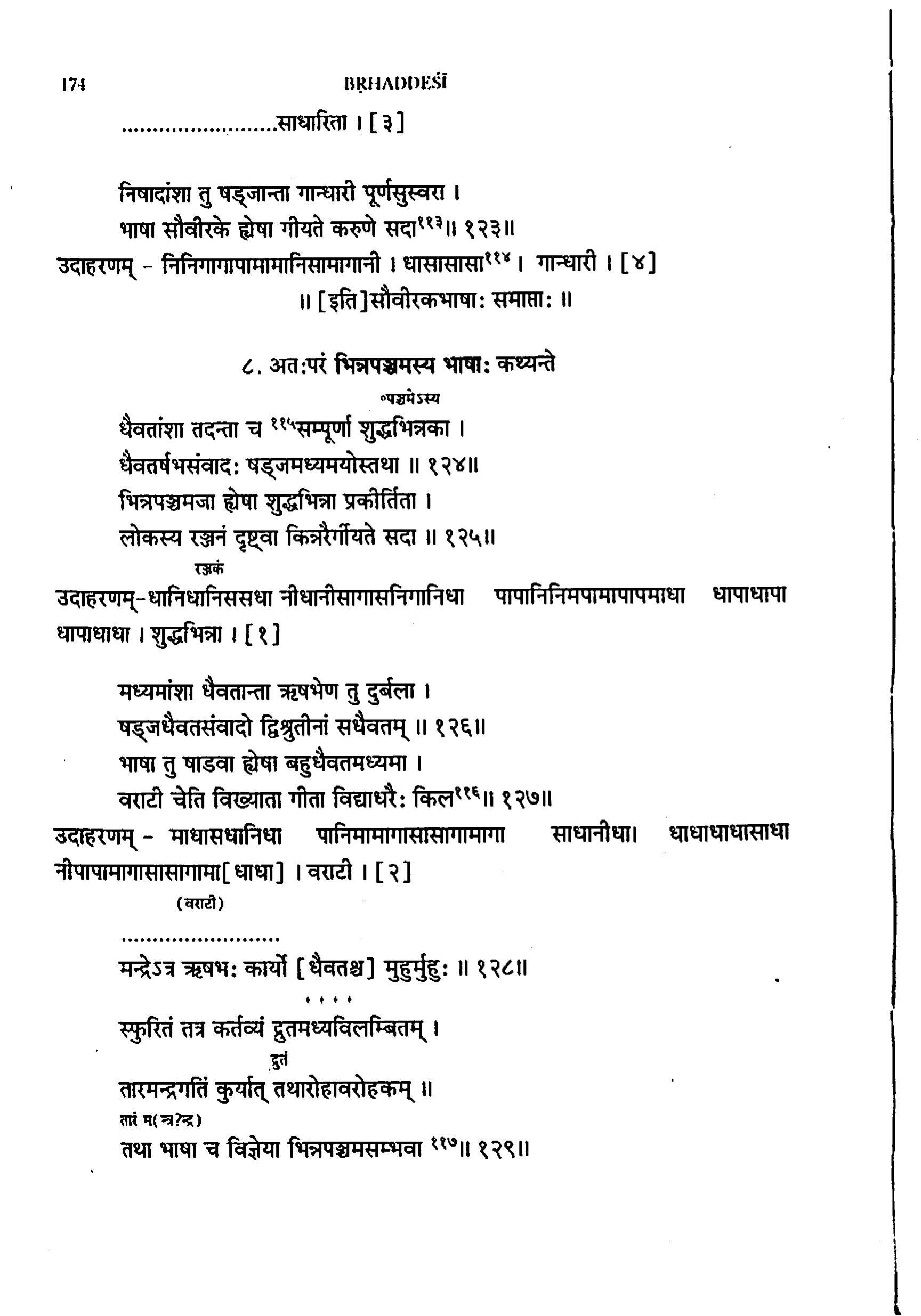
.....साधारिता । [३] निषादांशा तु षड्जान्ता गान्धारी पूर्णसुस्वरा ।9 भाषा सौवीरके ह्येषा गीयते करुणे सदा65 ११३॥१२३॥ उदाहरणम् – निनिगागापामामानिसामागानी । धासासासा११४गान्धारी । [४]
॥ [इति]सौवीरकभाषा: समाप्ता: ॥
८. अतःपरं भिन्नपञ्चमस्य॰पञ्चमेऽस्य भाषाः कथ्यन्ते धैवतांशा तदन्ता च ११५सम्पूर्णा शुद्धभित्रका10 धैवतर्षभसंवाद: षड्जमध्यमयोस्तथा ॥१२४॥ भित्रपञ्चमजा होषा शुद्धभित्रा प्रकीर्तिता ।7 लोकस्य रञ्जनंरञ्जकं दृष्ट्वा किन्नरैर्गीयते सदा31 ॥१२५॥ उदाहरणम्-धानिधानिससधा नीधानीसागासनिगानिधा पापानिनिमपामापापमाधाधापाधापा धापाधाधा । शुद्धभिन्ना । [१] मध्यमांशा धैवतान्ता ऋषभेण तु दुर्बला ।12 षड्जधैवतसंवादो द्विश्रुतीनां सधैवतम् ॥१२६॥ भाषा तु षाडवा ह्येषा बहुधैवतमध्यमा । वराटी चेति विख्याता11 गीता विद्याधरै: किल82११६॥१२७॥
उदाहरणम् - माधासधानिधा(वराटी) पानिमामागासासागामागा साधानीधाधाधाधाधासाधा
नीपापामागासासागामा[धाधा] । वराटी । [२] मन्द्रेऽत्र ऋषभः कार्यो [धैवतश्च] मुहुर्मुहुः ॥१२८॥ स्फुरितं तत्र कर्तव्यं द्रुतमध्यविलम्बितम् ।13
तारमन्द्रगतिंतारं म(न्त्र?न्द्र) कुर्यात् तथारोहावरोहकम् ॥
तथा भाषा च विज्ञेया भित्रपञ्चमसम्भवा १९७॥१२९॥
English — Sharma (translation)
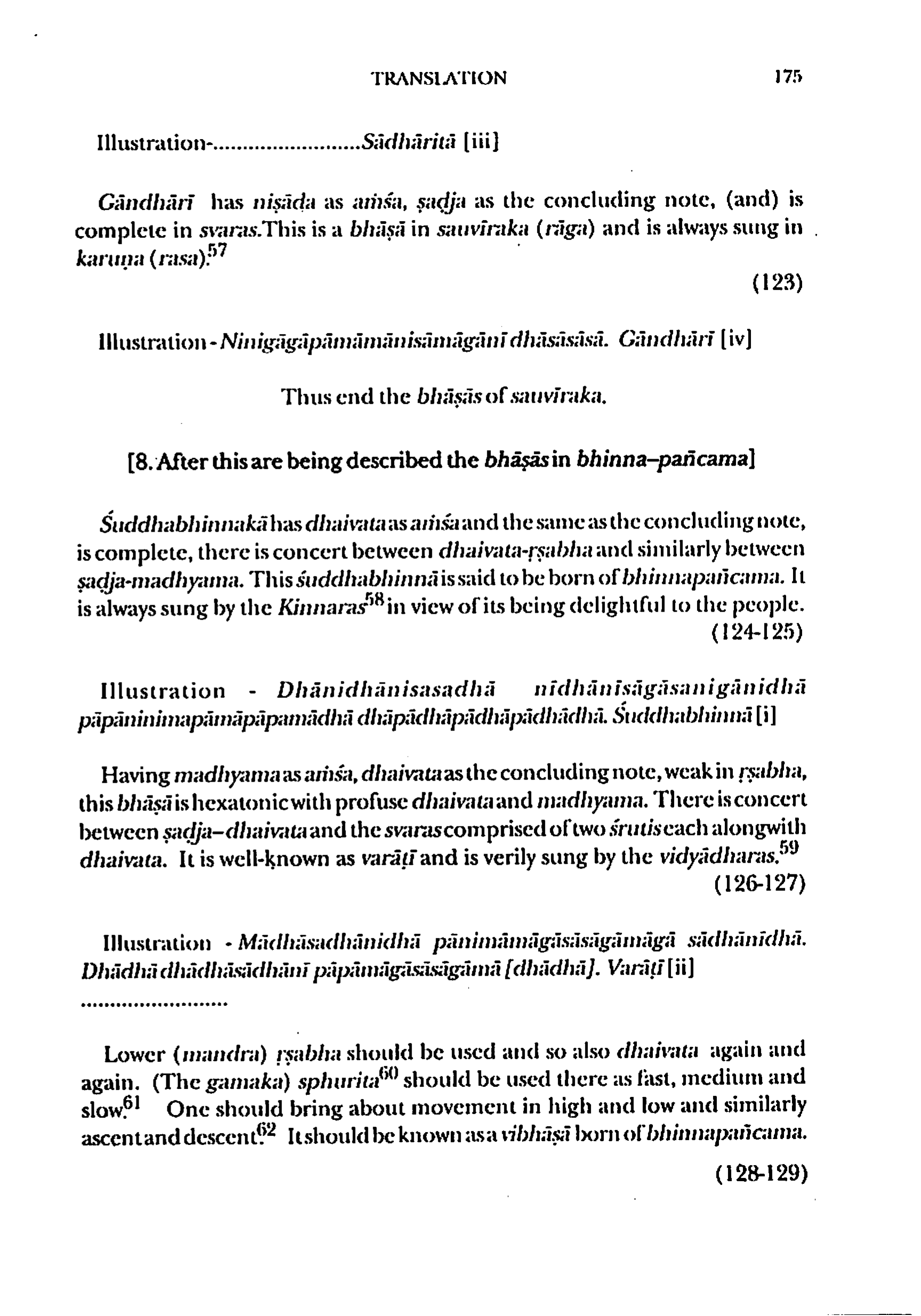
Illustration-.....Sādhāritā [iii] Gāndhārī has niṣāda as amśa, ṣadja as the concluding note, (and) is complete in svaras. This is a bhāṣā in sauvīraka (rāga) and is always sung in karuna (rasa).6557
(123)
Illustration - Ninigāgāpāmāmānisāmāgānī dhāsāsāsā. Gāndhārī [iv] Thus end the bhāṣās of sauvīraka.
[8. After this are being described the bhāṣās in bhinna-paācama]
Śuddhabhinnakā has dhaivata as amśa and the same as the concluding note, is complete, there is concert between dhaivata-ṛṣabha and similarly between șadja-madhyama. This śuddhabhinnā is said to be born of bhinnapañcama.7 It is always sung by the Kinnaras58 in view of its being delightful to the people.3 (124-125) Illustration - Dhānidhānisasadhā nīdhānisāgāsanigānidhā pāpāninimapāmāpāpamādhā dhāpādhāpādhādhā. Śuddhabhinnā [i] Having madhyama as amśa, dhaivata as the concluding note, weak in ṛṣabha, this bhāṣā is hexatonic with profuse dhaivata and madhyama. There is concert between şadja-dhaivata and the svaras comprised of two śrutis each alongwith dhaivata. It is well-known as varāṭī11 and is verily sung by the vidyādharas.82 59 <math>(126-127)</math> Illustration - Mādhāsadhānidhā pānimāmāgāsāsāgāmāgā sādhānīdhā. Dhādhā dhādhāsādhānī pāpāmāgāsāsāgāmā [dhādhā]. Varāṭī [ii] Lower (mandra) ṛṣabha should be used and so also dhaivata again and again. (The gamaka) sphurita60 should be used there as fast, medium and One should bring about movement in high and low and similarly slow.61 ascentand descent. Eshould be known as a vibhāṣā born of bhinnapañcama. <math>(128-129)</math>
1.[attribution]Śuddhabhinnā is always sung by the Kinnaras because of its delightfulness to peopleलोकस्य रञ्जनं दृष्ट्वा किन्नरैर्गीयते सदा
2.[attribution]Varāṭī is sung by the vidyādharasगीता विद्याधरैः किल
3.[attribution] Kinnaras sing the Śuddhabhinnā bhāṣā in view of its being delightful to peopleकिन्नरैर्गीयते सदा
4.[enumeration]Bhinna-pañcama is a category under which multiple bhāṣās are classifiedअतःपरं भिन्नपञ्चमस्य भाषा कथ्यन्ते
5.[relation]Gāndhārī is a bhāṣā in sauvīraka rāga and is always sung in karuṇa rasaभाषा सौवीरके ह्येषा गीयते करुणे सदा
6.[relation]Sauvīraka is a rāga associated with the Gāndhārī bhāṣāभाषा सौवीरके ह्येषा गीयते करुणे सदा
7.[relation]Śuddhabhinnā is born from bhinnapañcamaभित्रपञ्चमजा होषा शुद्धभित्रा प्रकीर्तिता ।
8.[relation]Vidyādharas are singers of the Varāṭī bhāṣāगीता विद्याधरैः किल
9.[structural]Gāndhārī is a bhāṣā with niṣāda as aṁśa and ṣaḍja as the concluding noteनिषादांशा तु षड्ज?ान्ता गान्धारी पूर्णसुस्वरा ।
10.[structural]Śuddhabhinnā has dhaivata as both aṁśa and concluding noteधैवतांशा तदन्ता च ११५सम्पूर्णा शुद्धभित्रका
11.[structural]Varāṭī is a hexatonic (ṣāḍava) bhāṣā with profuse dhaivata and madhyamaभाषा तु षाडवा ह्येषा बहुधैवतमध्यमा । वराटी चेति विख्याता
12.[structural]Varāṭī has madhyama as aṁśa and dhaivata as the concluding noteमध्यमांशा धैवतान्ता ऋषभेण तु दुर्बला ।
13.[structural]Sphurita is a gamaka (melodic embellishment) to be performed in fast, medium, and slow temposस्फुरितं तत्र कर्तव्यं द्रुतमध्यविलम्बितम् ।
2.[attribution] Varāṭī is sung by the vidyādharasand is verily sung by the vidyādharas.
3.[attribution]Kinnaras sing the Śuddhabhinnā bhāṣā in view of its being delightful to peopleIt is always sung by the Kinnaras in view of its being delightful to the people.
4.[enumeration] Bhinna-pañcama is a category under which multiple bhāṣās are classified[8. After this are being described the bhāṣās in bhinna-paācama]
5.[relation] Gāndhārī is a bhāṣā in sauvīraka rāga and is always sung in karuṇa rasaThis is a bhāṣā in sauvīraka (rāga) and is always sung in karuna (rasa).
6.[relation] Sauvīraka is a rāga associated with the Gāndhārī bhāṣāThis is a bhāṣā in sauvīraka (rāga) and is always sung in karuna (rasa).
7.[relation] Śuddhabhinnā is born from bhinnapañcamaThis śuddhabhinnā is said to be born of bhinnapañcama.
8.[relation] Vidyādharas are singers of the Varāṭī bhāṣāis verily sung by the vidyādharas.
9.[structural] Gāndhārī is a bhāṣā with niṣāda as aṁśa and ṣaḍja as the concluding noteGāndhārī has niṣāda as aṁśa, ṣaḍja as the concluding note, (and) is complete in svaras.
10.[structural] Śuddhabhinnā has dhaivata as both aṁśa and concluding noteŚuddhabhinnakā has dhaivata as aṁśa and the same as the concluding note, is complete
11.[structural] Varāṭī is a hexatonic (ṣāḍava) bhāṣā with profuse dhaivata and madhyamathis bhāṣā is hexatonic with profuse dhaivata and madhyama. There is concert between şadja-dhaivata and the svaras comprised of two śrutis each alongwith dhaivata. It is well-known as varāṭī
12.[structural] Varāṭī has madhyama as aṁśa and dhaivata as the concluding noteHaving madhyama as aṁśa, dhaivata as the concluding note, weak in ṛṣabha,