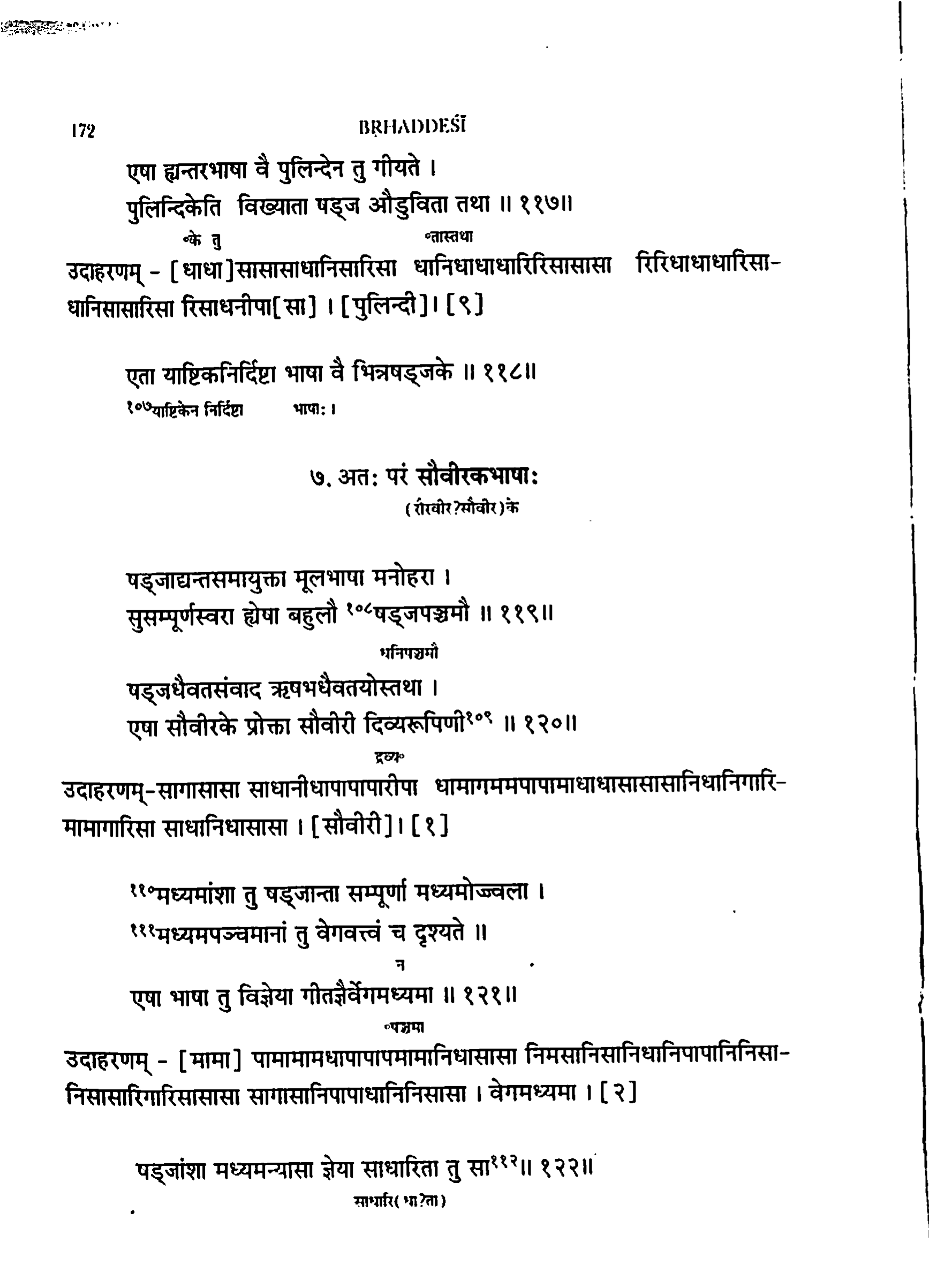
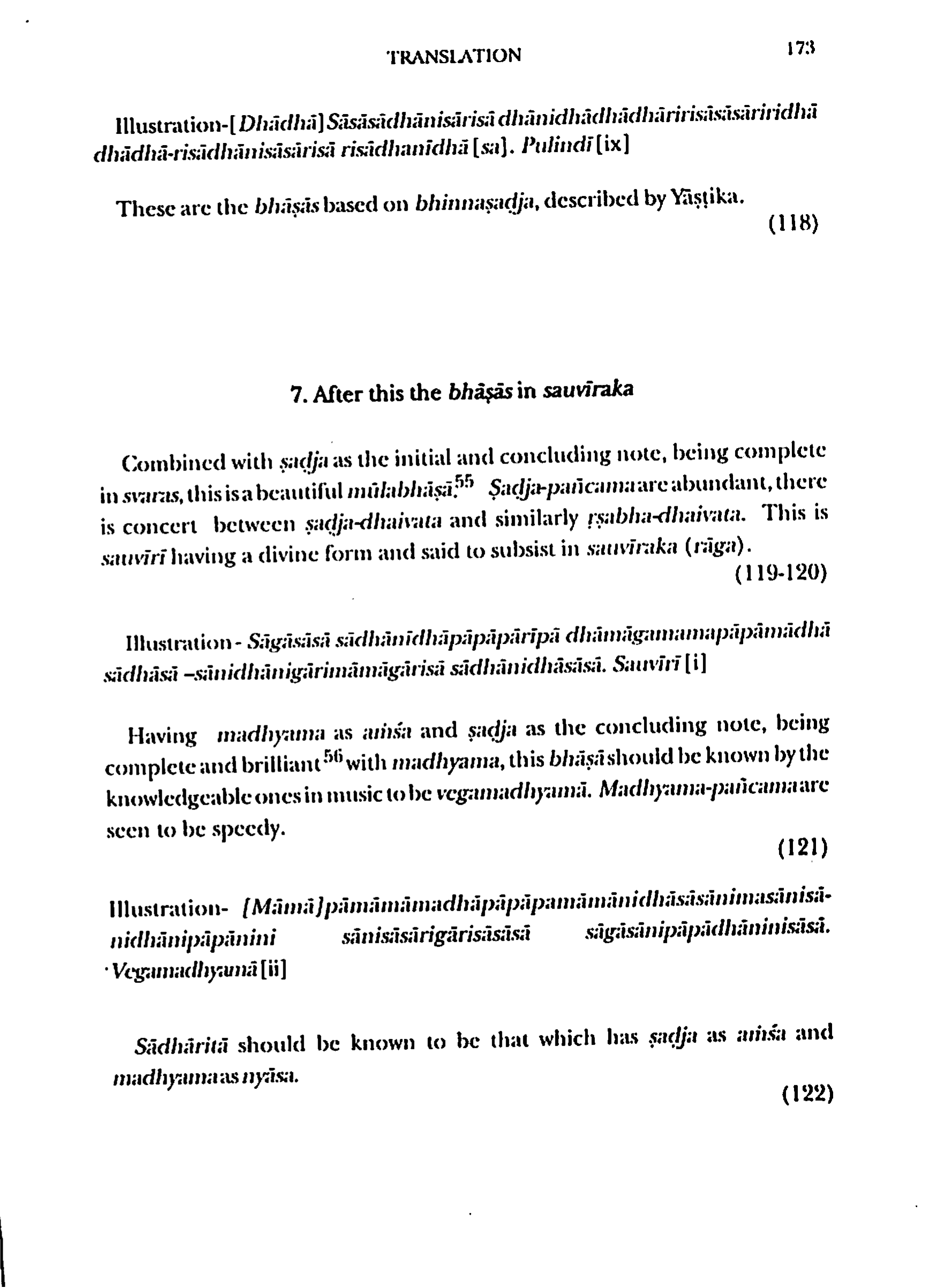
Illustration-[Dhādhā] Sāsāsādhānisārisā dhānidhādhādhāririsāsāsāriridhā
dhādhā-risādhānisāsārisā risādhanīdhā [sa]. Pulindī [ix]
These are the bhāṣās based on bhinnaṣaḍja, described by Yāṣṭika.5
(118)
7. After this the bhāṣās in
sauvīraka
Combined with sadja as the initial and concluding note, being complete
in svaras, this is a beautiful <math>m\bar{u}labh\bar{a}</math>ṣ<math>\bar{a}</math>. Şadja-pa<math>\bar{u}</math>cama are abundant,
there
is concert between şadja-dhaivata and similarly ṛṣabha-dhaivata.8 This is
sauvīrī having a divine form and said to subsist in sauvīraka (rāga).61
<math>(119-120)</math>
Illustration - Sāgāsāsā sādhānīdhāpāpāpārīpā dhāmāgamamapāpāmādhā
sādhāsā -sānidhānigārimāmāgārisā sādhānidhāsāsā.
Sauvīrī [i]
Having
madhyama as amśa and şadja as the concluding note, being
complete and brilliant <math>^{56}</math> with <math>
madhyama</math>, this <math>bh\bar{a}</math>, <math>\bar{a}</math> should be known by the
knowledgeable ones in music to be
vegamadhyamā.
Madhyama-
pañcama are
seen to be speedy.
(121)
Illustration- [Māmā]pāmāmāmadhāpāpāpamāmānidhāsāsānimasānisā-
sāgāsānipāpādhāninisāsā.
sānisāsārigārisāsāsā
nidhānipāpānini
·
Vegamadhyamā[ii]
Sādhāritā should be known to be that which has şadja as aniśa and
madhyamaas nyāsa.9
(122)