Source scans · vol_II_p097
recto · open full
scan recto
verso · open full
scan verso
Bṛhaddeśī · Volume II
pp. 176–177folio 097
Devanāgarī (Bṛhaddeśī)
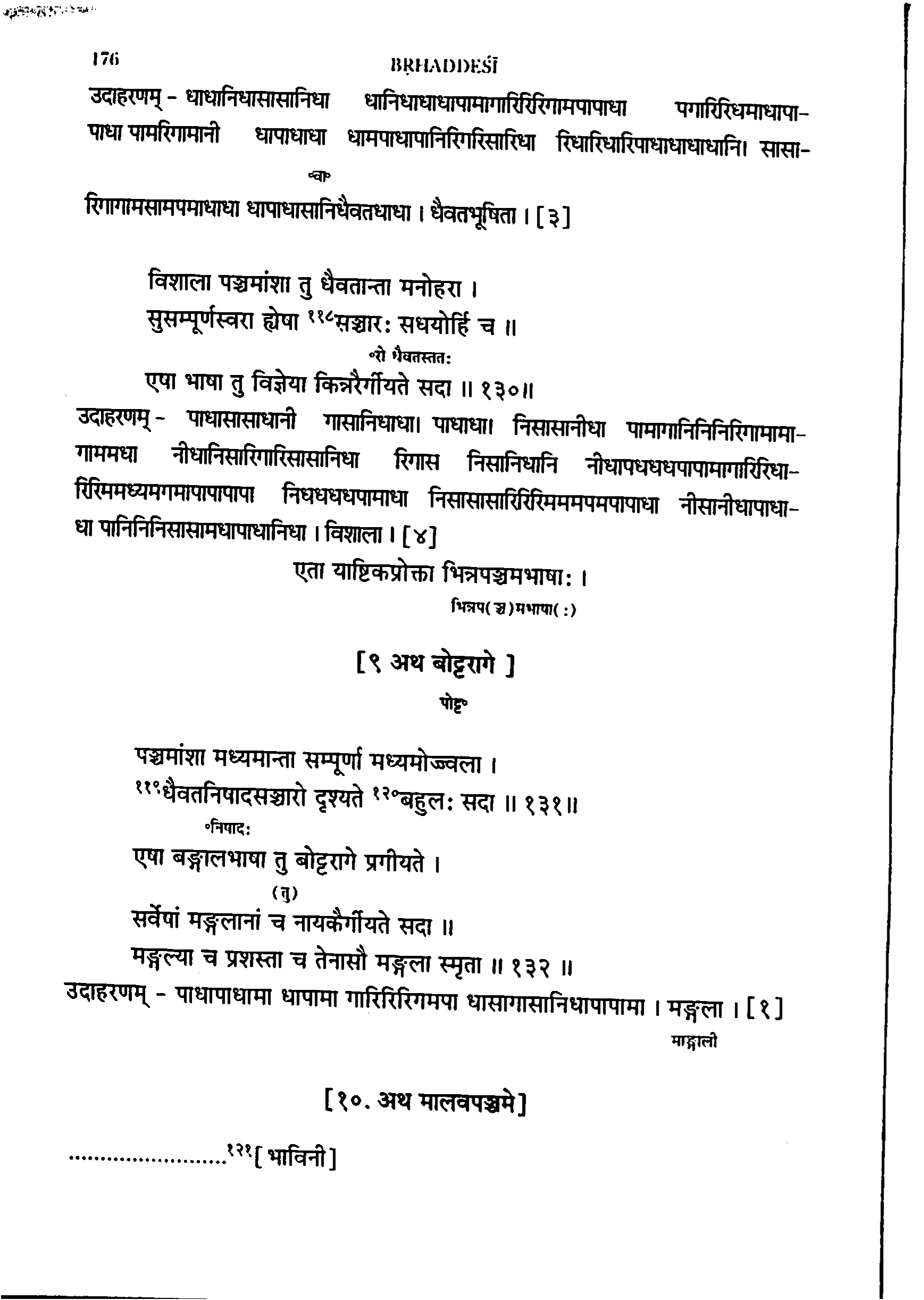
उदाहरणम्पाधा पामरिगामानी - धाधानिधासासानिधा धानिधाधाधापामागारिरिरिगामपापाधापगारिरिधमाधापा- धापाधाधा धामपाधापानिरिगरिसारिधा रिधारिधारिपाधाधाधाधानि। सासा- প্ৰাণ रिगागामसामपमाधाधा धापाधासानिधैवतधाधा । धैवतभूषिता । [३]12 विशाला पञ्चमांशा तु धैवतान्ता मनोहरा।117
सुसम्पूर्णस्वरा होषा ११८ सञ्चार:शो धैवतस्तत: सधयोर्हि च8
एषा भाषा तु विज्ञेया किन्नरैर्गीयते सदा3 ॥१३०॥ उदाहरणम् – पाधासासाधानी गासानिधाधा। पाधाधा। निसासानीधा पामागानिनिनिरिगामामा– नीधानिसारिगारिसासानिधागाममधा रिगास निसानिधानि नीधापधधधपापामागारिरिधा- रिरिममध्यमगमापापापा निधधधधपामाधा निसासासारिरिरिमममपमपापाधा नीसानीधापाधा- धा पानिनिनिसासामधापाधानिधा । विशाला । [४] एता याष्ट्रिकप्रोक्ता भित्रपञ्चमभाषा:भित्रप(ञ्च)मभाषा(:)1
[९ अथ बोट्टरागेपोट्ट]
पञ्चमांशा मध्यमान्ता सम्पूर्णा मध्यमोज्ज्वला9
११९धैवतनिषादसञ्चारो॰निपाद: दृश्यते १२०बहुल: सदा10 ॥१३१॥
एषा बङ्गालभाषा तु बोट्टरागे(तु) प्रगीयते4
सर्वेषां मङ्गलानां च नायकैर्गीयते सदा ॥6ZZANNZZWE0__ZZANNZZWS0__ मङ्गल्या च प्रशस्ता च तेनासौ मङ्गला स्मृता ॥१३२॥ उदाहरणम् - पाधापाधामा धापामा गारिरिरिगमपा धासागासानिधापापामा । मङ्गला । [१] ······१२१[ भाविनी ]
English — Sharma (translation)
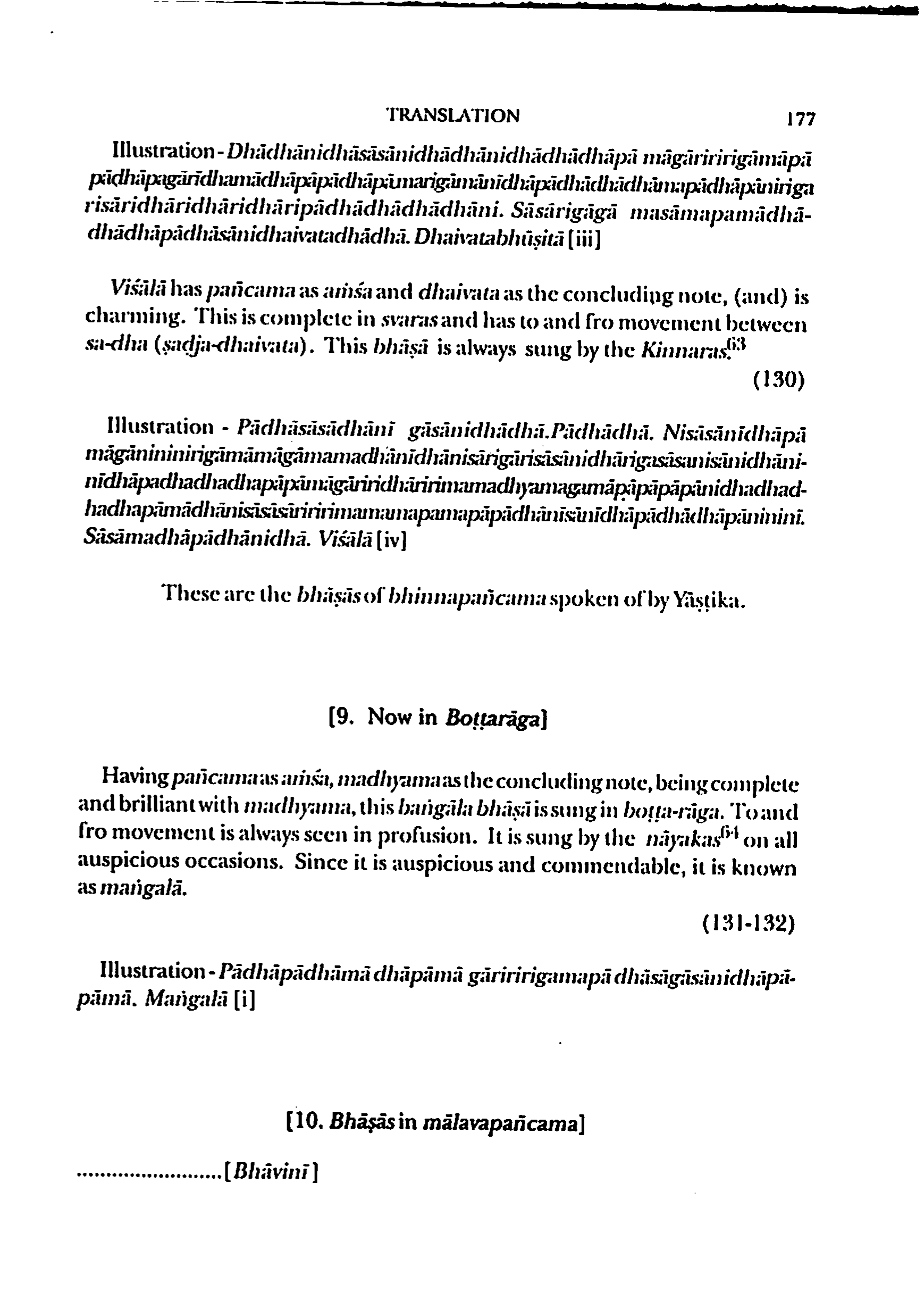
Illustration-Dhādhānidhāsāsānidhādhānidhādhādhāpā māgāriririgāmāpā pādhāpagārīdhamādhāpāpādhāpāmarigāmānīdhāpādhādhāmapādhāpāniriga risāridhāridhāripādhādhādhādhāni. Sāsārigāgā masāmapamādhā- dhādhāpādhāsānidhaivatadhādhā. Dhaivatabhūṣitā [iii] Viśālā has pañcama as amśa and dhaivata as the concluding note, (and) is charming. This is complete in svaras and has to and fro movement between sa-dha (ṣadja-dhaivata). This bhāṣā is always sung by the Kinnaras.633
(130)
Illustration - Pādhāsāsādhānī gāsānidhādhā.Pādhādhā. Nisāsānīdhāpā māgānininirigāmāmāgāmamadhānīdhānisārigārisāsānidhārigasāsanisānidhāni- nīdhāpadhadhadhapāpāmāgāriridhāririmamadhyamagamāpāpāpāpānidhadhad- hadhapāmādhānisāsāsāriririmamamapamapāpādhānīsānīdhāpādhādhāpānininī. Sāsāmadhāpādhānidhā. Viśālā [iv] These are the bhāṣās of bhinnapañcama spoken of by Yāṣṭika.1
[9. Now in Bottaraga]
Having pañcama as amsa, madhyama as the concluding note, being complete and brilliant with madhyama9, this baṅgāla bhāṣā is sung in boṭṭa-rāga.4 To and fro movement is always seen in profusion.10 It is sung by the <math>n\bar{a}yakas^{64}</math> on all auspicious occasions. Since it is auspicious and commendable, it is known as mangalā.2 <math>(131-132)</math> Illustration - Pādhāpādhāmā dhāpāmā gāriririgamapā dhāsāgāsānidhāpā- pāmā. Maṅgalā [i]
[10. Bhāṣās in mālavapañcama]
.....[Bhāvinī]
1.[attribution] The bhāṣās described by Yāṣṭika are characterized as bhinnapañcamaएता याष्ट्रिकप्रोक्ता भित्रपञ्चमभाषाः।
2.[definition] The baṅgāla bhāṣā form in Bottaraga is also known as Maṅgalā due to its auspicious and commendable qualitiesमङ्गल्या च प्रशस्ता च तेनासौ मङ्गला स्मृता
3.[relation] The Kinnaras are the group who traditionally sing the Viśālā bhāṣāएषा भाषा तु विज?्ञेया किन्नरैर्गीयते सदा
4.[relation] Bottaraga is a rāga context in which the baṅgāla bhāṣā with pañcama as aṁśa and madhyama as concluding note is sungएषा बङ्गालभाषा तु बोट्टरागे प्रगीयते
5.[relation] Bhāvinī is a bhāṣā type found in the mālavapañcama rāga[१०. अथ मालवपञ्चमे] ······१२१[ भाविनी ]
6.[relation] The baṅgāla bhāṣā type in Bottaraga is sung by nāyakas on all auspicious occasionsसर्वेषा मङ्गलाना च नायकैर्गीयते सदा ॥
7.[structural] Viśālā has pañcama as its aṁśa (characteristic note) and dhaivata as its concluding noteविशाला पञ्चमांशा तु धैवतान्ता मनोहरा।
8.[structural] Viśālā is complete in svaras and exhibits to and fro movement between sa and dhaivataसुसम्पूर्णस्वरा होषा ११८ सञ्चारः सधयोर्हि च
9.[structural] The Bottaraga has pañcama as aṁśa and madhyama as the concluding noteपञ्चमांशा मध्यमान्ता सम्पूर्णा मध्यमोज?्ज?्वला
10.[structural] To and fro movement (sañcāra) is always seen in profusion in Bottaragaधैवतनिषादसञ्चारो दृश्यते १२०बहुलः सदा
11.[structural] Viśālā is charming or attractive in qualityविशाला पञ्चमांशा तु धैवतान्ता मनोहरा।
12.[structural] Dhaivatabhūṣitā is an ornamental or characterizing feature of the Viśālā bhāṣāधैवतभूषिता । [३]
1.[attribution]The bhāṣās described by Yāṣṭika are characterized as bhinnapañcamaThese are the bhāṣās of bhinnapañcama spoken of by Yāṣṭika.
2.[definition]The baṅgāla bhāṣā form in Bottaraga is also known as Maṅgalā due to its auspicious and commendable qualitiesSince it is auspicious and commendable, it is known as mangalā.
3.[relation]The Kinnaras are the group who traditionally sing the Viśālā bhāṣāThis bhāṣā is always sung by the Kinnaras.63
4.[relation]Bottaraga is a rāga context in which the baṅgāla bhāṣā with pañcama as aṁśa and madhyama as concluding note is sungthis baṅgāla bhāṣā is sung in boṭṭa-rāga.
5.[relation]Bhāvinī is a bhāṣā type found in the mālavapañcama rāga[10. Bhāṣās in mālavapañcama] .....[Bhāvinī]
6.[relation]The baṅgāla bhāṣā type in Bottaraga is sung by nāyakas on all auspicious occasionsIt is sung by the nar{a}yakas64 on all auspicious occasions.
7.[structural]Viśālā has pañcama as its aṁśa (characteristic note) and dhaivata as its concluding noteViśālā has pañcama as aṁśa and dhaivata as the concluding note
8.[structural]Viśālā is complete in svaras and exhibits to and fro movement between sa and dhaivataThis is complete in svaras and has to and fro movement between sa-dha (ṣaḍja-dhaivata).
9.[structural]The Bottaraga has pañcama as aṁśa and madhyama as the concluding noteHaving pañcama as amsa, madhyama as the concluding note, being complete and brilliant with madhyama
10.[structural]To and fro movement (sañcāra) is always seen in profusion in BottaragaTo and fro movement is always seen in profusion.
11.[structural]Viśālā is charming or attractive in qualityViśālā has pañcama as aṁśa and dhaivata as the concluding note, (and) is charming.
12.[structural]Dhaivatabhūṣitā is an ornamental or characterizing feature of the Viśālā bhāṣāDhaivatabhūṣitā . [iii]