Source scans · vol_II_p102
recto · open full
scan recto
verso · open full
scan verso
Bṛhaddeśī · Volume II
pp. 186–187folio 102
Devanāgarī (Bṛhaddeśī)
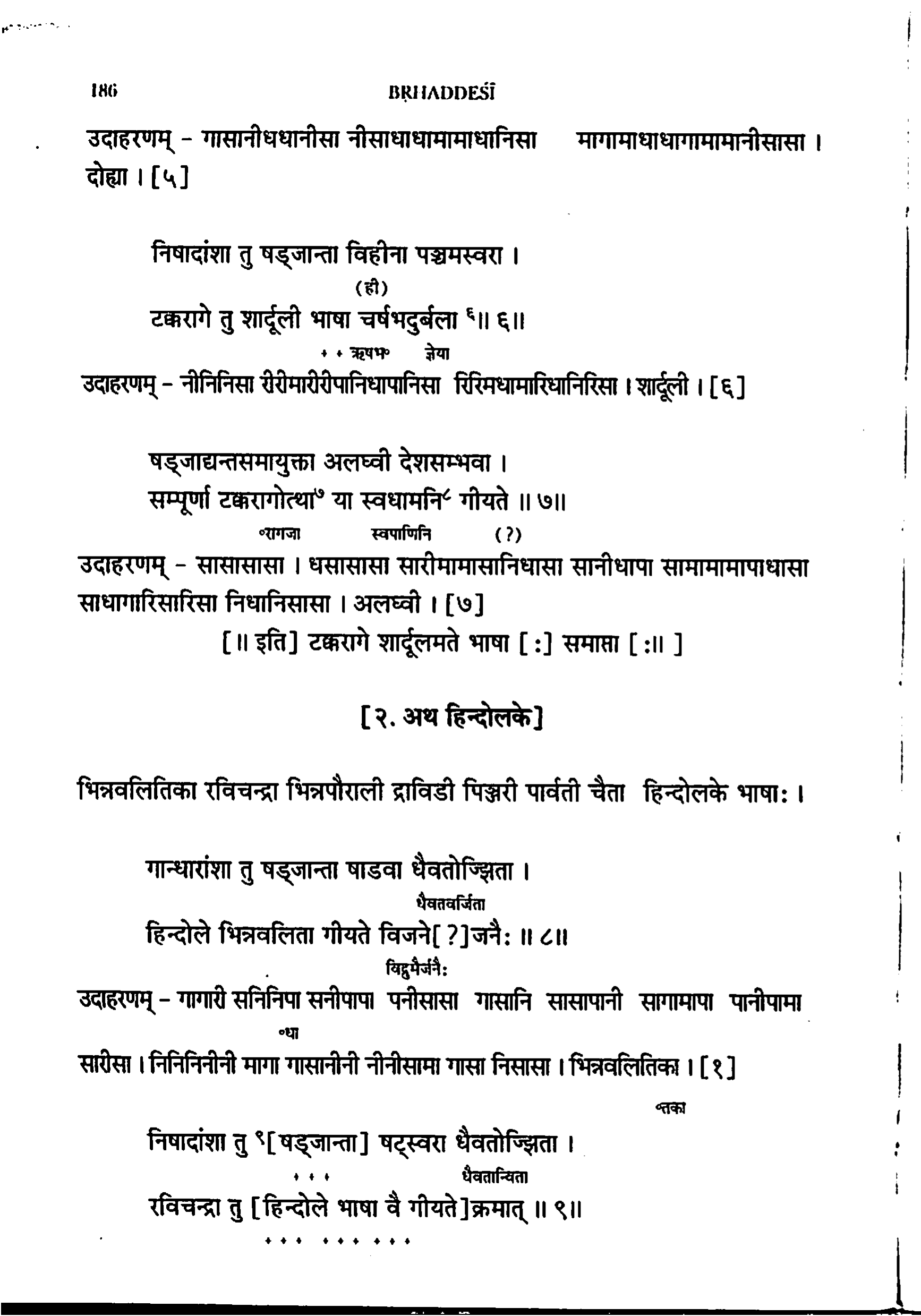
उदाहरणम् - गा सा नी ध धा नी सा नी सा धा धा मा मा धा नि सा मा गा मा धा धा गा मा मा नी सा सा ।
दोह्या।6[५]
निषादांशा तु षड्ज?ान्ता4 विहीना पञ्चमस्वरा8
(制) टक्करागे तु शार्दूली भाषा चर्षभदुर्बला ६॥६॥ ज?ेया + + ऋषभः उदाहरणम् - नी नि नि सा रीरीमारीरीपानिधापानिसा रि रि म धा मा रि धा नि रि सा । शार्दूली । [६]
षड्ज?ाद्यन्तसमायुक्ता अलघ्वी देशसम्भवा ।
सम्पूर्णा टक्करागोत्था9 या स्वधामनि गीयते ॥७॥ स्वपाणिनि (?) ॰रागजा उदाहरणम् – सा सा सा सा । ध सा सा सा सारीमामासानिधासा सा नी धा पा सा मा मा मा पा धा सा सा धा गा रि सा रि सा नि धा नि सा सा । अलघ्वी । [७] [॥ इति] टक्करागे शार्दूलमते भाषा [:] समाप्ता [:॥ ]1
[२. अथ हिन्दोलके]
भित्रवलितिका रविचन्द्रा भित्रपौराली द्राविडी पिञ्जरी पार्वती चैता हिन्दोलके भाषाः।2
गान्धारांशा तु षड्ज?ान्ता षाडवा धैवतोज?्झिता ।
धैवतवर्ज?िता हिन्दोले भित्रवलिता गीयते विजने[?]जनैः ॥८॥ विद्वर्भर्जनैः उदाहरणम् – गागारी स नि नि पा स नी पा पा प नी सा सा गा सा नि सा सा पा नी सा गा मा पा पा नी पा मा ण्धा सारीसा । नि नि नि नी नी मागा गा सा नी नी नी नी सा मा गासा नि सा सा । भिन्नवलितिका । [१] প্ৰকা
निषादांशा तु ९[षड्ज?ान्ता] षट्स्वरा धैवतोज?्झिता ।
धैवतान्यिता रविचन्द्रा तु [हिन्दोले भाषा वै गीयते]क्रमात् ॥९॥
English — Sharma (translation)
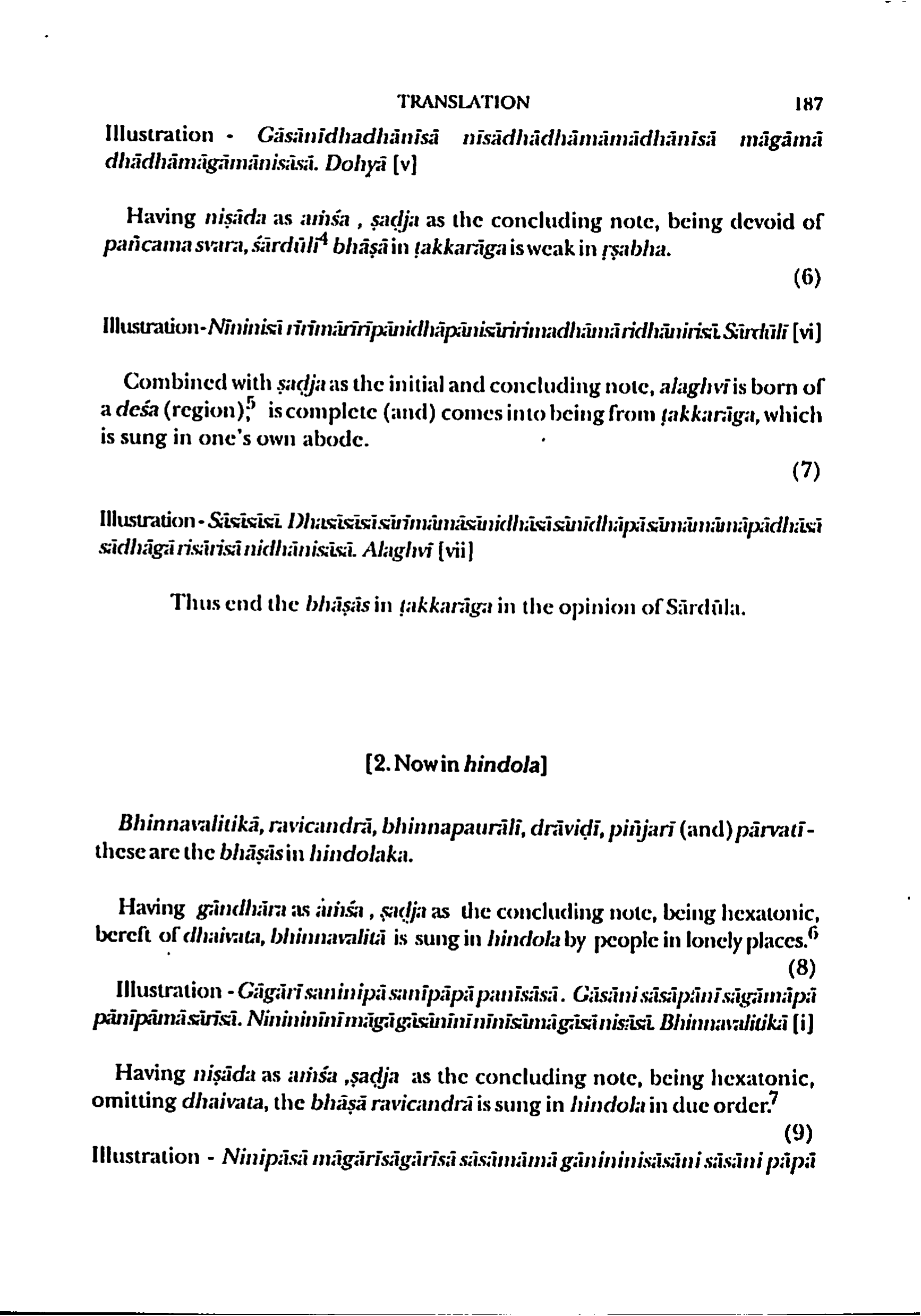
Illustration - Gāsānīdhadhānīsā nīsādhādhāmāmādhānīsā māgāmā dhādhāmāgāmānisāsā. Dohyā [v]6 Having niṣāda as amśa, ṣadja as the concluding note, being devoid of pañcama svara, śārdūlī4 bhāṣā in ṭakkarāga is weak in ṛṣabha.8
(6)
Illustration-Nīninisā rīrīmārīrīpānidhāpānisāririmadhāmāridhānirisā.Sārdūlī [vi] Combined with ṣadja as the initial and concluding note, alaghvī is born of a deśa (region)5, is complete (and) comes into being from takkarāga, which is sung in one's own abode.
(7)
Illustration - Sasasas Dhasasasas เกิดเลือนที่เกิดเลือนที่สายสายสายสายสายสายสายสายสายสายสายสายสายส sādhāgā risārisā nidhānisāsā. Alaghvī [vii] Thus end the bhāṣās in ṭakkarāga in the opinion of Sārdūla.
[2. Now in hindola]
Bhinnavalitikā, ravicandrā, bhinnapaurālī, drāviḍī, piūjarī (and) pārvatī- these are the bhāṣās in hindolaka.32 Having gāndhāra as ainsa, sadja as the concluding note, being hexatonic, bereft of dhaivata, bhinnavalitā is sung in hindola by people in lonely places.106
(8)
Illustration - Gāgārī saninipā sanīpāpā panīsāsā . Gāsāni sāsāpānī sāgāmāpā pลักโอลิเทลิรสิทิรนิ. Ninininīnī māgāgāsānīnī nīnīsīmāgāsā nisāsī. Bhinnavalitikā [i] Having niṣāda as amśa ,ṣadja as the concluding note, being hexatonic, omitting dhaivata, the bhāṣā ravicandrā is sung in hindola in due order.7
(9)
Illustration - Ninipāsā māgārīsāgārīsā sāsāmāmā gānininisāsāni sāsāni pāpā
ordered sequence list
bhāṣās of hindolaka — Section [2. Now in hindola]: bhinnavalitikā, ravicandrā, bhinnaparālī, drāviḍī, piñjarī, and pārvatī — these are the bhāṣās in hindolaka.
b · h · i · n · n · a · v · a · l · i · t · i · k · ā
r · a · v · i · c · a · n · d · r · ā
b · h · i · n · n · a · p · a · r · ā · l · ī
d · r · ā · v · i · ḍ · ī
p · i · ñ · j · a · r · ī
p · ā · r · v · a · t · ī
— Bhinnavalitikā, ravicandrā, bhinnaparālī, drāviḍī, piñjarī (and) pārvatī — these are the bhāṣās in hindolaka.
1.[enumeration] ṭakkarāga has multiple bhāṣā varieties including Dohyā, Śārdūlī, and Alaghvī[॥ इति] टक्करागे शार्दूलमते भाषा [:] समाप्ता [:॥ ]
2.[enumeration] Hindolaka has six distinct bhāṣā varieties: Bhinnavalitikā, ravicandrā, bhinnapaurālī, drāviḍī, piūjarī, and pārvatīभित्रवलितिका रविचन्द्रा भित्रपौराली द्राविडी पिञ्जरी पार्वती चैता हिन्दोलके भाषाः।
3.[relation] bhāṣā are distinct musical varieties associated with specific rāgasभित्रवलितिका रविचन्द्रा भित्रपौराली द्राविडी पिञ्जरी पार्वती चैता हिन्दोलके भाषाः।
4.[relation] aṁśa is a characteristic note that identifies specific bhāṣā varietiesनिषादांशा तु षड्ज?ान्ता
5.[relation] deśa (region) is a source or origin for alaghvī bhāṣāअलघ्वी देशसम्भवा
6.[relation] Dohyā is a bhāṣā variety of ṭakkarāga with illustrated melodic contentउदाहरणम् - गा सा नी ध धा नी सा नी सा धा धा मा मा धा नि सा मा गा मा धा धा गा मा मा नी सा सा । दोह्या।
8.[structural] Śārdūlī bhāṣā lacks the pañcama svara (fifth note)विहीना पञ्चमस्वरा
9.[structural] Alaghvī is a bhāṣā derived from a deśa (region), complete, and originates from ṭakkarāgaषड्ज?ाद्यन्तसमायुक्ता अलघ्वी देशसम्भवा । सम्पूर्णा टक्करागोत्था
1.[enumeration]ṭakkarāga has multiple bhāṣā varieties including Dohyā, Śārdūlī, and AlaghvīThus end the bhāṣās in ṭakkarāga in the opinion of Sārdūla.
2.[enumeration]Hindolaka has six distinct bhāṣā varieties: Bhinnavalitikā, ravicandrā, bhinnapaurālī, drāviḍī, piūjarī, and pārvatīBhinnavalitikā, ravicandrā, bhinnapaurālī, drāviḍī, piūjarī (and) pārvatī- these are the bhāṣās in hindolaka.
3.[relation]bhāṣā are distinct musical varieties associated with specific rāgasBhinnavalitikā, ravicandrā, bhinnapaurālī, drāviḍī, piūjarī (and) pārvatī- these are the bhāṣās in hindolaka.
4.[relation]aṁśa is a characteristic note that identifies specific bhāṣā varietiesHaving niṣāda as aṁśa, ṣaḍja as the concluding note
5.[relation]deśa (region) is a source or origin for alaghvī bhāṣāalaghvī is born of a deśa (region)
6.[relation]Dohyā is a bhāṣā variety of ṭakkarāga with illustrated melodic contentIllustration - Gāsānīdhadhānīsā nīsādhādhāmāmādhānīsā māgāmā dhādhāmāgāmānisāsā. Dohyā [v]
7.[structural]Śārdūlī bhāṣā in ṭakkarāga has niṣāda as aṁśa and ṣaḍja as concluding noteHaving niṣāda as aṁśa, ṣaḍja as the concluding note, being devoid of pañcama svara, śārdūlī bhāṣā in ṭakkarāga is weak in ṛṣabha.
8.[structural]Śārdūlī bhāṣā lacks the pañcama svara (fifth note)being devoid of pañcama svara, śārdūlī bhāṣā in ṭakkarāga is weak in ṛṣabha.
9.[structural]Alaghvī is a bhāṣā derived from a deśa (region), complete, and originates from ṭakkarāgaCombined with ṣaḍja as the initial and concluding note, alaghvī is born of a deśa (region), is complete (and) comes into being from takkarāga
10.[structural]Bhinnavalitikā has gāndhāra as aṁśa, ṣaḍja as concluding note, is hexatonic, and lacks dhaivataHaving gāndhāra as ainsa, sadja as the concluding note, being hexatonic, bereft of dhaivata, bhinnavalitā is sung in hindola by people in lonely places.
11.[structural]ravicandrā has niṣāda as aṁśa, ṣaḍja as concluding note, is hexatonic, and omits dhaivataHaving niṣāda as aṁśa ,ṣaḍja as the concluding note, being hexatonic, omitting dhaivata, the bhāṣā ravicandrā is sung in hindola in due order.