[1. Now in takka]
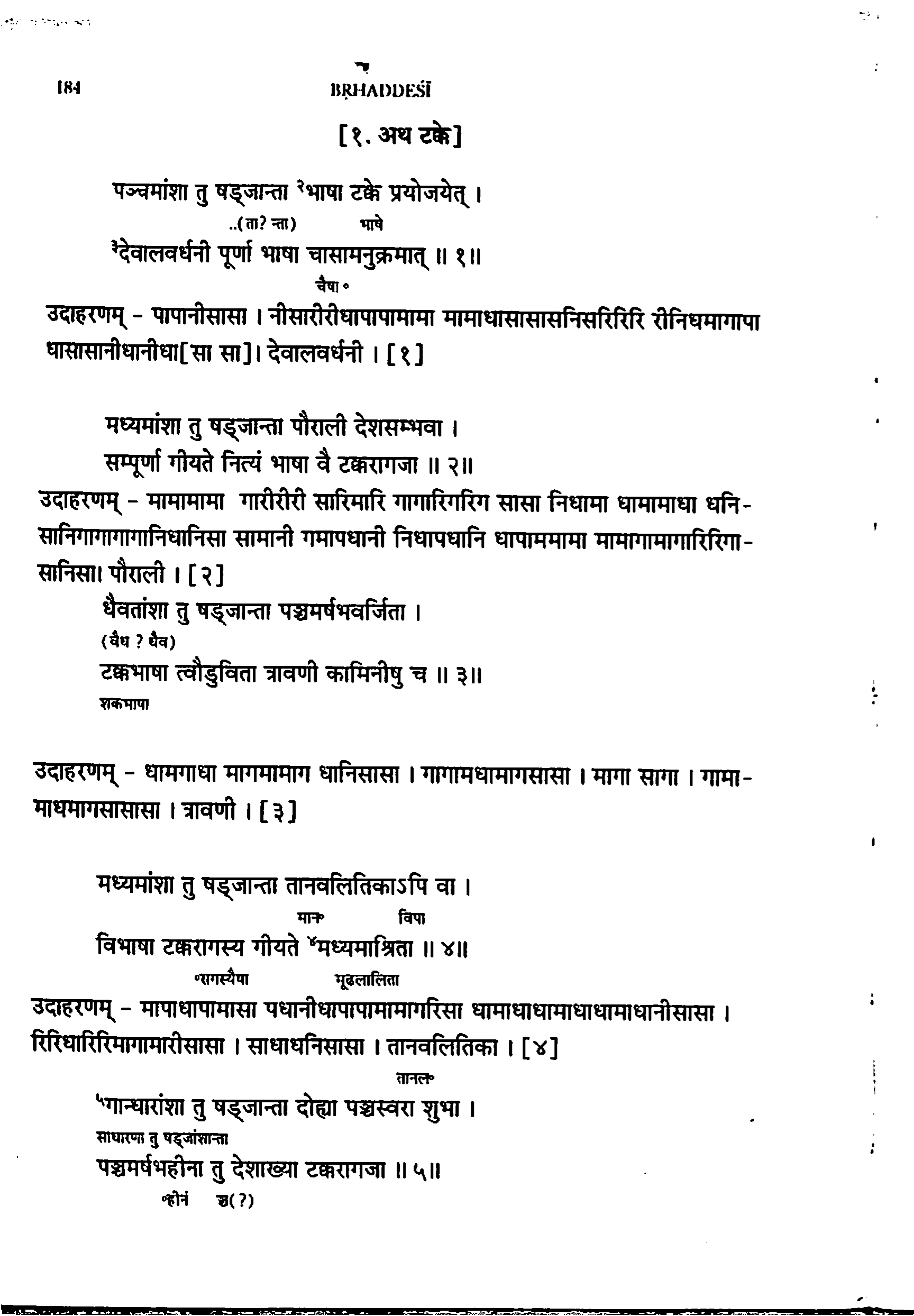
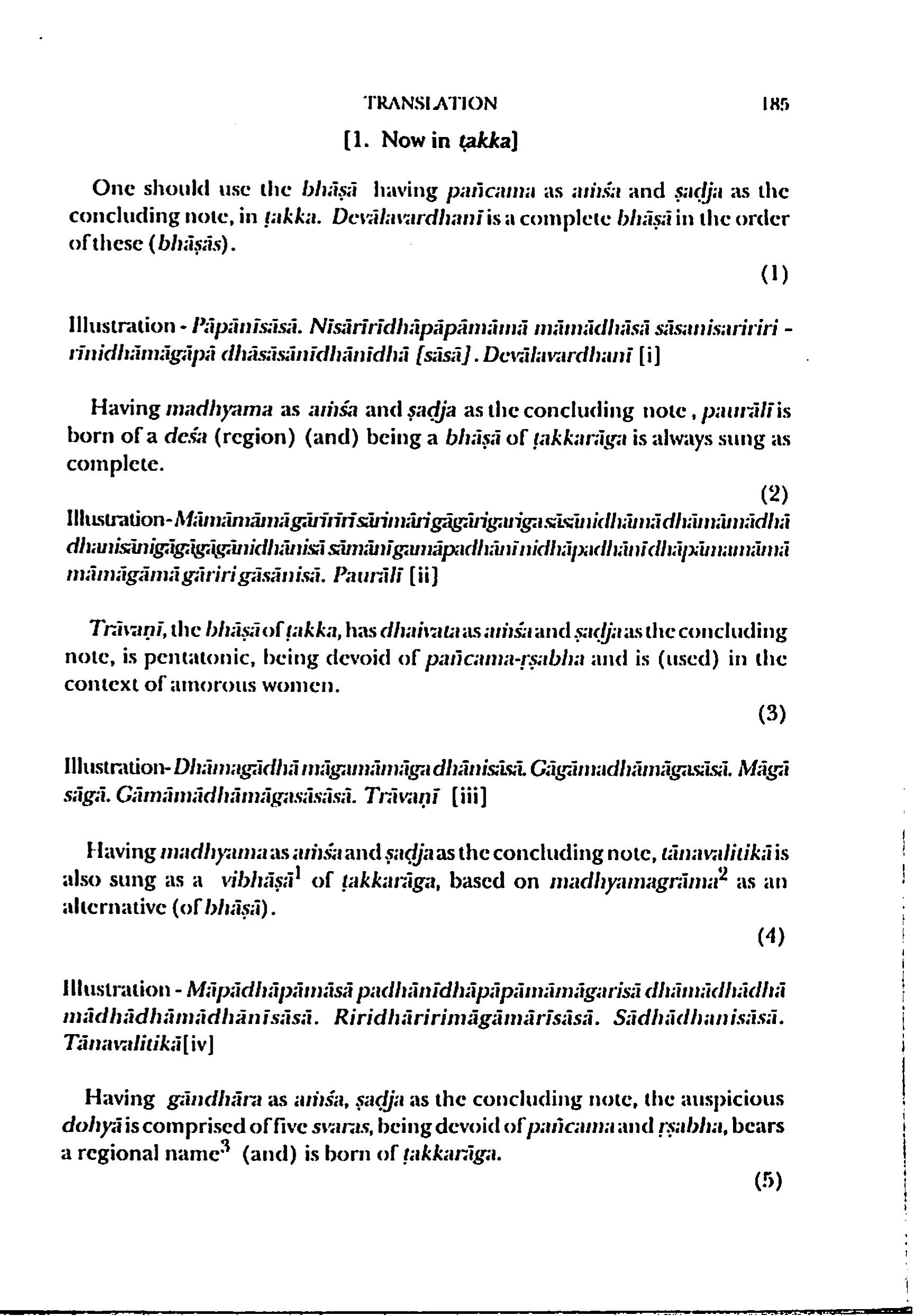
One should use the bhāṣā having
pañcama as amśa and ṣadja as the
concluding note, in takka.
Devālavardhanī is a complete bhāṣā in the order
of these (bhāṣās).9
(1)
Illustration - Pāpānīsāsā. Nīsārīrīdhāpāpāmāmā māmādhāsā sāsanisaririri -
rīnidhāmāgāpā dhāsāsānīdhānīdhā [sāsā].
Devālavardhanī [i]
Having
madhyama as amśa and ṣadja as the concluding note,
paurālī is
born of a deśa (region)6 (and)
being a bhāṣā of ṭakkarāga is always sung as
complete.4
(2)
Illustration-Māmāmāgārīrīrīsārimārigāgārigurigasāsānidhāmādhāmāmādhā
dhanisanigagagaganidhanisa samanigamapadhani nidhapadhani dhapamamama
māmāgāmā gāriri gāsānisā.
Paurālī [ii]
Trāvaṇī, the bhāṣā of ṭakka, has
dhaivata as amśa and ṣadja as the concluding
note, is
pentatonic, being devoid of
pañcama-ṛṣabha and
is (used) in the
context of amorous women.12
(3)
Illustration-
Dhāmagādhā māgamāmāga dhānisāsā. Gāgāmadhāmāgasāsā. Māgā
sāgā. Gāmāmādhāmāgasāsāsā. Trāvaņī [iii]
Having
madhyama as amśa and şadja as the concluding note,
tānavalitikā is
also sung as a vibhāṣā¹ of ṭakkarāga53, based on madhyamagrāma² as an
alternative (of bhāṣā).
(4)
Illustration - Māpādhāpāmāsā padhānīdhāpāpāmāmāgarisā dhāmādhādhā
mādhādhāmādhānīsāsā. Riridhāririmāgāmārīsāsā. Sādhādhanisāsā.
Tānavalitikā[iv]
Having
gāndhāra as amśa, ṣaḍja as the concluding note,
the auspicious
dohyā is comprised of five svaras, being devoid of pañcama and ṛṣabha14, bears
a regional name
3 (and) is born of
takkarāga.
(5)