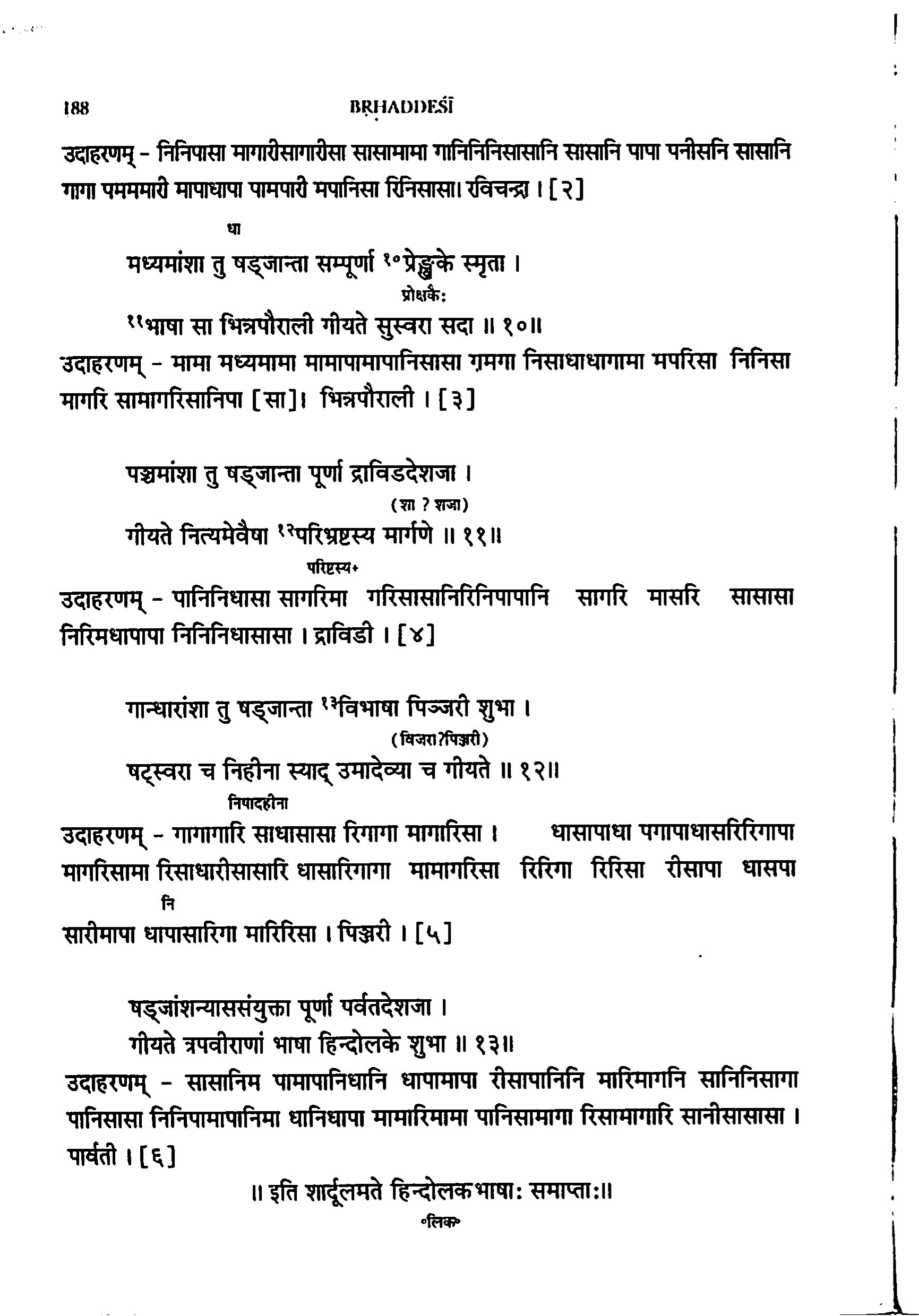
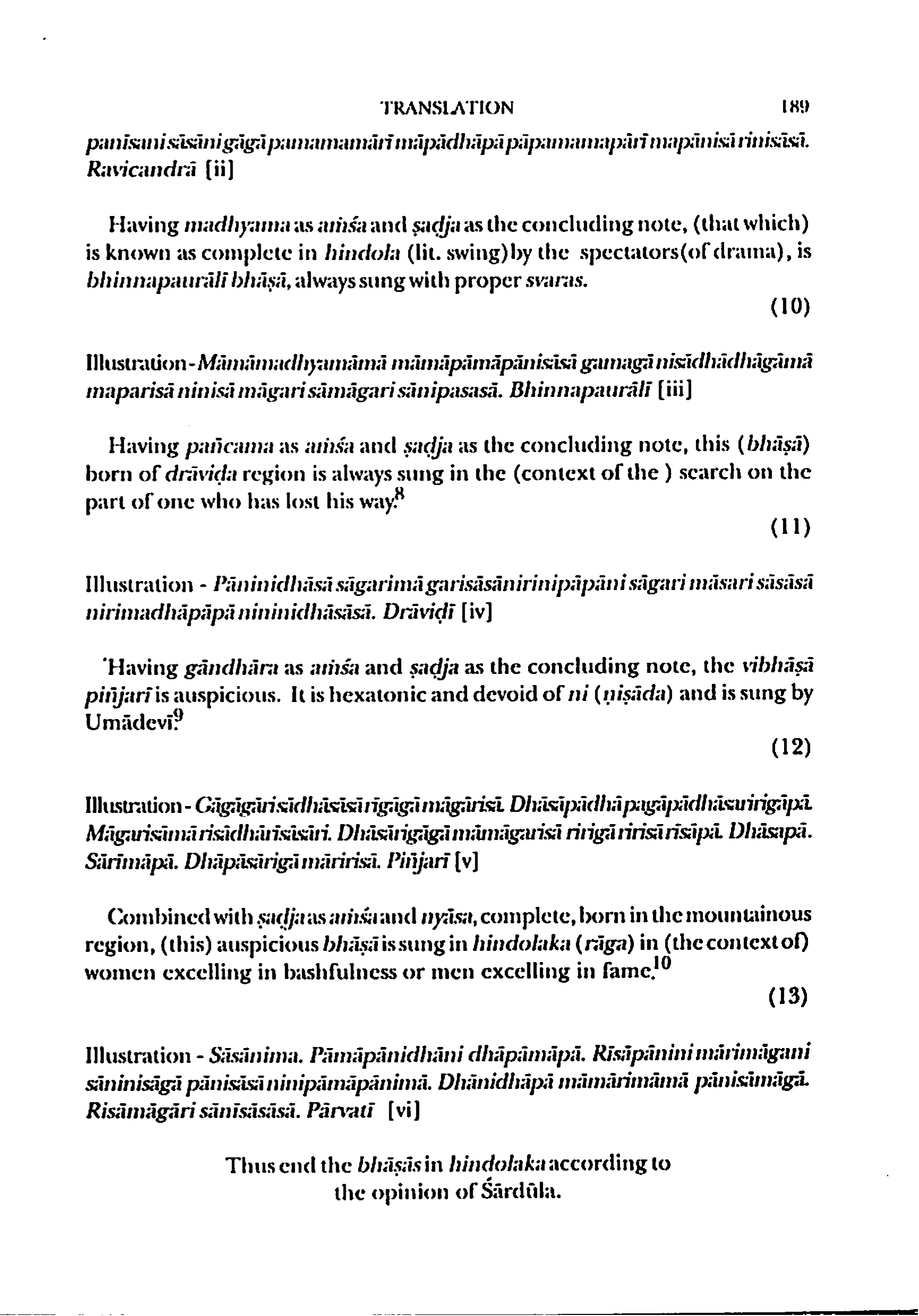
panīsani sāsāni gāgā pamamamārī māpādhāpā pāpamamapārī mapānisā rinisāsā.
Ravicandrā [ii]5
Having
madhyama as amśa and ṣaḍja as the concluding note, (that which)
is known as complete in
hindola (lit. swing) by the spectators (of drama), is
bhinnapaurālī bhāṣā, always sung with proper svaras.3
(10)
Illustration-Māmāmadhyamāmā māmāpāmāpānisāsā gamagā nisādhādhāgāmā
maparisā ninisā māgari sāmāgari sānipasasā.
Bhinnapaurālī [iii]
Having
pañcama as amśa and ṣaḍja as the concluding note, this (bhāṣā)
born of drāvida region is always sung in the (context of the ) search on the
part of one who has lost his way.8
(11)
Illustration - Pāninidhāsā sāgarimā garisāsānirinipāpāni sāgari māsari sāsāsā
nirimadhāpāpā nininidhāsāsā.
Drāviḍī [iv]
Having
gāndhāra as amśa and ṣadja as the concluding note, the
vibhāṣā
pinjarī is auspicious. It is
hexatonic and devoid of ni (niṣāda)
and is sung by
Umādevī.19
(12)
Illustration - <math>G</math>āgāgāri sādhāsāsī rīgāgā māgārisī. <math>D</math>hāsāpādhā pagāpādhāsu irigāpā.
<math>M</math>āgarisāmā risādhārisāsāri. <math>D</math>hāsārigāgā māmāgarisā ririgā ririsā rīsāpā. <math>D</math>hāsapā.
Sārīmāpā. Dhāpāsārigā māririsā. Pinjarī [v]
Combined with
ṣadja as
amśa and
nyāsa, complete, born in the mountainous
region, (this)
auspicious bhāṣā is sung in hindolaka (rāga)6 in (the context of)
women excelling in bashfulness or men excelling in fame.
10
(13)
Illustration - Sāsānima. Pāmāpānidhāni dhāpāmāpā. Rīsāpānini mārimāgani
sāninisāgā pānisāsā ninipāmāpānimā. Dhānidhāpā māmārimāmā pānisāmāgā.
Risāmāgāri sānīsāsāsā.
Pārvatī [vi]
Thus end the
bhāṣās in
hindolaka according to
the opinion of
Śārdūla.