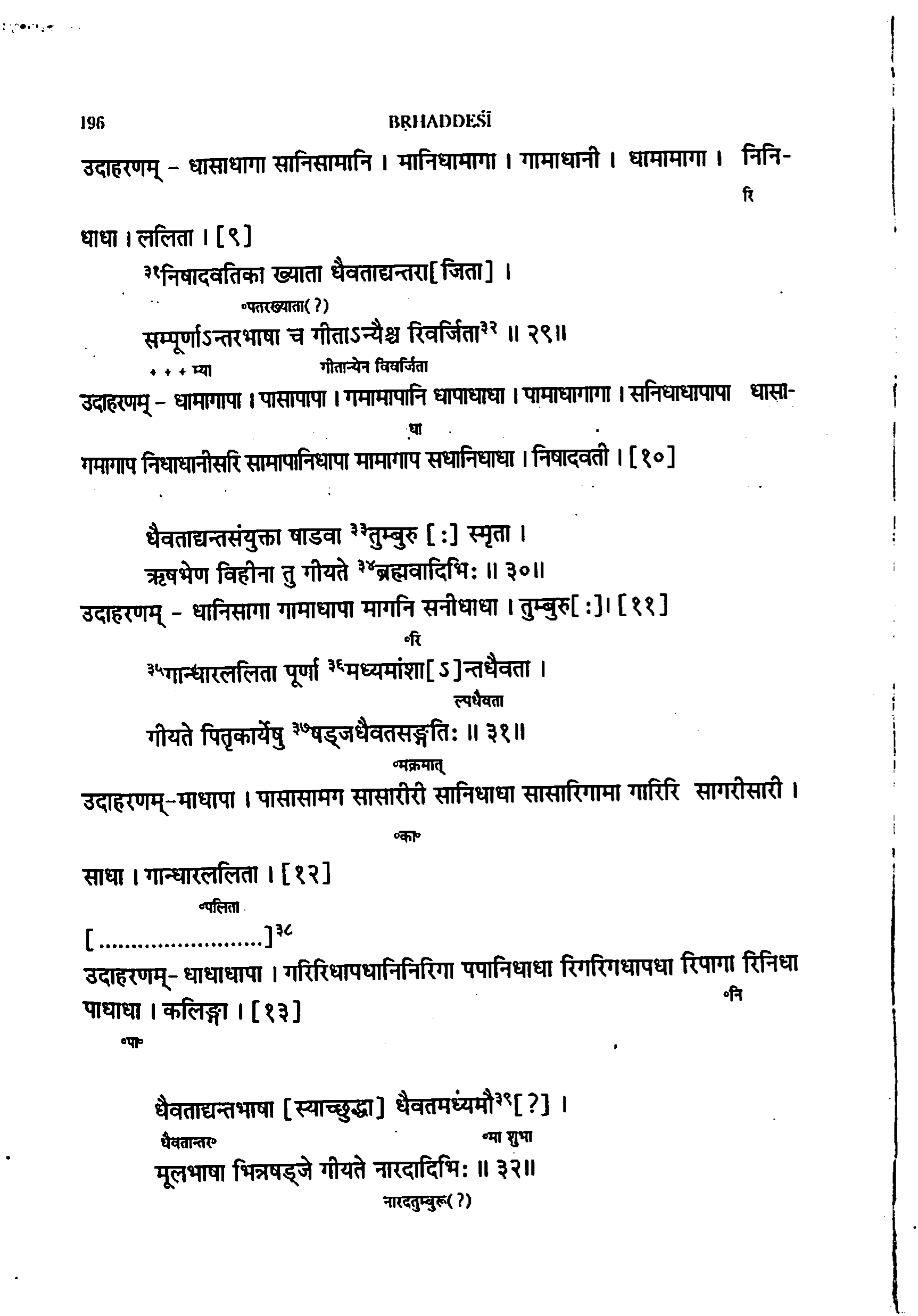
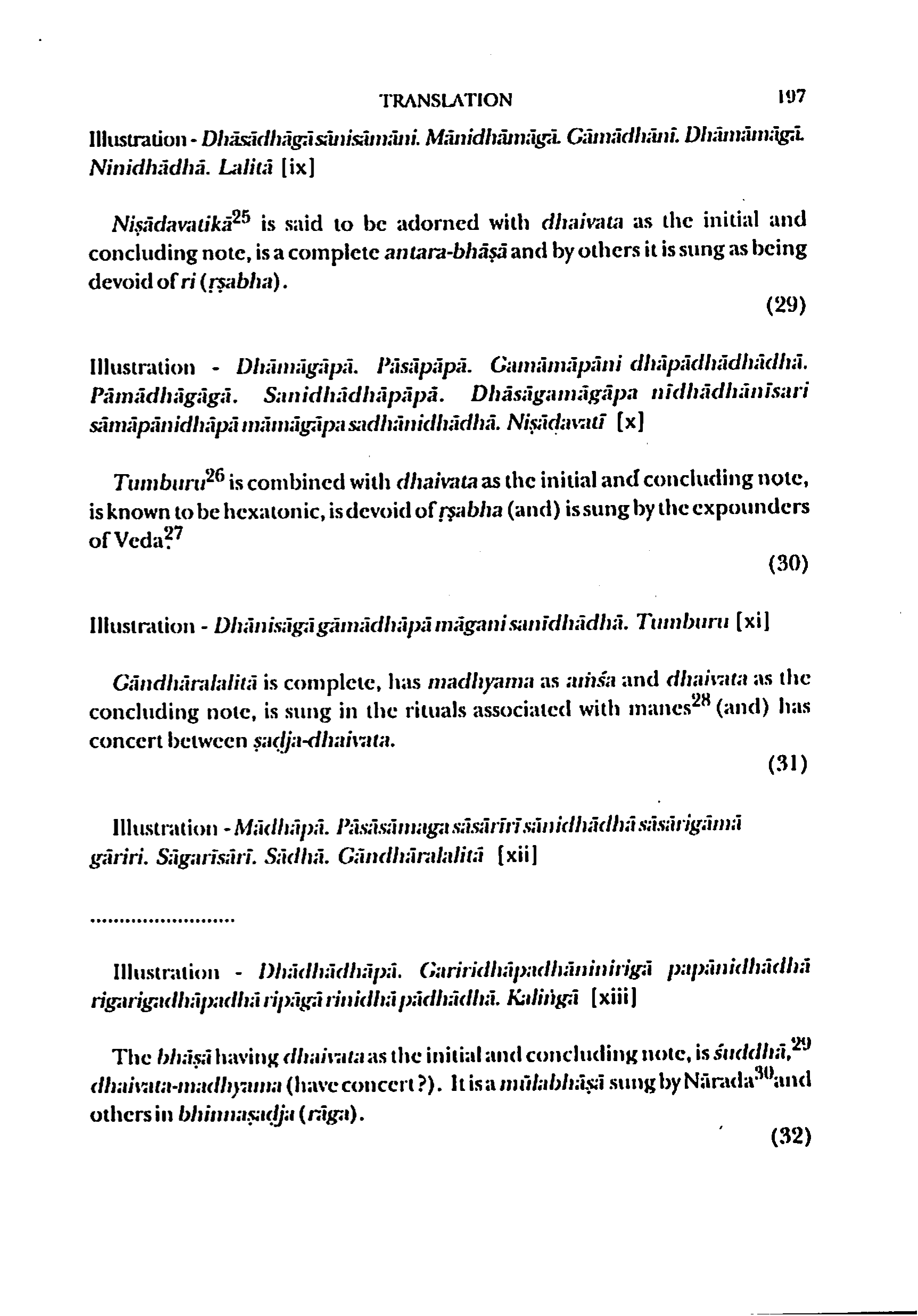
Illustration - Dhāsādhāgā sānisāmāni. Mānidhāmāgā. Gāmādhāni. Dhāmāmāgā.
Ninidhādhā. Lalitā [ix]
Niṣādavatikā25 is said to be adorned with
dhaivata as the initial and
concluding note,
is a complete antara-bhāṣā8 and by others it is sung as being
devoid of ri (ṛṣabha)1.5
(29)
Illustration - Dhāmāgāpā. Pāsāpāpā. Gamāmāpāni dhāpādhādhādhā.
Pāmādhāgāgā. Sanidhādhāpāpā. Dhāsāgamāgāpa nīdhādhānīsari
sāmāpānidhāpā māmāgāpa sadhānidhādhā. Niṣāḍavatī [x]
Tumburu26 is combined with
dhaivata as the initial and concluding note,
is known to be
hexatonic,
is devoid of rşabha11 (and)
is sung by the expounders
of Veda227
(30)
Illustration - Dhānisāgā gāmādhāpā māgani sanīdhādhā.
Tumburu [xi]
Gāndhāralalitā is complete12, has
madhyama as amśa and
dhaivata as the
concluding note,
is sung in the rituals associated with manes328 (and) has
concert between şadja-
dhaivata.
(31)
Illustration - Mādhāpā. Pāsāsāmaga sāsārīrī sānidhādhā sāsārigāmā
gāriri. Sāgarīsārī. Sādhā.
Gāndhāralalitā [xii]
.....................
Illustration - Dhādhādhāpā. Gariridhāpadhāninirigā papānidhādhā
rigarigadhāpadhā ripāgā rinidhā pādhādhā. Kalingā [xiii]
The
bhāṣā having
dhaivata as the initial and concluding note, is <math>\acute{s}uddh\bar{a}</math>, <math>^{29}</math>
dhaivata-
madhyama (have concert?). It is a <math>m\bar{u}labh\bar{a}</math>ṣ<math>\bar{a}</math> sung by Nārada<math>^{30}</math>and
others in bhinnaṣadja (rāga).
(32)