bhinnaṣaḍja raga_name
Generative rules (1) ↗ filter all
R_c32_bhinnasadjaclassification · 9 att.
bhinnaṣaḍja = catégorie de rāga regroupant 9 à 15 bhāṣās (Trāvaṇī, Ṣaḍjabhāṣā, Mālavī, Gūrjari...) avec dhaivata aṃśa et omission de pañcama/ṛṣabha en śuddhā
Pseudocode (DSL v1.1) ↗ full DSL (raw text)
RULE id: bhinnaṣaḍja (cluster 32)
SCOPE: raga_name family
STATUS: canonical
CONFIDENCE: canonical
PROTECT: true
Essence pseudocode — identity + RECORD. The page citations for each slot value are in the Grammar record table above (audit trail). The full DSL adds ASSERTIONS with verbatim quotes (see Affirmations below) and CITED_RULES (see Graph relations).
Graph relations
Outgoing (18)
--[structural]--> bhāṣā (5)--[relation]--> bhāṣā (2)--[relation]--> भाषा (2)--[structural]--> aṁśa (1)--[enumeration]--> bhāṣā (1)--[relation]--> Yāṣṭika (1)--[structural]--> gāndhāra (1)--[structural]--> pañcama (1)--[structural]--> śuddhā (1)--[relation]--> pulindikā (1)--[enumeration]--> mālatī (1)--[structural]--> dhaivata (1)--[structural]--> ṛṣabha (1)--[structural]--> bhinnaşadja (1)--[structural]--> धैवतांशा (1)--[enumeration]--> Trāvaṇī (1)--[relation]--> rāga (1)--[structural]--> Şadja (1)
Incoming (3)
Affirmations (9)
bhinnaṣaḍja has at least fifteen bhāṣās varieties including Trāvaņī, Șadjabhāşā, Mālavī, Gürjari, and others
"4. Bhāṣāsin bhinnaṣaḍja
Travaņī
i.
ii.
Ṣadjabhāşā
Mālavī
iii.
Gürjari
iv."
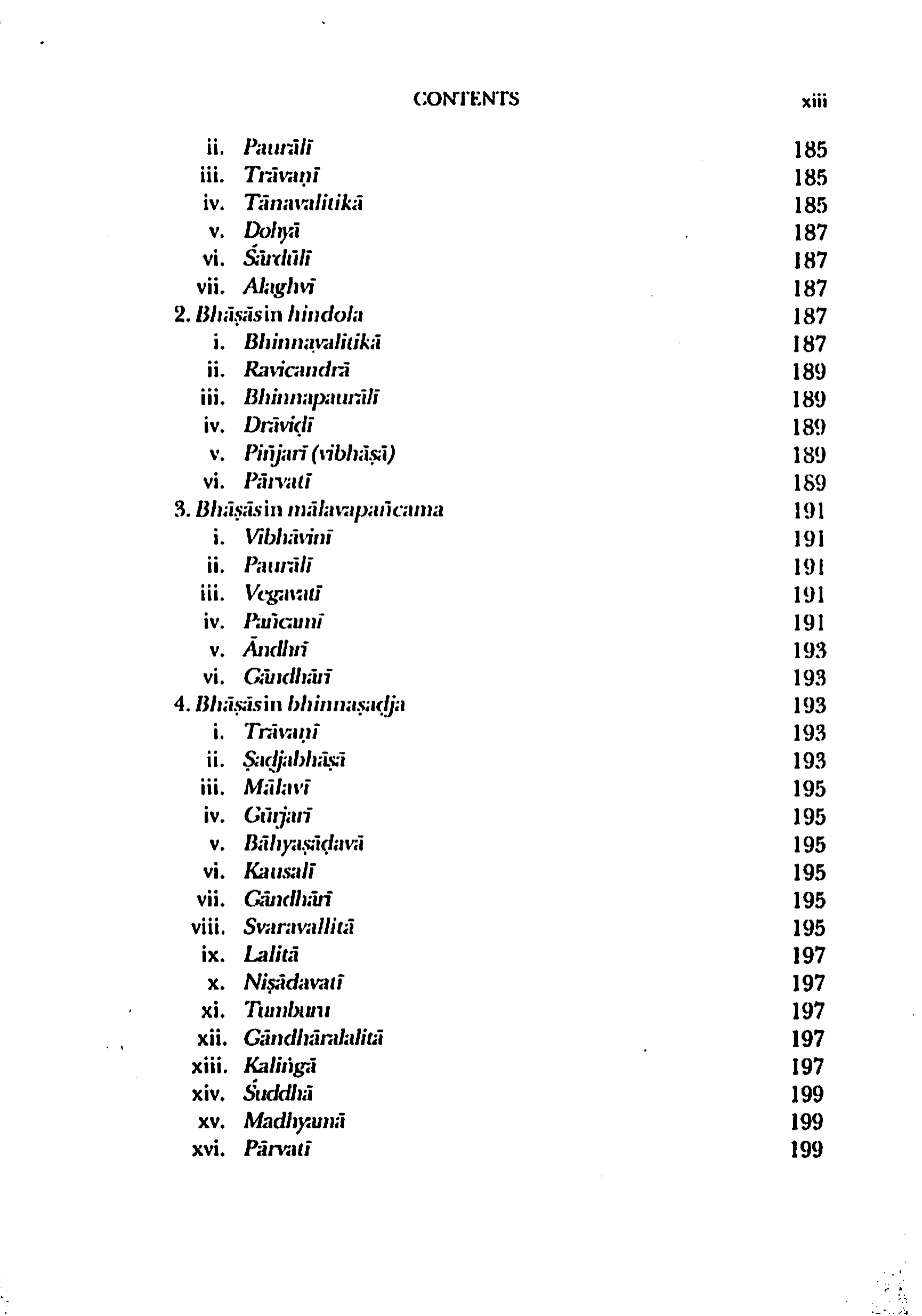
bhinnaṣaḍja is a classification that encompasses multiple named bhāṣās including Trāvaņī, śadjabhāṣā, mālavī, and others
"Now in bhinnaṣaḍja]
Travaņī and şadjabhāṣā, mālavī, similarly gūrjarī, bāhyaṣāḍavā, kausalī,
gāndhārī, svaravallitā, lalitā, niṣādavatī, tumburu, gāndhāralalitā, kaliṅgā and
śuddhā and madhyamā, similarly pārvatī"
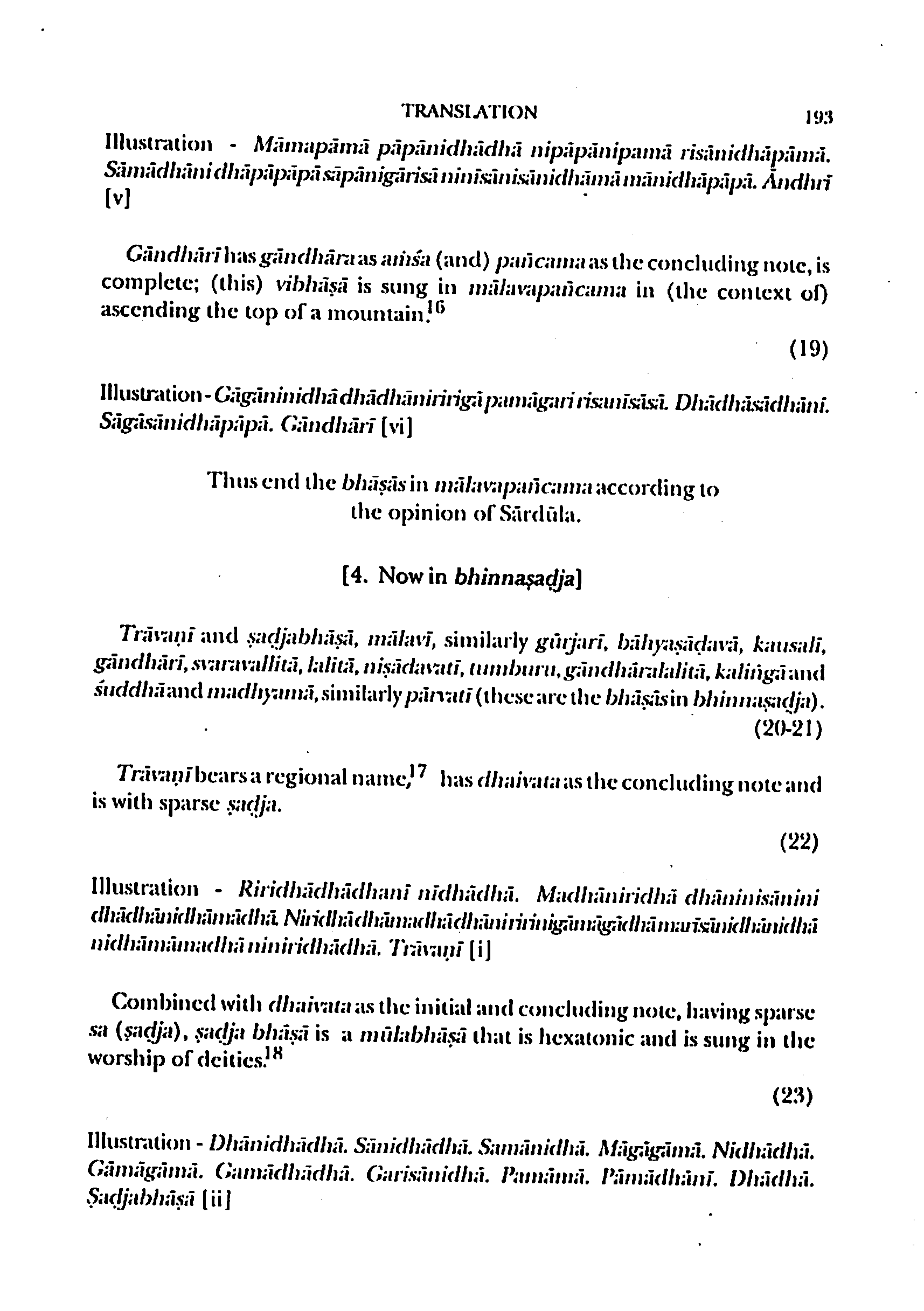
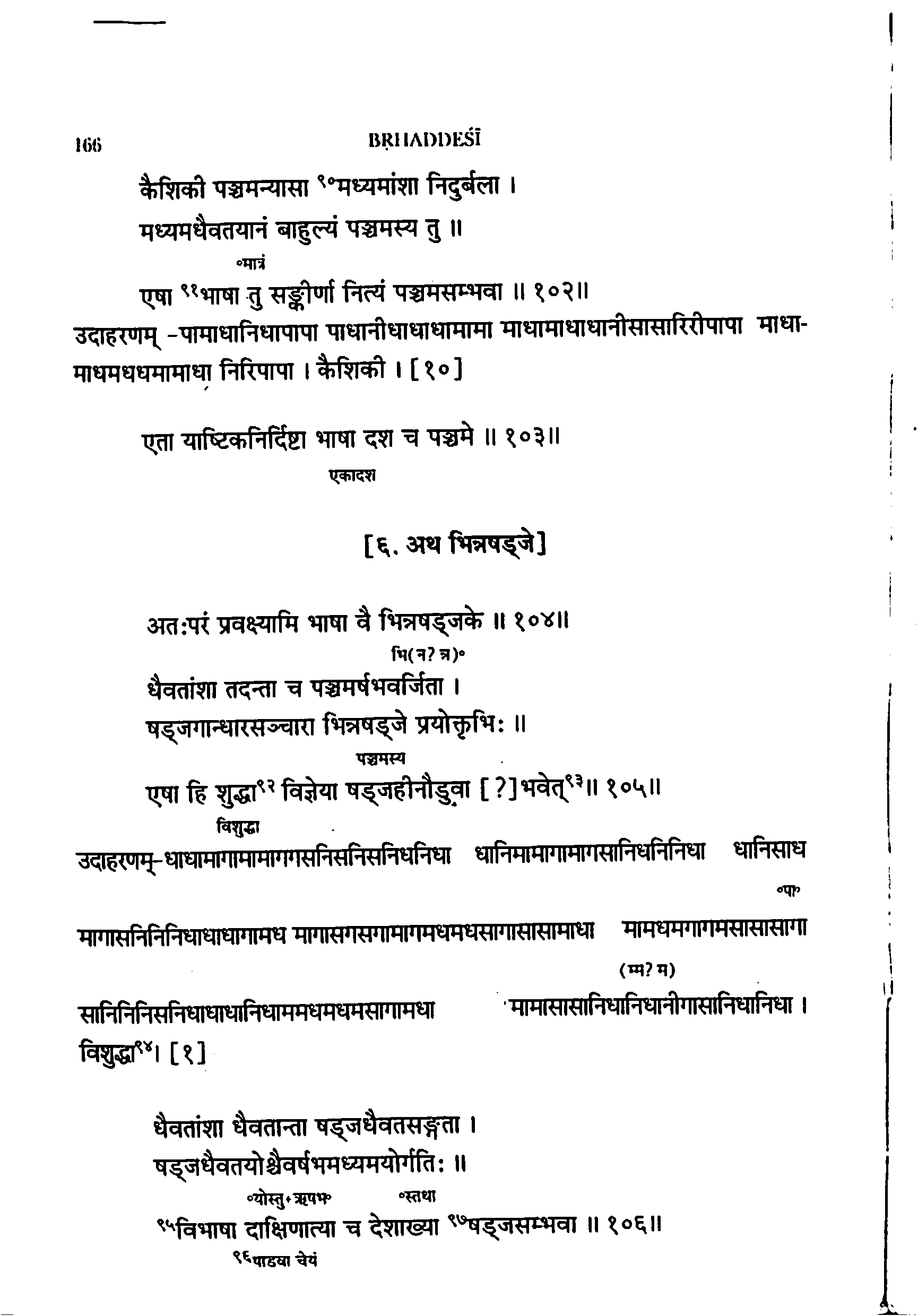
bhinnaṣaḍja is a rāga category for which bhāṣās are described in the treatise
"अतःपरं प्रवक्ष्यामि भाषा वै भिन्नषड्जके"
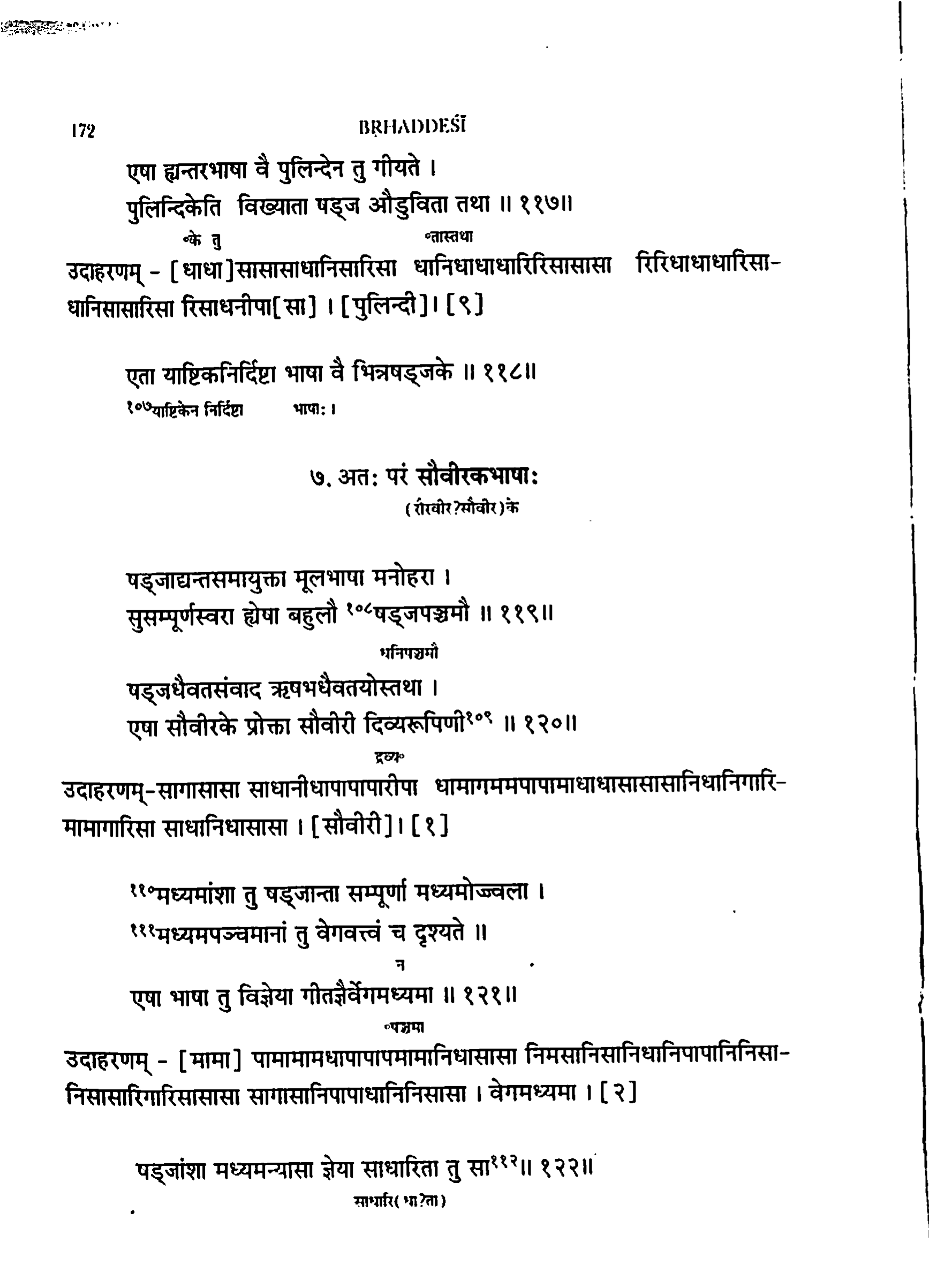
Pulindī and related bhāṣās are based on bhinnaṣaḍja as described by Yāṣṭika
"एता याष्ट्रिकनिर्दिष्टा भाषा वै भिन्नषङ्जके"
Bhinnaṣaḍja has nine bhāṣās
"nine are known in bhinnaṣaḍja."
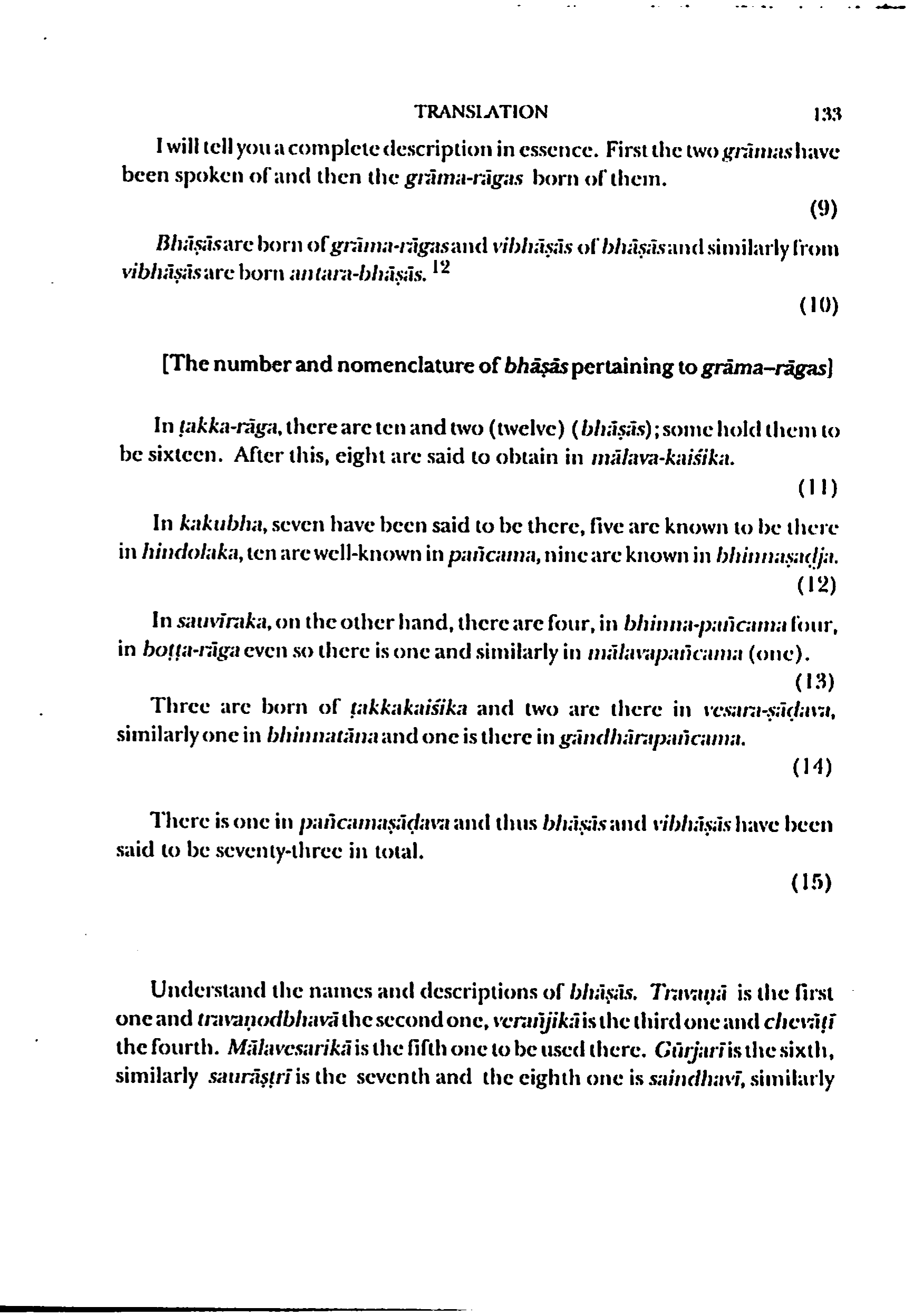
The śuddhā bhāṣā in bhinnaṣaḍja is characterized by dhaivata as aṁśa and concluding note, absence of pañcama and ṛṣabha, and movement between ṣaḍja-gāndhāra
"धैवतांशा तदन्ता च पञ्चमर्षभवर्ज?िता ।
षड्जगान्धारसञ्चारा भित्रषड्ज? प्रयोक्तृभिः"
Trāvaņī in bhinnaṣaḍja has dhaivata as the concluding note and is characterized by sparse ṣaḍja
"Trāvaṇī bears a regional name, 17 has dhaivata as the concluding note and
is with sparse şadja."
Bhinnaṣaḍja is a classification of bhāṣā whose melodic modes omit certain scale degrees
"while bhāṣās of bhinnaṣaḍja are
being described."
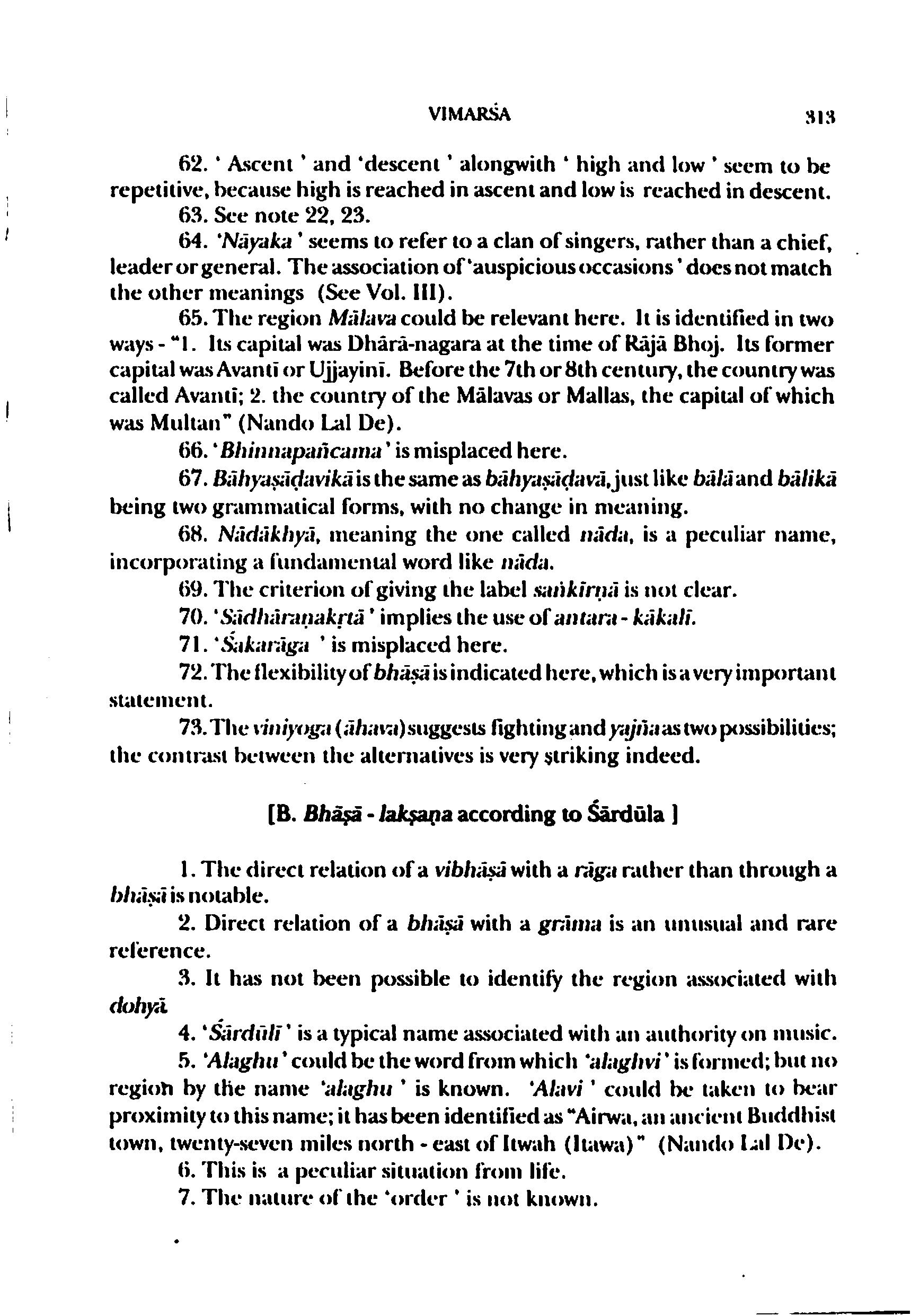
In the context of bhinnaṣaḍja bhāṣās, only śadja is mentioned in place of bhinnaśadja due to metrical demands
"Only şadja has been mentioned in the place of bhinnaşadja due to
the demand of metre."