Source scans · vol_II_p106
recto · open full
scan recto
verso · open full
scan verso
Bṛhaddeśī · Volume II
pp. 194–195folio 106
Devanāgarī (Bṛhaddeśī)
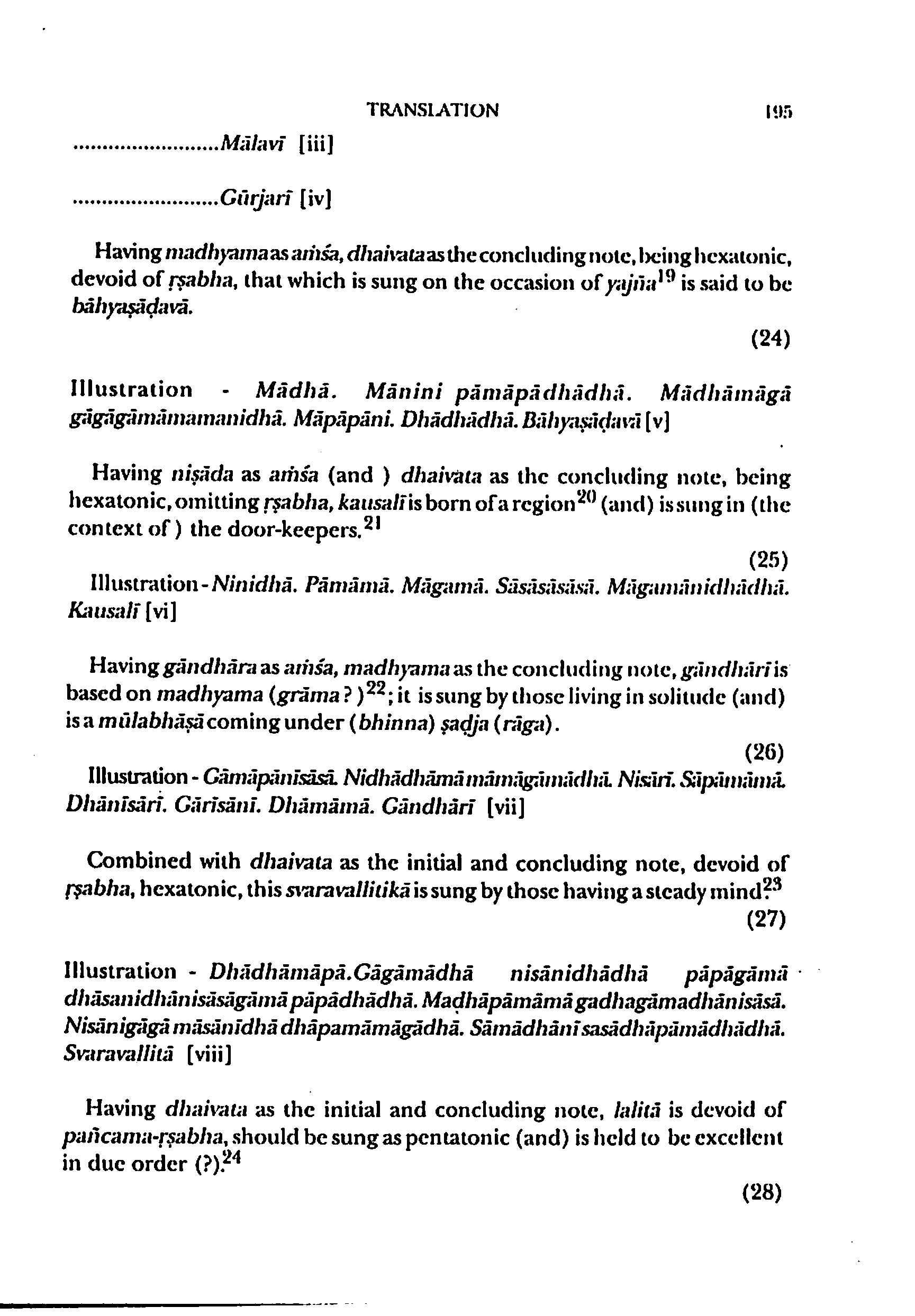
.....मालवी । [३]२४ .....गुर्जरी । [४]२५
मध्यामांशा २६धैवतान्ता षाडवा ऋषभोज्झिताऋषभान्विता
गीयते यज्ञकाले या सा ख्याता बाह्यषाडवा5 ॥२४॥ उदाहरणम् - माधा । मानिनि पामापाधाधा । माधामागा गागागामा ममनिधा मापापानिधा- धाधा । बाह्यषाडवा । [५]
निषादांशा धैवतान्ता षाडवा2 स्याद्रिवर्जिता२७षद्द्जवर्जिता
कौसलीकौसलदेश॰ देशसम्भूता प्रतीहारेषु गीयते7 ॥२५॥ उदाहरणम् – निनिधा । पामामा । मागमा । सासासासासा । मागमानिधाधा । कौसली । [६]
गान्धारांशा मध्यमान्ता(श?शा) गान्धारी मध्यमाश्रिता8२८
एकान्तवासिभिर्गीता मूलभाषा तु षड्जगा93 ॥२६॥
उदाहरणम् - गामापानीसासा । निधाधामा मामागामाधा । निसारी । सापामामा । धानीसारी ।
गारीसानी । धामामा । गान्धारी । [७]
२९धैवताद्यन्तसंयुक्ता रिहीना षाडवस्वरा॰ पह्जर्पभहीना
स्वरविवितका+ + बलितगा एषा गीयते दृढमानसै:11 ॥२७॥ उदाहरणम् - धाधामापा । गागामाधा निसानिधाधा पापागामा धासनिधानिसासागामा पापा- धाधा । मधापामामा गधगामधानिसासा। निसानिगागा मासानीधा धापमामागाधा । सामाधा- नी ससाधापामाधाधा । स्वरवलिता । [८]
धैवताद्यन्तललिता पञ्चमर्षभवर्जिताषह्जपश्चम ॰३॰पञ्चस्वरा तु गीयेत प्रकृष्टा सा मता क्रमात् ॥२८॥
- Paragraphy (Fig. 25) Apply (Head Co. 19) Apply (The Section 25) (25) All the second second second second second second second second second second second second second second second second second second second second second second second second second second second second second second seco والمراجع والمراكب والمراكب والمراجع والمراجع والمراجع والمراجع والمناكب
English — Sharma (translation)
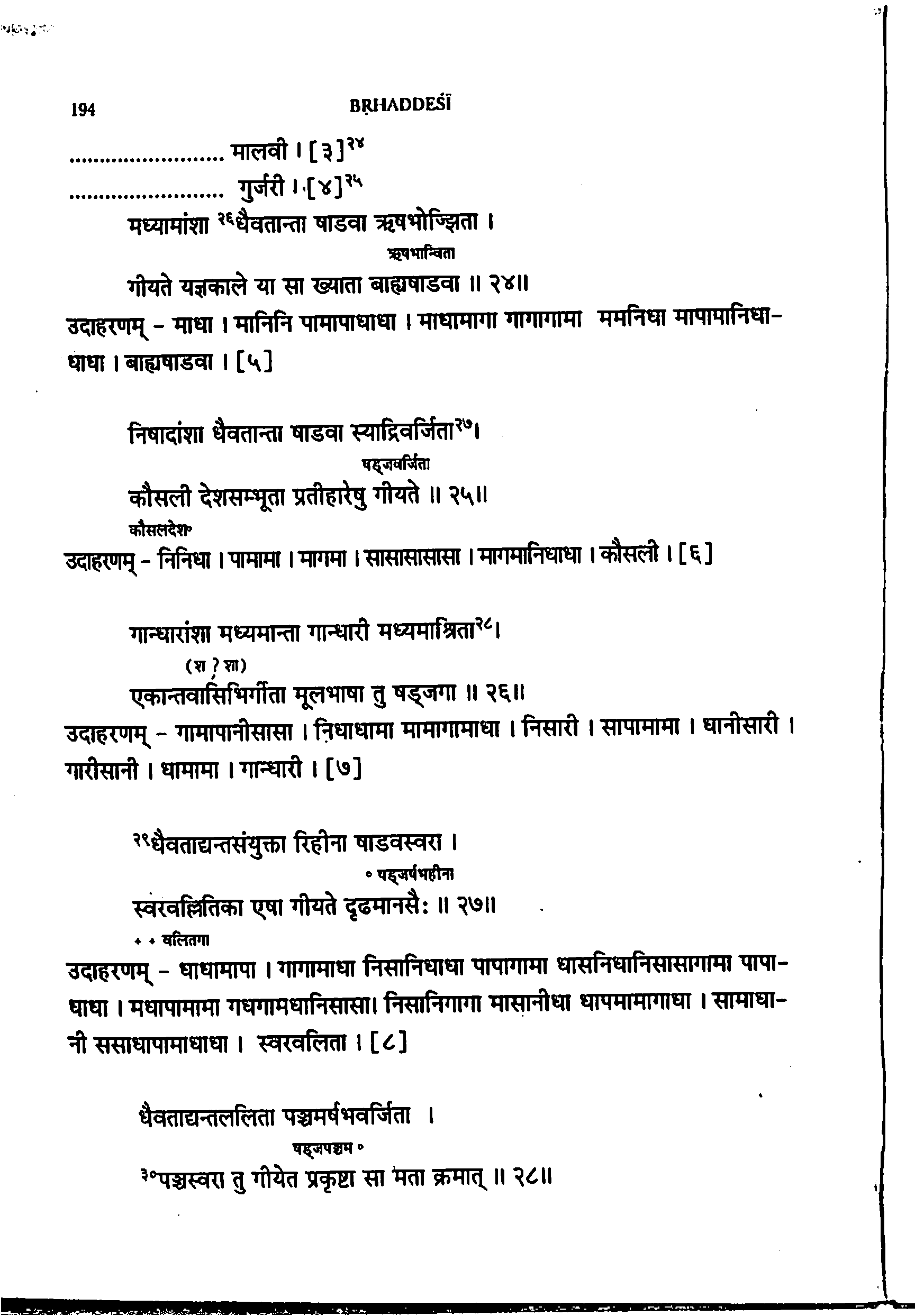
......Mālavī [iii] .....Gūrjarī [iv] Having madhyama as aniśa, dhaivata as the concluding note, being hexatonic, devoid of rṣabha, that which is sung on the occasion of yajña19 is said to be bāhyaṣāḍavā.5
(24)
Illustration - Mādhā. Mānini pāmāpādhādhā. Mādhāmāgā gāgāgāmāmamanidhā. Māpāpāni. Dhādhādhā. Bāhyaṣāḍavā1 [v] Having niṣāda as amsa (and ) dhaivata as the concluding note2, being hexatonic, omitting rşabha, kausalī is born of a region620 (and) is sung in (the context of ) the door-keepers.7 21
(25)
Illustration-Ninidhā. Pāmāmā. Māgamā. Sāsāsāsāsā. Māgamānidhādhā. Kausalī [vi] Having gāndhāra as amśa, madhyama as the concluding note, gāndhārī is based on madhyama (grāma?)22; it is sung by those living in solitude (and) is a mūlabhāṣā coming under (bhinna) ṣaḍja (rāga).93
(26)
Illustration - Gāmāpānīsāsā. Nidhādhāmā māmāgāmādhā. Nisārī. Sāpāmāmā. Dhānīsārī. Gārīsānī. Dhāmāmā. Gāndhārī [vii] Combined with dhaivata as the initial and concluding note, devoid of rṣabha, hexatonic, this svaravallitikā is sung by those having a steady mind.1123
(27)
Illustration - Dhādhāmāpā.Gāgāmādhā nisānidhādhā pāpāgāmā · dhāsanidhānisāsāgāmā pāpādhādhā. Madhāpāmāmā gadhagāmadhānisāsā. Nisānigāgā māsānīdhā dhāpamāmāgādhā. Sāmādhānī sasādhāpāmādhādhā. Svaravallitā [viii] Having dhaivata as the initial and concluding note, lalitā is devoid of pañcama-ṛṣabha, should be sung as pentatonic (and) is held to be excellent in due order (?).24
(28)
2.[definition] amsa is a structural element that functions as a primary note characteristic of a rāga or rāga typeनिषादांशा धैवतान्ता षाडवा
3.[relation] gāndhārī is a mūlabhāṣā coming under ṣaḍja rāgaमूलभाषा तु षड्जगा
5.[structural] bāhyaṣāḍavā is sung on the occasion of yajña (ritual sacrifice)गीयते यज्ञकाले या सा ख्याता बाह्यषाडवा
7.[structural] kausalī is sung in the context of the door-keepersकौसली देशसम्भूता प्रतीहारेषु गीयते
8.[structural] gāndhārī has gāndhāra as amsa and madhyama as concluding noteगान्धारांशा मध्यमान्ता गान्धारी मध्यमाश्रिता
9.[structural] gāndhārī is sung by those living in solitudeएकान्तवासिभिर्गीता मूलभाषा तु षड्जगा
10.[structural] svaravallitikā is hexatonic, combined with dhaivata as initial and concluding note, and devoid of ṛṣabhaधैवताद्यन्तसंयुक्ता रिहीना षाडवस्वरा । ॰ पह्जर्पभहीना स्वरविवितका एषा गीयते दृढमानसैः
11.[structural] svaravallitikā is sung by those having a steady mindएषा गीयते दृढमानसैः
1.[citation]bāhyaṣāḍavā is illustrated with the melodic phrase: Mādhā, Mānini pāmāpādhādhā, etc.Illustration - Mādhā. Mānini pāmāpādhādhā. Mādhāmāgā gāgāgāmāmamanidhā. Māpāpāni. Dhādhādhā. Bāhyaṣāḍavā
2.[definition]amsa is a structural element that functions as a primary note characteristic of a rāga or rāga typeHaving niṣāda as amsa (and ) dhaivata as the concluding note
3.[relation]gāndhārī is a mūlabhāṣā coming under ṣaḍja rāgais a mūlabhāṣā coming under (bhinna) ṣaḍja (rāga).
4.[structural]bāhyaṣāḍavā is hexatonic, has madhyama as aniśa, dhaivata as concluding note, and is devoid of ṛṣabhaHaving madhyama as aniśa, dhaivata as the concluding note, being hexatonic, devoid of ṛṣabha, that which is sung on the occasion of yajña is said to be bāhyaṣāḍavā.
5.[structural]bāhyaṣāḍavā is sung on the occasion of yajña (ritual sacrifice)that which is sung on the occasion of yajña is said to be bāhyaṣāḍavā.
6.[structural]kausalī is hexatonic, has niṣāda as amsa, dhaivata as concluding note, and omits ṛṣabhaHaving niṣāda as amsa (and ) dhaivata as the concluding note, being hexatonic, omitting rşabha, kausalī is born of a region
7.[structural]kausalī is sung in the context of the door-keeperskausalī is born of a region (and) is sung in (the context of ) the door-keepers.
8.[structural]gāndhārī has gāndhāra as amsa and madhyama as concluding noteHaving gāndhāra as aṁśa, madhyama as the concluding note, gāndhārī is based on madhyama
9.[structural]gāndhārī is sung by those living in solitudeit is sung by those living in solitude (and) is a mūlabhāṣā coming under (bhinna) ṣaḍja (rāga).
10.[structural]svaravallitikā is hexatonic, combined with dhaivata as initial and concluding note, and devoid of ṛṣabhaCombined with dhaivata as the initial and concluding note, devoid of ṛṣabha, hexatonic, this svaravallitikā is sung by those having a steady mind.
11.[structural]svaravallitikā is sung by those having a steady mindthis svaravallitikā is sung by those having a steady mind.