Source scans · vol_II_p108
recto · open full
scan recto
verso · open full
scan verso
Bṛhaddeśī · Volume II
pp. 198–199folio 108
Devanāgarī (Bṛhaddeśī)
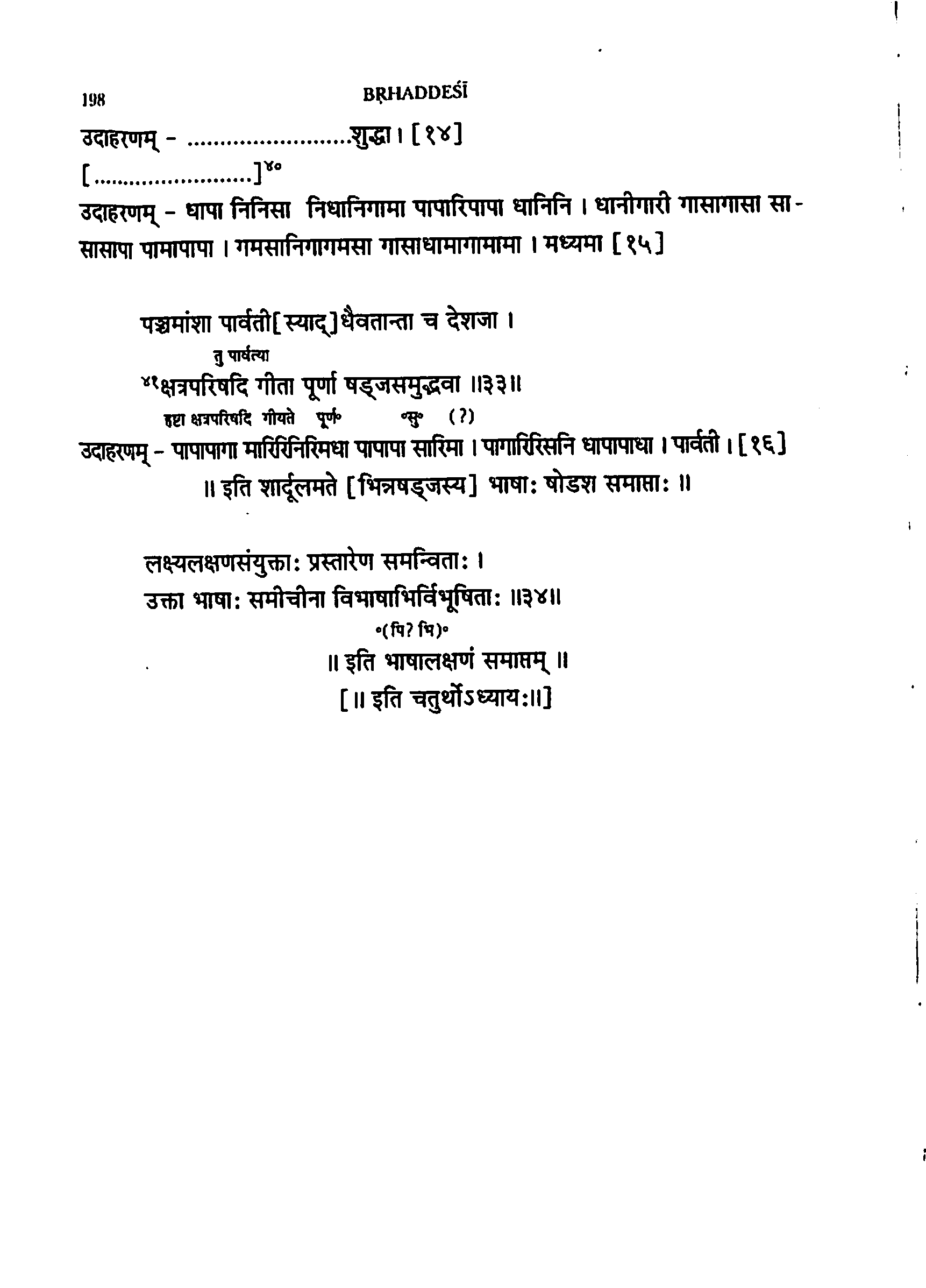
पञ्चमांशा पार्वती[स्याद्]धैवतान्ता च देशजा8
४१क्षत्रपरिषदितु पार्धत्या गीता पूर्णा षड्जसमुद्भवा94 ॥३३॥ हृष्टा क्षत्रपरिषदि गीयते पूर्ण क्सु (?) उदाहरणम् - पापापागा मारिरिनिरिमधा पापापा सारिमा । पागारिरिसनि धापापाधा । पार्वती । [१६]
इति शार्दूलमते [भित्रषड्जस्य] भाषा: षोडश समाप्ता:321
लक्ष्यलक्षणसंयुक्ताः प्रस्तारेण समन्विता5ः ।
उक्ता भाषा: समीचीना विभाषाभिर्विभूषिता:6•(पि? भि)॰ ॥३४॥
॥ इति भाषालक्षणं समाप्तम् ॥
[॥ इति चतुर्थोऽध्याय:॥]
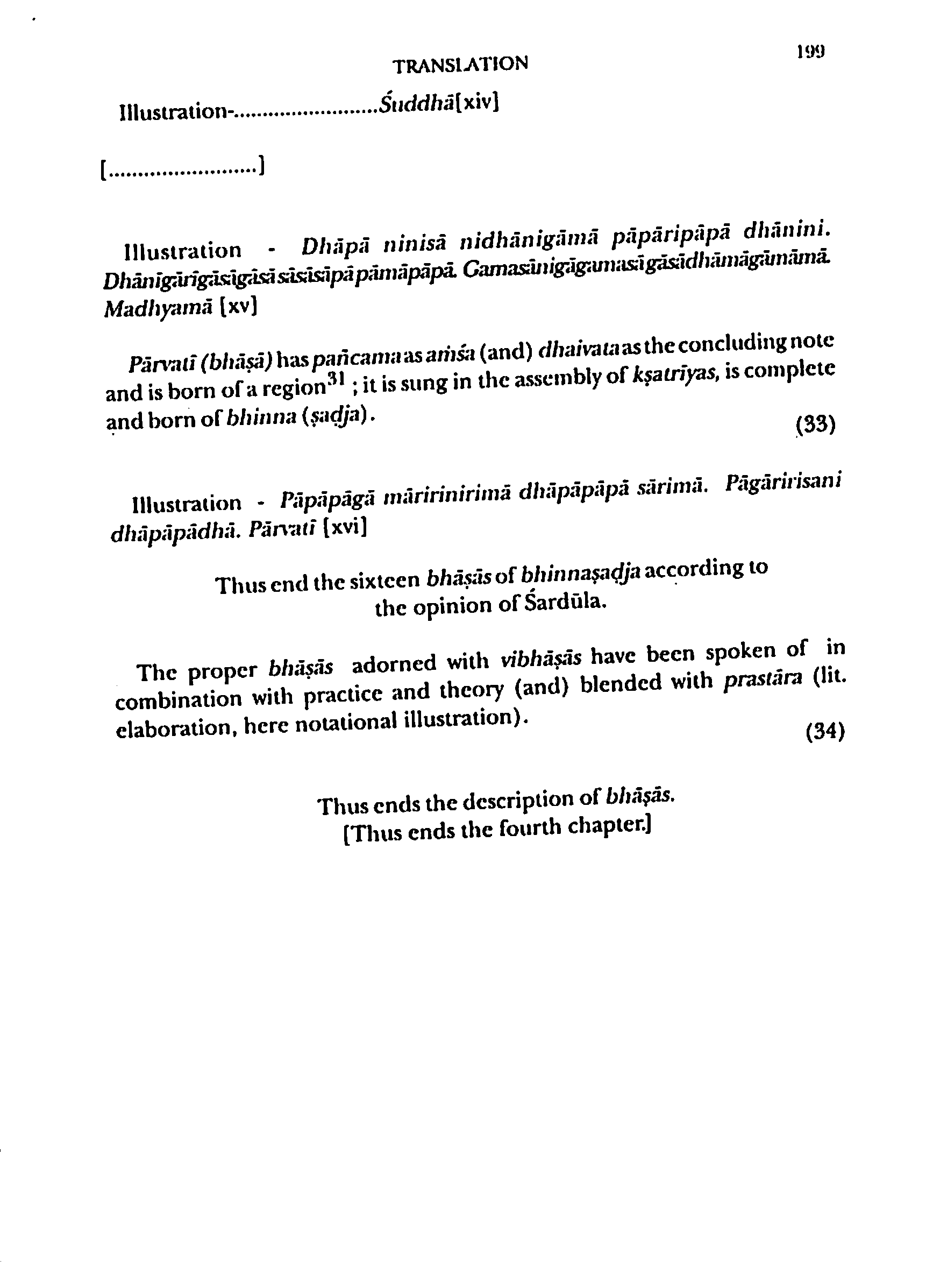
English — Sharma (translation)
Illustration-.....Śuddhā[xiv]
[.....]
Illustration - Dhāpā ninisā nidhānigāmā pāpāripāpā dhānini. Dhānīgārīgāsāgāsāsāsāsāpāpāmāpāpā. Gamasānigāgamasāgāsādhāmāgāmāmā. Madhyamā [xv] Pārvatī (bhāṣā) has paṇcama as amśa (and) dhaivata as the concluding note and is born of a region31; it is sung in the assembly of kşatrīyas4, is complete and born of bhinna (şadja)9.
(33)
Illustration - Pāpāpāgā māririnirimā dhāpāpāpā sārimā. Pāgāririsani dhāpāpādhā. Pārvatī [xvi] Thus end the sixteen bhāṣās of bhinnaṣaḍja3 according to the opinion of Śardūla.21 The proper bhāṣās adorned with vibhāṣās6 have been spoken of in combination with practice and theory (and) blended with prastāra7 (lit. elaboration, here notational illustration)5.
(34)
Thus ends the description of bhāṣās.
[Thus ends the fourth chapter.]
1.[attribution] Śardūla is the authority whose opinion classifies bhinna şadja into sixteen bhāṣāsइति शार्दूलमते [भित्रषड्जस्य] भाषाः षोडश समाप्ताः
2.[enumeration] bhinna şadja has sixteen bhāṣās according to Śardūla's opinionइति शार्दूलमते [भित्रषड्जस्य] भाषाः षोडश समाप्ताः
3.[enumeration] There are sixteen bhāṣās of bhinna şadjaइति शार्दूलमते [भित्रषड्जस्य] भाषाः षोडश समाप्ताः
4.[relation] Pārvatī is sung in the assembly of kşatrīyasक्षत्रपरिषदि गीता पूर्णा षड्जसमुद्भवा
5.[relation] prastāra functions as notational illustration blended with bhāṣā descriptionsप्रस्तारेण समन्विता
6.[relation] vibhāṣās are ornaments or embellishments of proper bhāṣāsउक्ता भाषाः समीचीना विभाषाभिर्विभूषिताः
7.[structural] bhāṣās are characterized by both practice and theory, and are elaborated through prastāraलक्ष्यलक्षणसंयुक्ता प्रस्तारेण समन्विता । उक्ता भाषाः समीचीना विभाषाभिर्विभूषिताः
8.[structural] Pārvatī bhāṣā has pañcama as its characteristic part (aṁśa) and dhaivata as concluding noteपञ्चमांशा पार्वती[स्याद्]धैवतान्ता च देशजा
9.[structural] Pārvatī is complete and born of bhinna (şadja)पूर्णा षड्जसमुद्भवा
1.[attribution]Śardūla is the authority whose opinion classifies bhinna şadja into sixteen bhāṣāsThus end the sixteen bhāṣās of bhinnaṣaḍja according to the opinion of Śardūla.
2.[enumeration]bhinna şadja has sixteen bhāṣās according to Śardūla's opinionThus end the sixteen bhāṣās of bhinnaṣaḍja according to the opinion of Śardūla.
3.[enumeration]There are sixteen bhāṣās of bhinna şadjaThus end the sixteen bhāṣās of bhinnaṣaḍja
4.[relation]Pārvatī is sung in the assembly of kşatrīyasit is sung in the assembly of kşatrīyas
5.[relation]prastāra functions as notational illustration blended with bhāṣā descriptionsblended with prastāra (lit. elaboration, here notational illustration)
6.[relation]vibhāṣās are ornaments or embellishments of proper bhāṣāsThe proper bhāṣās adorned with vibhāṣās
7.[structural]bhāṣās are characterized by both practice and theory, and are elaborated through prastāraThe proper bhāṣās adorned with vibhāṣās have been spoken of in combination with practice and theory (and) blended with prastāra
8.[structural]Pārvatī bhāṣā has pañcama as its characteristic part (aṁśa) and dhaivata as concluding notePārvatī (bhāṣā) has pañcama as aṁśa (and) dhaivata as the concluding note
9.[structural]Pārvatī is complete and born of bhinna (şadja)is complete and born of bhinna (şadja)