Source scans · vol_II_p133
recto · open full
scan recto
verso · open full
scan verso
Bṛhaddeśī · Volume II
pp. 248–249folio 133
Devanāgarī (Bṛhaddeśī)
F age grant in the
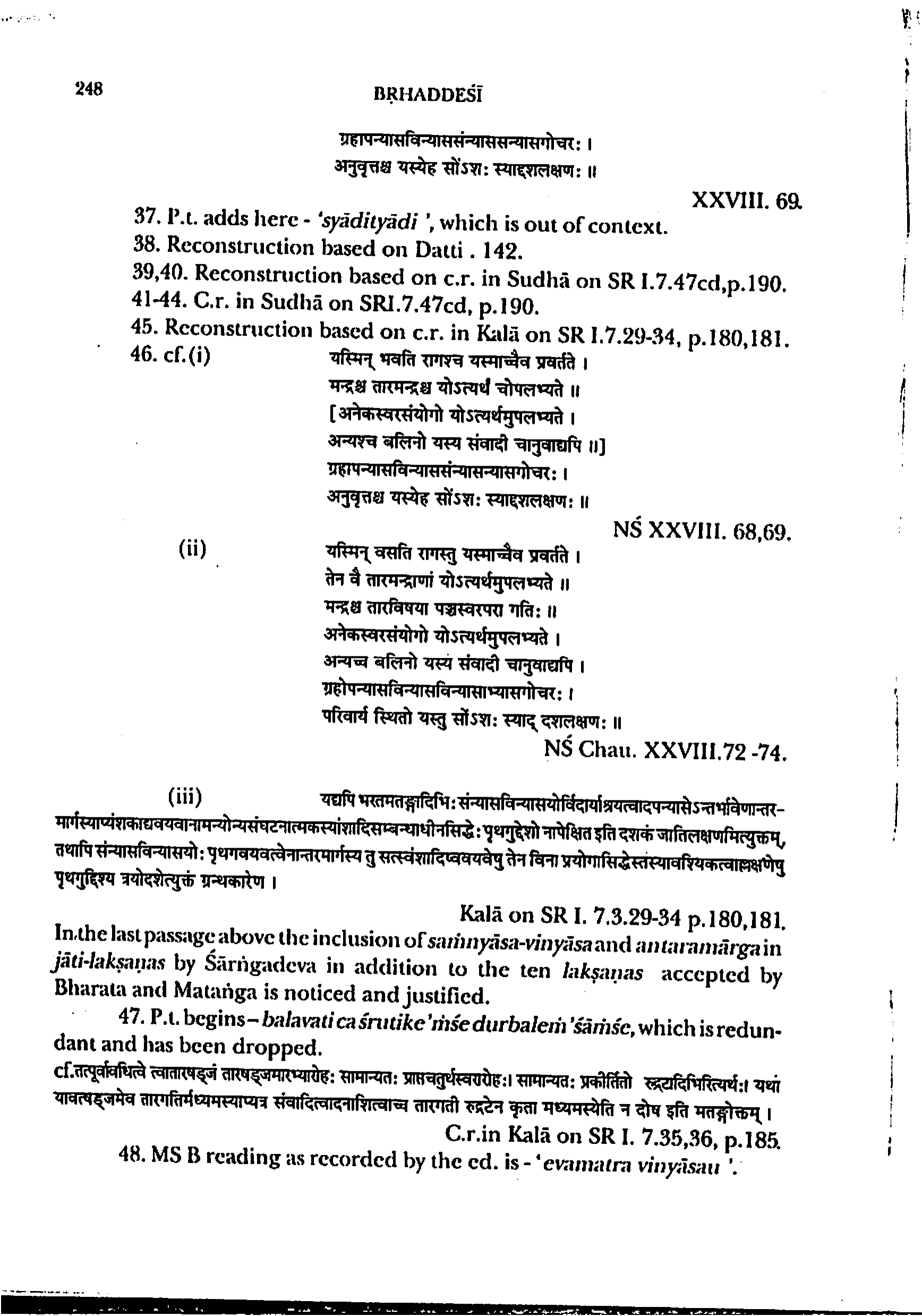
ग्रहापन्यासविन्याससंन्याससन्यासगोचर:।
अनुवृत्तश्च यस्येह सोंऽशः स्याद्दशलक्षणः ॥
XXVIII. 69. 37. P.t. adds here - 'syādityādi', which is out of context. 38. Reconstruction based on Datti . 142. 39,40. Reconstruction based on c.r. in Sudhā on SR I.7.47cd,p.190. 41-44. C.r. in Sudhā on SRI.7.47cd, p.190. 45. Reconstruction based on c.r. in Kalā on SR I.7.29-34, p.180,181. 46. cf.(i)
यस्मिन् भवति रागश्च यस्माच्चैव प्रवर्तते ।
मन्द्रश्च तारमन्द्रश्च योऽत्यर्थं चोपलभ्यते ॥
[अनेकस्वरसंयोगो योऽत्यर्थमुपलभ्यते ।
अन्यश्च बलिनो यस्य संवादी चानुवाद्यपि ॥] ग्रहापन्यासविन्याससंन्यासन्यासगोचर:।12
अनुवृत्तश्च यस्येह सोंऽशः स्याद्दशलक्षणः॥
NŚ XXVIII. 68,69.5 (ii)
यस्मिन् वसति रागस्तु यस्माच्चैव प्रवर्तते ।
तेन वै तारमन्द्राणां योऽत्यर्थमुपलभ्यते ॥
मन्द्रश्च तारविषया पञ्चस्वरपरा गति: ॥
अनेकस्वरसंयोगो योऽत्यर्धमुपलभ्यते ।
अन्यच्च बलिनो यस्य संवादी चानुवाद्यपि ।
ग्रहोपन्यासविन्यासविन्यासाभ्यासगोचर: ।
परिवार्य स्थितो यस्तु सोंऽश: स्याद् दशलक्षण:॥
NŚ Chau. XXVIII.72 -74. (iii) यद्यपि भरतमतङ्गादिभिः संन्यासविन्यासयोर्विदार्याश्रयत्वादपन्यासेऽन्तर्भावेणान्तर- मार्गस्याप्यंशकाद्यवयवानामन्योन्यसंघटनात्मकस्यांशादिसम्बन्धाधीनसिद्धेः पृथगुद्देशो नापेक्षित इति दशकं जातिलक्षणमित्युक्तम्, तथापि संन्यासिवन्यासयो: पृथगवयवत्वेनान्तरमार्गस्य तु सत्स्वंशादिष्ववयवेषु तेन विना प्रयोगासिद्धेस्तस्यावश्यिकत्वाक्षक्षणेषु
पृथगुद्दिश्य त्रयोदशेत्युक्तं ग्रन्थकारेण ।
Kalā on SR I. 7.3.29-34 p.180,181. In the last passage above the inclusion of samnyāsa-vinyāsa and antaramārga in jāti-lakṣaṇas by Śārṅgadeva in addition to the ten lakṣaṇas accepted by Bharata and Matanga is noticed and justified. 47. P.t. begins - balavati ca śrutike 'mśe durbalem' śāmśe, which is redun- dant and has been dropped. cf.तत्पूर्वावधित्वे त्वातारषड्जं तारषड्जमारभ्यारोहः सामान्यतः प्राप्तचतुर्थस्वरारोहः। सामान्यतः प्रकीर्तितो  स्द्रटादिभिरित्यर्थः। यथां
यावत्पड्जमेव तारगतिर्मध्यमस्याप्यत्र संवादित्वादनाशित्वाच्च तारगती रुद्रटेन कृता मध्यमस्येति न दोष इति मतङ्गोक्तम् ।
C.r.in Kalā on SR I. 7.35,36, p.185. 48. MS B reading as recorded by the ed. is - 'evamatra vinyāsau'. والمعالم والمعالي والمعالي والمعالي والمعالي والمعالي والمعالي والمعالية والمعالية والمعالية والمعالية والمعالية والمعالية والمعالية والمعالية والمعالية والمعالية والمعالية والمعالية والمعالية والمعالية والمعالية والمعالية and the second second second
English — Sharma
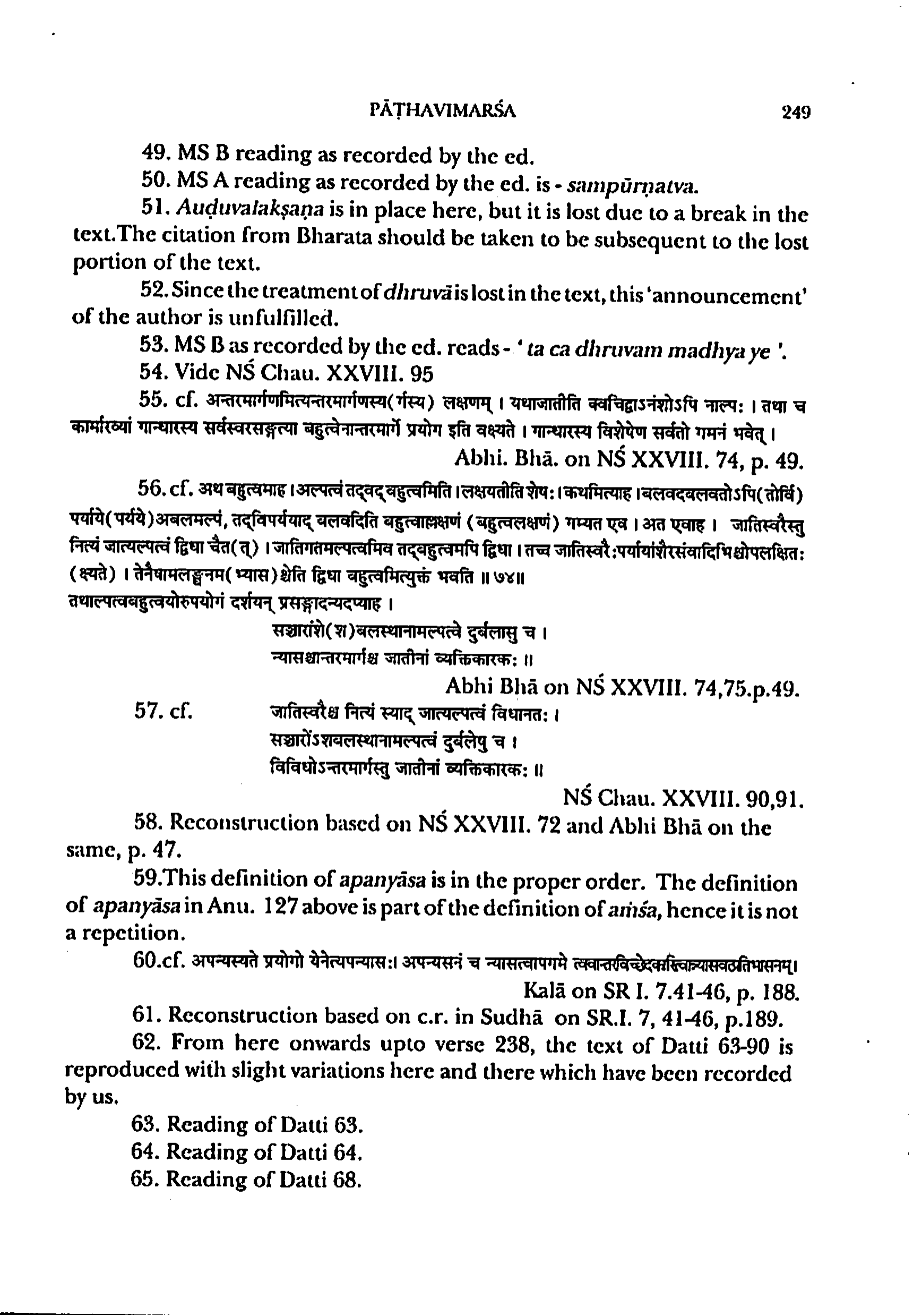
PĂŢHAVIMARŚA 49. MS B reading as recorded by the ed. 50. MS A reading as recorded by the ed. is - sampūrņatva.8 51. Auduvalakṣaṇa is in place here, but it is lost due to a break in the text.7 The citation from Bharata should be taken to be subsequent to the lost portion of the text. 52. Since the treatment of dhruvā is lost in the text, this 'announcement' of the author is unfulfilled.4 53. MS B as recorded by the ed. reads - 'ta ca dhruvam madhya ye '. 54. Vide NŚ Chau. XXVIII. 95 55. cf. अन्तरमार्गणमित्यन्तरमार्गणस्य(र्गस्य) लक्षणम् । यथाज?ातीति क्वचिद्वाऽनंशोऽपि नाल्पः । तथा च
कार्मारव्या गान्धारस्य सर्वस्वरसङ्गत्या बहुत्वेनान्तरमार्गे प्रयोग इति वक्ष्यते । गान्धारस्य विशेषेण सर्वतो गमनं भवेत् ।
Abhi. Bhā. on NŚ XXVIII. 74, p. 49. 56. cf. अथ बहुत्वमाह । अल्पत्वं तद्वद् बहुत्विमिति । लक्षयतीति शेषः । कथमित्याह । बलवदबलवतोऽपि(तोर्वि) पर्याये(पर्यये)अबलमल्पं, तद्विपर्ययाद् बलवदिति बहुत्वाक्षक्षणं (बहुत्वलक्षणं) गम्यत एव । अत एवाह । ज?ातिस्वरैस्तु नित्यं ज?ात्यल्पत्वं द्विधा चैत(त्) । ज?ातिगतमल्पत्विमव तद्बहुत्वमिप द्विधा । तच्च ज?ातिस्वरैःपर्यायांशैरसंवादिभिश्चोपलक्षितः (क्ष्यते) । तेनैषामलङ्घनम(भ्यास)श्चेति द्विधा बहुत्वमित्युक्तं भवति ॥७४॥
तथाल्पत्वबहुत्वयोरुपयोगं दर्शयन् प्रसङ्गादन्यदप्याह ।
सञ्चारांशे(श)बलस्थानामल्पत्वे दुर्बलासु च ।
न्यासश्चान्तरमार्गश्च ज?ातीना व्यक्तिकारकः॥
Abhi Bhā on NŚ XXVIII. 74,75.p.49. 57. cf.
ज?ातिस्वरैध नित्यं स्याद् ज?ात्यल्पत्वं विधानतः ।
सञ्चारोंऽशवलस्थानामल्पत्वं दुर्वलेषु च ।
विविधोऽन्तरमार्गस्तु ज?ातीना व्यक्तिकारकः॥
NŠ Chau. XXVIII. 90,91. 58. Reconstruction based on NŚ XXVIII. 72 and Abhi Bhā on the same, p. 47. 59. This definition of apanyāsa is in the proper order. The definition of apanyāsa in Anu. 127 above is part of the definition of amsa, hence it is not a repetition. 60.cf. अपन्यस्यते प्रयोगो येनेत्यपन्यासः। अपन्यसनं च न्यासत्वापगमे त्ववान्तरविच्छेद्वसंस्वात्र्यासवछतिभासनम्।9 Kalā on SR I. 7.41-46, p. 188. 61. Reconstruction based on c.r. in Sudhā on SR.I. 7, 41-46, p.189. 62. From here onwards upto verse 238, the text of Datti 63-90 is reproduced with slight variations here and there which have been recorded by us. 63. Reading of Datti 63. 64. Reading of Datti 64. 65. Reading of Datti 68.
5.[citation] NŚ is a treatise cited with verse numbering throughout this discussionNŚ XXVIII. 68,69.
9.[definition]apanyāsa is a technique where the practitioner does not follow the rules of nyāsa, creating the appearance of an intermediate path through discontinuity of the standard arrangementअपन्यसनं च न्यासत्वापगमे त्ववान्तरविच्छेद्वसंस्वात्र्यासवछतिभासनम्।
11.[relation]samnyāsa-vinyāsa are characteristics that serve as individual markers of jātisसञ्चारांशे(श)बलस्थानामल्पत्वे दुर्बलासु च । न्यासश्चान्तरमार्गश्च ज?ातीना व्यक्तिकारकः॥
12.[structural]antaramārga is composed of the mutual connection of component parts (aṅga) such as aṃśaअन्यश्च बलिनो यस्य संवादी चानुवाद्यपि ॥] ग्रहापन्यासविन्याससंन्यासन्यासगोचरः।
1.[attribution]Bharata is credited with establishing ten lakṣaṇas for jāti classificationthe inclusion of samnyāsa-vinyāsa and antaramārga in jāti-lakṣaṇas by Śārṅgadeva in addition to the ten lakṣaṇas accepted by Bharata and Matanga is noticed and justified.
2.[attribution]Matanga accepts ten lakṣaṇas for jāti classification, prior to Śārṅgadeva's expansionthe inclusion of samnyāsa-vinyāsa and antaramārga in jāti-lakṣaṇas by Śārṅgadeva in addition to the ten lakṣaṇas accepted by Bharata and Matanga is noticed and justified.
3.[attribution]Śārṅgadeva expands the classification of jāti-lakṣaṇas beyond the earlier traditionIn the last passage above the inclusion of samnyāsa-vinyāsa and antaramārga in jāti-lakṣaṇas by Śārṅgadeva in addition to the ten lakṣaṇas accepted by Bharata and Matanga is noticed and justified.
4.[citation]The treatment of dhruvā is lost in the text, leaving an unfulfilled announcement by the authorSince the treatment of dhruvā is lost in the text, this 'announcement' of the author is unfulfilled.
5.[citation]NŚ is a treatise cited with verse numbering throughout this discussionNŚ XXVIII. 68,69.
6.[citation]Kalā is a commentary work cited for explanation of jāti-lakṣaṇas and related conceptsKalā on SR I. 7.3.29-34 p.180,181.
7.[citation]Auduvalakṣaṇa is a concept that should appear in the text but is lost due to textual lacunaAuduvalakṣaṇa is in place here, but it is lost due to a break in the text.
8.[citation]MS A is a manuscript source with variant readings compared to MS BMS A reading as recorded by the ed. is - sampūrņatva.
9.[definition] apanyāsa is a technique where the practitioner does not follow the rules of nyāsa, creating the appearance of an intermediate path through discontinuity of the standard arrangementcf. अपन्यस्यते प्रयोगो येनेत्यपन्यासः। अपन्यसनं च न्यासत्वापगमे त्ववान्तरविच्छेद्वसंस्वात्र्यासवछतिभासनम्।
10.[relation]Śārṅgadeva includes samnyāsa-vinyāsa and antaramārga in jāti-lakṣaṇas in addition to the ten lakṣaṇas accepted by Bharata and Matangathe inclusion of samnyāsa-vinyāsa and antaramārga in jāti-lakṣaṇas by Śārṅgadeva in addition to the ten lakṣaṇas accepted by Bharata and Matanga is noticed and justified.