Source scans · vol_I_p062
recto · open full
scan recto
verso · open full
scan verso
Bṛhaddeśī · Volume I
pp. 106–107folio 062
Devanāgarī (Bṛhaddeśī)
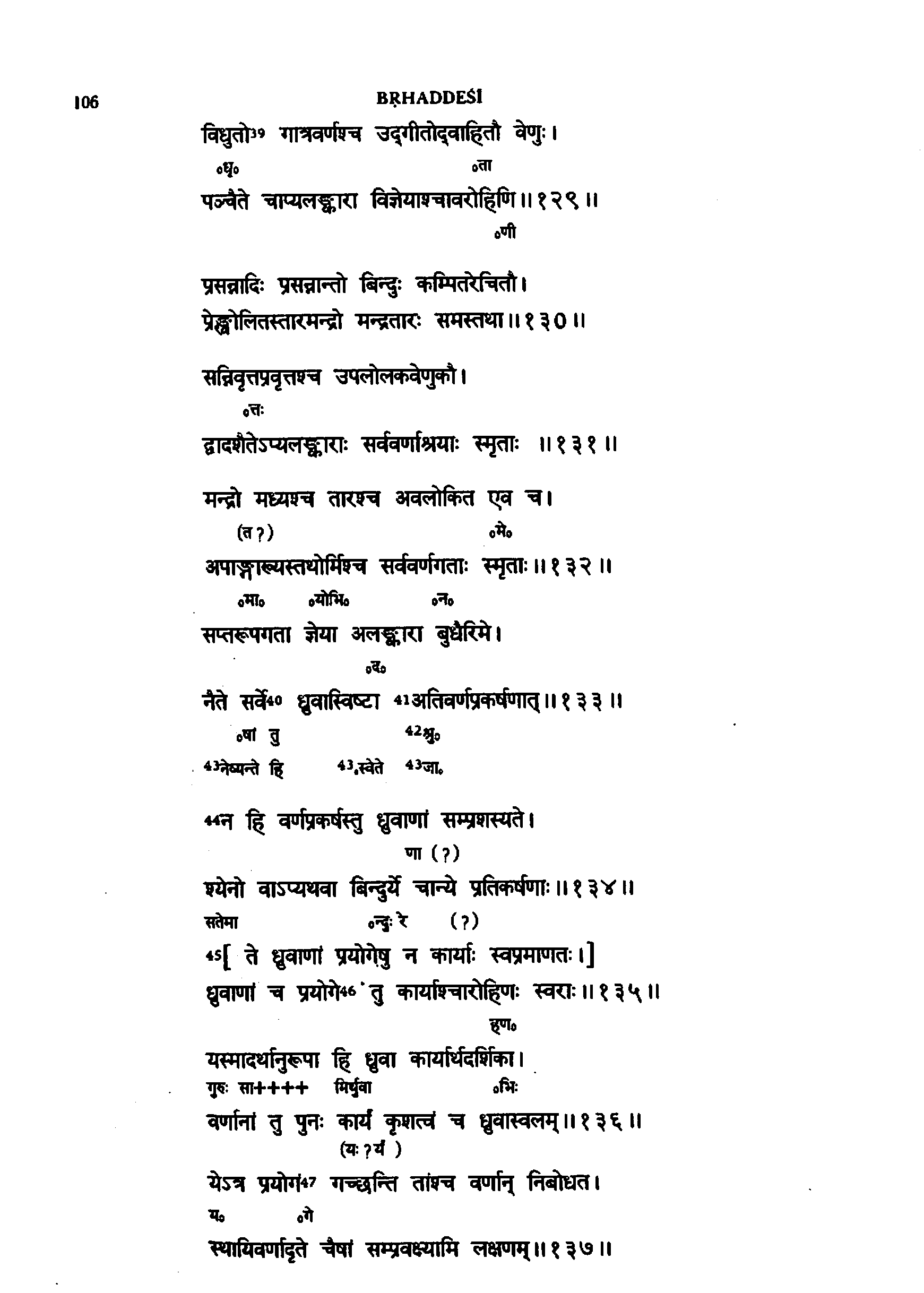
विधुतो ३१ गात्रवर्णश्च उद्गीतोद्वाहितौ₄ता वेणुः।
०धृ० पञ्चैते चाप्यलङ्कारा विज्ञेयाश्चावरोहिणि₀णी॥१२९॥
प्रसन्नादिः प्रसन्नान्तो बिन्दुः कम्पितरेचितौ।
प्रेङ्कोलितस्तारमन्द्रो मन्द्रतारः समस्तथा।।१३०।।
सि्रवृत्तप्रवृत्तश्च₀त्तः उपलोलकवेणुकौ।
द्वादशैतेऽप्यलङ्काराः सर्ववर्णाश्रयाः स्मृताः ॥१३१॥
मन्द्रो मध्यश्च तारश्च अवलोकित०मे० एव च।
(त?) अपाङ्गाख्यस्तथोर्मिश्च•योभि• सर्ववर्णगताः स्मृताः ॥१३२॥ ৹ল৹०मा०
सप्तरूपगता ज्ञेया अलङ्कारा बुधैरिमे।
৹ব৹
नैते सर्वे4०₀षा तु ध्रुवास्विष्टा 41अतिवर्णप्रकर्षणात्।।१३३।।
42列。 . 43नेष्यन्ते हि           43,स्वेते       43जा。
44न हि वर्णप्रकर्षस्तु ध्रुवाणांणा (?) सम्प्रशस्यते।
श्येनोसतेमा वाऽप्यथवा बिन्दुर्ये₀न्दुःरे (?) चान्ये प्रतिकर्षणाः ॥१३४॥ 45[ ते ध्रुवाणां प्रयोगेषु न कार्याः स्वप्रमाणतः।] ध्वाणां च प्रयोगे46ं तु कार्याश्चारोहिणः स्वराः ॥१३५॥ स्ण₃ यस्मादर्थानुरूपा हि ध्रुवा कार्यार्थदर्शिका०भिः1 गुरुः सा++++ भिर्पुवा वर्णानां तु पुनः कार्यं(यः ? यं ) कृशत्वं च ध्रुवास्वलम्।।१३६॥9
येऽत्रयः प्रयोगं47०गे गच्छन्ति तांश्च वर्णान् निबोधत।
स्थायिवर्णादृते चैषां सम्प्रवक्ष्यामि लक्षणम्।।१३७।।5
English — Sharma (translation)
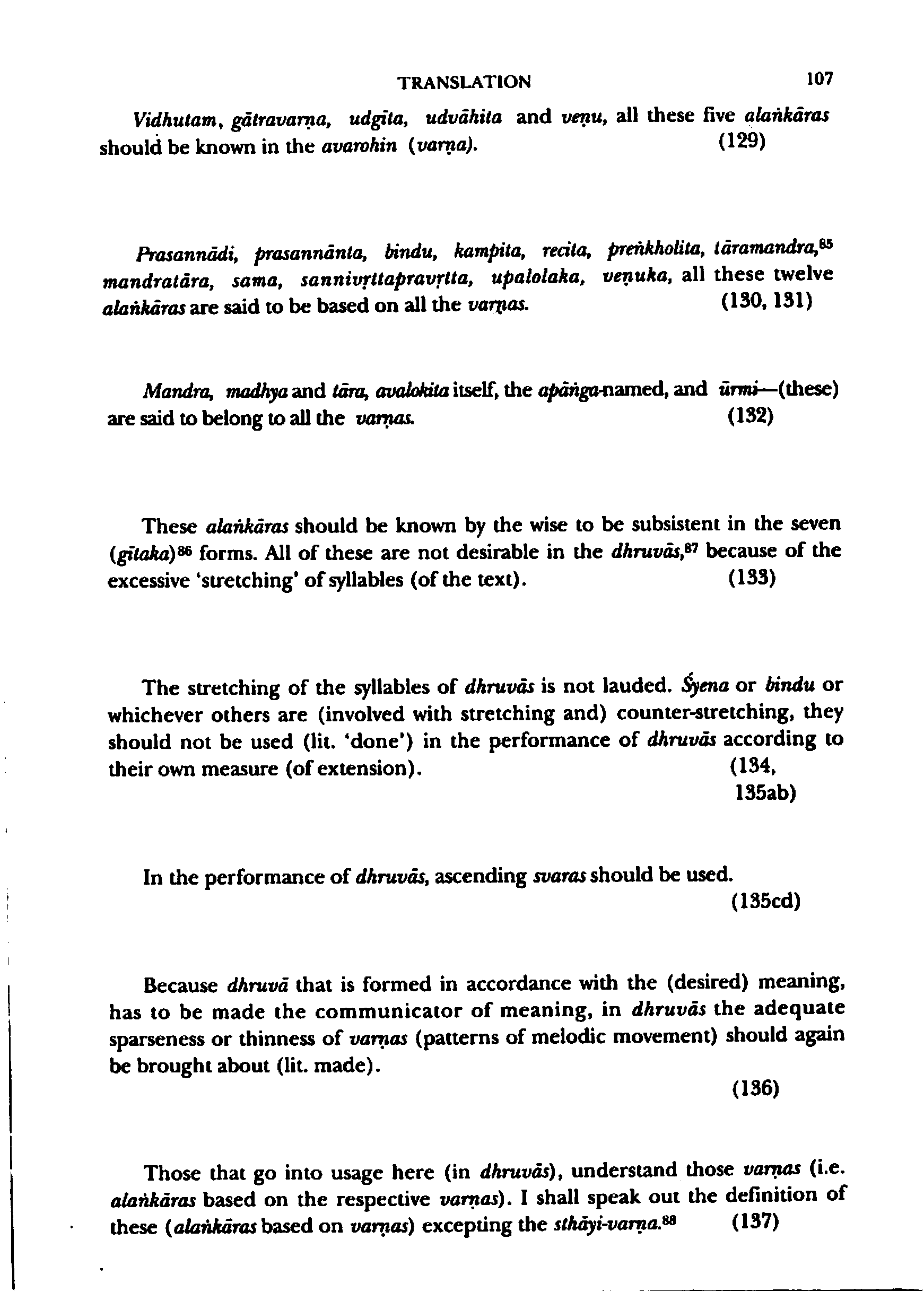
Vidhutam, gātravarņa, udgīta, udvāhita and veņu, all these five alankāras (129) should be known in the avarohin (varna).2 Prasannādi, prasannānta, bindu, kampita, recita, prenkholita, tāramandra,85 mandratāra, sama, sannivīttapravītta, upalolaka, veņuka, all these twelve (130, 131) alankāras are said to be based on all the varnas.3 Mandra, madhya and tāra, avalokita itself, the apānga-named, and ūrmi—(these) (132) are said to belong to all the varnas.4 These alankaras should be known by the wise to be subsistent in the seven (gītaka)86 forms.10 All of these are not desirable in the dhruvās,87 because of the (133) excessive 'stretching' of syllables (of the text).6 The stretching of the syllables of dhruvās is not lauded. Syena or bindu or whichever others are (involved with stretching and) counter-stretching, they should not be used (lit. 'done') in the performance of dhruvās according to (134, their own measure (of extension).7 135ab) In the performance of dhruvās, ascending svaras should be used.8 (135cd) t Because dhruvā that is formed in accordance with the (desired) meaning, has to be made the communicator of meaning1, in dhruvās the adequate sparseness or thinness of varnas (patterns of melodic movement) should again be brought about (lit. made).9
(136)
Those that go into usage here (in dhruvās), understand those varņas (i.e. alankāras based on the respective varņas). I shall speak out the definition of (137) these (alankāras based on varņas) excepting the sthāyi-varņa.885
1.[definition] Dhruvā should be formed in accordance with desired meaning and communicate that meaningयस्मादर्थानुरूपा हि ध्रुवा कार्यार्थदर्शिका।
5.[relation] The definition of alankāras based on varņas will be spoken excepting the sthāyi-varņaस्थायिवर्णादृते चैषा सम्प्रवक्ष्यामि लक्षणम्।।१३७।।
8.[structural] In dhruvā performance, ascending svaras should be usedध्वाणा च प्रयोगेषु तु कार्याश्चारोहिणः स्वरा ॥ १३५॥
9.[structural] In dhruvās, the sparseness or thinness of varņa patterns should be brought aboutवर्णाना तु पुनः कार्यं कृशत्वं च ध्रुवास्वलम्।।१३६॥
1.[definition]Dhruvā should be formed in accordance with desired meaning and communicate that meaningBecause dhruvā that is formed in accordance with the (desired) meaning, has to be made the communicator of meaning
2.[enumeration]These five ornaments should be known in the avarohin varnaVidhutam, gātravarņa, udgīta, udvāhita and veņu, all these five alankāras (129) should be known in the avarohin (varna).
3.[enumeration]Twelve ornaments are said to be based on all the varnasPrasannādi, prasannānta, bindu, kampita, recita, prenkholita, tāramandra,85 mandratāra, sama, sannivīttapravītta, upalolaka, veņuka, all these twelve (130, 131) alankāras are said to be based on all the varnas.
4.[relation]These ornaments are said to belong to all the varnasMandra, madhya and tāra, avalokita itself, the apānga-named, and ūrmi—(these) (132) are said to belong to all the varnas.
5.[relation]The definition of alankāras based on varņas will be spoken excepting the sthāyi-varņaI shall speak out the definition of (137) these (alankāras based on varņas) excepting the sthāyi-varņa.88
6.[structural]Not all alankāras are desirable in dhruvās because of excessive stretching of syllablesAll of these are not desirable in the dhruvās,87 because of the (133) excessive 'stretching' of syllables (of the text).
7.[structural]Syena, bindu and similar ornaments involving stretching should not be used in dhruvā performance according to their own measureSyena or bindu or whichever others are (involved with stretching and) counter-stretching, they should not be used (lit. 'done') in the performance of dhruvās according to (134, their own measure (of extension).
8.[structural]In dhruvā performance, ascending svaras should be usedIn the performance of dhruvās, ascending svaras should be used.
9.[structural]In dhruvās, the sparseness or thinness of varņa patterns should be brought aboutin dhruvās the adequate sparseness or thinness of varnas (patterns of melodic movement) should again be brought about (lit. made).
10.[structural]Alankāras should be known by the wise to be subsistent in seven gītaka formsThese alankaras should be known by the wise to be subsistent in the seven (gītaka)86 forms.