Source scans · vol_II_p018
recto · open full
scan recto
verso · open full
scan verso
Bṛhaddeśī · Volume II
pp. 18–48folio 018
Devanāgarī (Bṛhaddeśī)
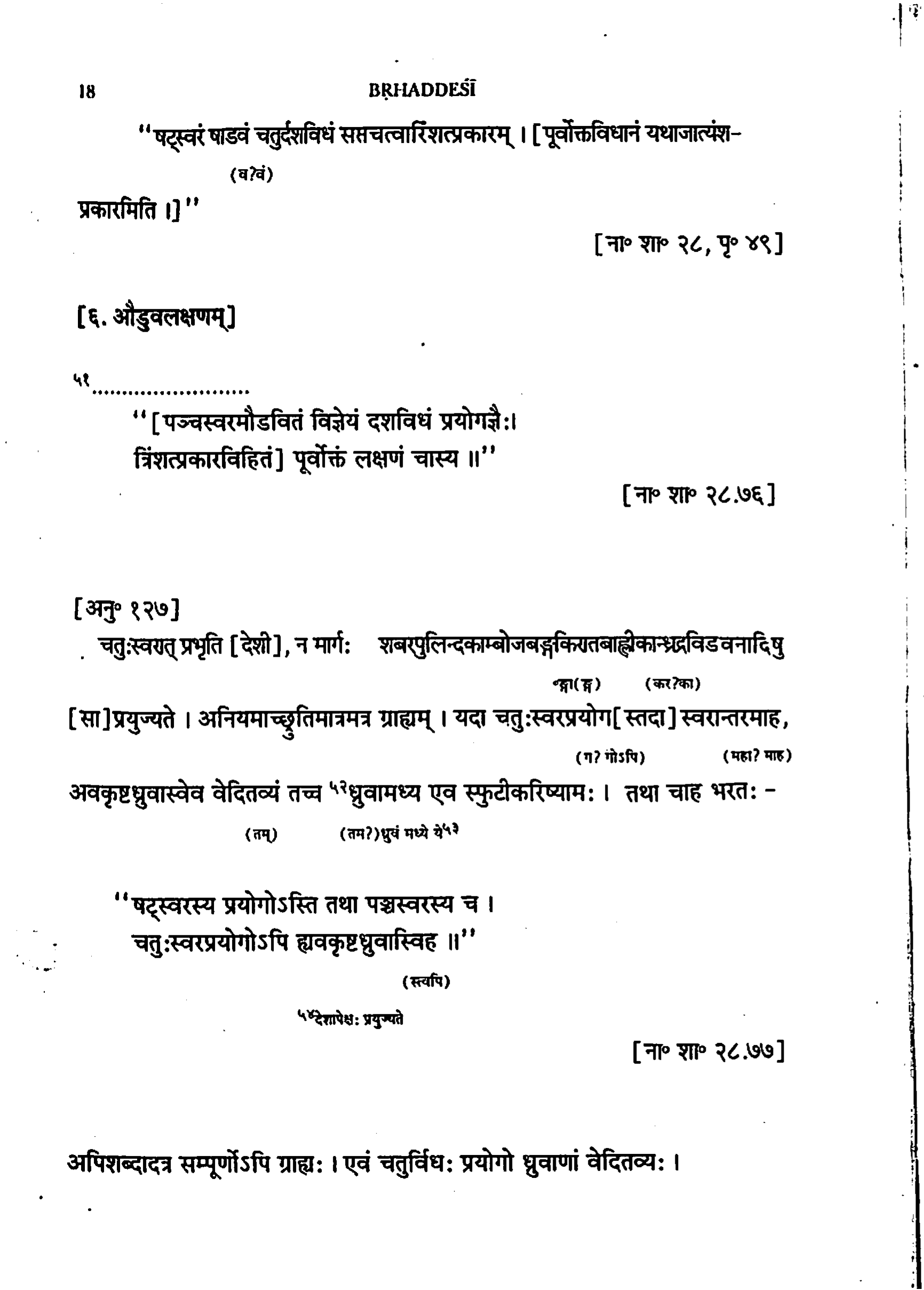
षर्स्वरं षाडवं चतुर्दशविधं सप्तचत्वारिंशत्प्रकारम्13 । [पूर्वोक्तविधानं यथाज?ात्यंश- (व?वं) प्रकारमिति ।]''
[ना॰ शा॰ २८, पृ॰ ४९]
[६. औडुवलक्षणम्]
‘‘[पञ्चस्वरमौडवितं विज?्ञेयं दशविधं प्रयोगज्ञैः12
त्रिंशत्प्रकारविहितं] पूर्वोक्तं लक्षणं चास्य ॥”
[ना॰ शा॰ २८.७६]
[अनु॰ १२७]
चतुःस्वरात् प्रभृति । दशा । , न मार्गः ।3 अबरपुःलिन्दकाम्बाजबङ्गाकरातबाह्मकान्ध्रदावडवनादिषु7 (कर?का) ন্দ্রা(দ্ব) [सा]प्रयुज?्यते । अनियमाच्छ्रितमात्रमत्र ग्राह्मम् ।8 यदा चतुःस्वरप्रयोग[स्तदा]स्वरान्तरमाह,4 (महा? माह) (ग? गोऽपि) अवकृष्टध्रुवास्वेव वेदितव्यं9 तच्च ५२ध्रुवामध्य एव स्फुटीकरिष्यामः। तथा चाह भरतः - (तम?)धुवं मध्ये ये५३ (तप्)
‘‘षट्स्वरस्य प्रयोगोऽस्ति तथा पञ्चस्वरस्य च ।
चतुःस्वरप्रयोगोऽपि ह्यवकृष्टध्रुवास्विह ॥’’ (सवपि) ५४देशापेशः प्रयुज?्यते [না । বা । বা । বা । বা । বা । বা । বা । বা । বা । বা । বা । বা । বা । বা । বা । বা । বা । বা । বা । বা । বা । বা । বা । বা । বা । বা । বা । বা । বা । বা । বা । বা । বা । বা । বা । বা अपिशब्दादत्र सम्पूर्णोऽपि ग्राह्यः । एवं चतुर्विधः प्रयोगो ध्रुवाणा वेदितव्यः ।5
English — Sharma (translation)
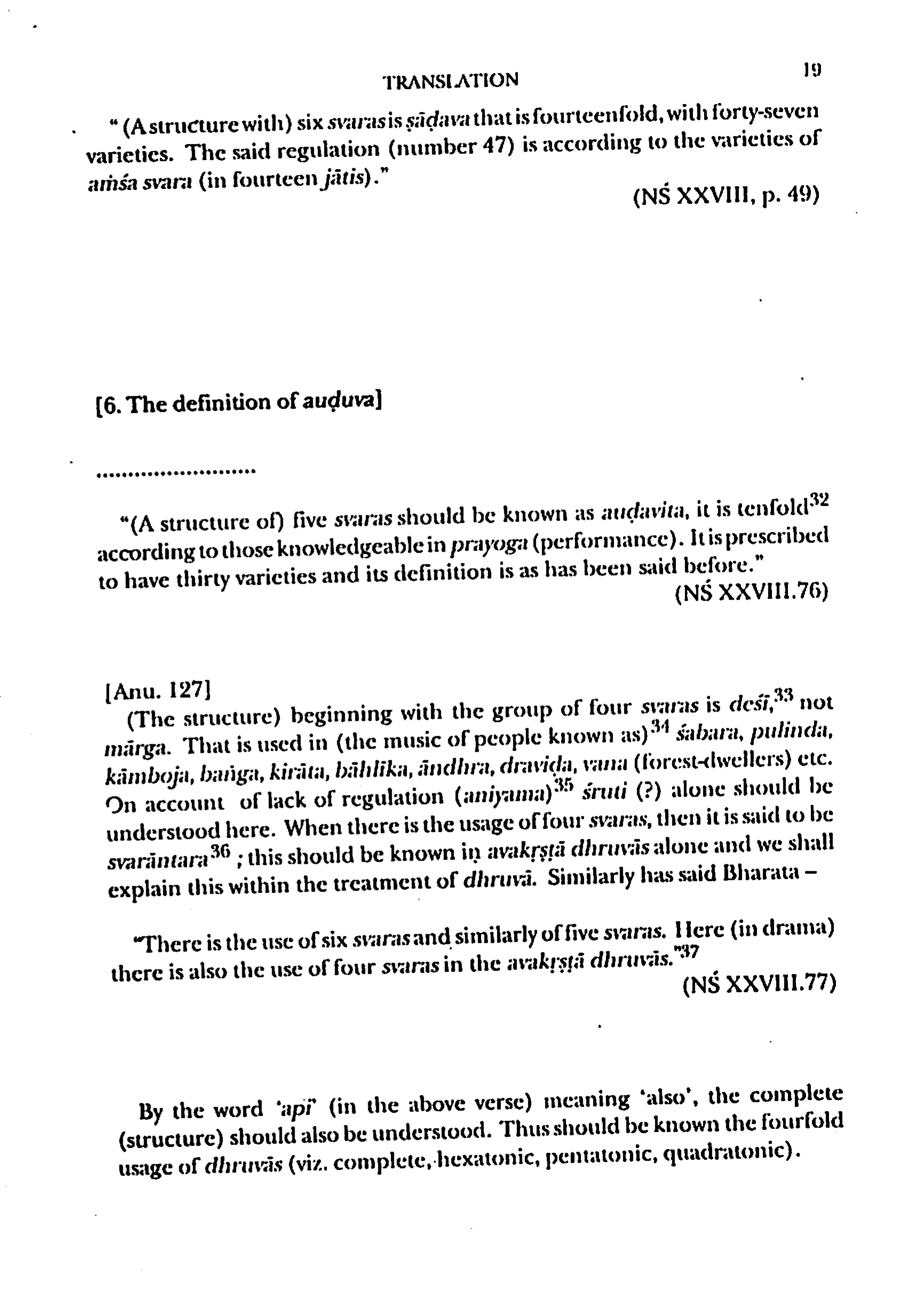
" (A structure with) six svaras is ṣāḍava that is fourteenfold, with forty-seven varieties.13 The said regulation (number 47) is according to the varieties of amśa svara (in fourteen jātis)." (NŚ XXVIII, p. 49)
[6. The definition of auduva]
----- "(A structure of) five svaras should be known as audavita, it is tenfold32 according to those knowledgeable in prayoga (performance). It is prescribed to have thirty varieties and its definition is as has been said before." (NŚ XXVIII.76)
[Anu. 127]
(The structure) beginning with the group of four svaras is deśi,33 not mārga. That is used in (the music of people known as) 34 śabara, pulinda, kāmboja, baṅga, kirāta, bāhlīka, āndhra, draviḍa, vana (forest-dwellers) etc.7 On account of lack of regulation (aniyama)35 śruti (?) alone should be understood here.8 When there is the usage of four svaras, then it is said to be svarāntara 36;4 this should be known in avakṛṣṭā dhruvās alone9 and we shall explain this within the treatment of dhruvā.10 Similarly has said Bharata - "There is the use of six svaras and similarly of five svaras. Here (in drama) there is also the use of four svaras in the avakṛṣṭā dhruvās."137 (NŚ XXVIII.77) By the word 'api' (in the above verse) meaning 'also', the complete (structure) should also be understood. Thus should be known the fourfold usage of dhruvās (viz. complete, hexatonic, pentatonic, quadratonic).5
2.[citation]The BRHADDEŚĪ by Mātaṅga (circa 750 CE) contains systematic classification of svara structuresBRHADDEŚĪ
3.[definition] The structure beginning with the group of four svaras is deśī, not mārgaचतुःस्वरात् प्रभृति । दशा । , न मार्गः ।
4.[definition] When there is usage of four svaras, it is said to be svarāntaraयदा चतुःस्वरप्रयोग[स्तदा]स्वरान्तरमाह,
5.[enumeration] Dhruvā can be used in four varieties: complete (full svaras), hexatonic, pentatonic, and quadratonic structuresएवं चतुर्विधः प्रयोगो ध्रुवाणा वेदितव्यः ।
6.[relation] Mārga is contrasted with deśī as a different type of structure, where deśī begins with four svarasचतुःस्वरात् प्रभृति । दशा । , न मार्गः ।
7.[relation] Deśī music is used among peoples known as śabara, pulinda, kāmboja, baṅga, kirāta, bāhlīka, āndhra, draviḍa, vana and othersअबरपुःलिन्दकाम्बाजबङ्गाकरातबाह्मकान्ध्रदावडवनादिषु
8.[relation] Due to lack of regulation (aniyama), śruti alone should be understood in certain musical contextsअनियमाच्छ्रितमात्रमत्र ग्राह्मम् ।
9.[relation] Svarāntara should be known in avakṛṣṭā dhruvās aloneअवकृष्टध्रुवास्वेव वेदितव्यं
12.[relation] Those knowledgeable in prayoga (performance) classify audavita structures as tenfoldदशविधं प्रयोगज्ञैः
13.[structural]A ṣāḍava structure consists of six svaras and is fourteenfold with forty-seven varietiesषर्स्वरं षाडवं चतुर्दशविधं सप्तचत्वारिंशत्प्रकारम्
14.[structural]A structure of five svaras should be known as audavita, tenfold according to those knowledgeable in prayoga, prescribed to have thirty varietiespañcasvaramauḍavitaṁ vijñeyaṁ daśavidhaṁ prayogajñaiः. triṁśatprakāravidhitaṁ pūrvuktaṁ lakṣaṇaṁ cāsya
1.[attribution]Bharata is cited as an authority who confirmed that there is usage of six, five, and four svaras in dramaSimilarly has said Bharata - "There is the use of six svaras and similarly of five svaras. Here (in drama) there is also the use of four svaras in the avakṛṣṭā dhruvās."
3.[definition]The structure beginning with the group of four svaras is deśī, not mārgaThe structure) beginning with the group of four svaras is deśī,33 not mārga.
4.[definition]When there is usage of four svaras, it is said to be svarāntaraWhen there is the usage of four svaras, then it is said to be svarāntara 36;
5.[enumeration]Dhruvā can be used in four varieties: complete (full svaras), hexatonic, pentatonic, and quadratonic structuresThus should be known the fourfold usage of dhruvās (viz. complete, hexatonic, pentatonic, quadratonic).
6.[relation]Mārga is contrasted with deśī as a different type of structure, where deśī begins with four svarasThe structure) beginning with the group of four svaras is deśī,33 not mārga.
7.[relation]Deśī music is used among peoples known as śabara, pulinda, kāmboja, baṅga, kirāta, bāhlīka, āndhra, draviḍa, vana and othersThat is used in (the music of people known as) 34 śabara, pulinda, kāmboja, baṅga, kirāta, bāhlīka, āndhra, draviḍa, vana (forest-dwellers) etc.
8.[relation]Due to lack of regulation (aniyama), śruti alone should be understood in certain musical contextsOn account of lack of regulation (aniyama)35 śruti (?) alone should be understood here.
9.[relation]Svarāntara should be known in avakṛṣṭā dhruvās alonethis should be known in avakṛṣṭā dhruvās alone
10.[relation]Avakṛṣṭā dhruvās will be explained in detail within the treatment of dhruvāand we shall explain this within the treatment of dhruvā.
11.[relation]The varieties of ṣāḍava are enumerated according to the varieties of aṁśa svara in fourteen jātisThe said regulation (number 47) is according to the varieties of aṁśa svara (in fourteen jātis).
12.[relation]Those knowledgeable in prayoga (performance) classify audavita structures as tenfoldit is tenfold32 according to those knowledgeable in prayoga (performance).
13.[structural] A ṣāḍava structure consists of six svaras and is fourteenfold with forty-seven varieties(A structure with) six svaras is ṣāḍava that is fourteenfold, with forty-seven varieties.