Source scans · vol_II_p078
recto · open full
scan recto
verso · open full
scan verso
Bṛhaddeśī · Volume II
pp. 138–139folio 078
Devanāgarī (Bṛhaddeśī)
: -- 10gd
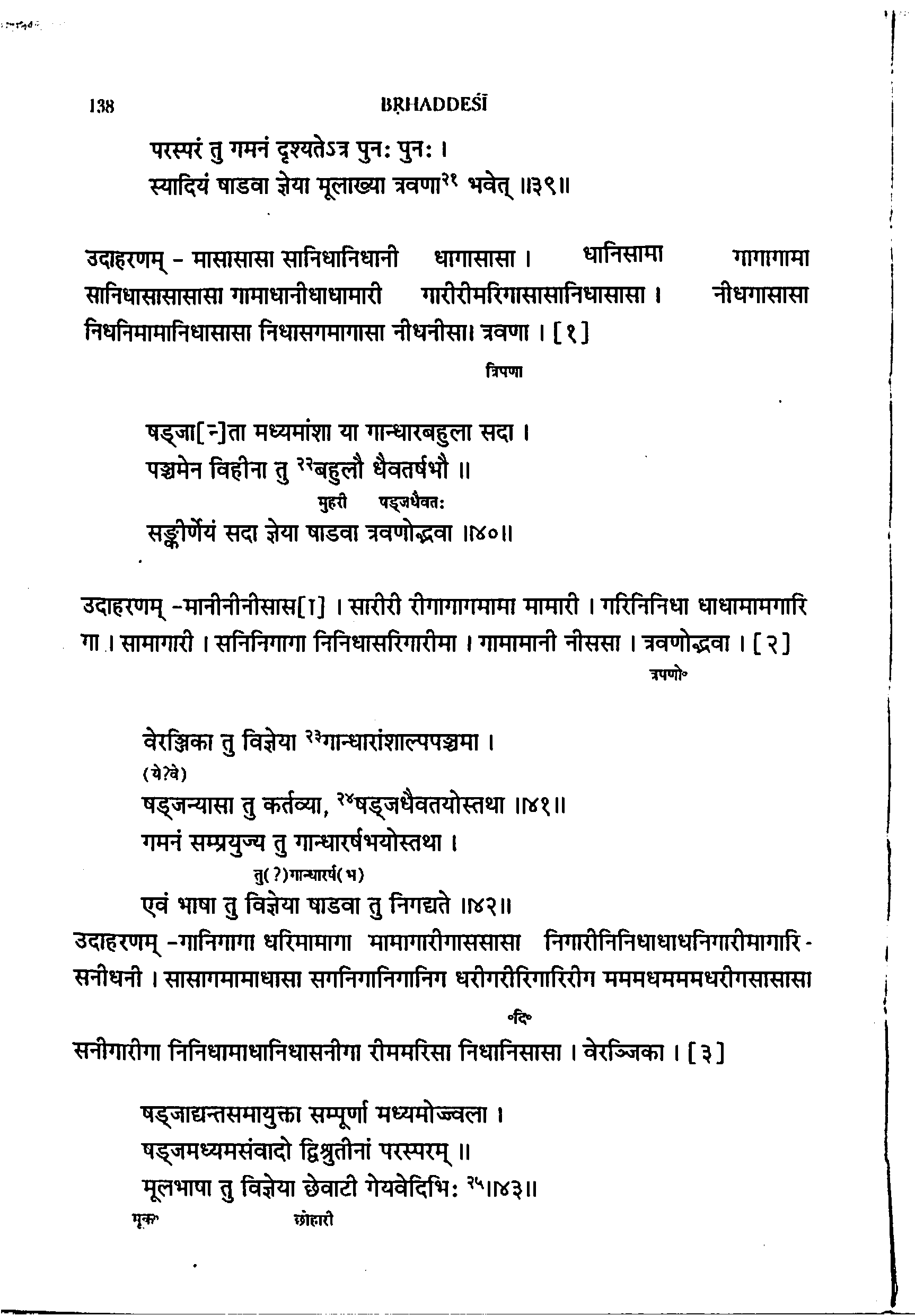
परस्परं तु गमनं दृश्यतेऽत्र पुन: पुन: ।
स्यादियं षाडवा ज्ञेया2 मूलाख्या त्रवणा२१ भवेत्4३९धानिसामा
उदाहरणम् – मासासासा सानिधानिधानी धागासासा ।ZZANNZZWE0__ZZANNZZWS0__ सानिधासासासा गामाधानीधाधामारी गारीरीमरिगासासानिधासासात्रिपणा ।ZZANNZZWE1__ZZANNZZWS1__ निधनिमामानिधासासा निधासगमागासा नीधनीसा। त्रवणा । [१]
षड्जा[-]ता मध्यमांशा या गान्धारबहुला सदा ।
पञ्चमेन विहीना तु २२बहुलौमुहरी पड्जधैवत: धैवतर्षभौ ॥
सङ्कीर्णेयं सदा ज्ञेया षाडवा त्रवणोद्भवा105४०त्रपणो॰
उदाहरणम् -मानीनीनीसास[1] । सारीरी रीगागागमामा मामारी । गरिनिनिधा धाधामामगारि गा । सामागारी । सनिनिगागा निनिधासरिगारीमा । गामामानी नीससा । त्रवणोद्भवा । [२]
वेरञ्जिका(ये?वे) तु विज्ञेया २३गान्धारांशाल्पपञ्चमा ।
षड्जन्यासा तु कर्तव्या, २४षड्जधैवतयोस्तथा ॥४१॥
गमनं सम्प्रयुज्य तु गान्धारर्षभयोस्तथातु(?)गान्धारर्ष(भ)
एवं भाषा तु विज्ञेया षाडवा तु निगद्यते3 ॥४२॥ उदाहरणम् -गानिगागा धरिमामागा मामागारीगाससासा निगारीनिनिधाधाधनिगारीमागारि - सनीधनी । सासागमामाधासा सगनिगानिगानिग धरीगरीरिगारिरीग मममधमममधरीगसासासा ৽বি৽ सनीगारीगा निनिधामाधानिधासनीगा रीममरिसा निधानिसासा । वेरञ्जिका । [३] षड्जाद्यन्तसमायुक्ता सम्पूर्णा मध्यमोज्वला ।
षड्जमध्यमसंवादो द्विश्रुतीनां परस्परम्11
मूलभाषामृक्र तु विज्ञेयाछोहारी छेवाटी गेयवेदिभि:91 २५॥४३॥
English — Sharma (translation)
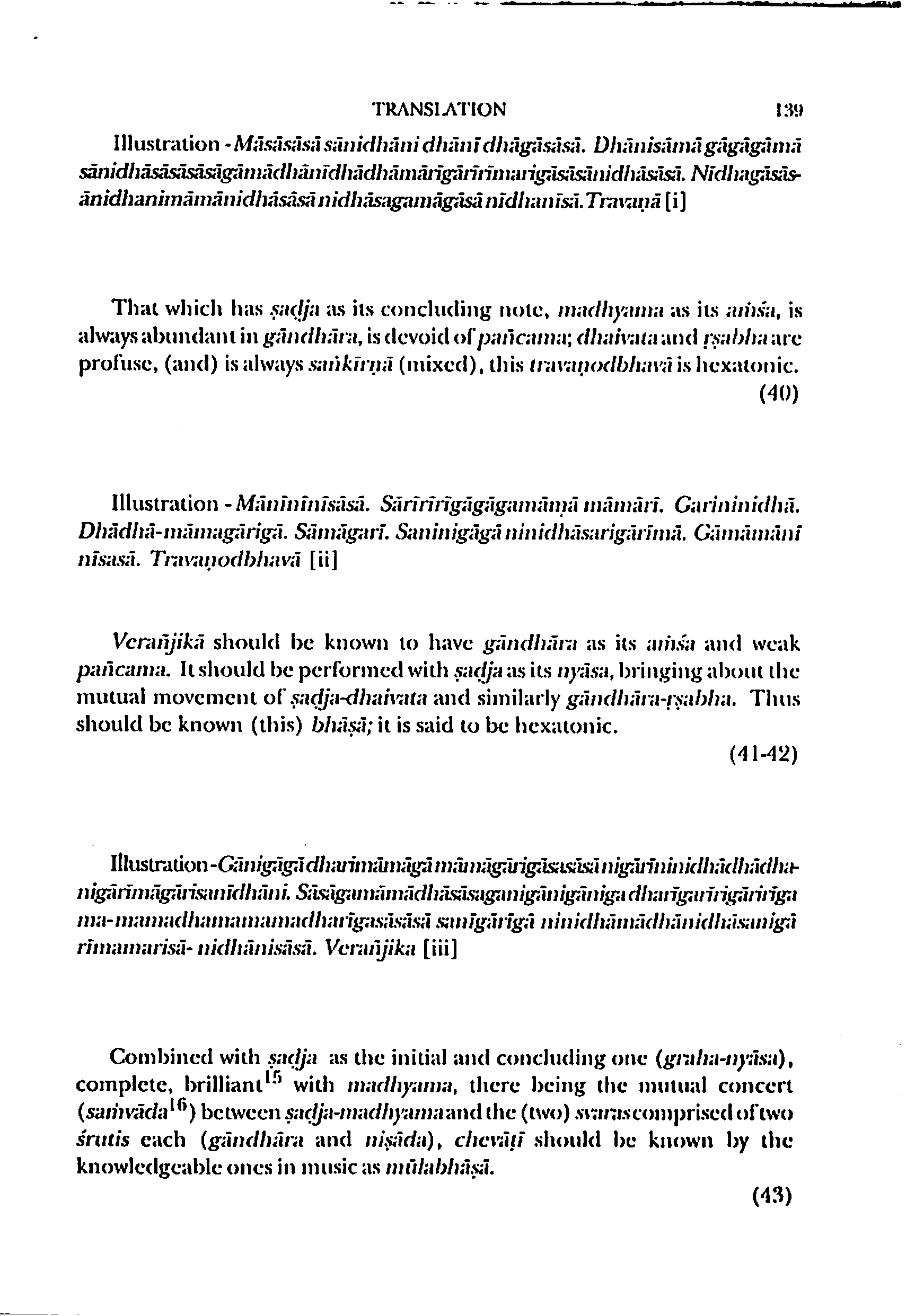
Illustration - Māsāsāsā sānidhāni dhānī dhāgāsāsā. Dhānisāmā gāgāgāmā sānidhāsāsāsāsāgāmādhānīdhādhāmārīgārīrīmarigāsāsānidhāsāsā. Nidhagāsās- ānidhanimāmānidhāsāsā nidhāsagamāgāsā nīdhanīsā. Travaņā [i] That which has sadja as its concluding note, madhyama as its amsa, is always abundant in gāndhāra, is devoid of pañcama; dhaivata and ṛṣabha are profuse6, (and) is always sankīrņā (mixed), this travaņodbhavā is hexatonic10542.
(40)
Illustration - Mānīnīnīsāsā. Sārīrīrīgāgāgamāmā māmārī. Garininidhā. Dhādhā-māmagārigā. Sāmāgarī. Saninigāgā ninidhāsarigārīmā, Gāmāmānī nīsasā. Travaņodbhavā [ii] Verañjikā should be known to have gandhāra as its amśa and weak pañcama. It should be performed with ṣaḍja as its nyāsa, bringing about the mutual movement of şadja-dhaivata and similarly gāndhāra-ṛṣabha.8 Thus should be known (this) bhāṣā; it is said to be hexatonic3. <math>(41-42)</math> Illustration-Gānigāgā dharimāmāgā māmāgārigāsasāsā nigārīninidhādhādha- nigārīmāgārisanīdhāni. Sāsāgamāmādhāsāsaganigānigāniga dharīgarīrigārirīga ma-mamadhamamamadharīgasāsāsā sanīgārīgā ninidhāmādhānidhāsanigā rīmamarisā- nidhānisāsā. Verañjika [iii] Combined with sadja as the initial and concluding one (graha-nyāsa), complete, brilliant 15 with madhyama, there being the mutual concert (samvāda16) between sadja-madhyama and the (two) svaras comprised of two śrutis each (gāndhāra and niṣāda), chevāṭī should be known by the knowledgeable ones in music as mūlabhāṣā.
(43)
1.[attribution] Mūlabhāṣā (root/fundamental bhāṣā) is recognized by knowledgeable musiciansमूलभाषा तु विज?्ञेया छेवाटी गेयवेदिभिः
2.[definition]Ṣāḍava is a hexatonic (six-note) rāga typeस्यादियं षाडवा ज?्ञेया
3.[definition]Bhāṣā is a technical category of rāga classification in Indian musicएवं भाषा तु विज?्ञेया षाडवा तु निगद्यते
4.[relation]Travaṇā is a specific category or variety of ṣāḍavaस्यादियं षाडवा ज?्ञेया मूलाख्या त्रवणा भवेत्
5.[structural]Travaṇodbhavā is a ṣāḍava (hexatonic rāga) that originates from travaṇāसङ्कीर्णेयं सदा ज?्ञेया षाडवा त्रवणोद्भवा
9.[structural] Chevāṭī is the mūlabhāṣā (root/fundamental bhāṣā) in musicमूलभाषा तु विज?्ञेया छेवाटी गेयवेदिभिः
10.[structural]Saṅkīrṇa (mixed) is a characteristic property of travaṇodbhavāसङ्कीर्णेयं सदा ज?्ञेया षाडवा त्रवणोद्भवा
11.[structural] Chevāṭī is complete, brilliant with madhyama, combines sadja as graha-nyāsa, and features samvāda between sadja-madhyama and two-śruti svarasषड्ज?ाद्यन्तसमायुक्ता सम्पूर्णा मध्यमोज?्वला । षड्जमध्यमसंवादो द्विश्रुतीना परस्परम्
1.[attribution]Mūlabhāṣā (root/fundamental bhāṣā) is recognized by knowledgeable musicianschevāṭī should be known by the knowledgeable ones in music as mūlabhāṣā.
2.[definition] Ṣāḍava is a hexatonic (six-note) rāga typethis travaņodbhavā is hexatonic
3.[definition] Bhāṣā is a technical category of rāga classification in Indian musicThus should be known (this) bhāṣā; it is said to be hexatonic
4.[relation] Travaṇā is a specific category or variety of ṣāḍavathis travaņodbhavā is hexatonic
5.[structural] Travaṇodbhavā is a ṣāḍava (hexatonic rāga) that originates from travaṇāis always sankīrņā (mixed), this travaņodbhavā is hexatonic
6.[structural]Travaṇodbhavā has sadja as concluding note, madhyama as amsa, is abundant in gāndhāra, lacks pañcama, and is profuse in dhaivata and ṛṣabhaThat which has sadja as its concluding note, madhyama as its amsa, is always abundant in gāndhāra, is devoid of pañcama; dhaivata and ṛṣabha are profuse
7.[structural]Verañjikā is a ṣāḍava rāga with gāndhāra as its amsa and weak pañcamaVerañjikā should be known to have gandhāra as its aṁśa and weak pañcama.
8.[structural]Verañjikā should be performed with ṣaḍja as nyāsa and features mutual movement of ṣaḍja-dhaivata and gāndhāra-ṛṣabhaIt should be performed with ṣaḍja as its nyāsa, bringing about the mutual movement of şadja-dhaivata and similarly gāndhāra-ṛṣabha.
9.[structural]Chevāṭī is the mūlabhāṣā (root/fundamental bhāṣā) in musicchevāṭī should be known by the knowledgeable ones in music as mūlabhāṣā.
10.[structural] Saṅkīrṇa (mixed) is a characteristic property of travaṇodbhavāis always sankīrņā (mixed), this travaņodbhavā is hexatonic
11.[structural]Chevāṭī is complete, brilliant with madhyama, combines sadja as graha-nyāsa, and features samvāda between sadja-madhyama and two-śruti svarasCombined with sadja as the initial and concluding one (graha-nyāsa), complete, brilliant 15 with madhyama, there being the mutual concert (samvāda16) between sadja-madhyama and the (two) svaras comprised of two śrutis each