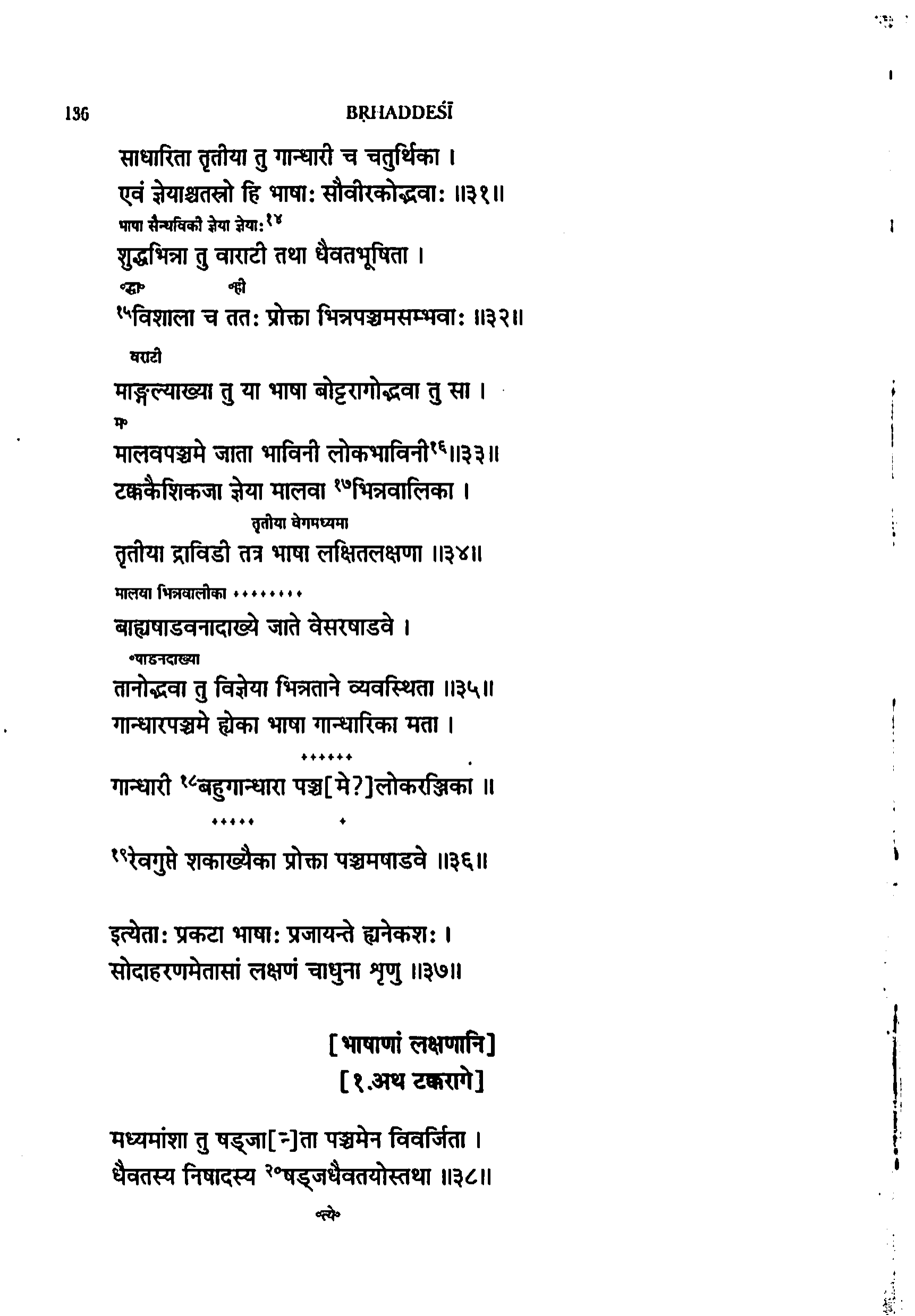
Sauvīrī should be known as the first one,
vega-madhyamā the second,
sādhāritā is the third one and
gāndhārī the fourth. Thus should be known the
four
bhāṣās born of
sauvīraka.
<math>(30c-31)</math>
Suddhabhinnā, vārāṭī, similarly
dhaivatabhūṣitā and then viśālā are said
to be born of
bhinnapañcama.
(32)
The bhāṣā called māṅgalī is born of boṭṭa-rāga.5 In mālavapañcama is born
bhāvinī, the one that is beautiful for the people11.6
(33)
Mālavā (and) bhinnavālikā should be known to be born of ṭakkakaiśika7,
and
drāvidī is the third bhāṣā there that is described with characteristics
(lakṣaṇas).12
(34)
The two known as bāhyaṣāḍavā and nādākhyā are born in vesaraṣāḍava.8
Tānodbhavā should be known as being assigned to bhinnatāna.9
(35)
In gāndhārapañcama, gāndhārikā is the one bhāṣā that is accepted.10
Gāndhārī is with profuse gāndhāra and is delightful to the people in
pañcama13 (
gāndhārapañcama). In
revagupta13 (?) śakākhyā is the one
spoken of in
pañcamaṣāḍava.
(36)
Thus are obvious the bhāṣās that are born in manifold ways.
Now listen
to their description alongwith illustration for each one.1
(37)
[The description of bhāṣās]
It has
madhyama as its amśa, şadja as its concluding note,
is devoid of
pañcama15 and there is to be seen here again and again the mutual
movement
14 of
dhaivata-niṣāda and similarly ṣadja -
dhaivata. This should
be known as
hexatonic. Travaņā should bear the name mūlā.
(38-39)