Source scans · vol_II_p088
recto · open full
scan recto
verso · open full
scan verso
Bṛhaddeśī · Volume II
pp. 158–159folio 088
Devanāgarī (Bṛhaddeśī)
A STATE OF THE STATE OF THE STATE OF THE STATE OF THE STATE OF THE STATE OF THE STATE OF THE STATE OF THE STATE OF THE STATE OF THE STATE OF THE STATE OF THE STATE OF THE STATE OF THE STATE OF THE STATE OF THE STATE OF THE
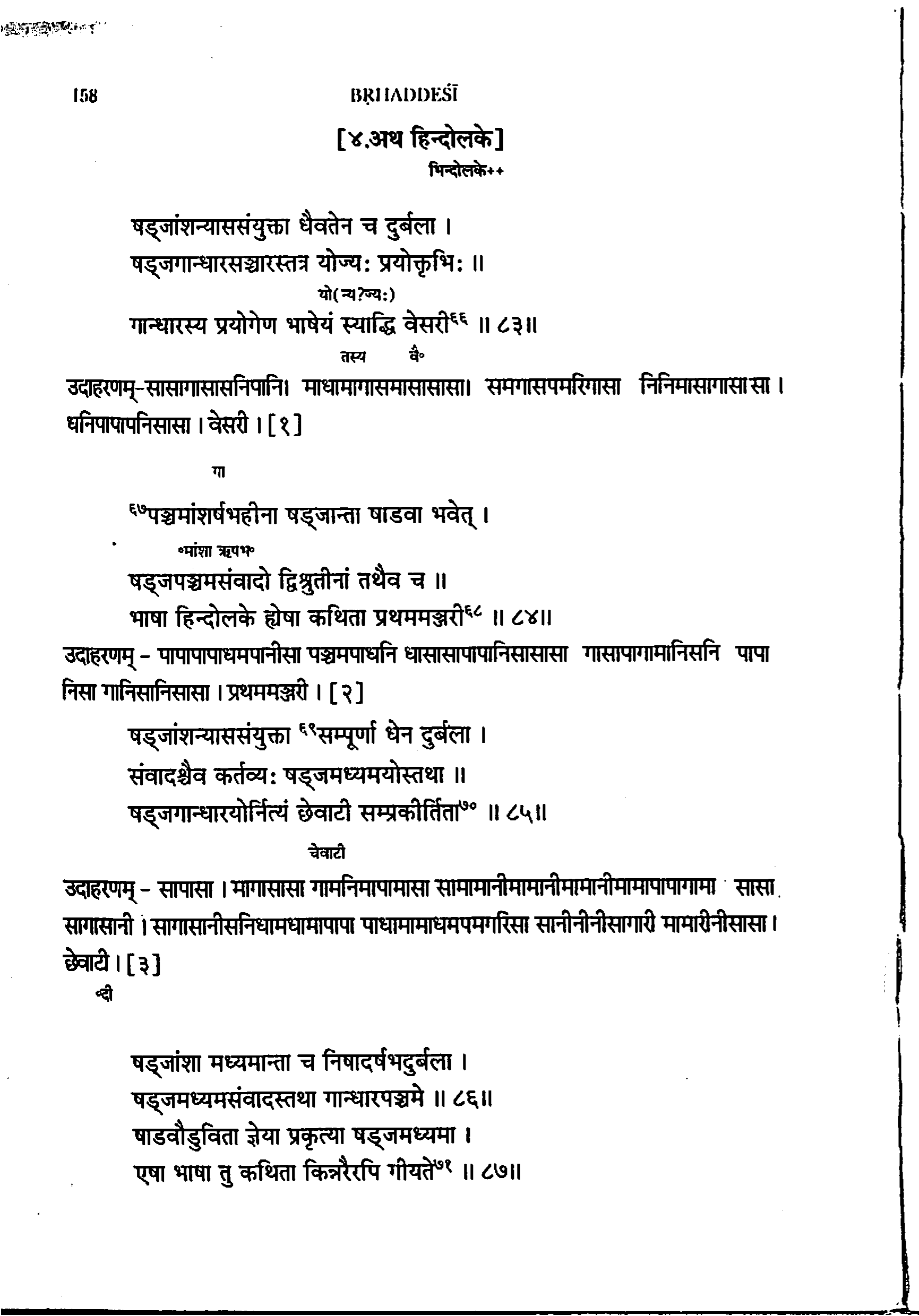
[४.अथ हिन्दोलके]
भिन्दोलके++
षड्ज?ांशन्याससंयुक्ता धैवतेन च दुर्बला5
षड्जगान्धारसञ्चारस्तत्र योज?्यः प्रयोक्तृभिः3
यो(न्य?ज?्यः) गान्धारस्य प्रयोगेण भाषेयं स्याद्धि वेसरी६६ ॥८३॥ तस्य
उदाहरणम्-सासागासासनिपानि। माधामागासमासासासा। स म गा स प म रि गा सा नि नि मा सा गा सा सा ।
ध नि पा पा प नि सा सा । वेसरी । [१] गा
६७पञ्चमांशर्षभहीना षड्ज?ान्ता षाडवा भवेत्4
॰मांशा ऋषभ॰
षड्जपञ्चमसंवादो द्विश्रुतीना तथैव च ॥
भाषा हिन्दोलके ह्येषा कथिता प्रथममञ्जरी7६८ ॥८४॥ उदाहरणम् – पा पा पा पा ध म पा नी सा पञ्चमपाधनि धा सा सा पा पा नि सा सा सा गा सा पा गा मा नि स नि पापा निसा गा नि सा नि सा सा । प्रथममञ्जरी । [२]
षड्ज?ांशन्याससंयुक्ता ६९सम्पूर्णा धेन दुर्बला ।
संवादश्चेव कर्तव्यः षड्जमध्यमयोस्तथा10
षड्जगान्धारयोर्नित्यं छेवाटी सम्प्रकीर्तिता७० ॥८५॥ चेवाटी उदाहरणम् - सा पा सा । मा गा सा सा गा म नि मा पा मा सा सा मा मा नी मा मा नी मा मा नी मा मा पा पा गा मा सासा
सा गा सा नी । सा गा सा नी स नि धा म धा मा पा पा पा धा मा मा ध म प म ग रि सा सानीनीनीसागारी मामारीनीसासा।
छेवाटी।[३] न्दी
षड्ज?ांशा मध्यमान्ता च निषादर्षभदुर्बला ।
षड्जमध्यमसंवादस्तथा गान्धारपञ्चमे ॥८६॥
षाडवौडुविता ज?्ञेया प्रकृत्या षड्जमध्यमा
एषा भाषा तु कथिता किन्नरैरिप गीयते1 ॥८७॥
English — Sharma (translation)
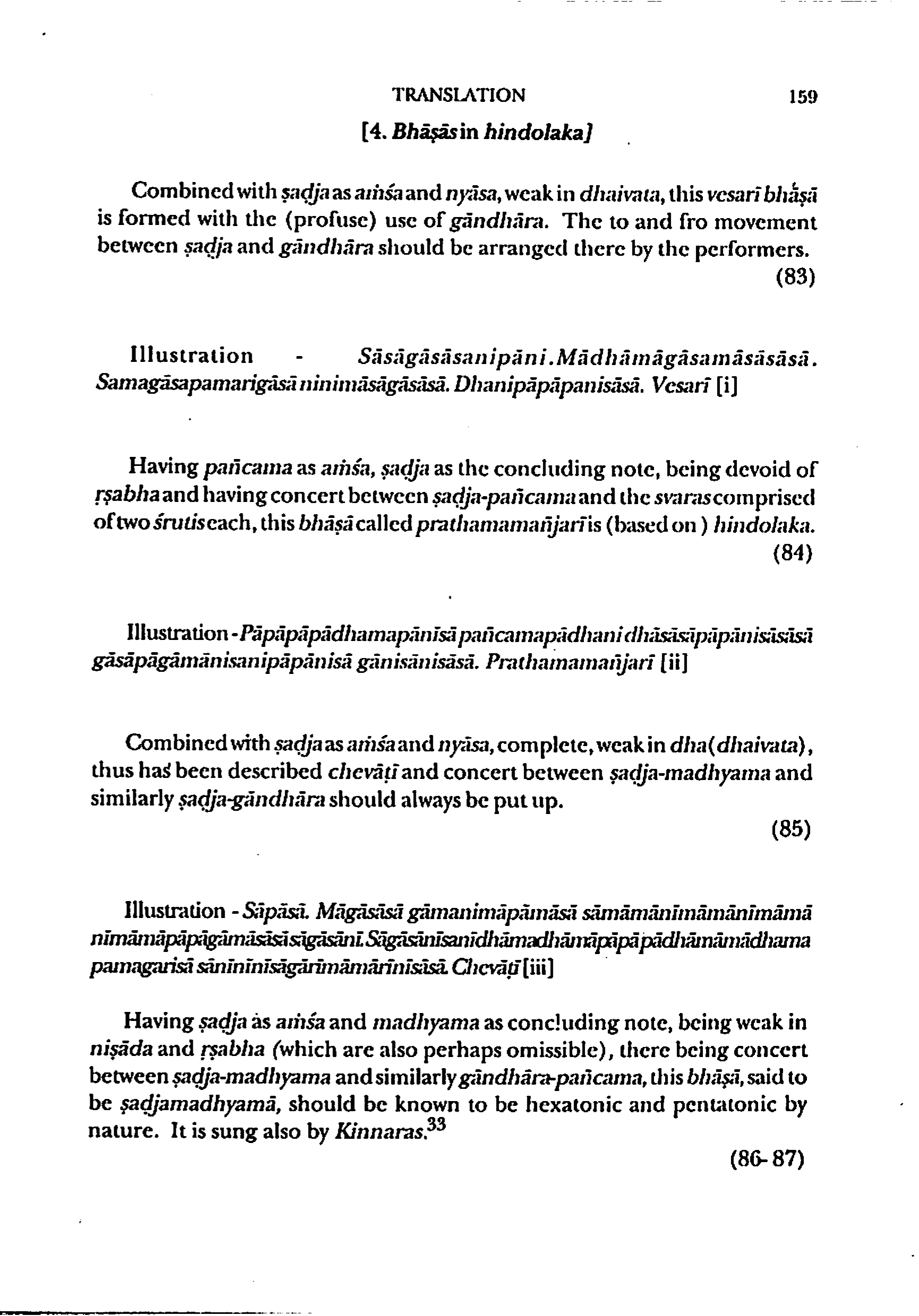
[4. Bhāṣās in hindolaka]
Combined with ṣaḍja as amśa and nyāsa, weak in dhaivata, this vesarī bhāṣā is formed with the (profuse) use of gandhara3. The to and fro movement between şadja and gandhara should be arranged there by the performers.
(83)
Illustration Sāsāgāsāsanipāni.Mādhāmāgāsamāsāsāsā. Samagāsapamarigāsā ninimāsāgāsāsā. Dhanipāpāpanisāsā. Vesarī [i] Having pancama as amśa, şadja as the concluding note, being devoid of ṛṣabha and having concert between ṣaḍja-pañcama and the svaras comprised of two śrutiseach, this bhāṣā called prathamamañjarī is (based on ) hindolaka7.
(84)
Illustration - Pāpāpāpādhamapānīsā pañcamapādhani dhāsāsāpāpānisāsāsā gāsāpāgāmānisanipāpānisā gānisānisāsā. Prathamamanjarī [ii] Combined with sadja as amsa and nyāsa, complete, weak in dha(dhaivata), thus has been described chevāțī and concert between șadja-madhyama and similarly şadja-gāndhāra should always be put up.10
(85)
Illustration - Sāpāsā. Māgāsāsā gāmanimāpāmāsā sāmāmānīmāmāmā nīmāmāpāpāgāmāsāsāsāgāsānī. Sāgāsānīsanīdhāmadhāmāpāpāpādhāmāmādhama pamagarisā sānīnīnīsāgārīmāmārīnīsāsā. Chevāţī [iii] Having şadja às amśa and madhyama as concluding note, being weak in niṣāda and ṛṣabha (which are also perhaps omissible), there being concert between ṣaḍja-madhyama and similarly gāndhāra-pañcama, this bhāṣā, said to be şadjamadhyamā, should be known to be hexatonic and pentatonic by nature. It is sung also by Kinnaras.133 <math>(86-87)</math>
1.[attribution] Kinnaras are attributed as singers of the ṣaḍjamadhyamā bhāṣāएषा भाषा तु कथिता किन्नरैरिप गीयते
2.[citation]BRHADDEŚĪ is a treatise by Mātaṅga that contains descriptions of bhāṣās in hindolakaBRHADDEŚĪ 158 [४.अथ हिन्दोलके]
3.[definition] bhāṣā is a musical form or style that can be constructed with specific svaras and relationshipsषड्जगान्धारसञ्चारस्तत्र योज?्यः प्रयोक्तृभिः
4.[enumeration] vesarī, prathamamañjarī, and chevāțī are three distinct bhāṣās enumerated in the hindolaka sectionपञ्चमांशर्षभहीना षड्ज?ान्ता षाडवा भवेत्
5.[relation] aṁśa is a structural feature of bhāṣās that can be combined with nyāsa in their constructionषड्ज?ांशन्याससंयुक्ता धैवतेन च दुर्बला
6.[relation] nyāsa is a structural feature paired with aṁśa in the formation of bhāṣāsषड्ज?ांशन्याससंयुक्ता धैवतेन च दुर्बला
7.[relation] hindolaka is a rāga or melodic framework on which bhāṣās such as prathamamañjarī are basedभाषा हिन्दोलके ह्येषा कथिता प्रथममञ्जरी
8.[structural] vesarī is a bhāṣā combined with ṣaḍja as aṁśa and nyāsa, weak in dhaivata, formed with profuse use of gandharaषड्ज?ांशन्याससंयुक्ता धैवतेन च दुर्बला । षड्जगान्धारसञ्चारस्तत्र योज?्यः प्रयोक्तृभिः
10.[structural] chevāțī is a bhāṣā combined with ṣaḍja as aṁśa and nyāsa, complete, weak in dhaivata, with concert between ṣaḍja-madhyama and ṣaḍja-gāndhāraषड्ज?ांशन्याससंयुक्ता ६९सम्पूर्णा धेन दुर्बला । संवादश्चेव कर्तव्यः षड्जमध्यमयोस्तथा
1.[attribution]Kinnaras are attributed as singers of the ṣaḍjamadhyamā bhāṣāIt is sung also by Kinnaras.
2.[citation] BRHADDEŚĪ is a treatise by Mātaṅga that contains descriptions of bhāṣās in hindolaka[4. Bhāṣās in hindolaka]
3.[definition]bhāṣā is a musical form or style that can be constructed with specific svaras and relationshipsthis vesarī bhāṣā is formed with the (profuse) use of gandhara
4.[enumeration]vesarī, prathamamañjarī, and chevāțī are three distinct bhāṣās enumerated in the hindolaka sectionVesarī [i] Having pancama as aṁśa, şadja as the concluding note, being devoid of ṛṣabha and having concert between ṣaḍja-pañcama and the svaras comprised of two śrutiseach, this bhāṣā called prathamamañjarī is (based on ) hindolaka. (84) Illustration - Pāpāpāpādhamapānīsā pañcama
5.[relation]aṁśa is a structural feature of bhāṣās that can be combined with nyāsa in their constructionCombined with ṣaḍja as aṁśa and nyāsa, weak in dhaivata
6.[relation]nyāsa is a structural feature paired with aṁśa in the formation of bhāṣāsCombined with ṣaḍja as aṁśa and nyāsa, weak in dhaivata
7.[relation]hindolaka is a rāga or melodic framework on which bhāṣās such as prathamamañjarī are basedthis bhāṣā called prathamamañjarī is (based on ) hindolaka
8.[structural]vesarī is a bhāṣā combined with ṣaḍja as aṁśa and nyāsa, weak in dhaivata, formed with profuse use of gandharaCombined with ṣaḍja as aṁśa and nyāsa, weak in dhaivata, this vesarī bhāṣā is formed with the (profuse) use of gandhara.
9.[structural]prathamamañjarī is a bhāṣā based on hindolaka, having pancama as aṁśa and ṣaḍja as concluding note, devoid of ṛṣabhaHaving pancama as aṁśa, şadja as the concluding note, being devoid of ṛṣabha and having concert between ṣaḍja-pañcama and the svaras comprised of two śrutiseach, this bhāṣā called prathamamañjarī is (based on ) hindolaka.
10.[structural]chevāțī is a bhāṣā combined with ṣaḍja as aṁśa and nyāsa, complete, weak in dhaivata, with concert between ṣaḍja-madhyama and ṣaḍja-gāndhāraCombined with sadja as amsa and nyāsa, complete, weak in dha(dhaivata), thus has been described chevāțī and concert between șadja-madhyama and similarly şadja-gāndhāra should always be put up.