Source scans · vol_II_p089
recto · open full
scan recto
verso · open full
scan verso
Bṛhaddeśī · Volume II
pp. 160–161folio 089
Devanāgarī (Bṛhaddeśī)
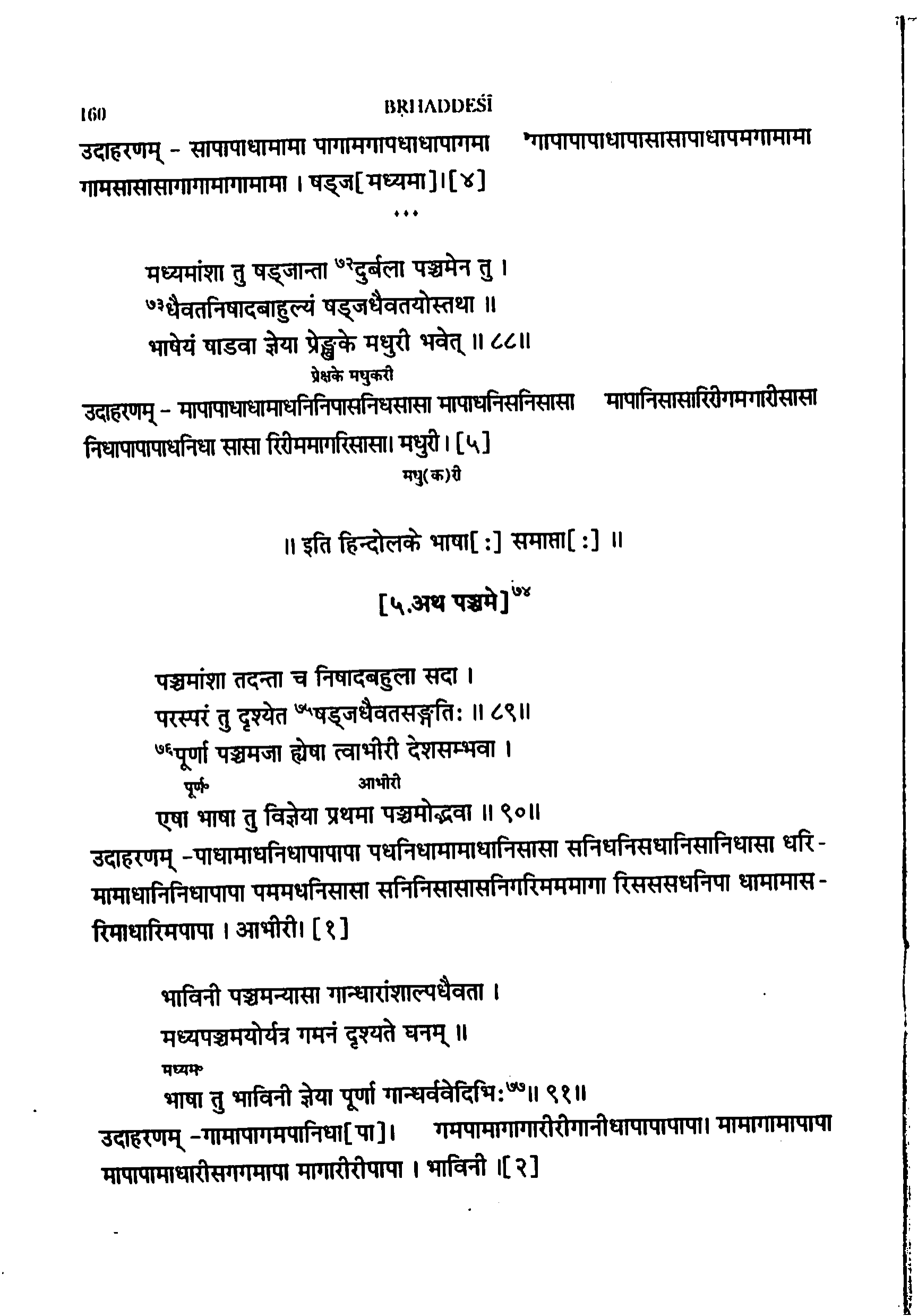
उदाहरणम् - सापापाधामामा पागामगापधाधापागमा गामसासासागागामागामामा । षड्ज[मध्यमा]।[४] मध्यमांशा तु षड्जान्ता10 ७२दुर्बला पञ्चमेन तु ।
७३धैवतनिषादबाहुल्यं षड्जधैवतयोस्तथा7
भाषेयं षाडवा ज्ञेया प्रेङ्खकेप्रेक्षके मधुकरी मधुरी भवेत्26 ८८॥
मापानिसासारिरोगमगारीसासा उदाहरणम् – मापापाधाधामाधनिनिपासनिधसासामधु(क)री मापाधनिसनिसासा निधापापापाधनिधा सासा रिरोममागरिसासा। मधुरी। [५]
इति हिन्दोलके भाषा[:] समाप्ता[:]1
[५.अथ पञ्चमे] ७४
पञ्चमांशा तदन्ता च निषादबहुला सदा।
परस्परं तु दृश्येत अषड्जधैवतसङ्गतिः ॥८९॥ ७६पूर्णापूर्ण पञ्चमजा ह्येषाआभौरी त्वाभीरी देशसम्भवा38 एषा भाषा तु विज्ञेया प्रथमा पञ्चमोद्भवा ॥९०॥ उदाहरणम् -पाधामाधनिधापापापा पधनिधामामाधानिसासा सनिधनिसधानिसानिधासा धरि- मामाधानिनिधापापा पममधनिसासा सनिनिसासासिनगरिमममागा रिसससधिनपा धामामास - रिमाधारिमपापा । आभीरी। [१] भाविनी पञ्चमन्यासा11 गान्धारांशाल्पधैवता ।
मध्यपञ्चमयोर्यत्रमध्यम् गमनं दृश्यते घनम्9
भाषा तु भाविनी ज्ञेया पूर्णा गान्धर्ववेदिभिः ७०॥९१॥ उदाहरणम् -गामापागमपानिधा[पा]। गमपामागागारीरीगानीधापापापाप। मामागामापापा मापापामाधारीसगगमापा मागारीरीपापा । भाविनी ।[२]
English — Sharma (translation)
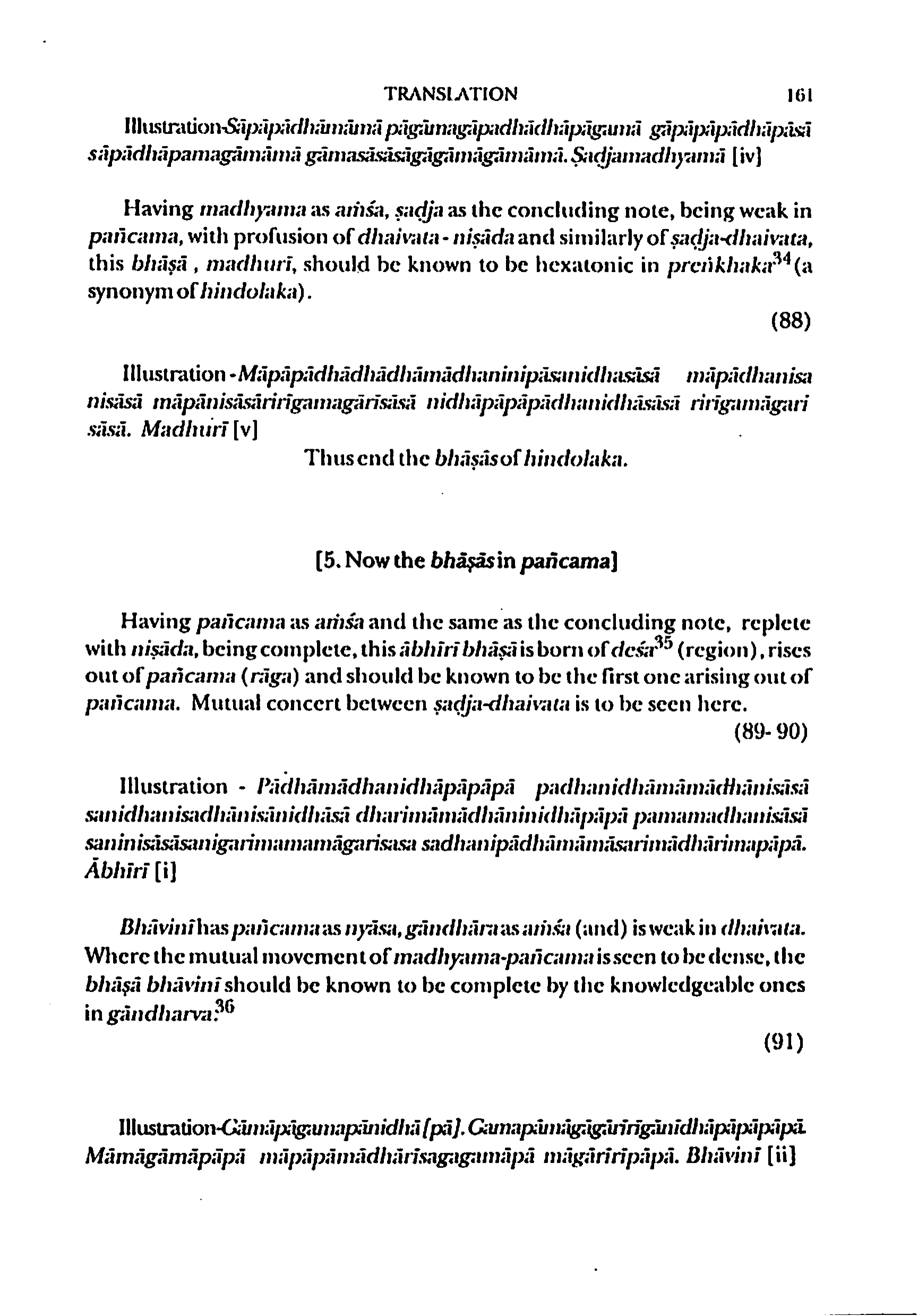
Illustration-Sāpāpādhāmāmā pāgāmagāpadhādhāpāgamā gāpāpāpādhāpāsā sāpādhāpamagāmāmā gāmasāsāsāgāgāmāgāmāmā. Şadjamadhyamā [iv] Having madhyama as amśa, ṣaḍja as the concluding note, being weak in pañcama, with profusion of dhaivata - niṣāda and similarly of ṣaḍja-dhaivata, this bhāṣā, madhurī, should be known to be hexatonic in prenkhaka6234 (a synonym of hindolaka).
(88)
Illustration - Māpāpādhādhādhāmādhaninipāsanidhasāsā māpādhanisa nisāsā māpānisāsārirīgamagārīsāsā nidhāpāpāpādhanidhāsāsā rirīgamāgari sāsā. Madhurī [v] Thus end the bhāṣās of hindolaka.
[5. Now the bhāṣās in pañcama]
Having pancama as amsa and the same as the concluding note, replete with niṣāda, being complete, this ābhīrī bhāṣā is born of deśa35 (region), rises out of pañcama (rāga) and should be known to be the first one arising out of pañcama. Mutual concert between șadja-dhaivata is to be seen here. <math>(89-90)</math> Illustration - Pādhāmādhanidhāpāpāpā padhanidhāmāmādhānisāsā sanidhanisadhānisānidhāsā dharimāmādhāninidhāpāpā pamamadhanisāsā saninisāsāsanigarimamamāgarisasa sadhanipādhāmāmāsarimādhārimapāpā. Abhīrī [i] Bhāvinī has pañcama as nyāsa11, gāndhāra as amśa (and) is weak in dhaivata. Where the mutual movement of madhyama-pañcama is seen to be dense, the bhāṣā bhāvinī should be known to be complete by the knowledgeable ones in gändharva5.36
(91)
Illustration-Gāmāpāgamapānidhā [pā]. Gamapāmāgāgārī rīgāmīdhāpāpāpāpā Māmāgāmāpāpā māpāpāmādhārisagagamāpā māgāriripāpā. Bhāvini [ii]
1.[relation]hindolaka is a rāga type within which the madhurī bhāṣā existsइति हिन्दोलके भाषा[:] समाप्ता[:]
2.[relation]prenkhaka is a synonym or alternative name for hindolakaभाषेयं षाडवा ज?्ञेया प्रेङ्खके मधुरी भवेत्
3.[relation]deśa (region) is connected to the origin or derivation of certain bhāṣā types like ābhīrīत्वाभीरी देशसम्भवा
6.[structural]bhāṣā is a musical category that can be hexatonic (șadava) or have other structural propertiesभाषेयं षाडवा ज?्ञेया प्रेङ्खके मधुरी भवेत् ॥
7.[structural]madhurī is a bhāṣā characterized by weak pañcama, profusion of dhaivata-niṣāda, and șadja-dhaivata pairingमध्यमांशा तु षड्ज?ान्ता दुर्बला पञ्चमेन तु । ७३धैवतनिषादबाहुल्यं षड्जधैवतयोस्तथा
8.[structural] Abhīrī is the first bhāṣā arising from pañcama with niṣāda profusionपूर्णा पञ्चमजा ह्येषा त्वाभीरी देशसम्भवा ।
9.[structural] Bhāvinī has pañcama as nyāsa, gāndhāra as aṁśa, is weak in dhaivata, and shows dense movement between madhyama-pañcamaभाविनी पञ्चमन्यासा गान्धारांशाल्पधैवता । मध्यपञ्चमयोर्यत्र गमनं दृश्यते घनम्
10.[structural]aṁśa is a structural component of bhāṣā classification, exemplified in madhurī (madhyama) and bhāvinī (gāndhāra)मध्यमांशा तु षड्ज?ान्ता
11.[structural] nyāsa is a concluding or resting note in a bhāṣā, as exemplified by pañcama in bhāvinīभाविनी पञ्चमन्यासा
12.[structural]ābhīrī bhāṣā is complete, born of deśa, arises from pañcama, and shows mutual concert between șadja-dhaivataपूर्णा पञ्चमजा ह्येषा त्वाभीरी देशसम्भवा । पूर्ण एषा भाषा तु विज?्ञेया प्रथमा पञ्चमोद्भवा
1.[relation] hindolaka is a rāga type within which the madhurī bhāṣā existsThus end the bhāṣās of hindolaka.
2.[relation] prenkhaka is a synonym or alternative name for hindolakathis bhāṣā, madhurī, should be known to be hexatonic in prenkhaka
4.[relation]gāndhāra functions as the aṁśa (characteristic note) in the bhāvinī bhāṣāBhāvinī has pañcama as nyāsa, gāndhāra as aṁśa
5.[relation]gändharva refers to a class of knowledgeable musicians or theorists who understand complete bhāṣā formsthe bhāṣā bhāvinī should be known to be complete by the knowledgeable ones in gändharva
6.[structural] bhāṣā is a musical category that can be hexatonic (șadava) or have other structural propertiesthis bhāṣā, madhurī, should be known to be hexatonic in prenkhaka
7.[structural] madhurī is a bhāṣā characterized by weak pañcama, profusion of dhaivata-niṣāda, and șadja-dhaivata pairingHaving madhyama as aṁśa, ṣaḍja as the concluding note, being weak in pañcama, with profusion of dhaivata - niṣāda and similarly of ṣaḍja-dhaivata
8.[structural]Abhīrī is the first bhāṣā arising from pañcama with niṣāda profusionHaving pancama as amsa and the same as the concluding note, replete with niṣāda, being complete, this ābhīrī bhāṣā is born of deśa (region), rises out of pañcama (rāga)
9.[structural]Bhāvinī has pañcama as nyāsa, gāndhāra as aṁśa, is weak in dhaivata, and shows dense movement between madhyama-pañcamaBhāvinī has pañcama as nyāsa, gāndhāra as aṁśa (and) is weak in dhaivata. Where the mutual movement of madhyama-pañcama is seen to be dense
10.[structural] aṁśa is a structural component of bhāṣā classification, exemplified in madhurī (madhyama) and bhāvinī (gāndhāra)Having madhyama as aṁśa, ṣaḍja as the concluding note
11.[structural]nyāsa is a concluding or resting note in a bhāṣā, as exemplified by pañcama in bhāvinīBhāvinī has pañcama as nyāsa