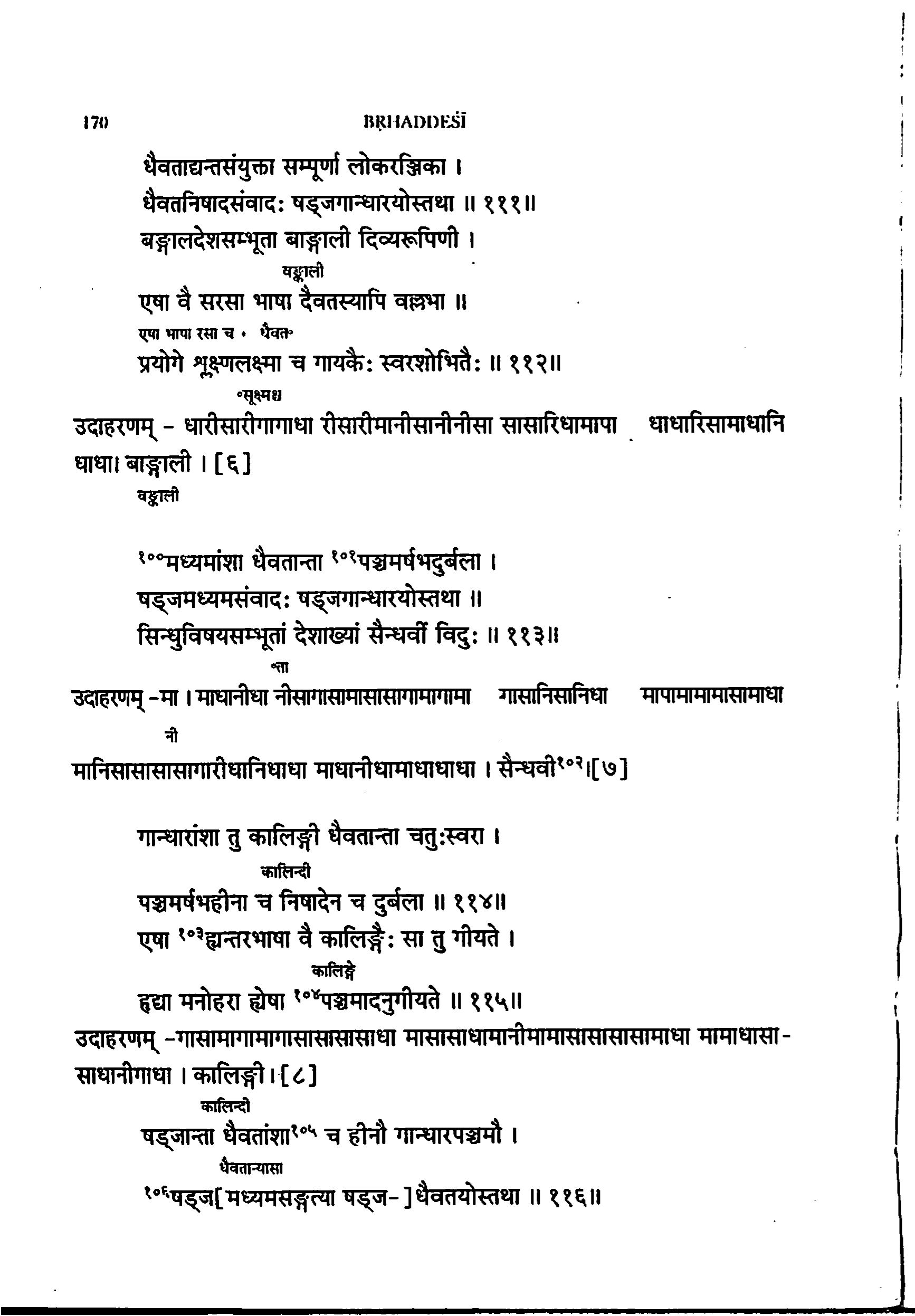
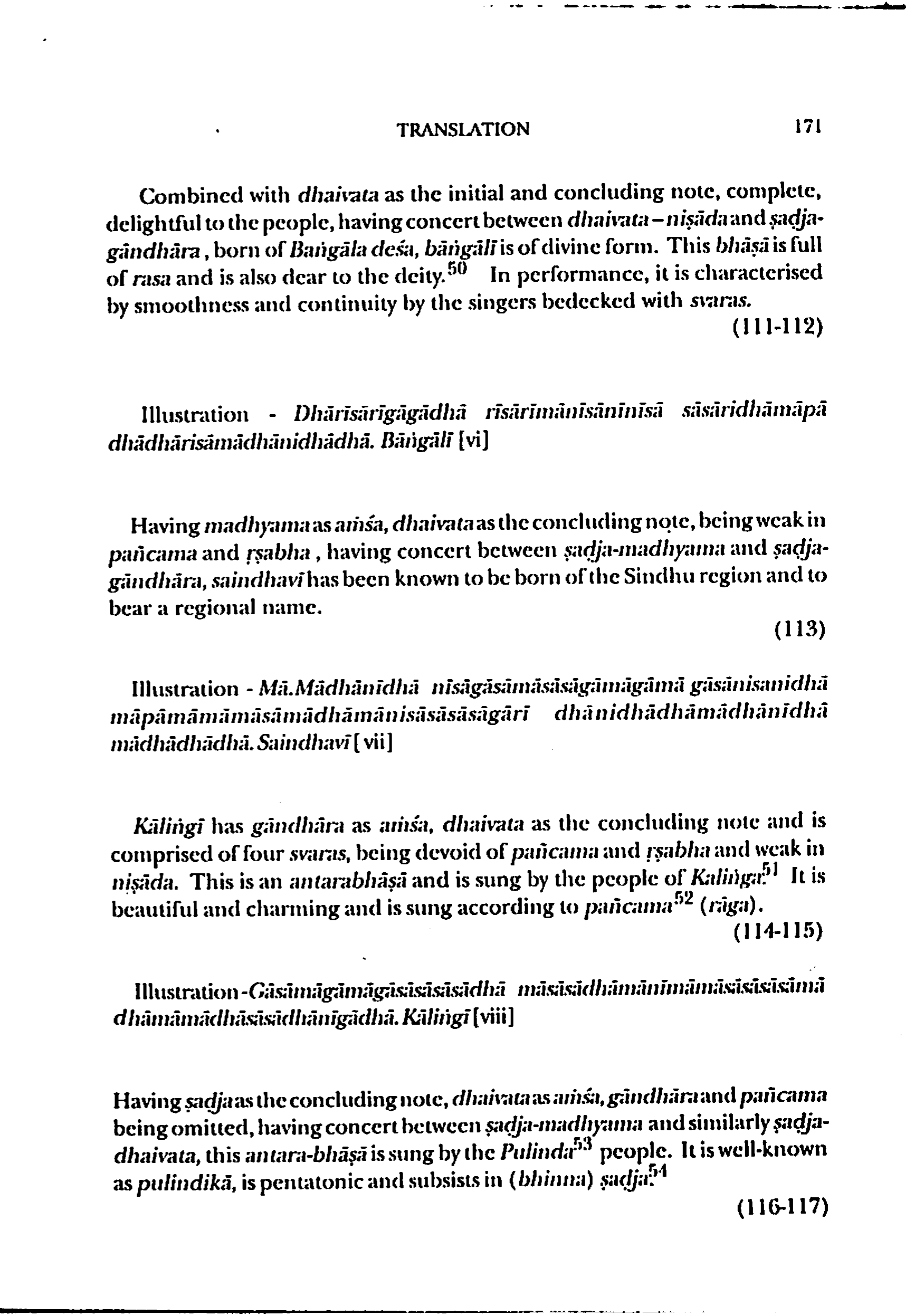
Combined with
dhaivata as the initial and concluding note, complete,
delightful to the people, having concert between
dhaivata - niṣāda and ṣadja-
gāndhāra,
born of Bangāla deśa, bāngālī is of divine form3. This bhāṣā is full
of rasa and is also dear to the deity. 50
In performance, it is characterised
by smoothness and continuity by the singers bedecked with svaras.4
<math>(111-112)</math>
Illustration - Dhārīsārīgāgādhā rīsārīmānīsānīnīsā sāsāridhāmāpā
dhādhārisāmādhānidhādhā. Bāṅgālī [vi]
Having
madhyama as amśa,
dhaivata as the concluding note,
being weak in
pañcama and ṛṣabha8, having concert between ṣadja-
madhyama and ṣadja-
gāndhāra,
saindhavī has been known to be born of the Sindhu region and to
bear a regional name.6
(113)
Illustration - Mā.Mādhānīdhā nīsāgāsāmāsāsāgāmāgāmā gāsānisanidhā
māpāmāmāmāsāmādhāmānisāsāsāsāgārī dhānidhādhāmādhānīdhā
mādhādhādhā.
Saindhavī [vii]
Kālingī has
gāndhāra as amśa,
dhaivata as the concluding note and
is
comprised of four svaras, being devoid of pañcama and ṛṣabha10 and weak in
niṣāda.
This is an antarabhāṣā and is sung by the people of Kalinga2151 It is
beautiful and charming and is sung according to
pañcama52 (rāga).
<math>(114-115)</math>
Illustration-<math>G</math>āsāmāgāmāgāsāsāsāsādhā<math>m</math>āsāsādhāmānīmāmāsāsāsāsāmā
dhāmāmādhāsāsādhānīgādhā. Kāliṅgī [viii]
Having ṣadjaas the concluding note, dhaivataas aniśa, gāndhāra and pañcama
being omitted13, having concert between ṣaḍja-
madhyama and similarly ṣaḍja-
dhaivata,
this antara-bhāṣā is sung by the Pulinda53 people. It is well-known
as pulindikā, is pentatonic12 and subsists in (
bhinna) sadja.54
<math>(116-117)</math>