11. Now in
takkakaišika
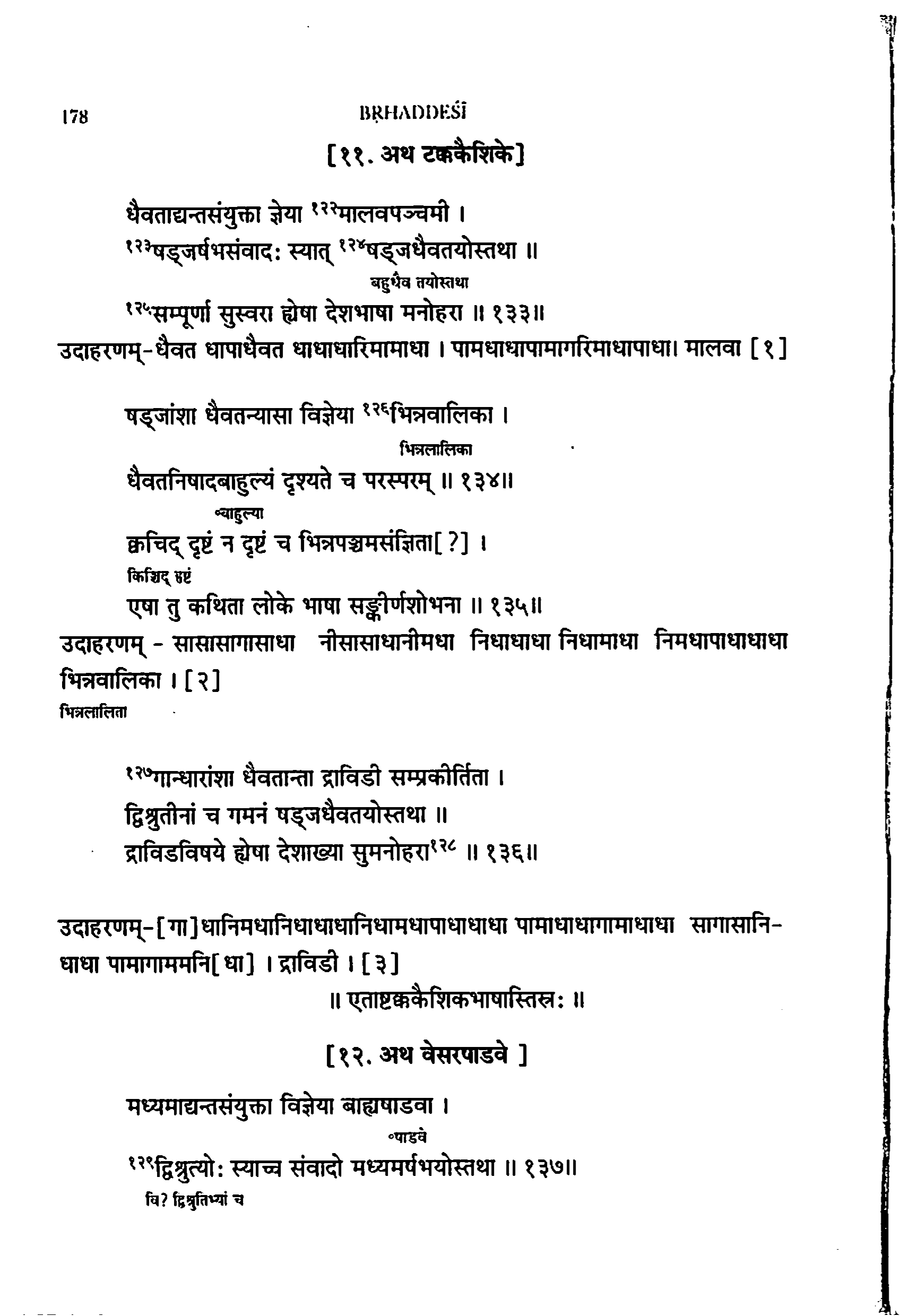
Mālavapañcamī should be known to be combined with dhaivata as the
initial and concluding note.2 There is concert between șadja-ṛṣabha and
similarly between sadja-dhaivata.3 This is complete with beautiful svaras
(and) is a charming regional
65 bhāsā.
(133)
lllustration -
Dhaivata dhāpādhaivata dhādhādhārimāmādhā.Pāmadhādhā
pāmāgarimādhāpādhā. Mālavā [i]
Bhinnavālikā should be known to have şadja as amśa (and)
dhaivata as
nyāsa. The mutual profusion of
dhaivata and niṣāda is seen sometimes and
not so at other times. It bears the name
bhinnapañcama66 (?).
This bhāṣā is
commonly known as sankīrņā (mixed) and is beautiful.5
<math>(134-135)</math>
Illustration-Sāsāsāgāsādhā nīsāsādhānīmadhā nidhādhādhā nidhāmādhā
nimadhāpādhādhādhā.
Bhinnavālikā [ii]
Drāvidī is said to have
gāndhāra as amśa,
dhaivata as the concluding note,
there is (mutual) movement between the svaras comprised of two śrutis each
and similarly between şadja-
dhaivata.
This pertains to the Drāvida region,
is charming and bears a regional name.7
(136)
Illustration-[
Gā] Dhānimadhānidhādhādhā-nidhāmadhāpādhādhādhā
pāmādhādhā-gāmādhādhāsāgāsānidhādhā pāmāgāmamani [dhā]. Drāvidī [iii]
These are the three
bhāṣās of
ṭakkakaiśika.
12. Now in
vesarașādava
Bāhyaşāḍavā should be known to be combined with madyama as the initial
and concluding note.8 There is concert between the two svaras comprised of
two śrutis each and similarly between madhyama-ṛṣabha.9 This bhāṣā is sung by
people as being complete in svaras.
Bāhyaṣāḍavikā67 is a bhāṣā there in
vesara-șâdava (rāga).
<math>(137-138)</math>