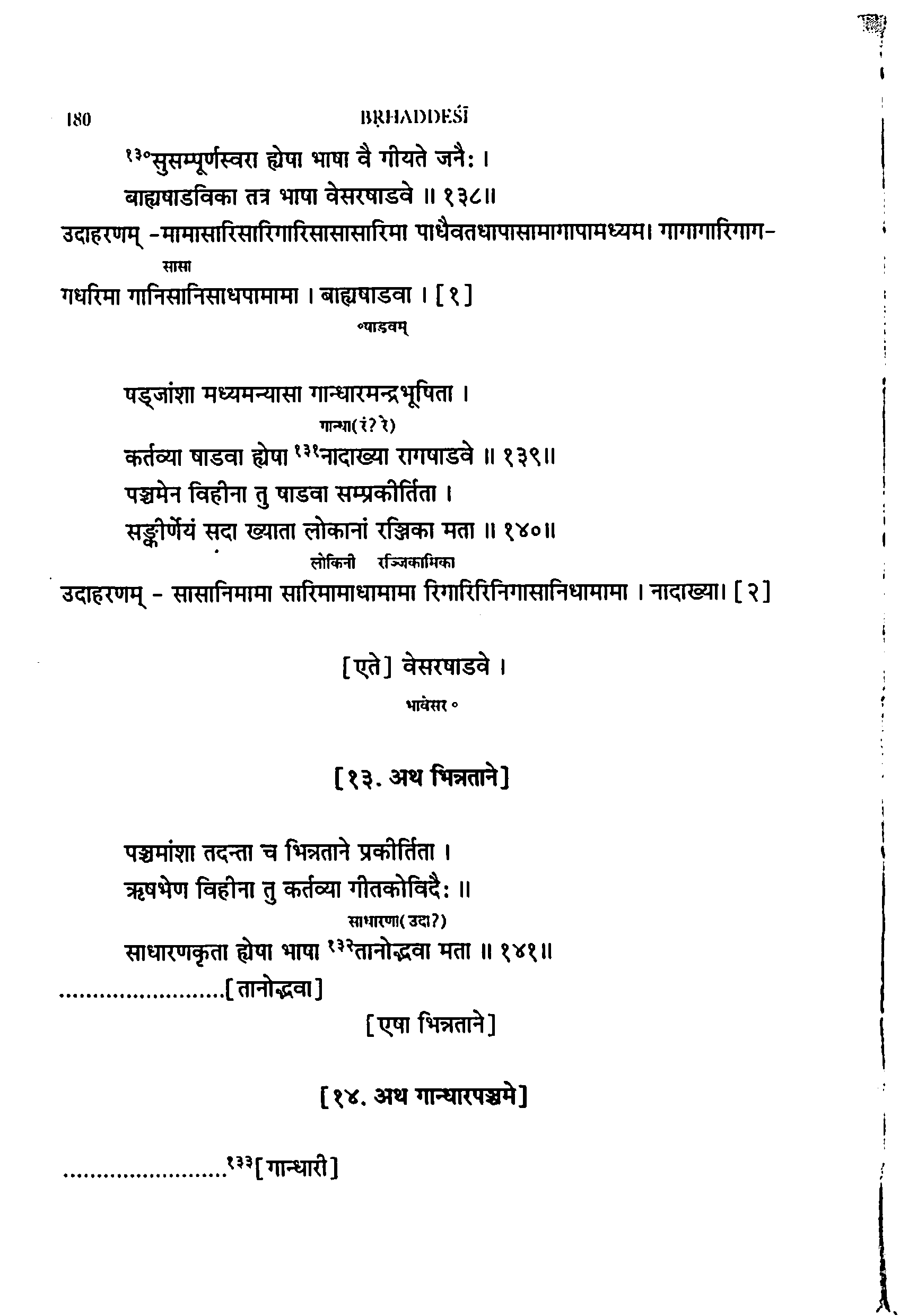
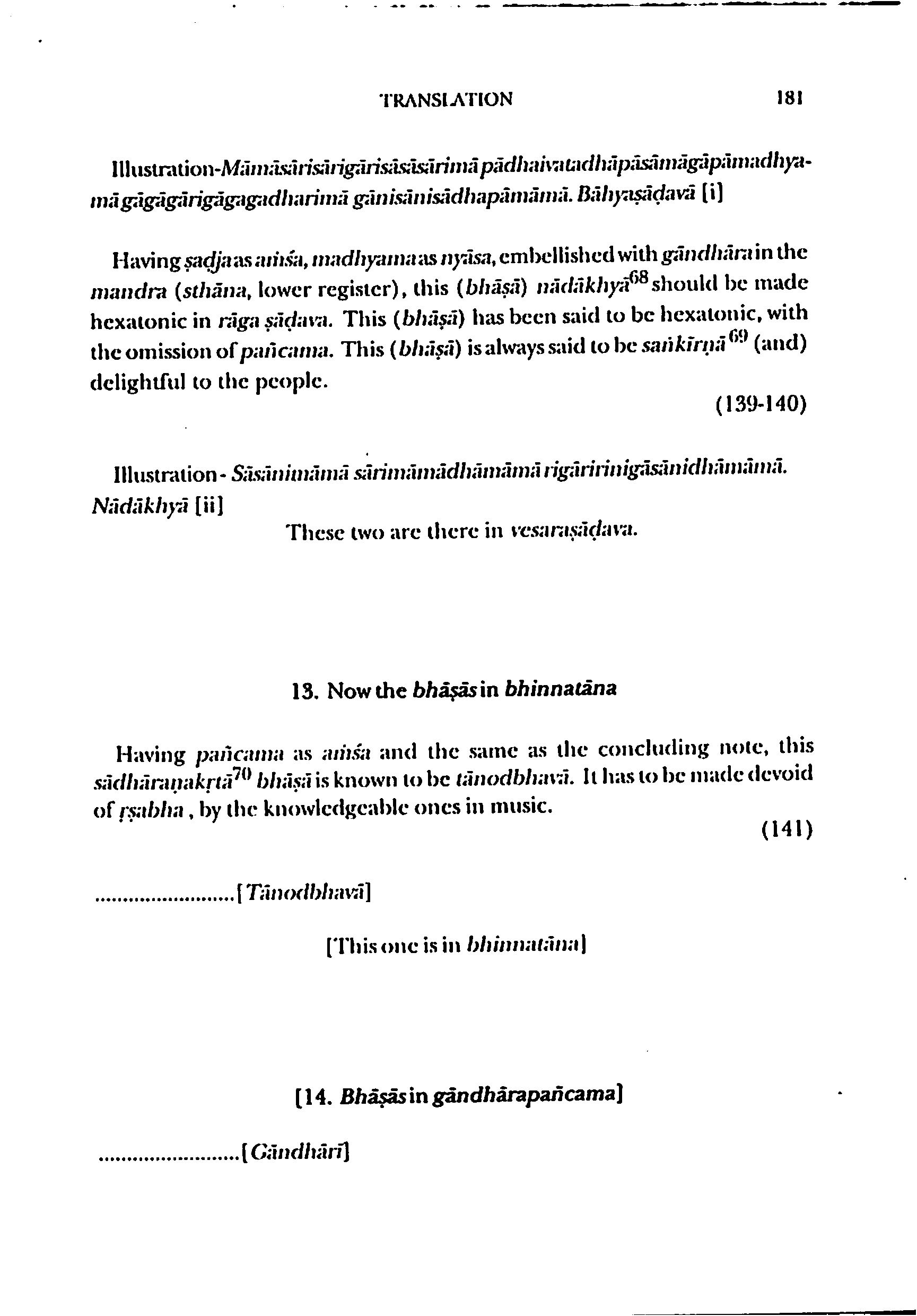
Illustration-Māmāsārisārigārisāsāsārimā pādhaivatadhāpāsāmāgāpāmadhya-
mā gāgāgārigāgagadharimā gānisānisādhapāmāmā. Bāhyaṣāḍavā [i]6
Having şadjaas amśa, madhyamaas nyāsa, embellished with
gāndhāra in the
mandra (sthāna, lower register),
this (bhāṣā) nādākhyā68 should be made
hexatonic in rāga ṣāḍava7. This (bhāṣā) has been said to be
hexatonic, with
the omission of <math>pa\bar{n}cama</math>. This (<math>bh\bar{a}s\bar{a}</math>) is always said to be <math>sa\bar{n}k\bar{i}rn\bar{a}^{69}</math> (and)
delightful to the people.
<math>(139-140)</math>
Illustration - Sāsānimāmā sārimāmādhāmāmā rigāririnigāsānidhāmāmā.
Nādākhyā [ii]
These two are there in
vesarașādava.
13. Now the bhāṣās in
bhinnatāna
Having pañçama as amsa and the same as the concluding note, this
sādhāraņakṛtā70 bhāṣā is known to be
tānodbhavā. It has to be made devoid
of rṣabha, by the knowledgeable ones in music.
(141)
.....[
Tānodbhavā]
.....[
Gāndhārī]