Source scans · vol_II_p141
recto · open full
scan recto
verso · open full
scan verso
Bṛhaddeśī · Volume II
pp. 264–265folio 141
Devanāgarī
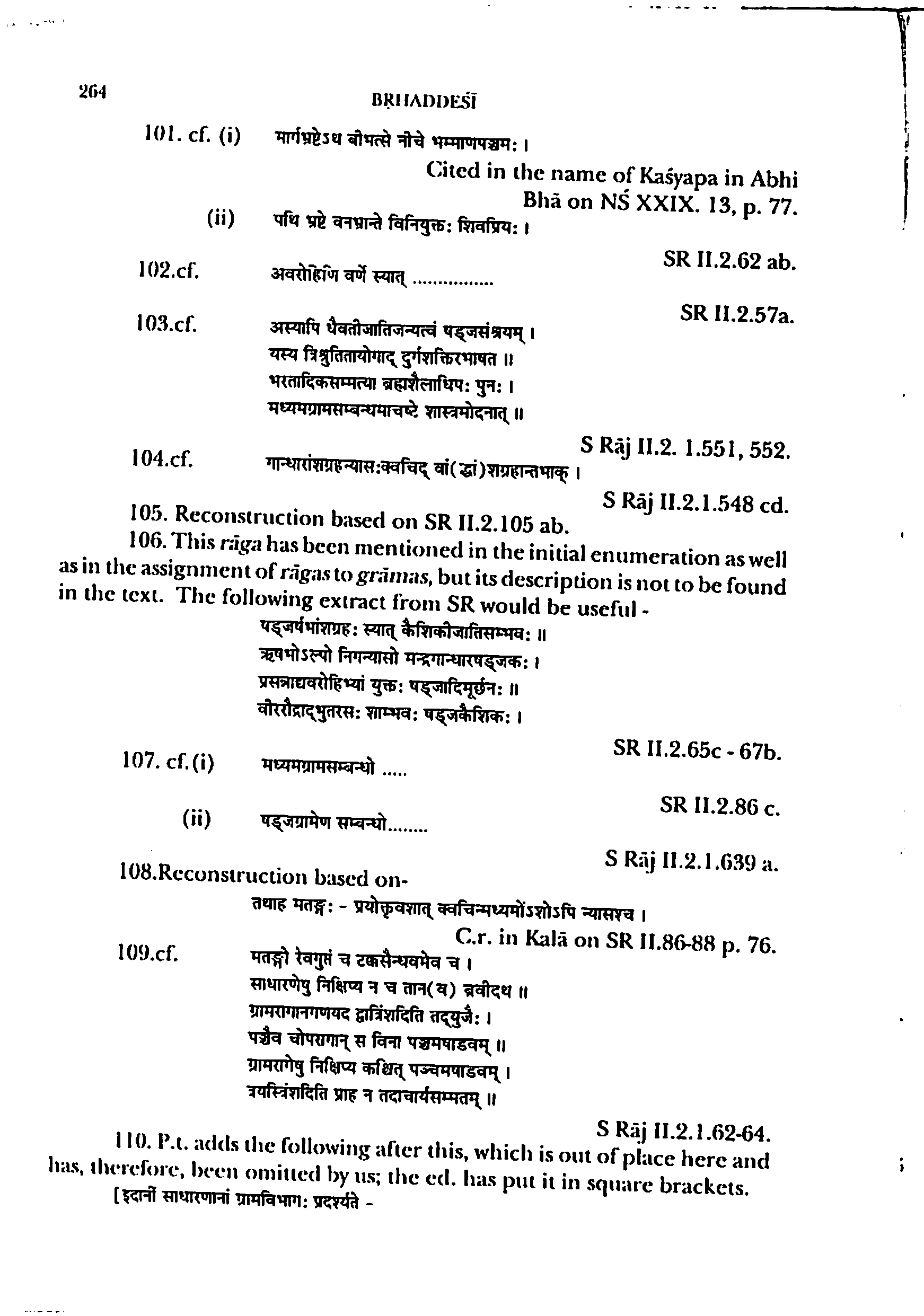
BRHADDEŚĪ 101. cf. (i)
मार्गप्रष्टेऽध बीभत्से नीचे भम्माणपञ्चम:।
Cited in the name of Kasyapa in Abhi Bhā on NŚ XXIX. 13, p. 77.
पथि भ्रष्टे वनभ्रान्ते विनियुक्तः शिवप्रियः।
(ii) SR II.2.62 ab. 102.cf. अवरोोहाँण वर्णे स्यात् ..... SR 11.2.57a. 103.cf.
अस्यापि धैवतीजातिजन्यत्वं षड्जसंश्रयम् ।
यस्य त्रिश्रुतितायोगाद् दुर्गशक्तिरभाषत ॥
भरतादिकसम्मत्या ब्रह्मशैलाधिप: पुन: ।
मध्यमग्रामसम्बन्धमाचप्टे शास्त्रमोदनात् ॥
S Rāj II.2. 1.551, 552. 104.cf. गान्धारांशग्रहन्यासः क्वचिद् वां(द्धां)शग्रहान्तभाक्। S Rāj II.2.1.548 cd.4 105. Reconstruction based on SR II.2.105 ab. 106. This rāga has been mentioned in the initial enumeration as well as in the assignment of rāgas to grāmas, but its description is not to be found in the text. The following extract from SR would be useful -
पड्जर्पभांशग्रह: स्यात् कैशिकीजातिसम्भव:॥
ऋषभोऽल्पो निगन्यासो मन्द्रगान्धारषङ्जकः।
प्रसन्नाद्यवरोहिभ्यां युक्तः षड्जादिमूर्छनः ॥
वीररौद्राद्भुतरसः शाम्भवः षड्जकैशिकः।
SR II.2.65c - 67b. 107. cf.(i)मध्यमग्रामसम्बन्धो .... SR II.2.86 c. षड्जग्रामेण सम्बन्धो...... (ii) S Rāj II.2.1.639 a. 108.Reconstruction based on- तथाह मतङ्गः - प्रयोक्तृवशात् क्वचिन्मध्यमोऽशोऽपि न्यासश्च ।1 C.r. in Kalā on SR II.86-88 p. 76.5 109.cf.
मतङ्गो रेवगुप्तं च टक्कसैन्धवमेव च।
साधारणेषु निक्षिप्य न च तान(य) ब्रवीदथ ॥
ग्रामरागानगणयद द्वात्रिंशदिति तद्युजै:।8
पञ्चैव चोपरागान् स विना पञ्चमषाडवम् ॥
ग्रामरागेषु निक्षिप्य कश्चित् पञ्चमपाडवम् ।
त्रयस्त्रिंशदिति प्राह न तदाचार्यसम्मतम् ॥
S Rāj II.2.1.62-64. 110. P.t. adds the following after this, which is out of place here and has, therefore, been omitted by us; the ed. has put it in square brackets. • [इदानीं साधारणानां ग्रामविभाग: प्रदर्श्यते - ----
English — Sharma
PĀŢHAVIMARŠA
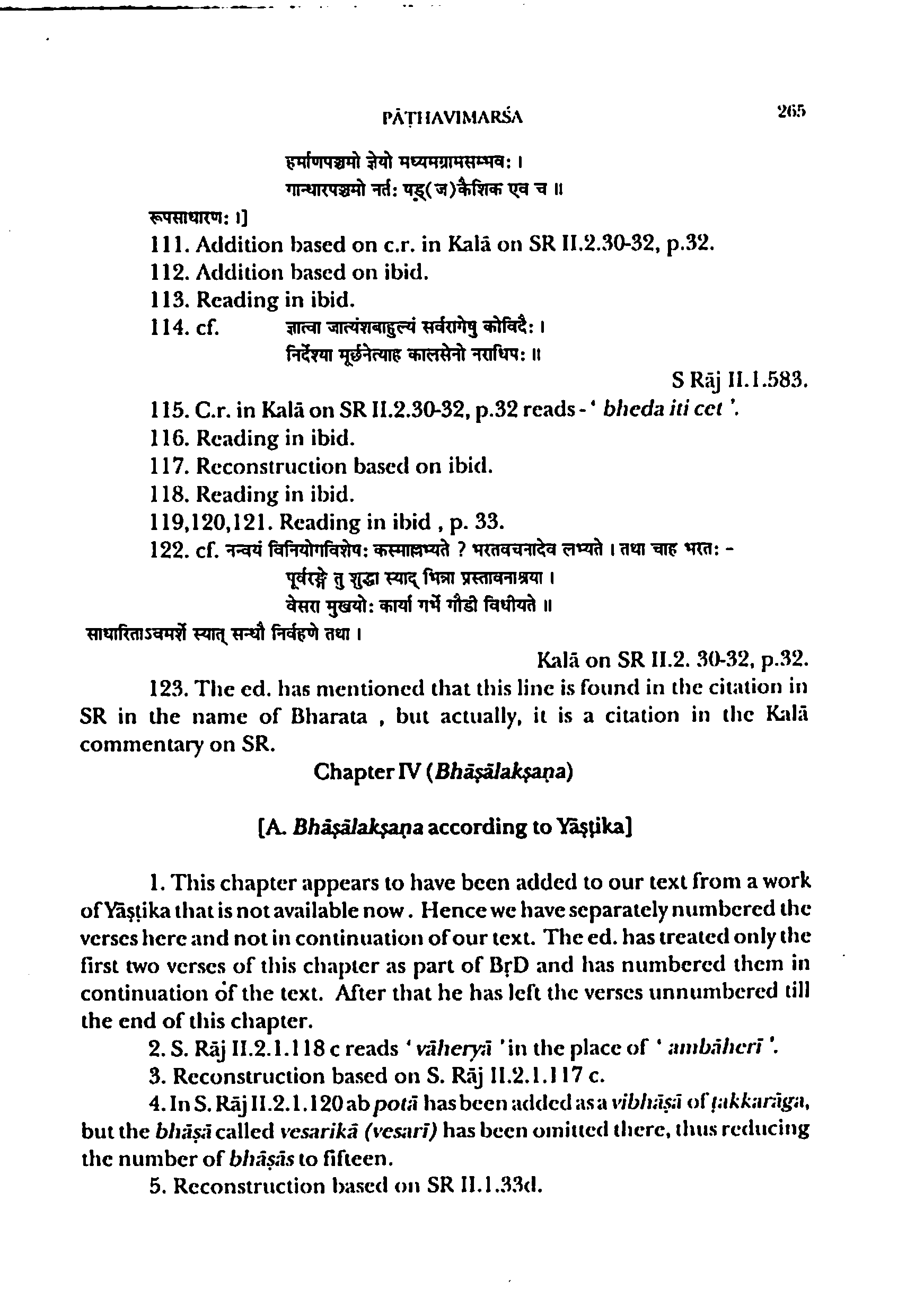
हर्माणपञ्चमो ज?्ञेयो मध्यमग्रामसम्भवः।
गान्धारपञ्चमो नर्तः पड्(ज?)कैशिक एव च ॥
रूपसाधारणः ।] 111. Addition based on c.r. in Kalā on SR II.2.30-32, p.32. 112. Addition based on ibid. 113. Reading in ibid.
ज?्ञात्वा ज?ात्यंशबाहुत्यं सर्वरागेषु कोविदैः ।
114. cf.
निर्देश्या मुर्छनेत्याह कालसेनो नराधिपः॥
S Rāj II.1.583. 115. C.r. in Kalā on SR II.2.30-32, p.32 reads - 'bheda iti cet'. 116. Reading in ibid. 117. Reconstruction based on ibid. 118. Reading in ibid. 119,120,121. Reading in ibid, p. 33. 122. cf. नन्वयं विनियोगविशेषः कस्मालभ्यते ? भरतवचनादेव लभ्यते । तथा चाह भरतः2 -
पूर्वरङ्गे तु शुद्धा स्याद् भिन्ना प्रस्तावनाश्रया ।
वेसरा मुखयोः कार्या गर्भे गौडी विधीयते ॥
साधारिताऽवमर्शे स्यात् सन्धौ निर्वहणे तथा ।
Kalā on SR II.2. 30-32, p.32. 123. The ed. has mentioned that this line is found in the citation in SR in the name of Bharata, but actually, it is a citation in the Kalā commentary on SR. Chapter IV (Bhāṣālakṣaṇa) [A. Bhāṣālakṣaṇa according to Yāṣṭika]10 1. This chapter appears to have been added to our text from a work of Yāṣṭika that is not available now.3 Hence we have separately numbered the verses here and not in continuation of our text. The ed. has treated only the first two verses of this chapter as part of BrD and has numbered them in continuation of the text. After that he has left the verses unnumbered till the end of this chapter. 2. S. Rāj II.2.1.118 c reads 'vāheryā 'in the place of 'ambāherī'. 3. Reconstruction based on S. Rāj II.2.1.117 c. 4. In S. Rāj II.2.1.120 ab potā has been added as a vibhāṣā of ṭakkarāga7, but the bhāṣā called vesarikā (vesarī) has been omitted there, thus reducing the number of bhāṣās to fifteen.9 5. Reconstruction based on SR II.1.33d.
1.[attribution]Mātaṅga is cited as an authority on the usage and placement of musical notes in rāgasतथाह मतङ्गः - प्रयोक्तृवशात् क्वचिन्मध्यमोऽशोऽपि न्यासश्च ।
2.[attribution]Bharata is cited as an ancient authority on musical regulations and performance contextsभरतवचनादेव लभ्यते । तथा चाह भरतः
4.[citation] The Saṅgīta Ratnākara is extensively cited as a source for musical terminology and classificationsगान्धारांशग्रहन्यासः क्वचिद् वा(द्धा)शग्रहान्तभाक्। S Rāj II.2.1.548 cd.
5.[citation] The Kalā is a commentary work cited for clarifying and reconstructing passages from the Saṅgīta Ratnākaraतथाह मतङ्गः - प्रयोक्तृवशात् क्वचिन्मध्यमोऽशोऽपि न्यासश्च । C.r. in Kalā on SR II.86-88 p. 76.
8.[relation]Grāma is a foundational musical concept that rāgas relate to or are derived fromग्रामरागानगणयद द्वात्रिंशदिति तद्युज?ैः।
2.[attribution] Bharata is cited as an ancient authority on musical regulations and performance contextscf. नन्वयं विनियोगविशेषः कस्मालभ्यते ? भरतवचनादेव लभ्यते । तथा चाह भरतः
3.[attribution]Yāṣṭika is an author whose work on Bhāṣālakṣaṇa was incorporated into the BrihaddeshiThis chapter appears to have been added to our text from a work of Yāṣṭika that is not available now.
4.[citation]The Saṅgīta Ratnākara is extensively cited as a source for musical terminology and classificationsS Rāj II.2.1.548 cd. 105. Reconstruction based on SR II.2.105 ab.
5.[citation]The Kalā is a commentary work cited for clarifying and reconstructing passages from the Saṅgīta RatnākaraC.r. in Kalā on SR II.86-88 p. 76.
6.[citation]NŚ (likely Nāṭya Śāstra) is cited as a source containing musical referencesCited in the name of Kasyapa in Abhi Bhā on NŚ XXIX. 13, p. 77.
7.[definition]Vibhāṣā represents variant or alternative forms of rāgas or bhāṣāspotā has been added as a vibhāṣā of ṭakkarāga
9.[structural]Bhāṣā is a musical concept with multiple varieties or classificationsthe bhāṣā called vesarikā (vesarī) has been omitted there, thus reducing the number of bhāṣās to fifteen.
10.[structural]Bhāṣālakṣaṇa is a chapter topic covering the characteristics and varieties of bhāṣāsChapter IV (Bhāṣālakṣaṇa) [A. Bhāṣālakṣaṇa according to Yāṣṭika]