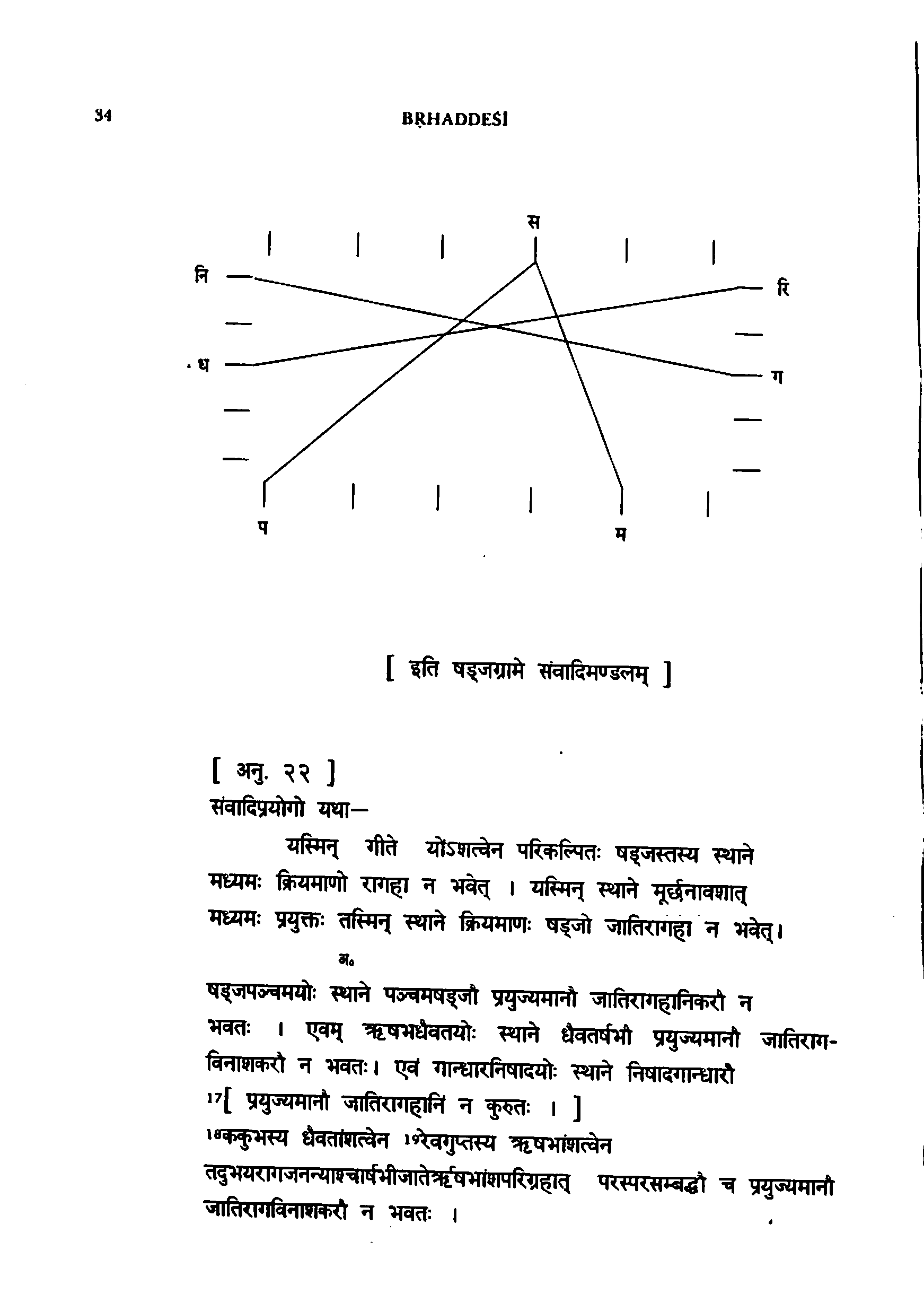
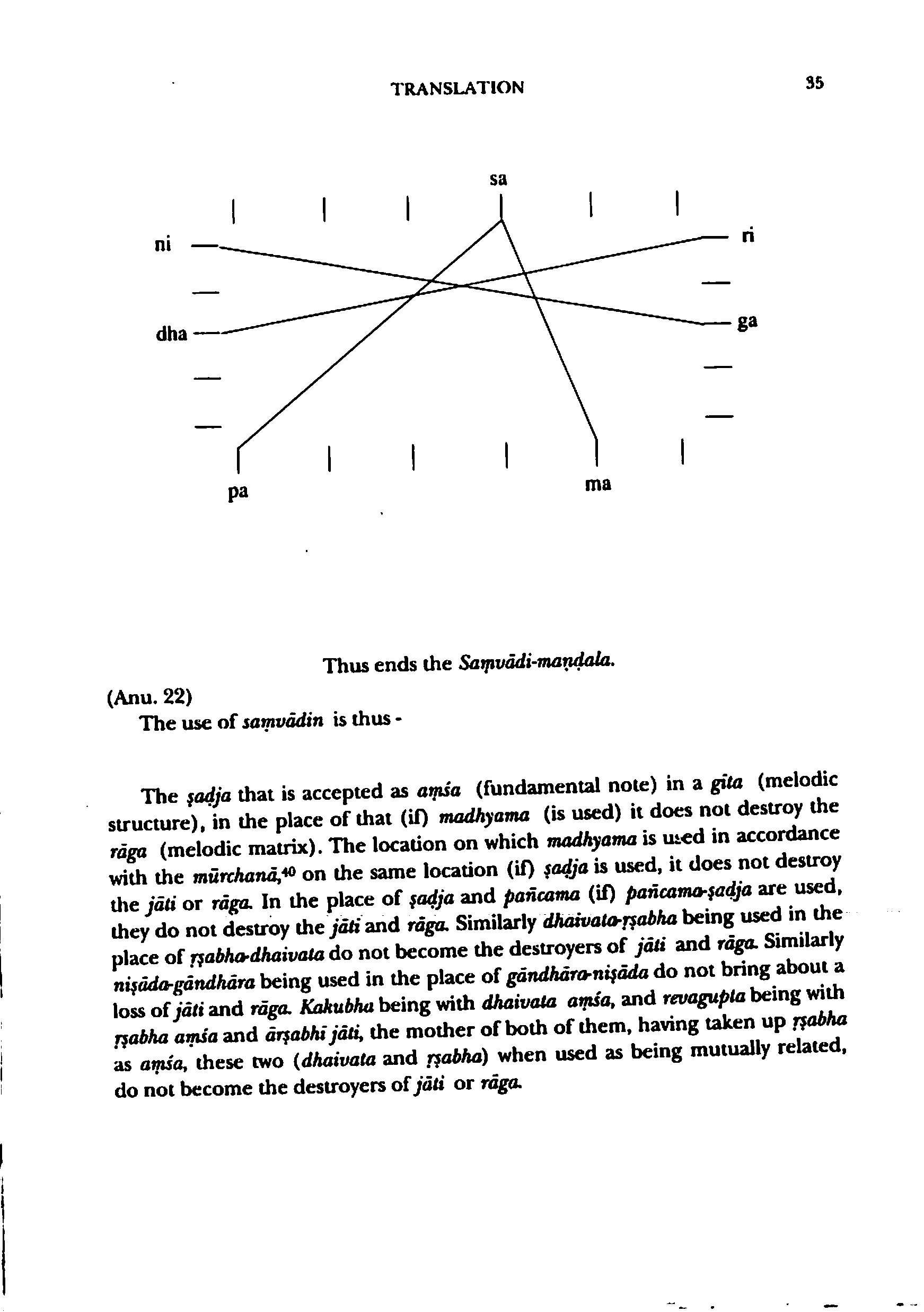
sa
n
ni
ga
dha
ma
pa
Thus ends the
Samvādi-mandala.
(Anu. 22)
The use of samvadin is thus-8
The sadja that is accepted as amsa (fundamental note) in a gita (melodic
structure), in the place of that (if) madhyama (is used) it does not destroy the
rāga (melodic matrix).4 The location on which madhyama is used in accordance
with the mūrchanā1,40 on the same location (if) şadja is used, it does not destroy
the jāti or rāga. In the place of şadja and
pañcama (if)
pañcama-şadja are used,
they do not destroy the jāti and rāga. Similarly
dhaivata-rṣabha being used in the
place of rabha-
dhaivata do not become the destroyers of jāti and rāga. Similarly
niṣāda-
gāndhāra being used in the place of
gāndhāra-niṣāda do not bring about a
loss of jāti and rāga.
Kakubha being with
dhaivata amśa,
and revagupta being with
ṛṣabha aṃśa10 and ārṣabhī jāti, the mother of both of them3, having taken up ṛṣabha
as amía, these two (
dhaivata and rṣabha) when used as being mutually related,
do not become the destroyers of jāti or rāga.