Source scans · vol_I_p052
recto · open full
scan recto
verso · open full
scan verso
Bṛhaddeśī · Volume I
pp. 86–87folio 052
Devanāgarī (Bṛhaddeśī)
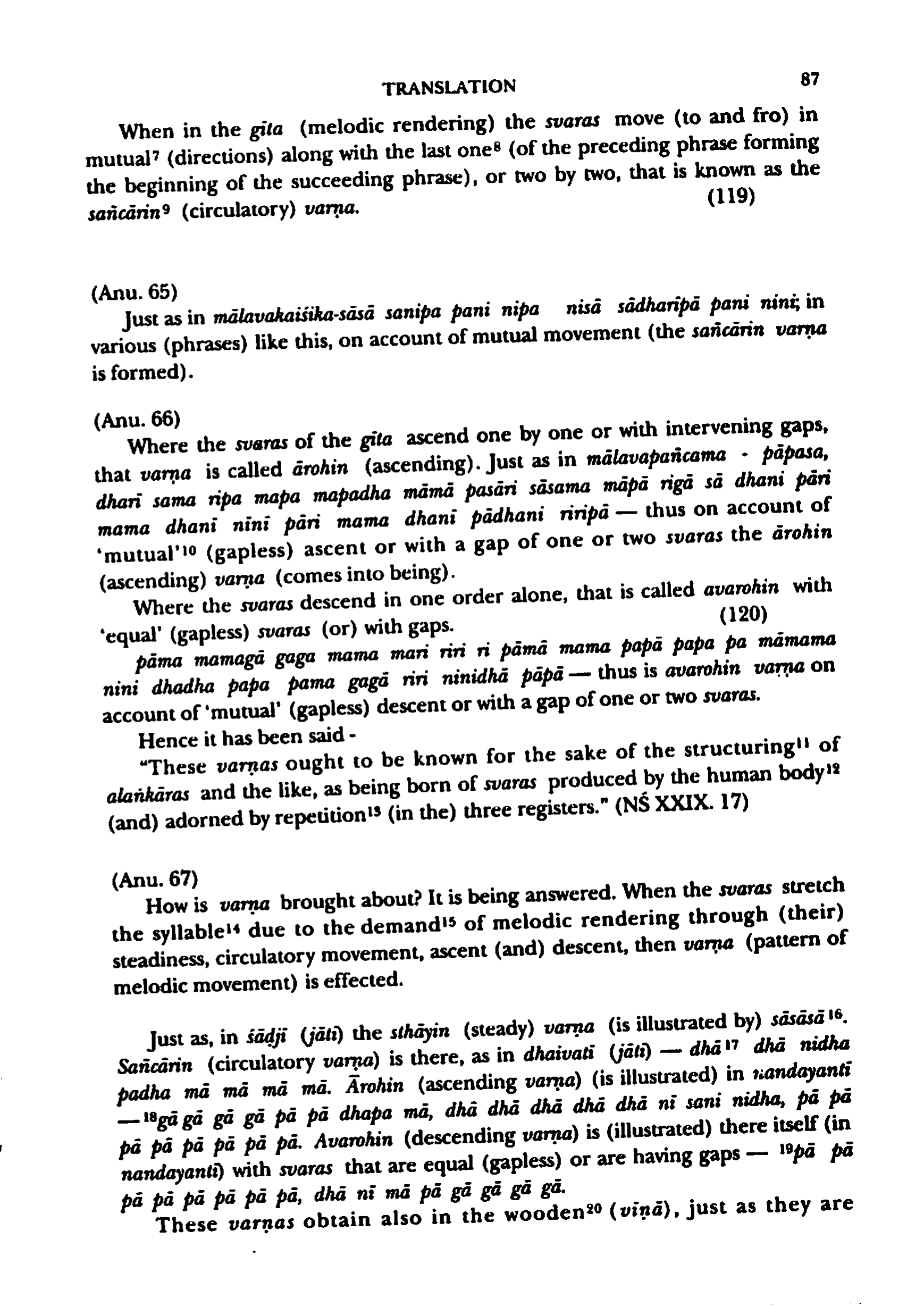
[अनु₀ ६५]
यथा मालवकैशिके - सासा सिन [ प ] पिनिनिप निसा [ सा ] धरीपा पिन
निनीत्येवमादिप्रकारेषु परस्परसंचारात्2ः ।
[अनु₀ ६६]
यत्र गेयाः स्वरा आरोहन्ति एकैकशः सान्तरा वा स वर्ण(वं ?) आरोहीत्युच्यते।
यथा मालवपञ्चमे -पापस धरी सम रिपमगरि पम मप मपध मामा पसारि सासम मापा रिगा सा धनि पारि मम धनी नीनी पारि मम धनी पाधनि रिरिपा इति परस्परैकान्तरद्वचन्तरस्वरारोहणादारोही।13
अवरोहन्ति स्वरा यत्रैकेनैवब्दे तुुन् क्रमेण तु।
स चावरोही शब्दोत समश्चान्तरगः स्वरः ॥१२०॥ पामा मममध्यम गा गग मम मरि रिरि रि पा मा मम पपा पप प माममप्र म्मि निनि धध पप पम गगा रिरिध्(?) म्र नाद (?) निनिध पापा इति परस्परैकान्तर- द्वचन्तरस्वरावरोहादवरोहीति। अत एवोक्तम्-
शारीरस्वरसम्भूतास्त्रिस्थानगुणशोभिताःम्ुगु
अमी वर्णास्तु विज्ञेया अलंकारादिसिद्धये ॥5
[ना. शा. २९. १७]
[अनु₀ ६७]
ननु कथं वर्णनिष्पत्तिः ? उच्यते- यदा हि स्वरा वर्णकर्षमाकर्षयन्ति गीतवशात् स्थायित्वेन संचारित्वेन आरोहित्वेन अवरोहित्वेन तदा वर्णस्य निष्पत्तिः। यथा षाड्ज्यां स्थायी वर्णः —सासासा। संचारी यथा धैवत्यां्ता धध धा धनीनी oर्णा ? ুজা नीपनी पधा धा। आरोही नन्दयन्त्यां—गा गा गा गा पा पा धप मा रिरि रिरि पनि सधा निनिधा। अवरोही तत्रैव समसान्तरस्वरैः—
English — Sharma
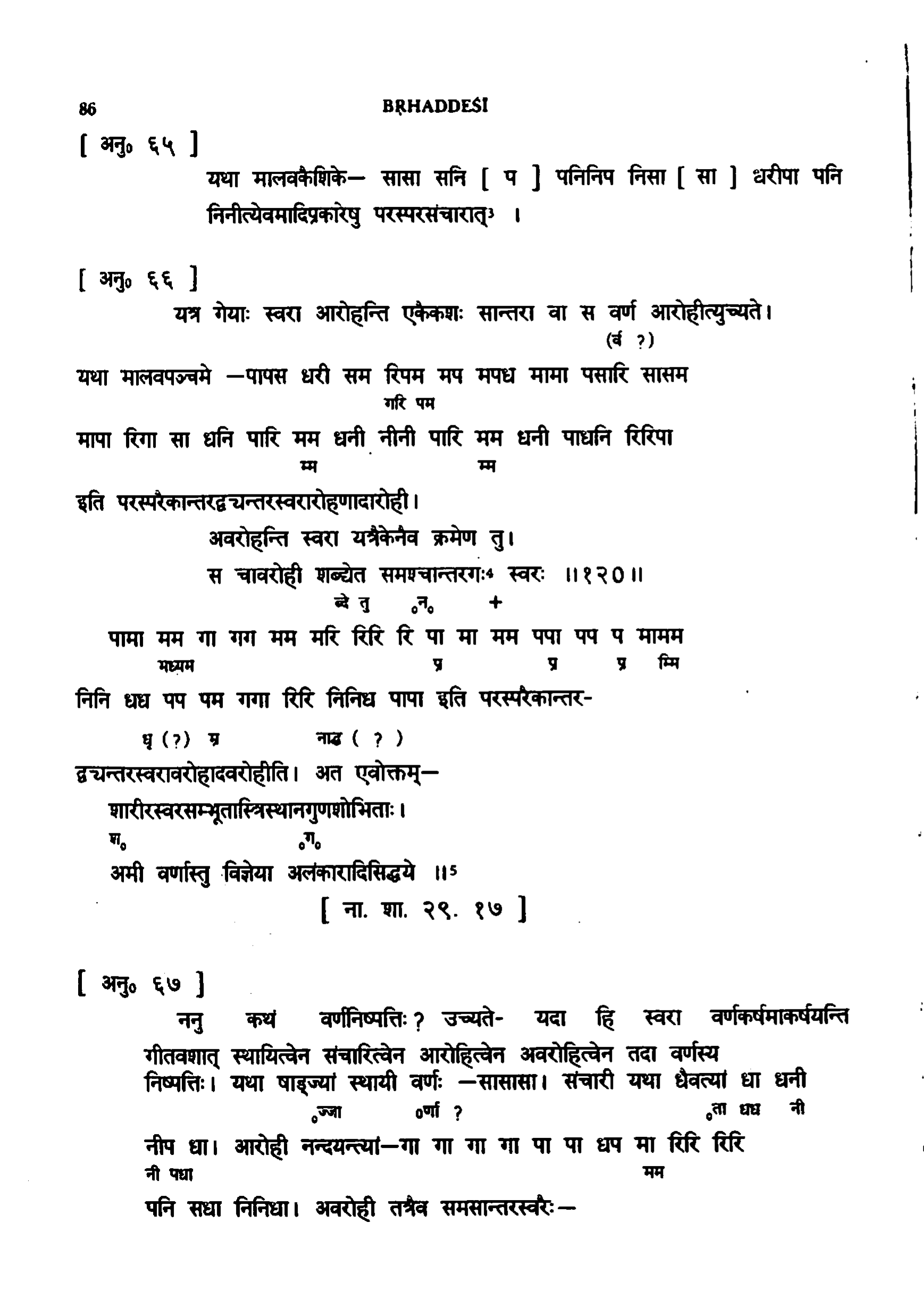
When in the gita (melodic rendering) the svaras move (to and fro) in mutual7 (directions) along with the last one8 (of the preceding phrase forming the beginning of the succeeding phrase), or two by two, that is known as the
(119)
sañcārin9 (circulatory) varņa. (Anu. 65) Just as in mālavakaišika-sāsā sanipa pani nipa nisā sādharīpā pani nini; in various (phrases) like this, on account of mutual movement (the sañcārin varņa is formed).2 (Anu. 66) Where the svaras of the gita ascend one by one or with intervening gaps, that varņa is called ārohin (ascending).8 Just as in mālavapancama - pāpasa, dharī sama ripa mapa mapadha māmā pasāri sāsama māpā rigā sā dhani pāri mama dhani nini pāri mama dhani pādhani riripā — thus on account of 'mutual'10 (gapless) ascent or with a gap of one or two svaras the arohin (ascending) varņa (comes into being).133 Where the svaras descend in one order alone, that is called avarohin with (120) 'equal' (gapless) svaras (or) with gaps.9 pāma mamagā gaga mama mari riri ri pāmā mama papā papa pa māmama nini dhadha papa pama gagā riri ninidhā pāpā — thus is avarohin varņa on account of 'mutual' (gapless) descent or with a gap of one or two svaras.14 Hence it has been said - "These varnas ought to be known for the sake of the structuring" of alankāras and the like, as being born of svaras produced by the human body11 12 (and) adorned by repetition13 (in the) three registers."1 (NŚ XXIX. 17) (Anu. 67) How is varna brought about? It is being answered. When the svaras stretch the syllable14 due to the demand15 of melodic rendering through (their) steadiness, circulatory movement, ascent (and) descent, then varņa (pattern of melodic movement) is effected.6 Just as, in śādjī (jātī) the sthāyin (steady) varņa (is illustrated by) sāsāsā12 16. Sancārin (circulatory varņa) is there, as in dhaivatī (jātī) — dhā 17 dhā nidha padha mā mā mā.4 Ārohin (ascending varņa) (is illustrated) in nandayantī — 18 gā gā gā pā pā dhapa mā, dhā dhā dhā dhā nī sani nidha, pā pā pā pā pā pā pā. Avarohin (descending varņa) is (illustrated) there itself (in nandayanti)5 with svaras that are equal (gapless) or are having gaps — 19pā pā pā pā pā pā pā pā, dhā nī mā pā gā gā gā. These varņas obtain also in the wooden20 (viņā), just as they are
2.[citation] Mālavakaišika is exemplified in the text with the phrase sāsā sanipa pani nipa nisā sādharīpā pani nini as an example of sañcārin varṇa.यथा मालवकैशिके - सासा सिन [ प ] पिनिनिप निसा [ सा ] धरीपा पिन निनीत्येवमादिप्रकारेषु परस्परसंचारात्
3.[citation] Mālavapancama is exemplified with multiple melodic phrases demonstrating ārohin varṇa.यथा मालवपञ्चमे -पापस धरी सम रि प म मप म प ध मामा प सा रि सा स म गरि पम मापा रिगा सा धनि पारि मम धनी नीनी पारि मम धनी पा ध नि रि रि पा इति परस्परैकान्तरद्वचन्तरस्वरारोहणादारोही।
5.[citation] Nandayantī provides examples of both ārohin and avarohin varṇas.आरोही नन्दयन्त्या—गा गा गा गा पा पा धप मा रिरि रिरि नी पधा पनि सधा निनिधा। अवरोही तत्रैव समसान्तरस्वरै—
6.[definition] Varṇa is a pattern of melodic movement brought about when svaras stretch syllables through steadiness, circulatory movement, ascent and descent in response to the demand of melodic rendering.यदा हि स्वरा वर्णकर्षमाकर्षयन्ति गीतवशात् स्थायित्वेन संचारित्वेन आरोहित्वेन अवरोहित्वेन तदा वर्णस्य निष्पत्ति।
8.[definition] Ārohin varṇa is formed when svaras of a gita ascend one by one or with intervening gaps.यत्र गेया स्वरा आरोहन्ति एकैकशः सान्तरा वा स वर्ण आरोहीत्युच्यते।
9.[definition] Avarohin varṇa occurs where svaras descend in one order alone, either with gapless svaras or with gaps.अवरोहन्ति स्वरा यत्रैकेनैव क्रमेण तु। स चावरोही शब्दोत समश्चान्तरगः स्वरः
13.[structural] Ārohin varṇa arises through mutual gapless ascent or with a gap of one or two svaras.इति परस्परैकान्तरद्वचन्तरस्वरारोहणादारोही।
1.[attribution]Varṇas are born of svaras produced by the human body and are adorned by repetition in the three registers.These varnas ought to be known for the sake of the structuring" of alankāras and the like, as being born of svaras produced by the human body 12 (and) adorned by repetition13 (in the) three registers." (NŚ XXIX. 17)
2.[citation]Mālavakaišika is exemplified in the text with the phrase sāsā sanipa pani nipa nisā sādharīpā pani nini as an example of sañcārin varṇa.Just as in mālavakaišika-sāsā sanipa pani nipa nisā sādharīpā pani nini; in various (phrases) like this, on account of mutual movement (the sañcārin varņa is formed).
3.[citation]Mālavapancama is exemplified with multiple melodic phrases demonstrating ārohin varṇa.Just as in mālavapancama - pāpasa, dharī sama ripa mapa mapadha māmā pasāri sāsama māpā rigā sā dhani pāri mama dhani nini pāri mama dhani pādhani riripā — thus on account of 'mutual'10 (gapless) ascent or with a gap of one or two svaras the arohin (ascending) varņa (comes into b
4.[citation]Dhaivatī jātī provides an example of sañcārin varṇa illustrated by the phrase dhā dhā nidha padha mā mā mā.Sancārin (circulatory varņa) is there, as in dhaivatī (jātī) — dhā dhā nidha padha mā mā mā.
5.[citation]Nandayantī provides examples of both ārohin and avarohin varṇas.Ārohin (ascending varņa) (is illustrated) in nandayantī — gā gā gā pā pā dhapa mā, dhā dhā dhā dhā nī sani nidha, pā pā pā pā pā pā pā. Avarohin (descending varņa) is (illustrated) there itself (in nandayanti)
6.[definition]Varṇa is a pattern of melodic movement brought about when svaras stretch syllables through steadiness, circulatory movement, ascent and descent in response to the demand of melodic rendering.When the svaras stretch the syllable due to the demand of melodic rendering through (their) steadiness, circulatory movement, ascent (and) descent, then varņa (pattern of melodic movement) is effected.
7.[definition]Sañcārin varṇa occurs when svaras move in mutual directions with the last one of the preceding phrase forming the beginning of the succeeding phrase, or move two by two.When in the gita (melodic rendering) the svaras move (to and fro) in mutual7 (directions) along with the last one8 (of the preceding phrase forming the beginning of the succeeding phrase), or two by two, that is known as the (119) sañcārin9 (circulatory) varņa.
8.[definition]Ārohin varṇa is formed when svaras of a gita ascend one by one or with intervening gaps.Where the svaras of the gita ascend one by one or with intervening gaps, that varņa is called ārohin (ascending).
9.[definition]Avarohin varṇa occurs where svaras descend in one order alone, either with gapless svaras or with gaps.Where the svaras descend in one order alone, that is called avarohin with (120) 'equal' (gapless) svaras (or) with gaps.
10.[enumeration]Varṇa has four varieties: sthāyin, sañcārin, ārohin, and avarohin.Just as, in śādjī (jātī) the sthāyin (steady) varņa (is illustrated by) sāsāsā. Sancārin (circulatory varņa) is there, as in dhaivatī (jātī) — dhā dhā nidha padha mā mā mā. Ārohin (ascending varņa) (is illustrated) in nandayantī — gā gā gā pā pā dhapa mā, dhā dhā dhā dhā nī sani
11.[relation]Varṇas are to be known for the sake of the structuring of alankāras and similar ornamentation.These varnas ought to be known for the sake of the structuring" of alankāras and the like, as being born of svaras produced by the human body
12.[structural]Sthāyin varṇa is the steady variety of varṇa, exemplified in śādjī jātī by the phrase sāsāsā.Just as, in śādjī (jātī) the sthāyin (steady) varņa (is illustrated by) sāsāsā
13.[structural]Ārohin varṇa arises through mutual gapless ascent or with a gap of one or two svaras.thus on account of 'mutual'10 (gapless) ascent or with a gap of one or two svaras the arohin (ascending) varņa (comes into being).
14.[structural]Avarohin varṇa is formed through mutual gapless descent or with a gap of one or two svaras.thus is avarohin varņa on account of 'mutual' (gapless) descent or with a gap of one or two svaras.