ordered sequence list
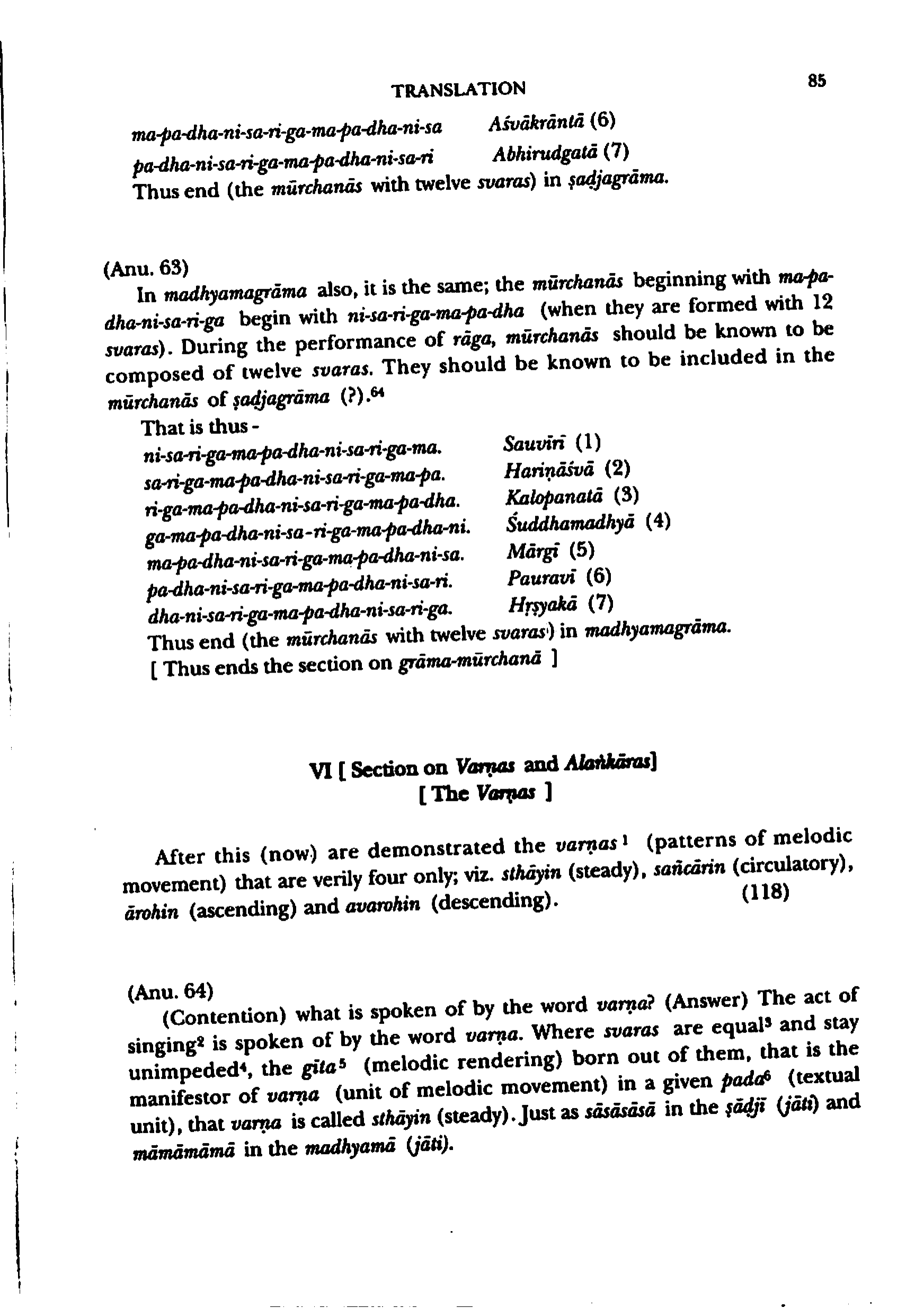
mūrchanā — named mūrchanās of ṣaḍja-grāma and madhyama-grāma (Bharata enumeration)
uttaramandrā
rajanī
uttarāyatā
śuddhaṣaḍjā
matsarīkṛtā
aśvakrāntā
abhirudgatā
sauvīrī
hariṇāśvā
kalopanatā
śuddhamadhyā
mārgavī
pauravī
hṛṣyakā
— The (named) mūrchanās of the two grāmas
Thus end (the
mūrchanās with twelve svaras) in
şadjagrāma.
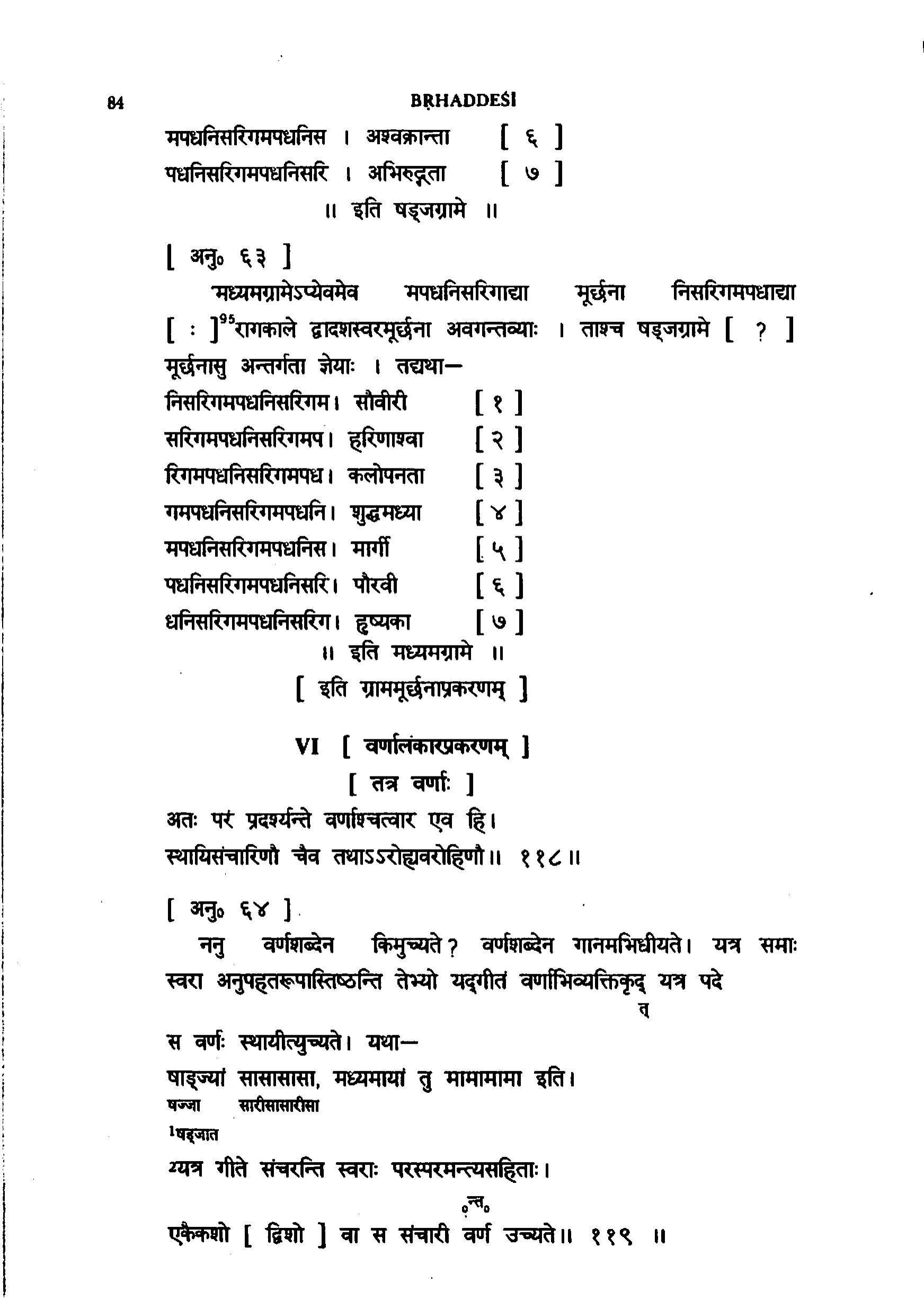
(Anu. 63)
In
madhyamagrāma also, it is the same; the
mūrchanās beginning with ma-pa-
dha-ni-sa-ri-ga begin with ni-sa-ri-ga-ma-pa-dha (when they are formed with 12
svaras).
During the performance of raga, murchanas should be known to be
composed of twelve svaras. They should be known to be included in the
Thus end (the mūrchanās with twelve svaras) in madhyamagrāma.
[Thus ends the section on grāma-mūrchanā]7
VI [Section on Varņas and
Alankāras]
[The Varnas]
After this (now) are demonstrated the varnas 1 (patterns of melodic
movement) that are verily four only; viz. sthāyin (steady), sancārin (circulatory),
(118)
ārohin (ascending) and avarohin (descending).32
(Anu. 64)
(Contention) what is spoken of by the word varna? (Answer) The act of
singing
2 is spoken of by the word varņa. Where svaras are equal
3 and stay
unimpeded4, the gita5 (melodic rendering) born out of them, that is the
manifestor of varņa (unit of melodic movement) in a given pada6 (textual
unit), that varņa is called
sthāyin (steady). Just as sāsāsāsā in the ṣāḍjī (jātī) and
māmāmāmā in the
madhyamā (jāti).