Source scans · vol_II_p005
recto · open full
scan recto
verso · open full
scan verso
Bṛhaddeśī · Volume II
pp. 0–167folio 005
Bṛhaddeśī
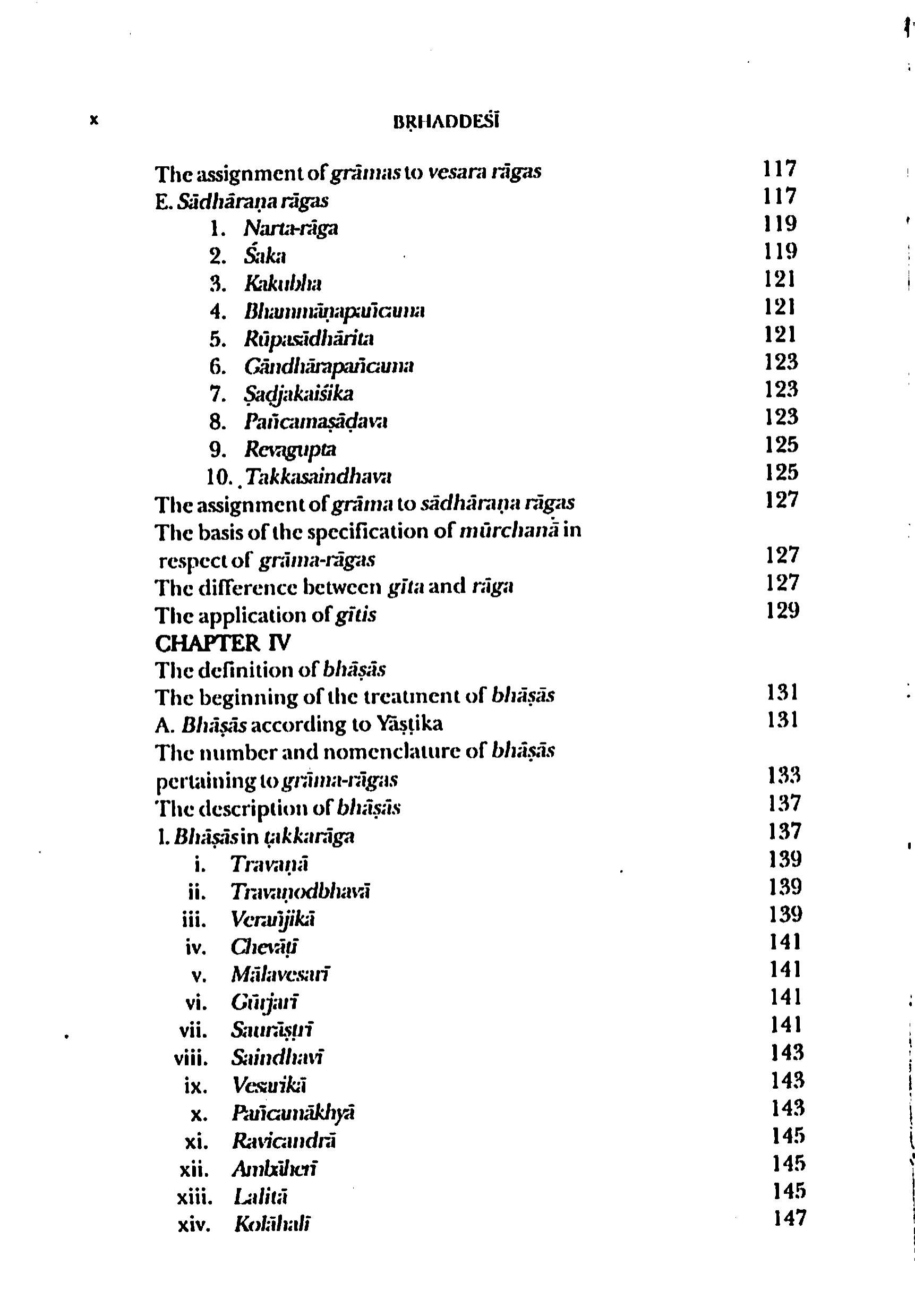
BRHADDEŠĪ The assignment of grāmas to vesara rāgas E. Sādhāraņa rāgas 1. Narta-rāga 2. Šaka 3. Kakubha 4. Bhammāṇapañcama 5. Rūpasādhārita Gāndhārapañcama 6. 7. Şadjakaisika Pañcamaşādava 8. 9. Revagupta 10. Takkasaindhava The assignment of grāma to sādhāraņa rāgas The basis of the specification of mūrchanā in respect of grāma-rāgas The difference between gita and rāga The application of gītis CHAPTER IV The definition of bhāṣās The beginning of the treatment of bhāṣās A. Bhāṣās according to Yāṣṭika The number and nomenclature of bhāṣās pertaining to grāma-rāgas The description of bhāṣās 1. Bhāṣās in takkarāga Travaņā i. ii. Travanodbhavā iii. Veranjikā Chevăți iv. Mālavesarī ٧. Gürjari vi. vii. Saurășui Saindhavi viii. Vesuiki ix. Pancunākhyā X. Ravicandrā xi. xii. Ambilicri xiii. Lalită Kolāhalī xiv.
translation
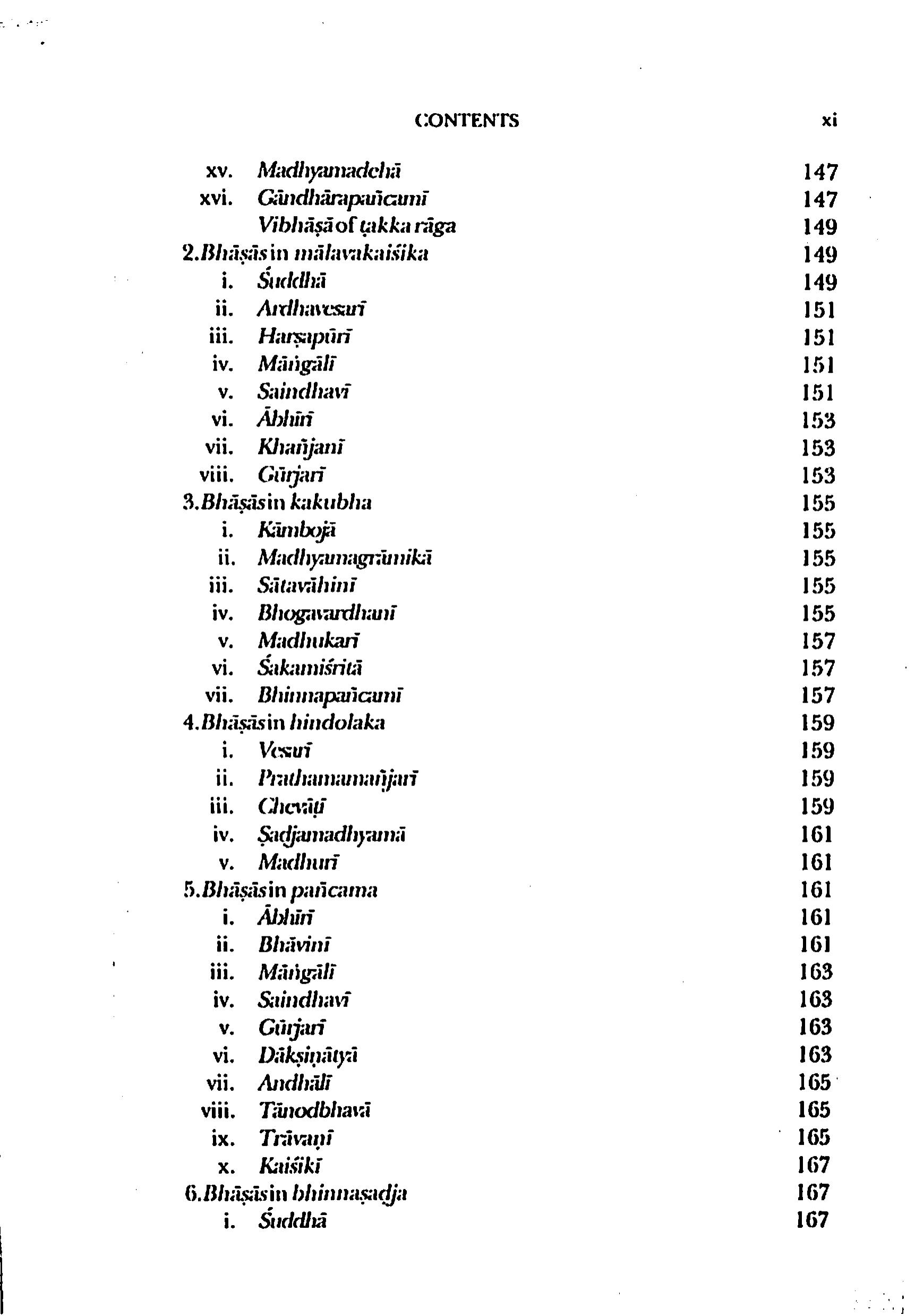
- - CONTENTS χi Madhyamadchā XV. Gàndhàrapañcami xvi. Vibhāṣāof ţakka rāga 2.Bhāṣās in mālavakaišika i. Suddhā ii. Ardhavesari iii. Harşapüri Māṅgālī iv. Saindhavī ٧. Äbhūrī vi. vii. Khañjanî Gürjari viii. 3.Bhāṣāsin kakubha Kāmbojā 1. Madhyamagrāmikā ii. iii. Sātavāhinī Bhogavardhani iv. Madhukari v. Śakamiśritā vi. vii. Bhinnapañcamī 4.Bhāṣāsin hindolaka Vesui i. ii. Prathamamañjari iii. Chevāţī Şadjamadhyamā iv. Madhuri ٧. 5.Bhāṣāsin pañcama Ābhīrī i. ii. Bhāvinī iii. Mängäli Saindhavi iv. Gürjari ٧. Dākṣiṇātyā vi. vii. Andhālī viii. Tänodbhavā Trāvaņī ix. Kaiśikī X. 6.Bhāṣāsin bhinnaṣadja Šuddhā i.
1.[attribution]Yastica is cited as a source for classification of bhasas according to grama-ragasA. Bhāṣās according to Yāṣṭika The number and nomenclature of bhāṣās 133 pertaining to grāma-rāgas
2.[citation]Brhaddeshi is a treatise on Indian classical music that contains systematic treatment of ragas and their classificationBRHADDEŠĪ X 117 The assignment of grāmas to vesara rāgas
3.[enumeration]Sadhrana ragas are enumerated with ten identified varieties including Narta-raga, Saka, Kakubha, and othersE. Sādhāraņa rāgas 119 ٠ 1. Narta-rāga 119 2. Šaka 121 3. Kakubha 121 4. Bhammāṇapañcama 121 5. Rūpasādhārita 123 Gāndhārapañcama 6. 123 7. Şadjakaisika 123 Pañcamaşādava 8. 125 9. Revagupta 125 10. Takkasaindhava
4.[enumeration]Bhasas are classified according to different ragas such as takka, malavakaiska, kakubha, hindolaka, and pancama1.Bhāṣās in takkarāga 139 ii. Travanodbhavā 139 2.Bhāṣās in mālavakaišika 3.Bhāṣāsin kakubha 4.Bhāṣāsin hindolaka 5.Bhāṣāsin pañcama
5.[enumeration]Bhasas in takka raga include fourteen varieties such as Travana, Veranjika, Chevati, Malavasari, and others1. Bhāṣās in takkarāga 139 i. Travaņā 139 ii. Travanodbhavā 139 iii. Veranjikā 141 iv. Chevăți 141 v. Mālavesarī ٧. 141
6.[relation]Gramas are assigned to different categories of ragas including vesara ragas and sadhrana ragasThe assignment of grāma to sādhāraņa rāgas The basis of the specification of mūrchanā in 127 respect of grāma-rāgas
7.[relation]Murchana is specified in relation to grama-ragasThe basis of the specification of mūrchanā in respect of grāma-rāgas
8.[relation]Gitis are distinguished from ragasThe difference between gita and rāga
9.[structural]Vesara ragas form a distinct category that receives assignment of gramasThe assignment of grāmas to vesara rāgas
10.[structural]Gitis have applications within the framework of raga theoryThe application of gītis