٠.
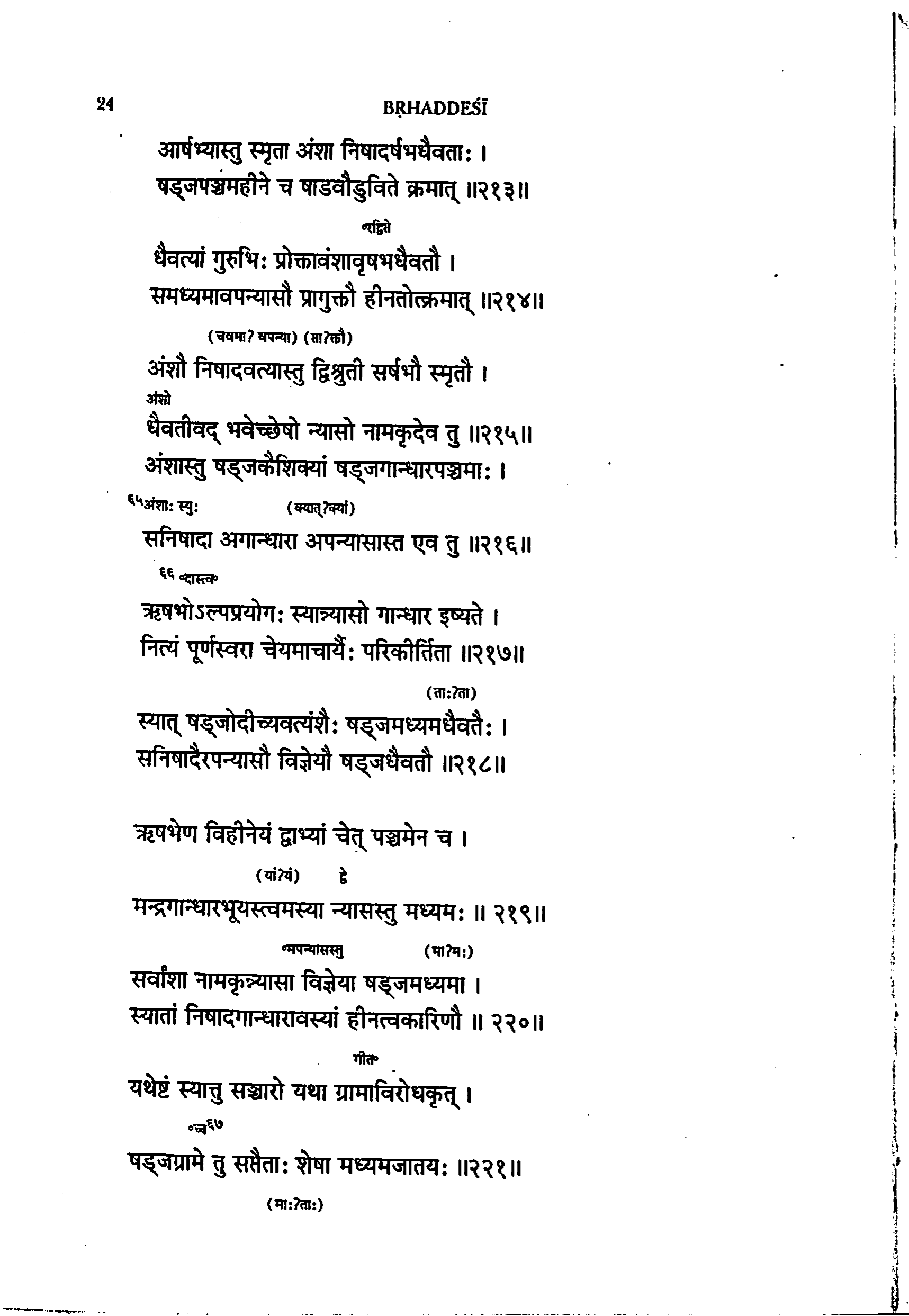
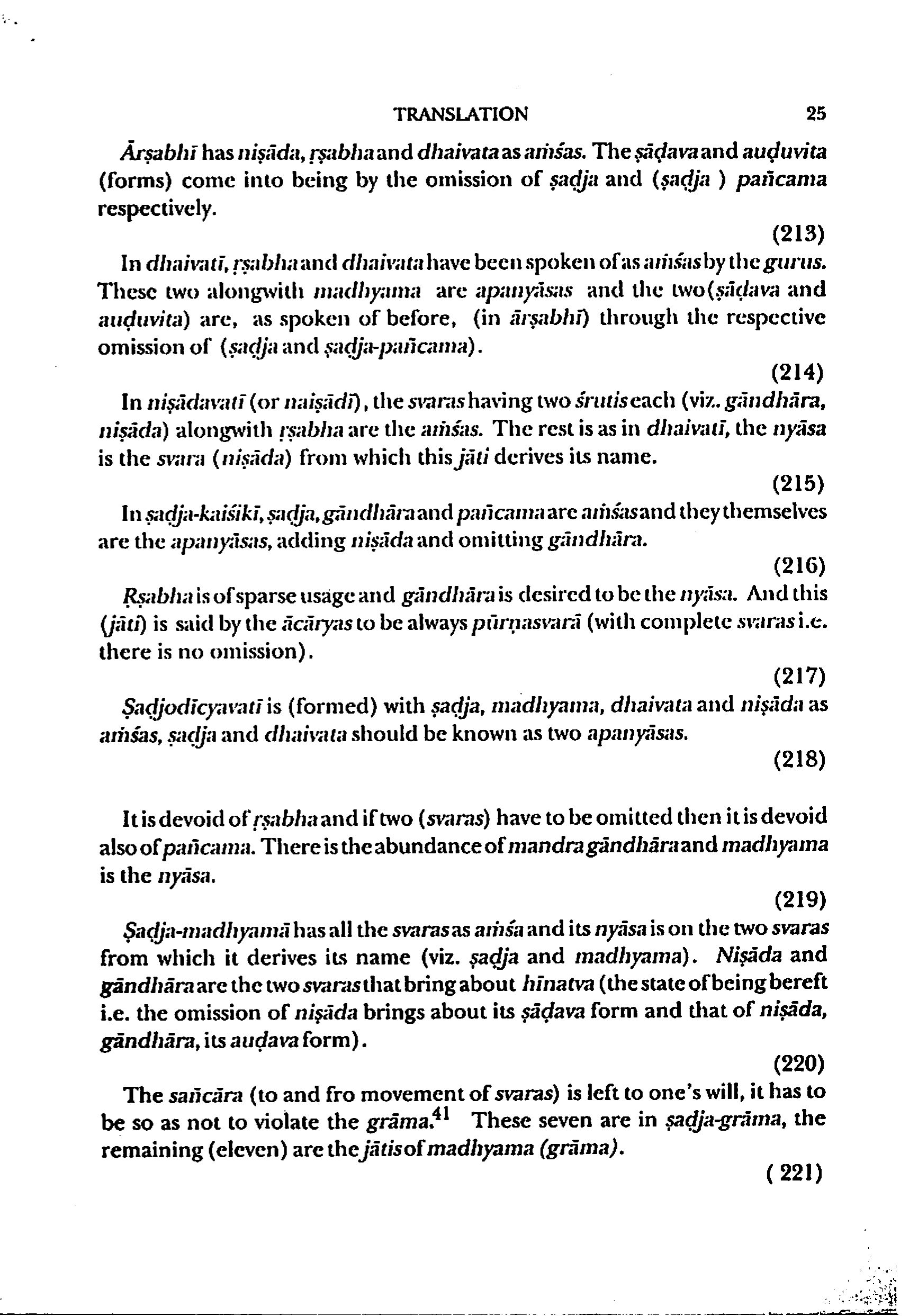
Ārṣabhī has niṣāda, ṛṣabha and dhaivata as amsas.2 The ṣāḍava and auḍuvita
(forms) come into being by the omission of sadja and (sadja) pañcama
respectively.3
(213)
In dhaivatī, ṛṣabha and dhaivata have been spoken of as amśas by the gurus.4
These two alongwith madhyama are apanyāsas5 and the two(ṣāḍava and
auduvita) are, as spoken of before, (in
ārṣabhī) through the respective
omission of (ṣadja and ṣadja-
pañcama).
(214)
In niṣādavatī (or naiṣādī), the svaras having two śrutis each (viz. gāndhāra,
niṣāda) alongwith ṛṣabha are the amśas.6 The rest is as in
dhaivatī,
the nyāsa
is the svara (niṣāda) from which this jāti derives its name.7
(215)
In ṣaḍja-kaiśikī, ṣaḍja, gāndhāra and pañcama are aṁśas and they themselves
are the apanyāsas8, adding niṣāda and omitting
gāndhāra.
(216)
Rṣabhais of sparse usage and gāndhārais desired to be the nyāsa.9 And this
(jāti) is said by the ācāryas to be always pūrņasvarā (with complete svaras i.e.
there is no omission).1
(217)
Şadjodicyavatī is (formed) with şadja, madhyama, dhaivata and niṣāda as
amśas10,
sadja and dhaivata should be known as two apanyāsas.11
(218)
It is devoid of rṣabha and if two (svaras) have to be omitted then it is devoid
also of
pañcama. There is the abundance of mandra
gandhara and
madhyama
is the
nyāsa.
(219)
Şadja-madhyamā has all the svaras as amśa and its nyāsa is on the two svaras
from which it derives its name (viz. şadja and
madhyama).
Nişāda and
gāndhāra are the two svaras that bring about hīnatva13 (the state of being bereft
i.e. the omission of niṣāda brings about its ṣāḍava form and that of niṣāda,
gāndhāra, its audava form).
(220)
The sañcara (to and fro movement of svaras) is left to one's will, it has to
be so as not to violate the grāma.
41 These seven are in sadja-grāma14,
the
remaining (eleven) are the jātis of madhyama (grāma).15
(221)