TRANSLATION.
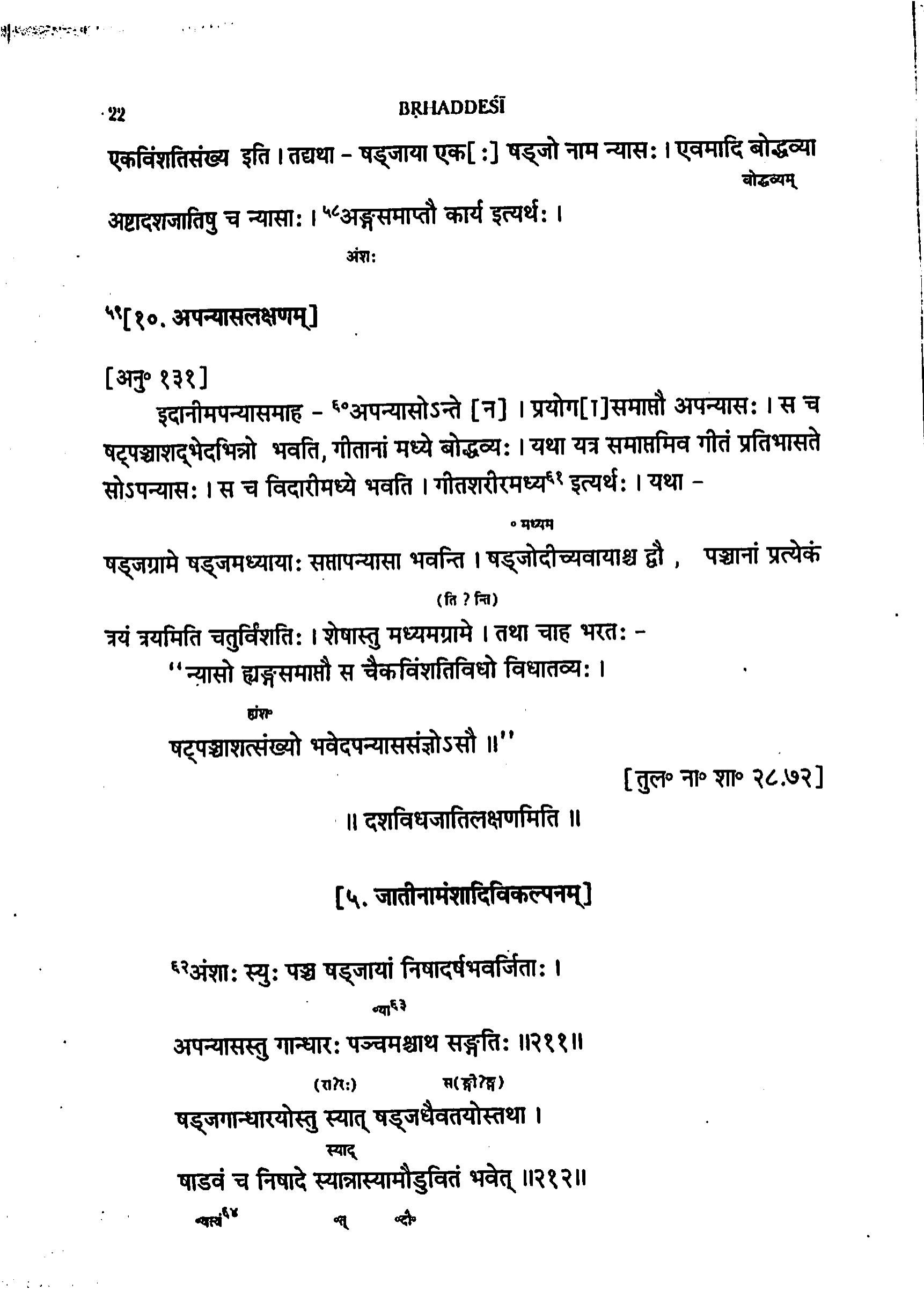
with which gita (tonal structure) is 'placed', left or ended is nyāsa.3 That nyāsa
is twenty-one in number.10 That is - ṣaḍjā has one nyāsa as ṣaḍja, thus should
be understood the nyāsas in the eighteen jātis. The purport is that (nyāsa)
should be done at the end of the anga (lit.body of the tonal structure).
[Anu. 131]
Now he (the author) spoke (speaks) of
apanyāsa;
apanyāsa does not occur
in the end (of the gita).4 Apanyāsa occurs before the end of the prayoga
(performance).5 And that is of fifty-six kinds, it should be understood as
occurring within the gitas.12 Where the gita appears to be ending, that is
apanyāsa.
That occurs within the vidārīs (sections or sub-sections).6 The
implication is that it is within the body of the gita. (It operates) thus - in
ṣaḍjagrāma the ṣaḍjamadhyā jāti has seven
apanyāsas, ṣaḍjodīcyavā has two,
(and the remaining) five have three each and thus they are twenty-four. The
rest (thirty-two) are in
madhyamagrāma.
Similarly has said Bharata -
"Nyāsa occurs at the end of anga (lit.body) and that should be made
twenty-onefold. This one named apanyāsa is fifty-six in number."1
(Cf.
NŚ XXVIII.72)
Thus end the tenfold ^{40} characteristics of jāti.
[5. Optional and alternative prescription of amsa and the like in jātis]
In ṣāḍjī there are five amśas, omitting mṣāḍa and ṛṣabha,
gāndhāra and
pañcama are
apanyāsas and then there is sangati (coming together or
concert) of ṣaḍja-gāndhāra and ṣaḍja-dhaivata.7 Its ṣāḍava (form) is (made)
through (the omission of) niṣāda.8 There is no auduvita form in this (jāti).13