Source scans · vol_II_p022
recto · open full
scan recto
verso · open full
scan verso
Bṛhaddeśī · Volume II
pp. 26–130folio 022
Devanāgarī (Bṛhaddeśī)
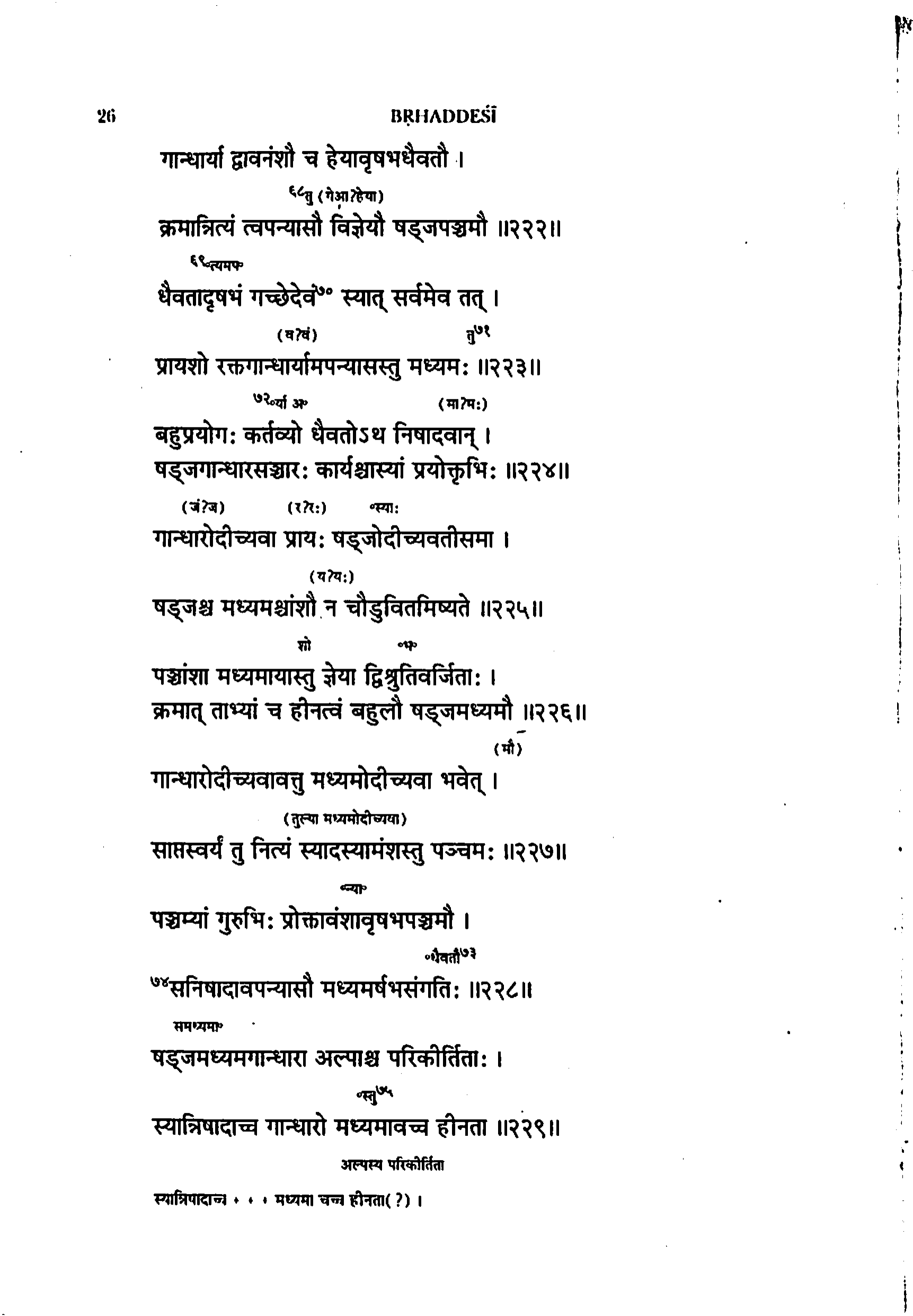
गान्धार्या द्वावनंशौ च हेयावृषभधैवतौ ।6 ६८षु (गेआ?हेपा) क्रमात्रित्यं६९ल्यमफ त्वपन्यासौ विज्ञेयौ षड्जपञ्चमौ4 ॥२२२॥
धैवतादृषभं गच्छेदेवं भ स्यात् सर्वमेव तत् ।
तुष्ध (व?वं) प्रायशो रक्तगान्धार्यामपन्यासस्तु७२०यां अ मध्यम:1 ॥२२३॥ (मा/प:)
बहुप्रयोग: कर्तव्यो धैवतोऽथ निषादवान्13
षड्जगान्धारसञ्चार:(जं?ज) कार्यश्चास्यां प्रयोक्तभि:7 ॥२२४॥ (₹?₹:)श्स्याः गान्धारोदीच्यवा प्राय:(य?य:) षड्जोदीच्यवतीसमा ।2 षड्जश्च मध्यमश्चांशौ न चौडुवितमिष्यते98 ॥२२५॥ पञ्चांशा मध्यमायास्तु ज्ञेया द्विश्रुतिवर्जिता:।5 क्रमात् ताभ्यां च हीनत्वं बहुलौ षड्जमध्यमौ(मी) ॥२२६॥
गान्धारोदीच्यवावतु मध्यमोदीच्यवा भवेत्।
(तुल्या मध्यमोदीच्यवा) साप्तस्वर्यं तु नित्यं स्यादस्यामंशस्तु पञ्चम:10 ॥२२७॥ पञ्चम्यां गुरुभि: प्रोक्तावंशावृषभपञ्चमौ•धेवती७३11 ७४सनिषादावपन्यासौसमध्यमाः मध्यमर्षभसंगति:123 ॥२२८॥
षड्जमध्यमगान्धारा अल्पाश्च परिकोर्तिता: ।
ल्लु७५, स्यात्रिषादाच्च गान्धारो मध्यमावच्चअल्पस्य परिकोर्तिता हीनता ॥२२९॥
स्यात्रिपादाच्य + + + मध्यमा चच्च होनता(?) ।
English — Sharma (translation)
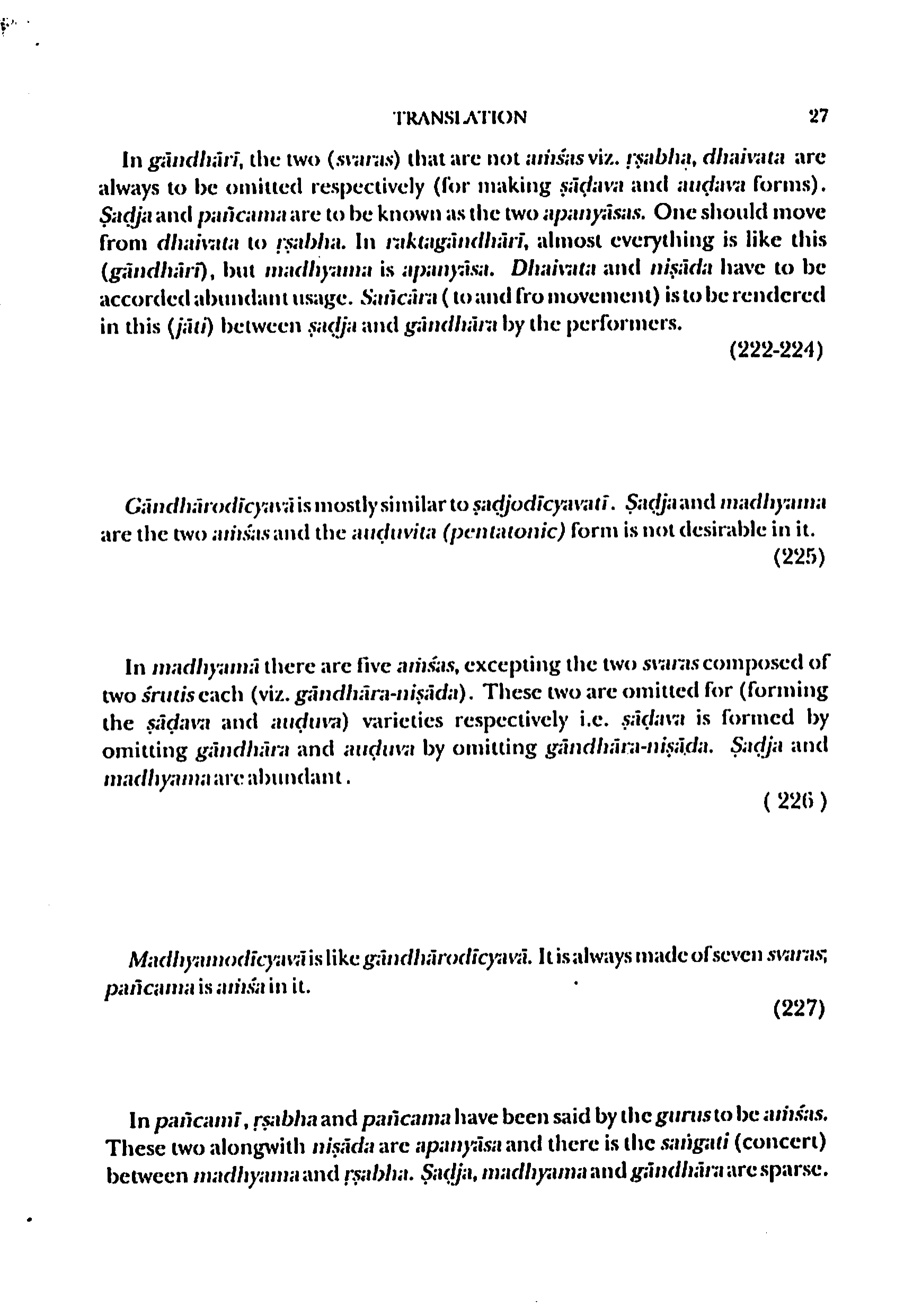
E. In gāndhārī, the two (svaras) that are not amśas viz. ṛṣabha, dhaivata are always to be omitted respectively (for making ṣāḍava and auḍava forms).6 Şadja and pañcama are to be known as the two apanyāsas.4 One should move from dhaivata to ṛṣabha. In raktagāndhārī, almost everything is like this (gãndhārī), but madhyama is apanyāsa.1 Dhaivata and niṣāda have to be accorded abundant usage.13 Sañcāra (to and fro movement) is to be rendered in this (jāti) between ṣaḍja and gāndhāra by the performers.7 <math>(222-224)</math> Gāndhārodīcyavā is mostly similar to şadjodīcyavatī.2 Şadja and madhyama are the two amsas and the auduvita (pentatonic) form is not desirable in it.98
(225)
In madhyamā there are five amśas, excepting the two svaras composed of two śrutis each (viz. gāndhāra-niṣāda).5 These two are omitted for (forming the ṣāḍava and auḍuva) varieties respectively i.e. ṣāḍava is formed by omitting gåndhåra and auduva by omitting gåndhåra-niṣāda. Şadja and madhyama are abundant.
(226)
Madhyamodīcyavā is like gāndhārodīcyavā. It is always made of seven svaras; pañcama is amsa in it.10
(227)
In pañcamī, ṛṣabha and pañcama have been said by the gurus to be aniśas.11 These two alongwith niṣāda are apanyāsa12 and there is the sangati (concert) between madhyama and ṛṣabha.3 Ṣaḍja, madhyama and gāndhāra are sparse.
1.[relation] In raktagāndhārī, madhyama is apanyāsa, unlike in gāndhārīप्रायशो रक्तगान्धार्यामपन्यासस्तु मध्यमः
2.[relation] Gāndhārodīcyavā is mostly similar to şadjodīcyavatīगान्धारोदीच्यवा प्रायः षड्ज?ोदीच्यवतीसमा ।
3.[relation] Sangati is a concert relationship between madhyama and ṛṣabha in pañcamīमध्यमर्षभसंगतिः
4.[structural] Ṣaḍja and pañcama are identified as the two apanyāsas in gāndhārīषड्जपञ्चमौ
5.[structural] In madhyamā, there are five amśas, excluding gāndhāra and niṣāda which are two-śruti svarasपञ्चांशा मध्यमायास्तु ज?्ञेया द्विश्रुतिवर्ज?िताः।
6.[structural] In gāndhārī, ṛṣabha and dhaivata are non-amśas that are always to be omittedगान्धार्या द्वावनंशौ च हेयावृषभधैवतौ ।
7.[structural] Sañcāra (to and fro movement) between ṣaḍja and gāndhāra should be performed in gāndhārīषड्जगान्धारसञ्चारः कार्यश्चास्या प्रयोक्तभिः
8.[structural] In gāndhārodīcyavā, ṣaḍja and madhyama are the two amśasषड्जश्च मध्यमश्चांशौ न चौडुवितमिष्यते
9.[structural] The auduvita (pentatonic) form is not desirable in gāndhārodīcyavāन चौडुवितमिष्यते
10.[structural] Madhyamā is always made of seven svaras with pañcama as amśaसाप्तस्वर्यं तु नित्यं स्यादस्यामंशस्तु पञ्चमः
11.[structural] In pañcamī, ṛṣabha and pañcama are aniśasपञ्चम्या गुरुभिः प्रोक्तावंशावृषभपञ्चमौ ।
12.[structural] In pañcamī, ṛṣabha, pañcama, and niṣāda are apanyāsasसनिषादावपन्यासौ मध्यमर्षभसंगतिः
13.[structural] Dhaivata and niṣāda have to be accorded abundant usage in raktagāndhārīबहुप्रयोगः कर्तव्यो धैवतोऽथ निषादवान्
1.[relation]In raktagāndhārī, madhyama is apanyāsa, unlike in gāndhārīIn raktagāndhārī, almost everything is like this (gãndhārī), but madhyama is apanyāsa.
2.[relation]Gāndhārodīcyavā is mostly similar to şadjodīcyavatīGāndhārodīcyavā is mostly similar to şadjodīcyavatī.
3.[relation]Sangati is a concert relationship between madhyama and ṛṣabha in pañcamīthere is the sangati (concert) between madhyama and ṛṣabha.
4.[structural]Ṣaḍja and pañcama are identified as the two apanyāsas in gāndhārīŞadja and pañcama are to be known as the two apanyāsas.
5.[structural]In madhyamā, there are five amśas, excluding gāndhāra and niṣāda which are two-śruti svarasIn madhyamā there are five amśas, excepting the two svaras composed of two śrutis each (viz. gāndhāra-niṣāda).
6.[structural]In gāndhārī, ṛṣabha and dhaivata are non-amśas that are always to be omittedIn gāndhārī, the two (svaras) that are not amśas viz. ṛṣabha, dhaivata are always to be omitted respectively (for making ṣāḍava and auḍava forms).
7.[structural]Sañcāra (to and fro movement) between ṣaḍja and gāndhāra should be performed in gāndhārīSañcāra (to and fro movement) is to be rendered in this (jāti) between ṣaḍja and gāndhāra by the performers.
8.[structural]In gāndhārodīcyavā, ṣaḍja and madhyama are the two amśasŞadja and madhyama are the two amsas and the auduvita (pentatonic) form is not desirable in it.
9.[structural]The auduvita (pentatonic) form is not desirable in gāndhārodīcyavāthe auduvita (pentatonic) form is not desirable in it.
10.[structural]Madhyamā is always made of seven svaras with pañcama as amśaIt is always made of seven svaras; pañcama is amsa in it.
11.[structural]In pañcamī, ṛṣabha and pañcama are aniśasIn pañcamī, ṛṣabha and pañcama have been said by the gurus to be aniśas.
12.[structural]In pañcamī, ṛṣabha, pañcama, and niṣāda are apanyāsasThese two alongwith niṣāda are apanyāsa
13.[structural]Dhaivata and niṣāda have to be accorded abundant usage in raktagāndhārīDhaivata and niṣāda have to be accorded abundant usage.