Source scans · vol_II_p039
recto · open full
scan recto
verso · open full
scan verso
Bṛhaddeśī · Volume II
pp. 1–61folio 039
Devanāgarī (Bṛhaddeśī)
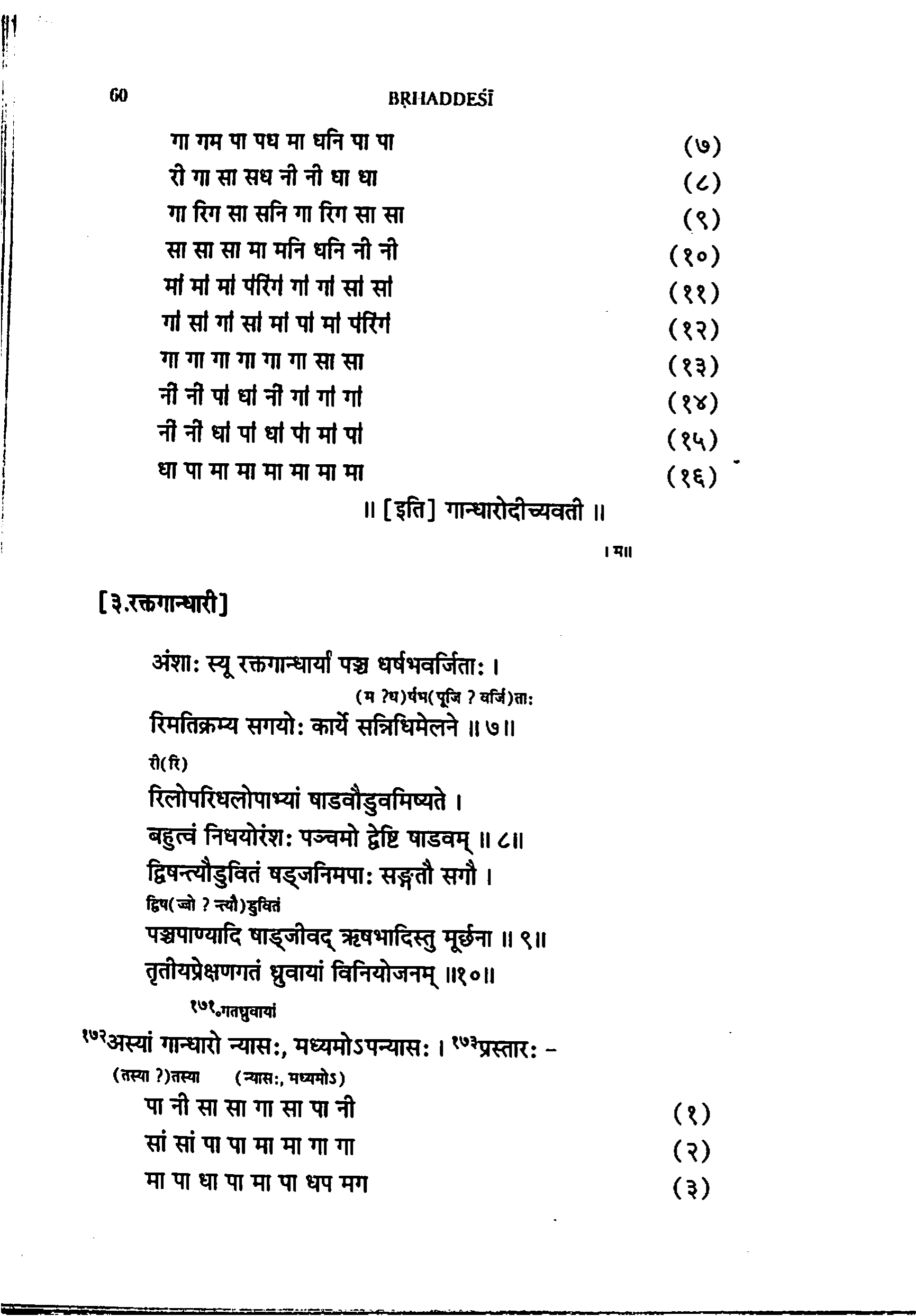
#1 गा गम पा पध मा धनि पा पा
(৩)
री गा सा सध नी नी धा धा
(८)
गा रिंग सा सनि गा रिंग सा सा
(9)
सा सा सा मा मिन धिन नी नी
(१०)
मां मां मां परिंग गो गो सो सो
(११)
गों सी गों सी मी पी मी पेरिने
(१२)
गा गा गा गा गा सा सा
(१३)
नी नी पो धो नी गो गो गो
(१४)
नी नी धा पा धा पा मा पा
(१५)
धा पा मा मा मा मा मा मा
(१६)
॥ [इति] गान्धारोदीच्यवती ॥
[३.रक्तगान्धारी]। मा अंशा: स्यू रक्तगान्धार्या पञ्च धर्षभवर्जिता:।51 (म ?घ)पंभ(पूजि ? वर्जि)ताः रिमतिक्रम्यरी(रि) सगयो: कार्ये सित्रिधिमेलने6 ॥७॥
रिलोपरिधलोपाभ्यां षाडवौडुविमष्यते2
बहुत्वं निधयोरंश: पञ्चमो द्वेष्टि षाडवम्10 ॥८॥ द्विषन्त्यौडुवितं षड्जनिमपा: सङ्गतौ सगौ।11 द्विप(जो ? नयौ) द्ववितं पञ्चपाण्यादि षाङ्जीवद् ऋषभादिस्तु मूर्छना3 ॥९॥ तृतीयप्रेक्षणगतं ध्रुवायां विनियोजनम्4 ॥१०॥ १७१ंगतघुवायां १७२अस्यां(तस्या ?)तस्या गान्धारो न्यास:7, मध्यमोऽपन्यास:।8 १७३प्रस्तार: - (न्यास:, मध्यमोऽ) पा नी सा सा गा सा पा नी(१) सां सां पा पा मा मा गा गा(२) मा पा धा पा मा पा धप मग
(3)
ordered sequence list
gandharodicyavati_prastara_phrases_7_to_16 — Brihaddesi vol II p.60 — continuation of prastāra for Gāndhārodīcyavatī (phrases numbered 7-16, ending with colophon '|| [iti] gāndhārodīcyavatī ||')
index · svaras
index · svaras
index · svaras
index · svaras
index · svaras
index · svaras
index · svaras
index · svaras
index · svaras
index · svaras
— गांधारोदीच्यवती prastāra (7)-(16)
ordered sequence list
raktagandhari_prastara_phrases_1_to_3 — Brihaddesi vol II p.60 — beginning of prastāra for [3.] Raktagāndhārī rāga (phrases 1-3 visible, list continues on next page). Preceded by lakṣaṇa kārikā ślokas 7-10 describing aṁśas, ṣāḍava/auḍuva forms, nyāsa = gāndhāra, apanyāsa = madhyama.
index · svaras
index · svaras
index · svaras
— [३.रक्तगान्धारी] prastāra (१)-(३)
English — Sharma (translation)
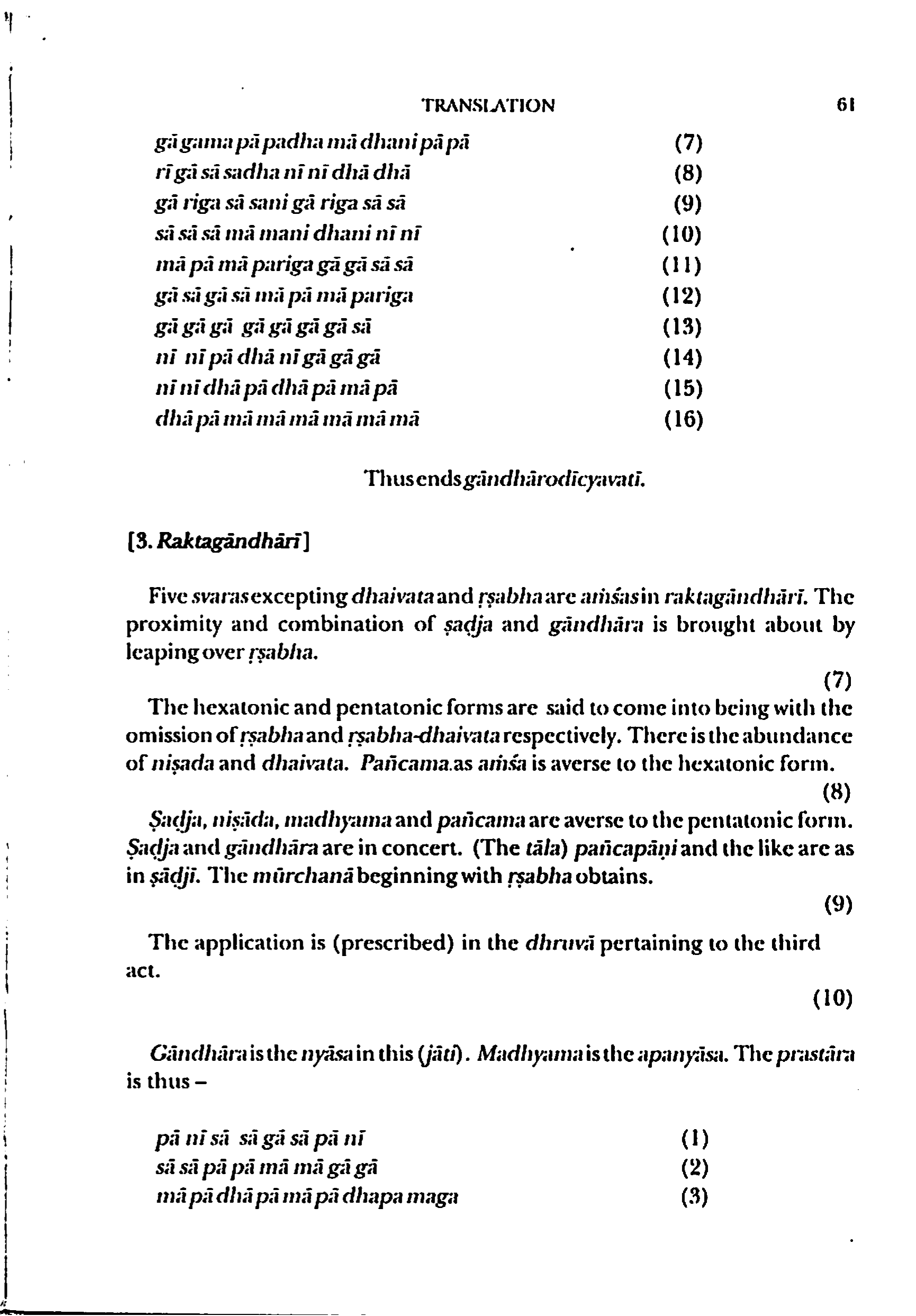
gā gama pā padha mā dhani pā pā (7) rī gā sā sadha nī nī dhā dhā
(8)
gā riga sā sani gā riga sā sā
(9)
sã sã sã mã mani dhani nĩ nĩ
(10)
(11)
mā pā mā pariga gā gā sā sā gã sã gã sã mã pã mã pariga
(12)
gã gã gã gã gã gã sã
(13)
ni ni pā dhā ni gā gā gā
(14)
ni ni dhā pā dhā pā mā pā
(15)
(16)
dhã pã mã mã mã mã mã mã Thus ends gändhärodīcyavatī. Five svaras excepting dhaivata and ṛṣabha are amśas in raktagāndhārī.51 The proximity and combination of șadja and gāndhāra is brought about by leaping over rşabha.6
(7)
The hexatonic and pentatonic forms are said to come into being with the omission of rşabha and rşabha-dhaivata respectively.2 There is the abundance of niṣada and dhaivata. Pañcama as amsa is averse to the hexatonic form.10
(8)
Ṣaḍja, niṣāda, madhyama and pañcama are averse to the pentatonic form.11 Ṣaḍja and gāndhāra are in concert. (The tāla) paūcapāṇi and the like are as in şādjī. The mūrchanā beginning with rṣabha obtains.
(9)
The application is (prescribed) in the dhruvā pertaining to the third act.4
(10)
Gāndhāra is the nyāsa in this (jāti).7 Madhyama is the apanyāsa.8 The prastāra is thus – pā nī sā sā gā sā pā nī
(1)
sã sã pã pã mã mã gã gã
(2)
mã pã dhã pã mã pã dhapa maga
(3)
1.[definition] Amśas are essential svaras that define a jāti, with five svaras serving as amśas in raktagāndhārīअंशाः स्यू रक्तगान्धार्या पञ्च धर्षभवर्ज?िताः।
2.[enumeration] Raktagāndhārī has both hexatonic (ṣāḍava) and pentatonic (auḍava) formsरिलोपरिधलोपाभ्या षाडवौडुविमष्यते
3.[relation] The mūrchanā beginning with ṛṣabha is employed in raktagāndhārīऋषभादिस्तु मूर्छना
4.[relation] Raktagāndhārī is prescribed for application in the dhruvā of the third actतृतीयप्रेक्षणगतं ध्रुवाया विनियोजनम्
5.[structural] Raktagāndhārī is a jāti characterized by five svaras excluding dhaivata and ṛṣabha as amśasअंशाः स्यू रक्तगान्धार्या पञ्च धर्षभवर्ज?िताः।
6.[structural] In raktagāndhārī, ṣadja and gāndhāra are brought into proximity by leaping over ṛṣabhaरिमतिक्रम्य सगयोः कार्ये सित्रिधिमेलने
7.[structural] Gāndhāra functions as the nyāsa in raktagāndhārī jātiअस्या गान्धारो न्यासः
8.[structural] Madhyama is designated as the apanyāsa in raktagāndhārīमध्यमोऽपन्यासः।
10.[structural] Pañcama as amśa is averse to the hexatonic form of raktagāndhārīपञ्चमो द्वेष्टि षाडवम्
11.[structural] In the pentatonic form, ṣaḍja, niṣāda, madhyama and pañcama are averseद्विषन्त्यौडुवितं षड्जनिमपाः सङ्गतौ सगौ।
1.[definition]Amśas are essential svaras that define a jāti, with five svaras serving as amśas in raktagāndhārīFive svaras excepting dhaivata and ṛṣabha are amśas in raktagāndhārī.
2.[enumeration]Raktagāndhārī has both hexatonic (ṣāḍava) and pentatonic (auḍava) formsThe hexatonic and pentatonic forms are said to come into being with the omission of rşabha and rşabha-dhaivata respectively.
3.[relation]The mūrchanā beginning with ṛṣabha is employed in raktagāndhārīThe mūrchanā beginning with ṛṣabha obtains.
4.[relation]Raktagāndhārī is prescribed for application in the dhruvā of the third actThe application is (prescribed) in the dhruvā pertaining to the third act.
5.[structural]Raktagāndhārī is a jāti characterized by five svaras excluding dhaivata and ṛṣabha as amśasFive svaras excepting dhaivata and ṛṣabha are amśas in raktagāndhārī.
6.[structural]In raktagāndhārī, ṣadja and gāndhāra are brought into proximity by leaping over ṛṣabhaThe proximity and combination of șadja and gāndhāra is brought about by leaping over rşabha.
7.[structural]Gāndhāra functions as the nyāsa in raktagāndhārī jātiGāndhāra is the nyāsa in this (jāti).
8.[structural]Madhyama is designated as the apanyāsa in raktagāndhārīMadhyama is the apanyāsa.
9.[structural]The prastāra of raktagāndhārī begins with the sequence pā nī sā sā gā sā pā nīThe prastāra is thus – pā nī sā sā gā sā pā nī
10.[structural]Pañcama as amśa is averse to the hexatonic form of raktagāndhārīPañcama as amsa is averse to the hexatonic form.
11.[structural]In the pentatonic form, ṣaḍja, niṣāda, madhyama and pañcama are averseṢaḍja, niṣāda, madhyama and pañcama are averse to the pentatonic form.