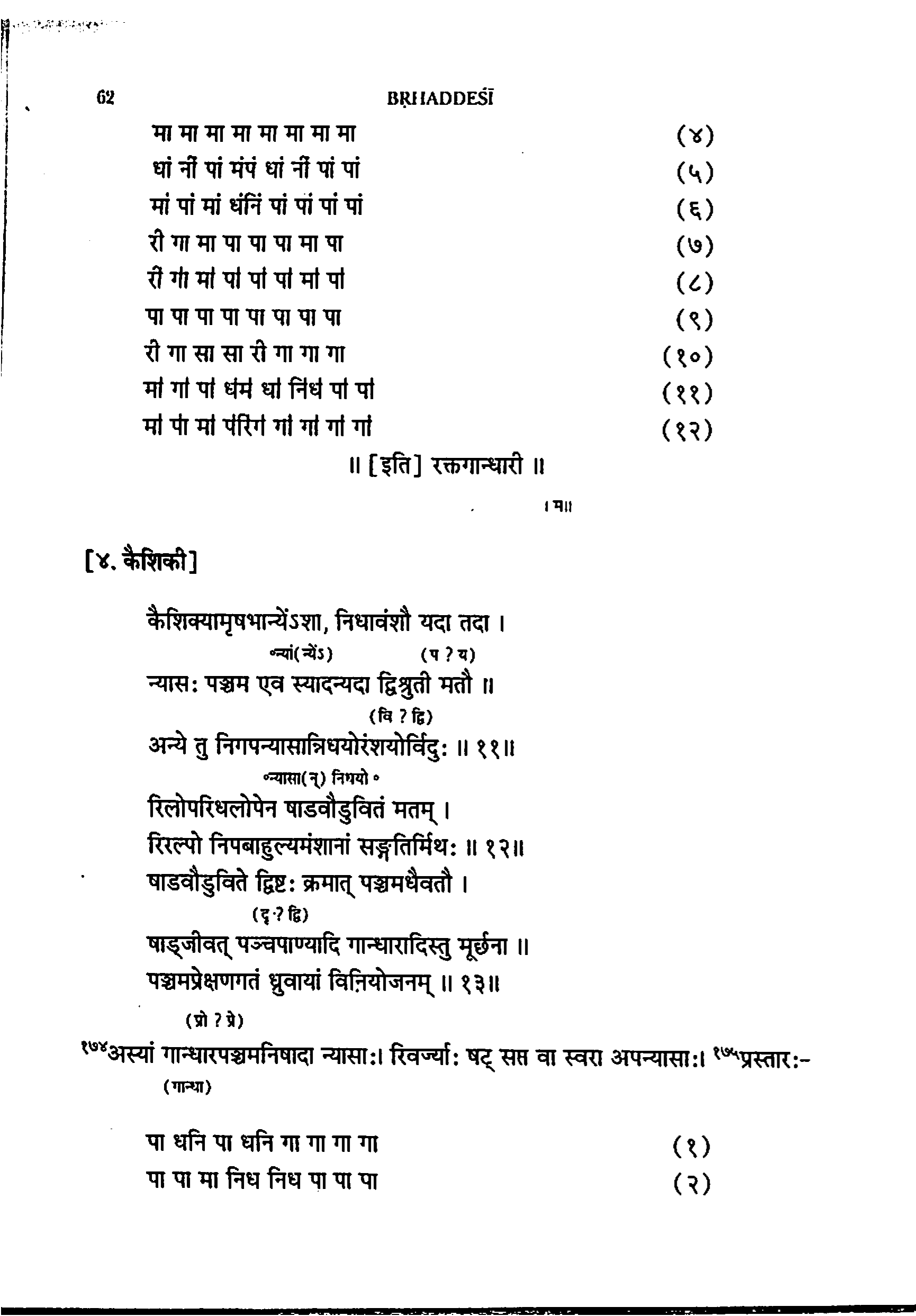
mā mā mā mā mā mā mā mā
(4)
dhā nī pā mapa dhā nī pā pā
(5)
(6)
mā pā mā dhani pā pā pā pā
(7)
rî gā mā pā pā pā mā pā
(8)
rī gā mā pā pā pā mā pā
(9)
pā pā pā pā pā pā pā pā
(10)
rī gā sā sā rī gā gā gā
(11)
gã gã pã dhama dhã nidha pã pã
(12)
mā pā mā pariga gā gā gā gā
Thus ends
raktagāndhārī.
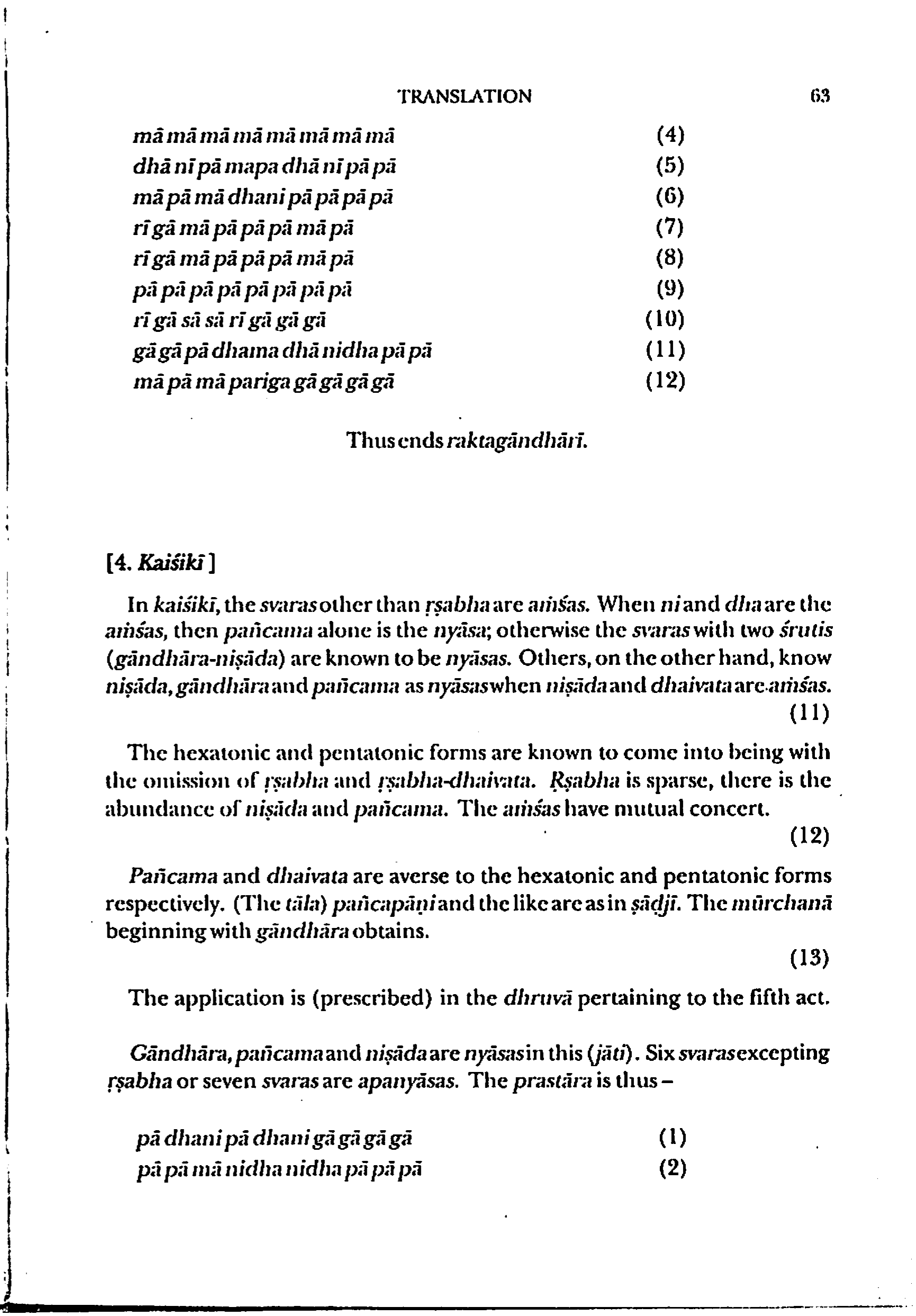
In kaiśikī, the svaras other than ṛṣabha are aṁśas.2 When ni and dha are the
amsas, then pancama alone is the nyāsa; otherwise the svaras with two śrutis
(gāndhāra-niṣāda) are known to be nyāsas.4 Others, on the other hand, know
niṣāda, gāndhāra and pañcama as nyāsas when niṣāda and dhaivata are amsas.8
(11)
The
hexatonic and
pentatonic forms are known to come into being with
the omission of
rṣabha and
rṣabha-dhaivata.
Rṣabha is sparse, there is the
abundance of niṣāda and
pañcama.
The amsas have mutual concert.12
(12)
Pañcama and
dhaivata are averse to the
hexatonic and
pentatonic forms
respectively.
(The tāla) pañcapāṇi and the like are as in ṣāḍjī.117 The mūrchanā
beginning with gāndhāra obtains.5
(13)
The application is (prescribed) in the dhruvā pertaining to the fifth act.6
Gāndhāra, pancama and niṣāda are nyāsas in this (jāti). Six svaras excepting
rṣabha or seven svaras are
apanyāsas.
The prastāra is thus -3
(1)
pā dhani pā dhani gā gā gā gā
pā pā mā nidha nidha pā pā pā
(2)