Source scans · vol_II_p143
recto · open full
scan recto
verso · open full
scan verso
Bṛhaddeśī · Volume II
pp. 268–269folio 143
Devanāgarī (Bṛhaddeśī)
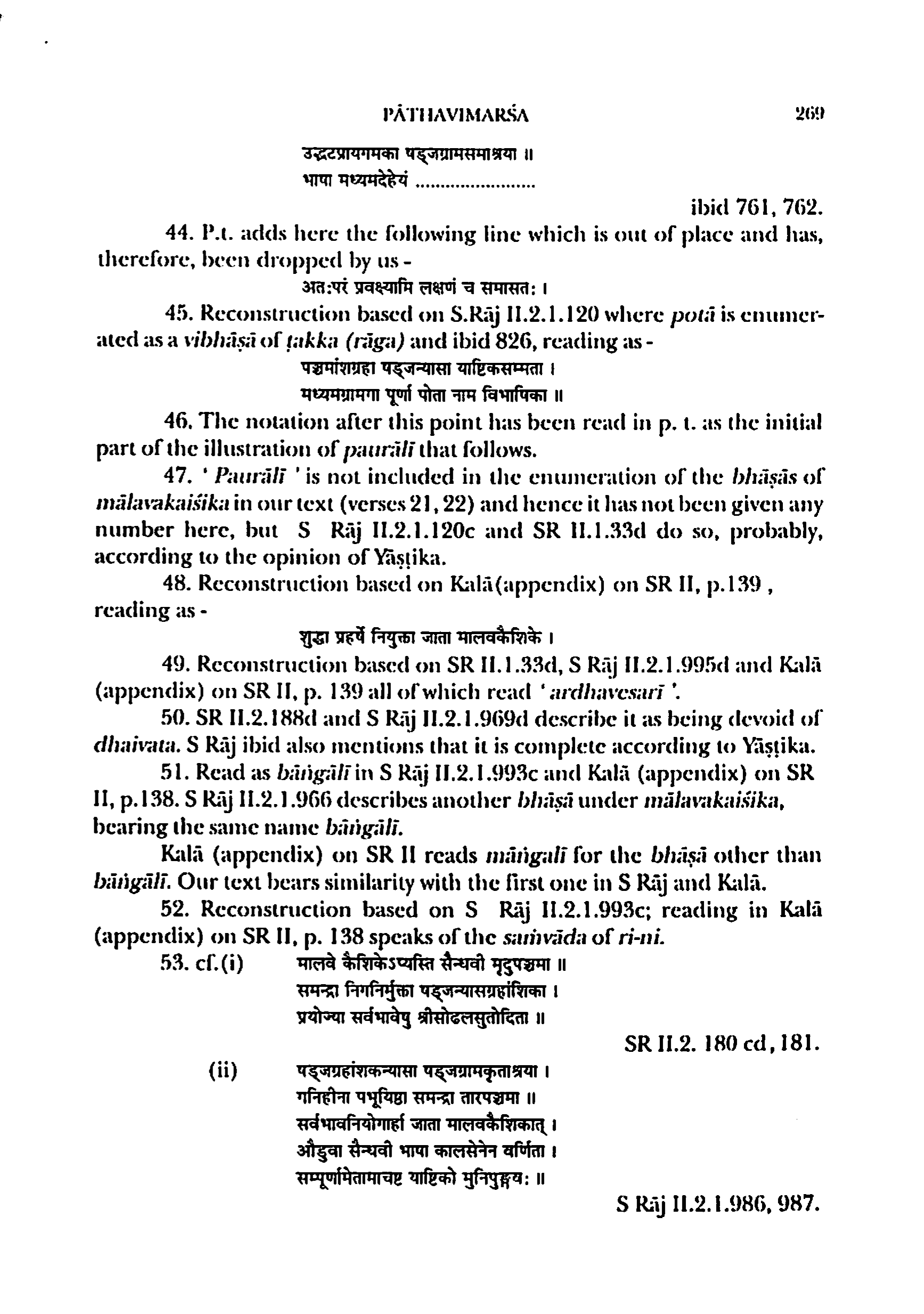
35. cf. (i) रिसयोः समयोर्युक्ता टक्कजा रविचन्द्रिका
Kalā (appendix) on SR II, p. 136. (ii) सङ्गता समयोधेव रिगयोधाल्पसप्तमा ।2 S Rāj II.2.1.516 ab. 36. P.t. adds 'takkarāgajā', which does not fit into the metre. 37. Reconstruction based on - (i)
मध्यमांशग्रहा पड्जन्यासा पञ्चमवर्ज?िता ।
S Rāj II.2.1. 818 ab. (ii) अम्बाहेरी टक्कभाषा देशाख्या पञ्चमोञ्झिता ।3 Kalā (appendix) on SR II, p.136. 38. Reconstruction based on S Rāj II.2.1.745 a cited below under (ii). 39. cf. (i)
टकभाषैव ललिता ललितैरुक्तरैः स्वरैः ॥
पड्ज?ांशग्रहणन्यासा पड्जमन्द्रा रिपोज?्झिता ।
धीरैवीरोत्सवे प्रोक्ता तारगान्धारधैवता ॥
SR II.2.174 cd, 175. (ii)
टक्कभापैव ललिता ग्रहांशन्यासपङ्जभाक् ।
पञ्चमर्पभहीना च तारगान्धारधैवता ॥
पङ्ज?ानुमन्द्रबहुला गमधस्वरराज?िता ।
लिता लितैः स्तोभैलीलतैहत्कटैः स्वरैः ॥
षाडवा याष्ट्रिकमते ऋपभैकविलोपतः।
सङ्ग्रामे विनियोक्तव्या वीरोत्साहविवर्धनी ॥
S Rāj II.2.1.743-745. 40. cf.
औंडुवा निपलोपेन याष्ट्रिकस्य मते मता ।
S Rāj 11.2.1.774ab SR II.2.143b describes it as being devoid of pañcama alone. 41. Reading in Kalā (appendix) on SR II. p. 134. S Rāj II.2.1.820 f reads-‘ pūrņasvaroditā ’i.e. complete in svaras. 42,43. S.Rājgives two bhāṣāsas madhyamagrāmadehā and madhyamadehā, the former bears similarity with the madhyamadehā of our text, as -
मध्यमांशग्रहा पड्जन्यासा टक्कसमुद्भवा ।
पड्जमध्यमसङ्गत्या(त्यो)पचिता मध्यगानयुक् ॥
मध्यमग्रामदेहेयं भाषा पूर्णस्वरोदिता ॥
S Rāj II.2.1.820. Madhyamadehā is different as-
पङ्ज?ांशग्रहणन्यासा पञ्चमर्षभवर्ज?िता ।
तारधैवतगान्धारा मन्द्रमध्यमसम्भवा ॥
मध्यधैवतपड्ज?ाख्या नियोज?्या वीर उत्तमे ।
English — Sharma
PÄTHAVIMARŚA
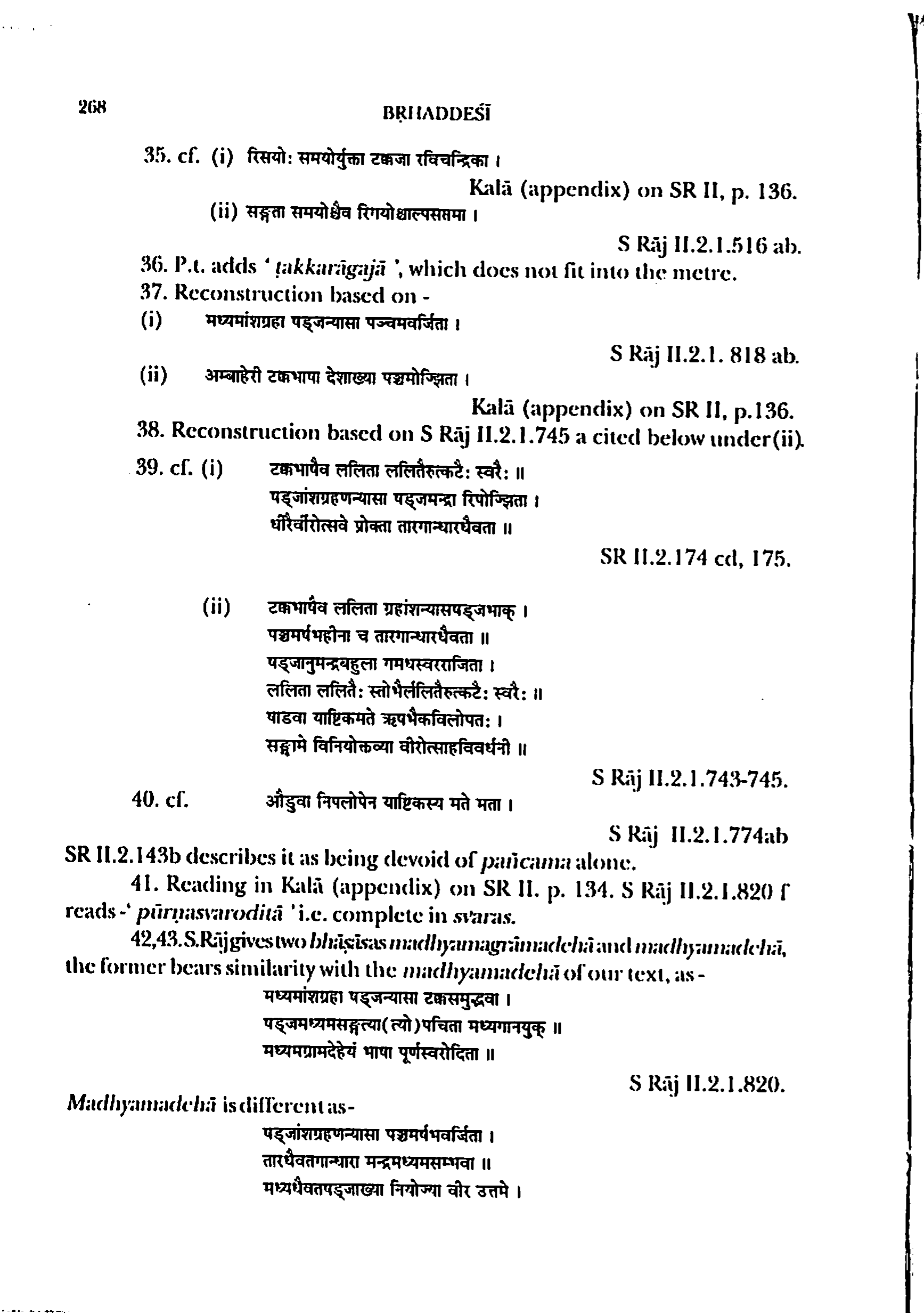
उद्भटप्रायगमका पङ्जग्रामसमाश्रया ॥
भाषा मध्यमदेहेयं ..... ibid 761, 762. 44. P.t. adds here the following line which is out of place and has, therefore, been dropped by us -
अतःपरं प्रवक्ष्यामि लक्षणं च समासतः।
45. Reconstruction based on S.Rāj II.2.1.120 where potā is enumer- ated as a vibhāṣā of ṭakka (rāga) and ibid 826, reading as -11
पञ्चमांशग्रहा पड्जन्यासा याष्टिकसम्मता ।
मध्यमग्रामगा पूर्णा पोता नाम विभाषिका ॥
46. The notation after this point has been read in p. t. as the initial part of the illustration of paurālī that follows. 47. 'Paurālī' is not included in the enumeration of the bhāṣās of mālavakaišika in our text (verses 21, 22)5 and hence it has not been given any number here, but S Rāj II.2.1.120c and SR II.1.33d do so, probably, according to the opinion of Yāstika. 48. Reconstruction based on Kalā (appendix) on SR II, p.139, reading as -
शुद्धा प्रहर्षे नियुक्ता ज?ाता मालवकैशिके ।
49. Reconstruction based on SR II.1.33d, S Rāj II.2.1.995d and Kalā (appendix) on SR II, p. 139 all of which read 'ardhavesarī'. 50. SR II.2.188d and S Rāj II.2.1.969d describe it as being devoid of dhaivata.10 S Rāj ibid also mentions that it is complete according to Yāṣṭika. 51. Read as bāṅgālī in S Rāj II.2.1.993c and Kalā (appendix) on SR II, p.138. S Rāj II.2.1.966 describes another bhāṣā under mālavakaišika, bearing the same name bāṅgālī. Kalā (appendix) on SR II reads māṅgalī for the bhāṣā other than bāṅgālī. Our text bears similarity with the first one in S Rāj and Kalā. 52. Reconstruction based on S Rāj II.2.1.993c; reading in Kalā (appendix) on SR II, p. 138 speaks of the samvāda of ri-ni.
53. cf.(i) मालवे कैशिकेऽप्यस्ति सैन्धवी मृदुपञ्चमा ॥
समन्द्रा निगनिर्मुक्ता पङ्जन्यासग्रहांशिका ।
प्रयोज?्या सर्वभावेषु श्रीसोढलसुतोदिता ॥
SR II.2. 180 cd, 181. (ii)
पड्जग्रहांशकन्यासा पड्जग्रामकृताश्रया ।
गनिहीना पभूयिष्ठा समन्द्रा तारपञ्चमा ॥
सर्वभावनियोगार्हा ज?ाता मालवकैशिकात् ।
औडुवा सैन्यवी भाषा कालसेनेन वर्णिता ।
सम्पूर्णामेतामाचष्ट्र याष्ट्रिको मुनिपुङ्गयः॥
S Rāj II.2.1.986, 987.1
1.[attribution]Yāṣṭika is an authoritative source cited for the classification and description of rāga bhāṣāsज?ाता मालवकैशिकात् । औडुवा सैन्यवी भाषा कालसेनेन वर्णिता । सम्पूर्णामेतामाचष्ट्र याष्ट्रिको मुनिपुङ्गयः॥
2.[citation] S Rāj is cited extensively as a source for bhāṣā classifications and descriptionsसङ्गता समयोधेव रिगयोधाल्पसप्तमा ।
3.[citation] SR (Sangīta Ratnākara) is referenced for descriptions of bhāṣās and their propertiesअम्बाहेरी टक्कभाषा देशाख्या पञ्चमोञ्झिता ।
11.[structural]bhāṣā can be characterized by the presence or absence of specific svaras like pañcama and dhaivataपञ्चमांशग्रहा पड्जन्यासा याष्टिकसम्मता । मध्यमग्रामगा पूर्णा पोता नाम विभाषिका ॥
1.[attribution] Yāṣṭika is an authoritative source cited for the classification and description of rāga bhāṣāsS Rāj II.2.1.986, 987.
2.[citation]S Rāj is cited extensively as a source for bhāṣā classifications and descriptionsS Rāj II.2.1.516 ab.
3.[citation]SR (Sangīta Ratnākara) is referenced for descriptions of bhāṣās and their propertiesKalā (appendix) on SR II, p. 136.
4.[definition]vibhāṣā represents variant forms or sub-categories within a rāga classificationpotā is enumer- ated as a vibhāṣā of ṭakka (rāga)
5.[enumeration]mālavakaišika is a rāga with multiple bhāṣās including ardhavesarī, bāṅgālī, and saindhvī'Paurālī' is not included in the enumeration of the bhāṣās of mālavakaišika in our text (verses 21, 22)
6.[relation]paurālī is a bhāṣā related to mālavakaišika but not included in some textual enumerations'Paurālī' is not included in the enumeration of the bhāṣās of mālavakaišika in our text (verses 21, 22)
7.[structural]bhāṣā is a category of musical forms that can be varieties of rāgas like ṭakka and mālavakaišikaS.Rāj II.2.1.120 where potā is enumer- ated as a vibhāṣā of ṭakka (rāga)
8.[structural]ṭakka is a rāga that has multiple vibhāṣās including potāpotā is enumer- ated as a vibhāṣā of ṭakka (rāga)
9.[structural]pañcama is a svara that can be omitted or modified in certain bhāṣāsSR II.2.143b describes it as being devoid of pañcama alone.
10.[structural]dhaivata is a svara that can be absent in certain bhāṣā formsSR II.2.188d and S Rāj II.2.1.969d describe it as being devoid of dhaivata.
11.[structural] bhāṣā can be characterized by the presence or absence of specific svaras like pañcama and dhaivata45. Reconstruction based on S.Rāj II.2.1.120 where potā is enumer- ated as a vibhāṣā of ṭakka (rāga) and ibid 826, reading as -
12.[structural]svaras are the fundamental pitch elements that constitute rāga bhāṣās, which can be complete or partialReading in Kalā (appendix) on SR II. p. 134. S Rāj II.2.1.820 f reads-' pūrņasvaroditā 'i.e. complete in svaras.