Source scans · vol_II_p043
recto · open full
scan recto
verso · open full
scan verso
Bṛhaddeśī · Volume II
pp. 68–1411folio 043
Devanāgarī (Bṛhaddeśī)
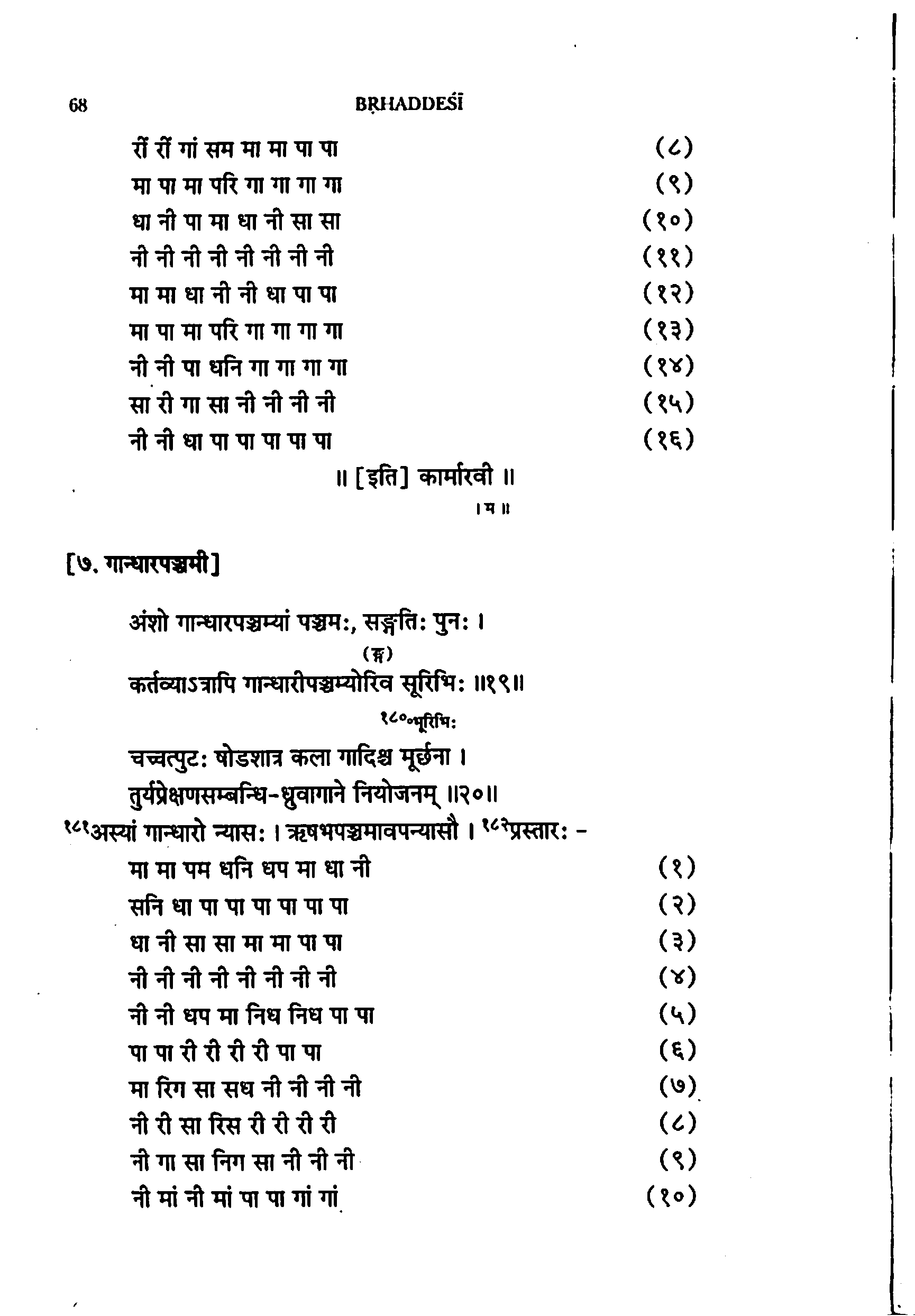
रों रों गां सम मा मा पा पा
(८)
(8)
मा पा मा परि गा गा गा गा
(१०)
धानी पामा धानी सासा
(११)
नी नी नी नी नी नी नी
(१२)
मा मा धा नी नी धा पा पा
(१३)
मा पा मा परि गा गा गा गा
(88)
नी नी पा धनि गा गा गा गा सारी गासानी नी नी नी
(१५)
(१६)
नी नी धा पा पा पा पा पा
॥ [इति] कार्मारवी
अंशो गान्धारपञ्चम्यां पञ्चमः6, सङ्गतिः पुनः ।
(育) कर्तव्याऽत्रापि गान्धारीपञ्चम्योरिव१८००भूरिभि: सूरिभि: ॥१९॥
चच्चत्पुट: षोडशात्र कला8 गादिश्च मूर्छना7
तुर्यप्रेक्षणसम्बन्धि-ध्रुवागाने नियोजनम्4 ॥२०॥ १८१अस्यां गान्धारो न्यासः । ऋषभपञ्चमावपन्यासौ । १८२प्रस्तारः -
(१)
मा मा पम धनि धप मा धा नी
(२)
सनि धा पा पा पा पा पा पा
(3)
धा नी सा सा मा मा पा पा नी नी नी नी नी नी नी
(8)
(4)
नी नी धप मा निध निध पा पा (६) पा पा री री री री पा पा
(७)
मा रिग सा सध नी नी नी नी
(८)
नी री सा रिस री री री री नी गा सा निग सा नी नी नी
(९)
(१०)
नी मां नी मां पा पा गां गां
ordered sequence list
prastāra (continuation) — Kārmāravī rāgāṅga — Verses (8)–(16), continuation of prastāra series for Kārmāravī; closing colophon ||[iti] kārmāravī||
index · svaras
index · svaras
index · svaras
index · svaras
index · svaras
index · svaras
index · svaras
index · svaras
index · svaras
— (८)–(१६)
ordered sequence list
prastāra — Gāndhārapañcamī rāgāṅga (verses 1–10) — Section [7. gāndhārapañcamī]; after kārikā ||19||–||20|| and prose 'asyāṃ gāndhāro nyāsaḥ | ṛṣabhapañcamāvapanyāsau | prastāraḥ:—'
index · svaras
index · svaras
index · svaras
index · svaras
index · svaras
index · svaras
index · svaras
index · svaras
index · svaras
index · svaras
— (१)–(१०)
English — Sharma (translation)
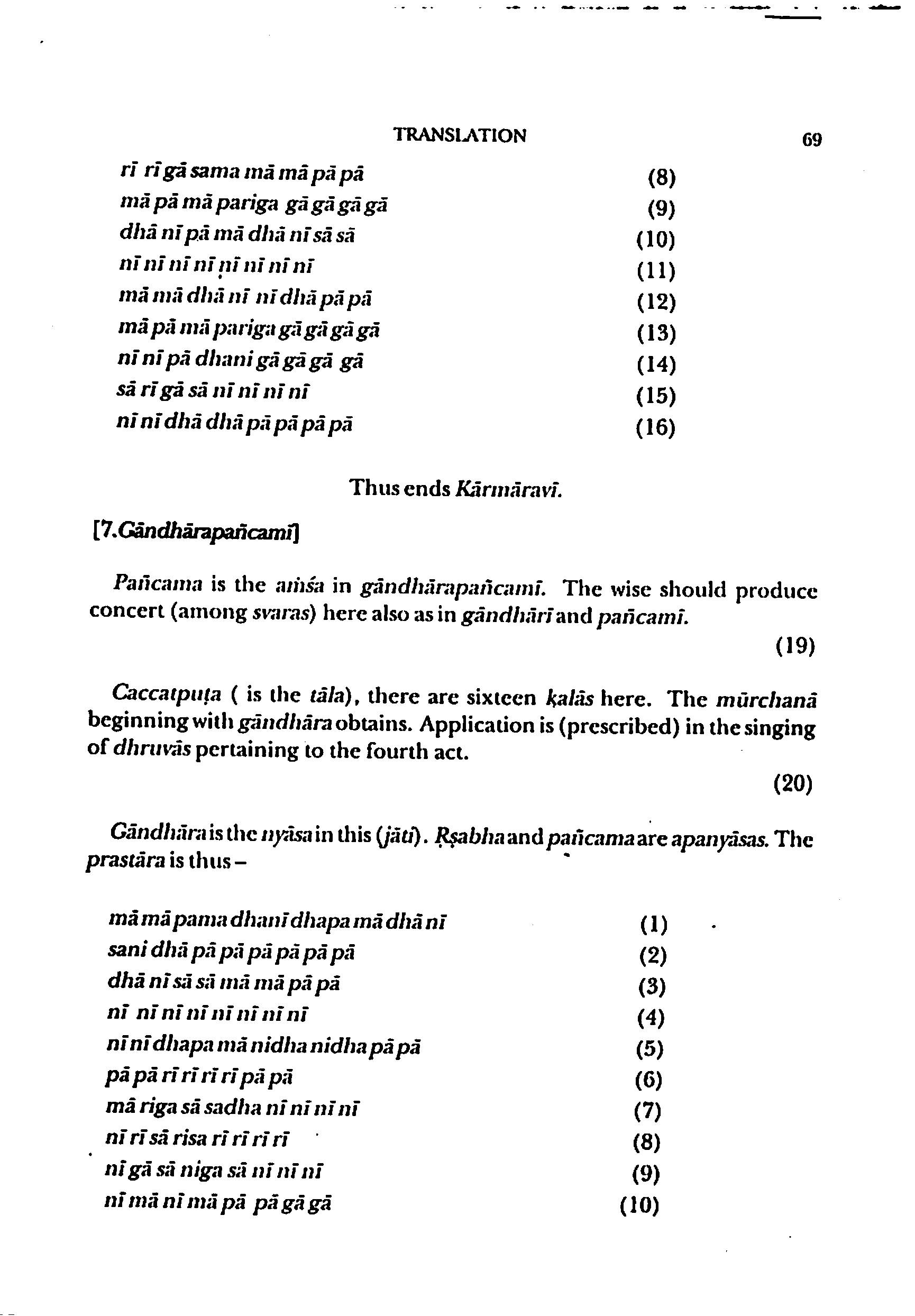
rī rī gā sama mā mā pā pā
(8)
mā pā mā pariga gā gā gā gā
(9)
dhā nī pā mā dhā nī sā sā
(10)
nī nī nī nī ņī nī nī nī
(11)
mā mā dhā nī nī dhā pā pā
(12)
mā pā mā pariga gā gā gā gā
(13)
nī nī pā dhani gā gā gā gā
(14)
sā rī gā sā nī nī nī nī
(15)
nī nī dhā dhā pā pā pā pā
(16)
Thus ends Kārmāravī. Pañcama is the amsa in gandharapañcami.6 The wise should produce concert (among svaras) here also as in gāndhārī and pancamī.5
(19)
Caccatpuța ( is the tāla), there are sixteen kalās here.8 The mūrchanā beginning with gandhara obtains.7 Application is (prescribed) in the singing of dhruvās pertaining to the fourth act.4
(20)
Gāndhārais the nyāsain this (jāti).9 Ŗṣabhaand pañcamaare apanyāsas.10 The prastāra is thus -3 mā mā pama dhanī dhapa mā dhā nī
(1)
sani dhā pā pā pā pā pā
(2)
dhā nī sā sā mā mā pā pā
(3)
ការី ការី ការី ការី ការី ការី ការី ការី
(4)
nī nī dhapa mā nidha nidha pā pā
(5)
pā pā rī rī rī rī pā pā
(6)
mā riga sā sadha nī nī nī nī
(7)
nī rī sā risa rī rī rī rī
(8)
ni gā sā niga sā nī nī nī
(9)
nī mā nī mā pā pā gā gā
(10)
ordered sequence list
prastāra (continuation) of Kārmāravī jāti — Continuation of numbered prastāra phrases (items 8-16) for Kārmāravī jāti, ending with 'Thus ends Kārmāravī.'
index · svaras
index · svaras
index · svaras
index · svaras
index · svaras
index · svaras
index · svaras
index · svaras
index · svaras
— (8)-(16)
ordered sequence list
prastāra of Gāndhārapañcamī jāti — Prastāra phrases of Gāndhārapañcamī jāti; introduced by 'The prastāra is thus -'. Gāndhāra = nyāsa; ṛṣabha and pañcama = apanyāsas.
index · svaras
index · svaras
index · svaras
index · svaras
index · svaras
index · svaras
index · svaras
index · svaras
index · svaras
index · svaras
— (1)-(10)
1.[citation]Kārmāravī is the name of a rāga or musical composition presented in this treatise॥ [इति] कार्मारवी
2.[citation]Gāndhārapañcami is a jāti (melodic type) presented as a section within this treatise[७. गान्धारपञ्चमी]
3.[enumeration] Prastāra is a systematic arrangement of note sequences for Gāndhārapañcami presented in ten numbered sectionsप्रस्तारः -
4.[relation] Dhruvās (fixed songs) pertaining to the fourth act utilize this musical materialतुर्यप्रेक्षणसम्बन्धि-ध्रुवागाने नियोजनम्
6.[structural] In Gāndhārapañcami, pañcama (fifth note) functions as the amsa (primary note)अंशो गान्धारपञ्चम्या पञ्चमः
7.[structural] Mūrchanā beginning with gandhara is prescribed for Gāndhārapañcamiगादिश्च मूर्छना
8.[structural] Caccatpuța is the prescribed tāla (rhythmic cycle) for Gāndhārapañcamiचच्चत्पुटः षोडशात्र कला
9.[structural] Gāndhāra is the nyāsa (resting tone) in Gāndhārapañcamiअस्या गान्धारो न्यासः
10.[structural] Ŗṣabha and pañcama are apanyāsas (non-resting tones) in Gāndhārapañcamiऋषभपञ्चमावपन्यासौ
1.[citation] Kārmāravī is the name of a rāga or musical composition presented in this treatiseThus ends Kārmāravī.
2.[citation] Gāndhārapañcami is a jāti (melodic type) presented as a section within this treatise[7.Gāndhārapañcami]
3.[enumeration]Prastāra is a systematic arrangement of note sequences for Gāndhārapañcami presented in ten numbered sectionsThe prastāra is thus -
4.[relation]Dhruvās (fixed songs) pertaining to the fourth act utilize this musical materialApplication is (prescribed) in the singing of dhruvās pertaining to the fourth act.
5.[relation]The concert (svaras arrangement) in Gāndhārapañcami should be produced according to the same principles as gāndhārī and pancamīThe wise should produce concert (among svaras) here also as in gāndhārī and pancamī.
6.[structural]In Gāndhārapañcami, pañcama (fifth note) functions as the amsa (primary note)Pañcama is the amsa in gandharapañcami.
7.[structural]Mūrchanā beginning with gandhara is prescribed for GāndhārapañcamiThe mūrchanā beginning with gandhara obtains.
8.[structural]Caccatpuța is the prescribed tāla (rhythmic cycle) for GāndhārapañcamiCaccatpuța ( is the tāla), there are sixteen kalās here.
9.[structural]Gāndhāra is the nyāsa (resting tone) in GāndhārapañcamiGāndhāra is the nyāsain this (jāti).
10.[structural]Ŗṣabha and pañcama are apanyāsas (non-resting tones) in GāndhārapañcamiŖṣabha and pañcamaare apanyāsas.