(11)
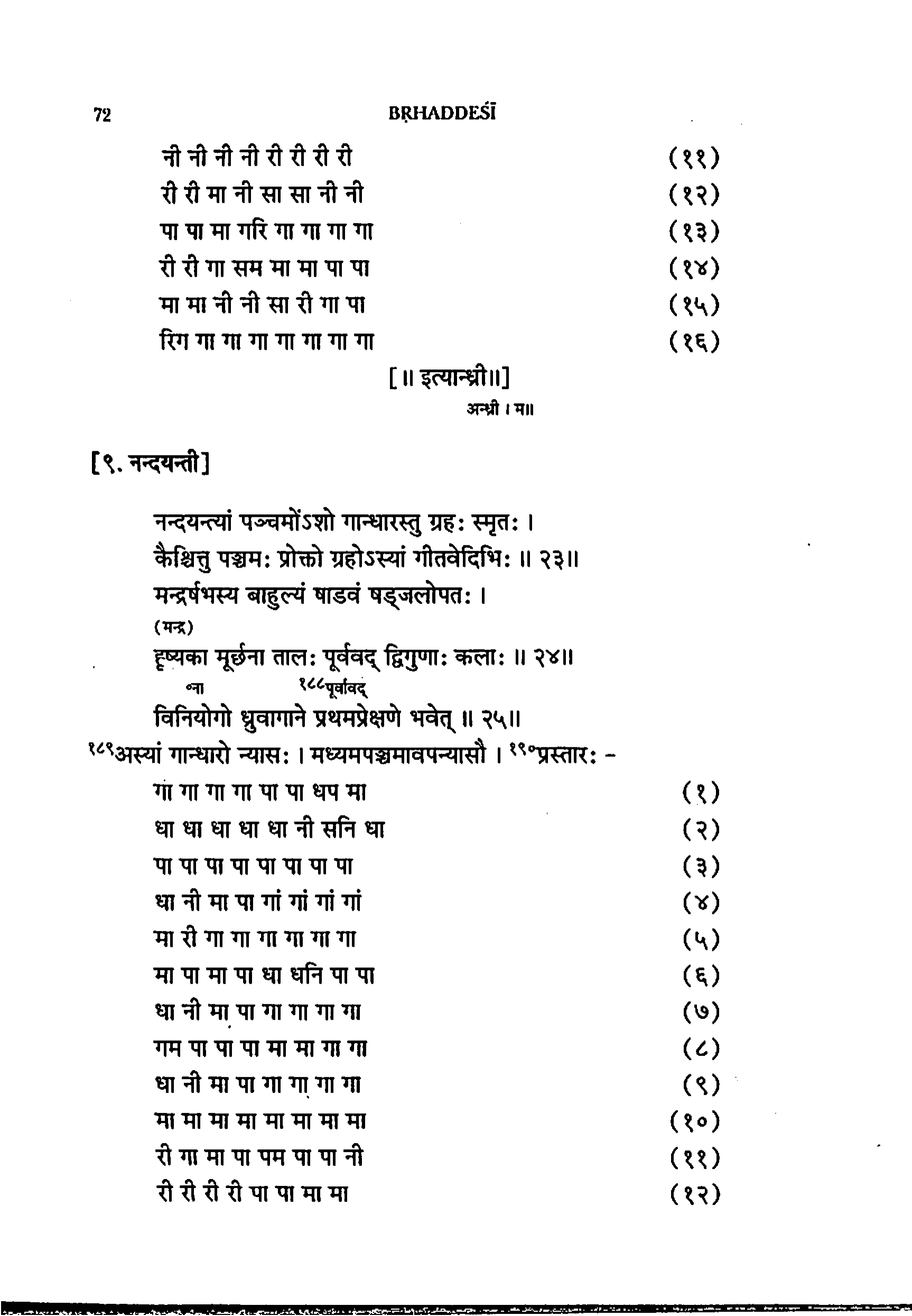
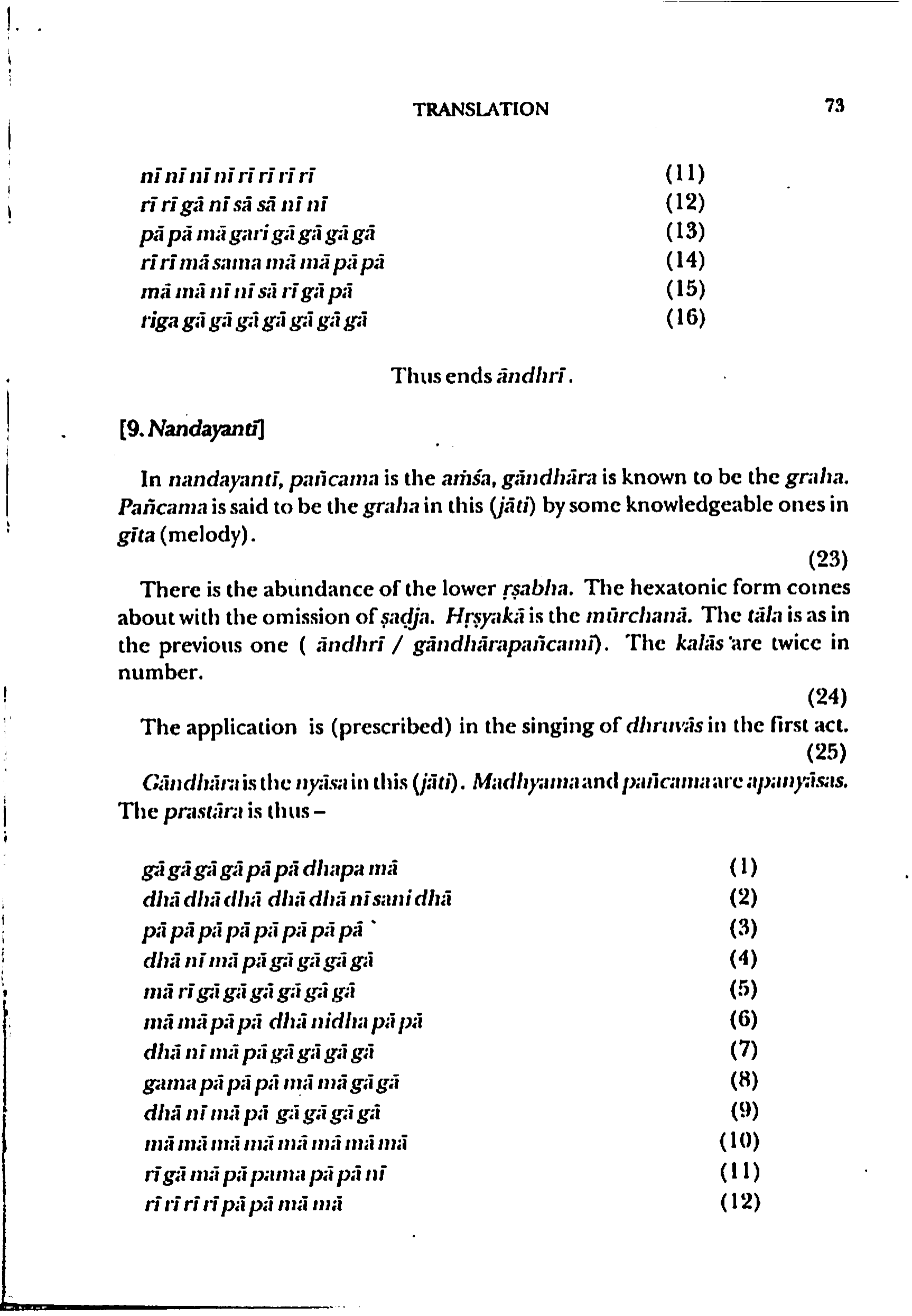
ni ni ni ni ri ri ri ri
(12)
rĩ rĩ gã nĩ sã sã nĩ nĩ
(13)
pā pā mā gari gā gā gā gā
(14)
rī rī mā sama mā mā pā pā
(15)
mā mā nī nī sā rī gā pā
riga gã gã gã gã gã gã gã
(16)
Thus ends andhri.
In
nandayantī,
pañcama is the amśa,
gāndhāra is known to be the graha.
Pañcama is said to be the graha in this (jāti) by some knowledgeable ones in
gīta (melody).41
(23)
There is the abundance of the lower rṣabha. The
hexatonic form comes
about with the omission of şadja.
Hṛṣyakā is the mūrchanā.5 The tāla is as in
the previous one ( āndhrī /
gāndhārapañcamī).
The kalās are twice in
number.10
(24)
The application is (prescribed) in the singing of
dhruvās in the first act.
(25)
Gāndhārais the nyāsain this (jāti).9 Madhyama and pañcama are apanyāsas.8
The
prastāra is thus –
(1)
gā gā gā gā pā pā dhapa mā
(2)
dhā dhā dhā dhā dhā nī sani dhā
(3)
pā pā pā pā pā pā pā pā `
(4)
dhā nī mā pā gā gā gā gā
(5)
mã rĩ gã gã gã gã gã gâ
(6)
mã mã pã pã dhã nidha pã pã
(7)
dhã nĩ mã pã gã gã gã gã
(8)
gama pā pā pā mā mā gā gā
(9)
dhā nī mā pā gā gā gā gā
(10)
mā mā mā mā mā mā mā mā
(11)
rī gā mā pā pama pā pā nī
(12)
rî rî rî rî pâ pâ mã mã
A . . . . . . . . . . . . . . . . . . .
ordered sequence list
nandayantī jāti — prastāra phrases (items 1-12) — Section [9. Nandayantī]: aṃśa=pañcama, graha=gāndhāra; hexatonic with omission of ṣaḍja; mūrchanā=hṛṣyakā; tāla as in āndhrī/gāndhārapañcamī; kalās twice; dhruvās in first act; nyāsa=gāndhāra; madhyama and pañcama are apanyāsa.
n · phrase
n · phrase
n · phrase
n · phrase
n · phrase
n · phrase
n · phrase
n · phrase
n · phrase
n · phrase
n · phrase
n · phrase
— The prastāra is: (1)–(12)